


Daily revenue approaches 600 million! The ceiling of the paper industry: How does the parent company of Meipusen in Guangzhou & Kunshan dominate the industry?
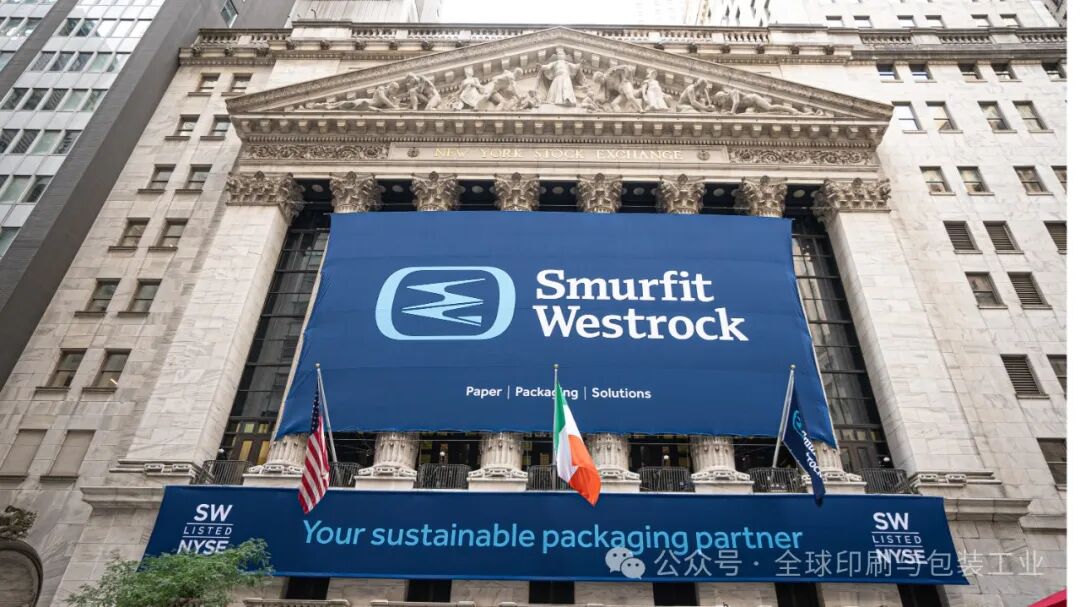
With the historic strategic merger of two industry giants, Smurfit Kappa and WestRock, a brand-new global packaging leader-Smurfit WestRock-has officially been established. According to the 2025 annual report, Smurfit WestRock not only set a new industry record in terms of scale but also established the 'industry ceiling' in the paper and packaging sector in sustainable development, global presence, and full industry chain integration.
Overall Group Business: Deep Integration Across the Entire Industry Chain
Smurfit Kappa is a global leading supplier of sustainable fiber-based packaging solutions. The core of its business model lies in a high degree of vertical integration: from forestry resources and recycled fiber procurement, to paper manufacturing, and downstream processing of packaging products, forming a closed-loop circular economy system.
The group primarily produces corrugated packaging (such as corrugated boxes and display racks), consumer packaging (such as folding cartons, labels, and multi-pack packaging), and specialty paper products (such as bag-in-box liners and kraft paper bags). By the end of 2025, the group had approximately 97,000 employees in 40 countries worldwide. This extensive geographic coverage allows it to be close to the supply chains of top global brands and provide one-stop packaging solutions.
Smurfit Kappa possesses an extremely strong asset base, with its factory network spanning North America, South America, Europe, Asia, Africa, and Australia.
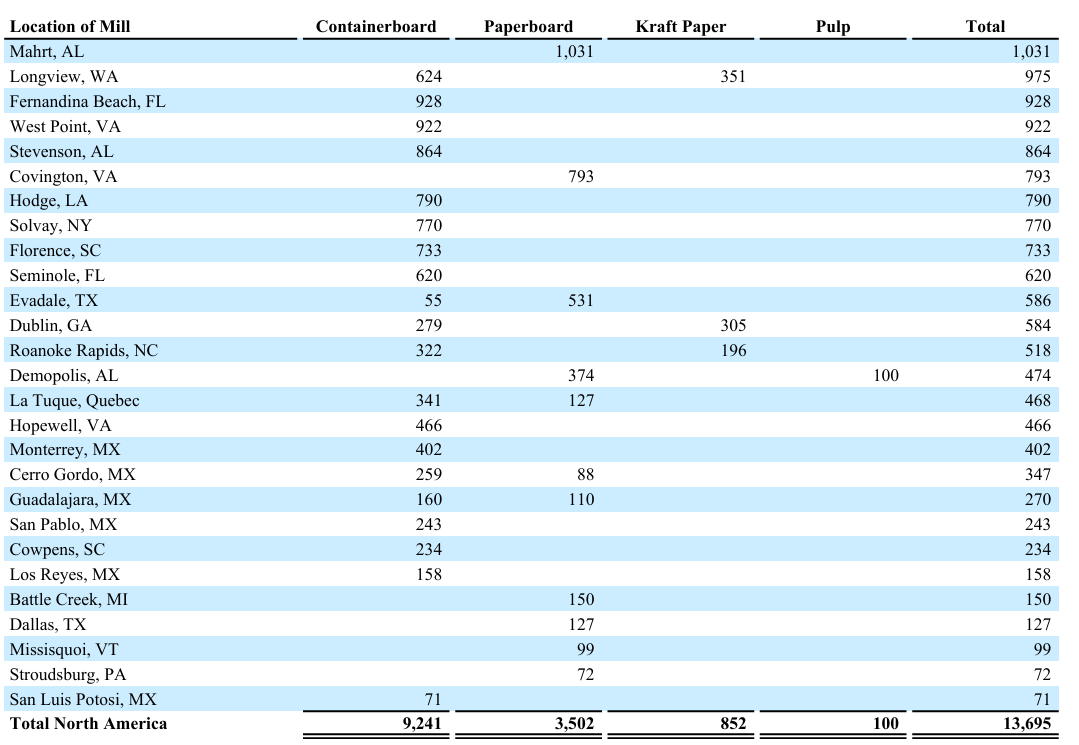
The group operates 57 paper mills. Among them, North America has 27 paper mills, with a paperboard production of approximately 9.24 million tons and card production of approximately 3.5 million tons in 2025. Europe, the Middle East, Africa, and Asia-Pacific have 21 paper mills, with a paperboard production of approximately 6.4 million tons in 2025. Latin America has 9 paper mills, producing about 1.5 million tons of paperboard and card products in 2025.
In addition, there are 450 carton and paper box processing factories, of which 329 focus on corrugated box production and 84 specialize in consumer packaging and label manufacturing. Moreover, the group owns approximately 308,000 acres of forests and plantations in Latin America (Brazil and Colombia), providing a solid resource guarantee for virgin fiber production.
Operating Performance in 2025: Strong Growth After the Merger
Fiscal year 2025 marks the first full operational year following the Smurfit Kappa merger, with impressive financial performance that fully demonstrates the synergistic effects of the merger.
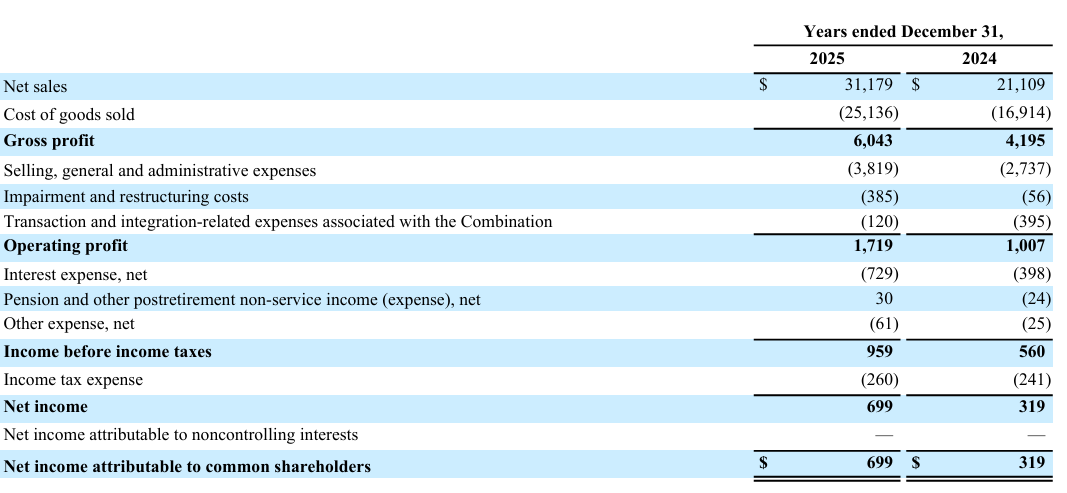
In 2025, net sales reached $31.179 billion (approximately RMB 215 billion, with average daily sales approaching RMB 600 million), a 47.7% increase over $21.109 billion in 2024, mainly due to the full integration of the VistRock business.
In 2025, net profit attributable to common shareholders was $699 million (approximately RMB 4.82 billion). Adjusted EBITDA reached $4.939 billion in 2025 (compared to $3.386 billion in 2024), demonstrating strong cash flow generation capabilities.
By the end of 2025, the group had successfully achieved the $400 million annual pre-tax operational synergy target, driven by enhanced purchasing leverage and optimized management processes.
Smarfey VistRock is managed through three reporting segments, each showing distinct regional performance:
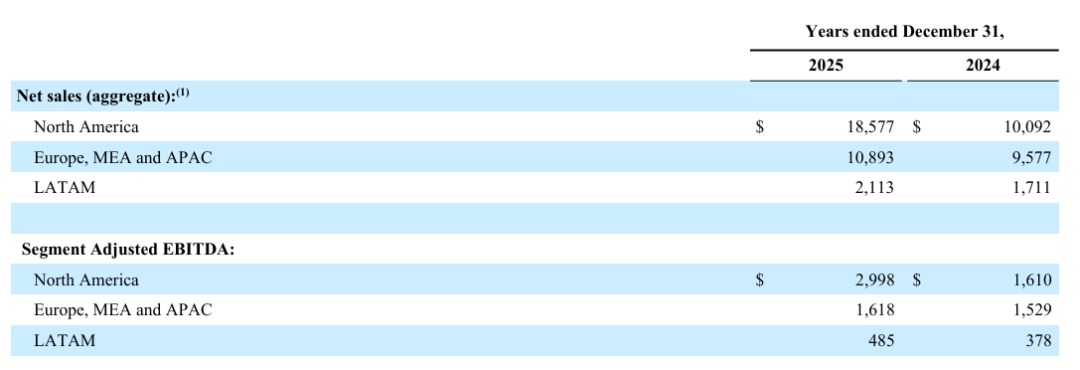
North America (58.5%): Net sales of $18.577 billion, the Group's largest source of profit. Despite the challenges of inflation and demand fluctuations in 2025, adjusted EBITDA grew strongly through cost control and the integration of the Westrock business.
EMEA & Asia Pacific (34.8%): Net sales of $10.893 billion. The segment operates consumer packaging in China, Japan and Australia, and maintains a stable gross margin with its leadership in the bag-in-box market.
Latin America (6.7%): Net sales of $2,113 million. The region has a highly integrated paper and processing system and is an important strategic growth pole for the Group.
Future prospects: green innovation and "accelerated growth"
Looking ahead, Smefei Visilok has a clear path to development:
Accelerated Growth Plan: In February 2026, the Group announced its "Medium-Term Plan" to accelerate its growth path in the packaging sector through continuous capital allocation optimization.
Sustainable packaging ceiling: Under the "Better Planet Packaging" initiative, the Group is developing a range of new paper-based materials that can replace single-use plastics, such as recyclable bubble-filled mailers.
R&D investment: The Group has 33 interconnected "Innovation and Experience Centers" around the world, helping brands reduce time-to-market and increase sustainable premiums through the data-driven "Design2Market" concept.
Smeerfield Visilok's 2025 annual report is not only a beautiful report card, but also an "evolutionary textbook" for the paper packaging industry.
1. Scale is not the only one, integration is king
Smolphy Visilok has achieved economies of scale through large-scale mergers and acquisitions, but its core barrier lies in vertical integration. In the face of the cycle of raw material fluctuations, the high synergy rate between paper mills and processing plants within the group (for example, paper production capacity in Europe is about 10% higher than processing demand) gives it strong risk resistance. Chinese companies should look at simple "capacity expansion" and instead pursue deeper production chain integration, locking in costs and profits through the matching of their own base paper and downstream processing.
2. Sustainable development from "cost item" to "revenue"
Rather than seeing environmental protection as a compliance burden, Smolphy Visilok has made it a core competitiveness through "Better Planet Packaging". In 2025, its capital expenditure on environmental compliance will reach US$168 million, but it has won the favor of global FMCG giants with extremely high requirements for sustainability. With the deepening of the "dual carbon" policy, Chinese counterparts should increase technology research and development in recyclable packaging materials and transform environmental characteristics into bargaining weight for products.
3. The art of transnational governance and cultural integration
Smeerphy Visilok completed a complex integration across Europe, the United States and Africa in half a year, and achieved a synergistic goal of $400 million. Through leadership programs such as "Open Leadership", it brings together employees who originally belonged to the two giants. For Chinese paper companies going overseas, how to manage multinational teams and achieve strategic alignment of different cultures will be the key to the success or failure of their globalization.
Schmöfe Visilok has proven with its achievements that in the mature paper packaging track, the real "industry ceiling" is not untouchable. Through the integration of the whole production chain, the green technology moat and the sound capital allocation strategy, Smolfield Visilok is defining a new height in the paper industry. For Chinese companies, this is not only the goal of catching up, but also the coordinate system towards high-level competition.