


Nestlé, Procter & Gamble, Unilever, and six other giants have formed alliances to accelerate the replacement of paper-based soft packaging
Against the backdrop of underdeveloped soft plastic packaging recycling systems and the growing environmental burden of traditional multi-layer composite plastics, global FMCG giants are speeding up the shift from individual experimentation to collaborative problem-solving.
The PaperFlex Alliance, initiated by the Ellen MacArthur Foundation and supported by consulting firm (RE)SET, has been officially established. The alliance was co-founded by six major global consumer goods manufacturers, including Colgate, Mars, Nestlé, PepsiCo, Procter & Gamble, and Unilever.
Pablo Costa, Unilever's global head of packaging, said the alliance aims to break the past fragmentation where individual companies struggled with technological bottlenecks. By collaborating deeply on R&D, they hope to accelerate the development and large-scale rollout of responsibly designed paper-based flexible packaging solutions.
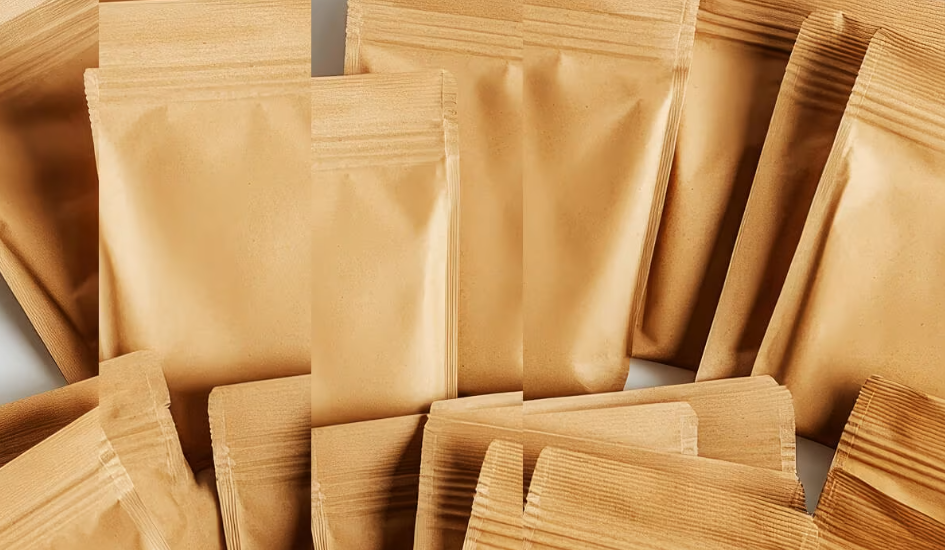
Targeting markets with weak recycling infrastructure, it has established a dual vision of "recyclability + biodegradability."
The foundation of the PaperFlex Alliance's work originates from the Ellen MacArthur Foundation's previously released special report on Paper-Based Flexible Packaging. This report objectively reveals the substantial gap between existing material technologies and the vision of "balancing recyclable and compostable flexible packaging."
Currently, the alliance's core focus is on regional markets that, despite extensive use of plastic flexible packaging, suffer from a severe shortage of waste collection and recycling facilities.
In response to these complex and diverse realities, the alliance has clearly anchored its vision on the dual goals of waste management: "recyclability" and "biodegradability."
As an innovative, recyclable, and compostable material, paper-based flexible packaging has the core mission of fully replacing traditional plastic films used in product packaging. By combining sustainably certified paper fibers with advanced barrier coatings, the new structure can seamlessly integrate into waste paper regeneration systems once recycling infrastructure is improved; In scenarios lacking collection facilities, even if packaging accidentally enters the natural environment, it can fully biodegrade, eliminating the hazards of persistent microplastics.
This joint R&D mechanism not only helps companies share the high costs of trial and error, but also assists multinational brands in meeting the stringent packaging environmental regulations being introduced worldwide in advance.
Breaking through the inherent physical shortcomings of paper-based materials, specialized coatings and equipment transformation have become key levers
Among the existing packaging material systems, paper is one of the very few substrates on the market that can be both widely recycled and directly composted.
However, untreated paper itself does not possess the physical barrier properties and heat sealing capabilities required by modern assembly lines. In high-speed industrial environments, it is easily torn and moisture-susceptible, and unlike thermoplastic resins, it cannot be melted and airtightly molded by heat, making product protection, sealing integrity, and shelf stability extremely challenging.
For this reason, many existing so-called paper packaging on the market still commonly have a thin layer of plastic film laminated inside to meet leak-proof sealing and barrier requirements, especially in liquid daily chemicals like shampoo and laundry detergent, as well as water- and oily foods.
How to rely on specialized advanced coating processes and matching production equipment upgrades to completely eliminate fossil-based plastic coatings, endow natural paper with plastic-comparable functional properties, and smoothly adapt it to automated high-speed packaging lines, has become the most technically demanding and complex material science challenge in today's packaging innovation field.
R&D investment has doubled, deepening cutting-edge coatings, and cross-industry screening of 3,000 new raw materials
To overcome these materials science challenges, Unilever has more than doubled its investment in packaging R&D in recent years, forming a cutting-edge team of over 60 materials scientists.
R&D personnel broke the thinking limitations of the traditional packaging industry and actively crossed fields to evaluate emerging materials from pharmaceuticals, high-end electronics, and other fields that have not yet been commercially available in packaging, with over 3,000 samples evaluated in total.
On the technology side, the team is focusing on testing renewable bio-based materials like plant proteins, as well as ultra-thin, plastic-free coatings made from naturally abundant compounds such as silica.
Pablo Costa emphasizes that there's no one-size-fits-all solution for soft packaging alternatives; the tech approach has to be tailored to the situation: customized R&D is needed for different contents' physical and chemical properties, different logistics and storage climates, and even the actual storage scenarios in consumers' homes (like bathrooms with high humidity year-round).
At the same time, all the source paper fibers must come from sustainably certified forestry to avoid causing new negative impacts on the ecosystem.
Market pilot projects help fine-tune production lines, and big companies coordinate to overcome the hurdle of scaling up.
Currently, several of Unilever's cutting-edge paper-based soft packaging technologies are gradually moving toward commercial validation. Take, for example, the all-paper packaging for Knorr broth cubes launched in the UK market: because the paste is high in oil, the packaging must prevent oil seepage and moisture damage during the shelf life at room temperature.
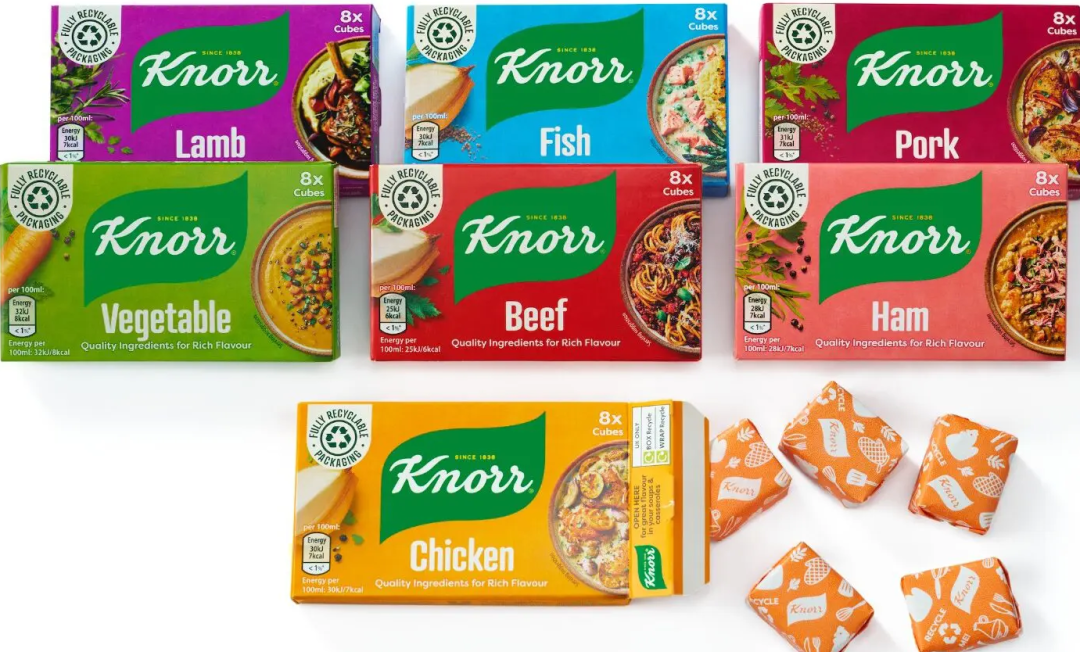
To achieve this, the factory fully pushed forward production line process upgrades, making precise mechanical adjustments to the folding, forming, and creasing guiding equipment, ensuring that the new paper packaging runs smoothly and stably at high speeds, while also capturing valuable production line tolerance data and real consumer experiences.
Pablo Costa summarized that for high-performance paper-based flexible packaging that is both recyclable and compostable to move from the lab to large-scale industrialization, a single company's limited R&D budget and application scenarios simply can't overcome the multiple barriers of high costs, weak supply chain support, and expensive equipment modifications on their own.
The reason why six major players-Colgate, Mars, Nestlé, PepsiCo, Procter & Gamble, and Unilever-are working together under the PaperFlex alliance is to plan projects collaboratively, co-fund them, and share test data, completely eliminating the duplicated effort that used to happen when companies were developing technologies on their own.
Relying on the unmatched purchasing scale and industrial aggregation effect of these six consumer goods giants, the alliance is steadily bridging the initial cost gap for technology and equipment investment, accelerating the global fast-moving consumer goods packaging industry toward a new era of plastic-free packaging that combines practicality with a sustainable closed-loop.