


From 'photocopying' to 'replicating,' how does China-India Hanmo Xuan expand its high-fidelity reproduction and printing business?
On August 20th, the 22nd "Digital Printing in China" Technology Development Forum 2026 was successfully held in Shanghai. At the event, Yang Xinwei, chairman of Zhongyin Hanmoxuan (Beijing) Culture Co., Ltd., gave a keynote talk titled "Protagonist & Supporting Roles-From Copying to Reproducing: Role Shift and Value Rebuilding in Business."
 Yang Xinwei, Chairman of Zhongyin Hanmo Xuan (Beijing) Culture Co., Ltd
Below is the full text of the speech.
Currently, the involution in the digital printing industry continues to intensify, with price wars of homogeneous products becoming increasingly fierce, the profit margins of traditional copy businesses being continuously squeezed, and many printing companies facing growth bottlenecks. Against the backdrop of industry competition in stock volume, how to break through the low-price competition dilemma, tap new business growth points, and achieve value upgrading and transformation has become a core issue that all printing companies urgently need to solve. After years of deep industry cultivation and frontline practice, Zhongyin Hanmo Xuan (Beijing) Culture Co., Ltd. (hereinafter referred to as "Zhongyin Hanmo Xuan") has found that simulation and copying printing is becoming a new growth hotspot in the digital printing industry. It can drive enterprises to complete the business iteration from basic "copying" to high-end "replication," reshaping business roles from industry "supporting roles" to "protagonists" of value, achieving a win-win situation of commercial value gain and cultural heritage empowerment.
Breakthrough and Insights: The Value Fragmentation of a Real Case
Recently, Zhongyin Hanmo Xuan completed a highly representative business, giving us a deeper understanding of value reconstruction. August 16 marks the centenary of the birth of "Father of the Hydrogen Bomb" Yu Min. To prepare multiple themed exhibitions, the client specially brought an original 1950 old newspaper to find us to replicate for display. This old newspaper bears an article signed by 376 Peking University faculty members including Yu Min, declaring Chairman Mao's determination to resist aggression (Resist U.S. Aggression and Aid Korea), which is of great significance.
A piece of paper that carries no information has negligible material value, sometimes even less than a cent. But relying on museum-grade simulated printing technology, we have fully restored and restored the textual details, paper texture, and traces of time in old newspapers. Through simulated replication and printing, not only are historical details perfectly restored, but the value of art exhibitions, collection preservation, and academic research is also imbued, achieving a hundredfold increase in value.
This real-life case clearly reveals the underlying logic of value reconstruction: the multiplication of cultural asset value lies not in the physical carrier itself, but in the professional excavation and empowerment of the historical information it carries. By combining modern craftsmanship with cultural creativity, dormant historical resources are transformed into new assets with profound cultural connotations and considerable market value, achieving a win-win for cultural heritage and commercial value.
Cognitive Upgrade: The essence and characteristics of simulation replication printing business
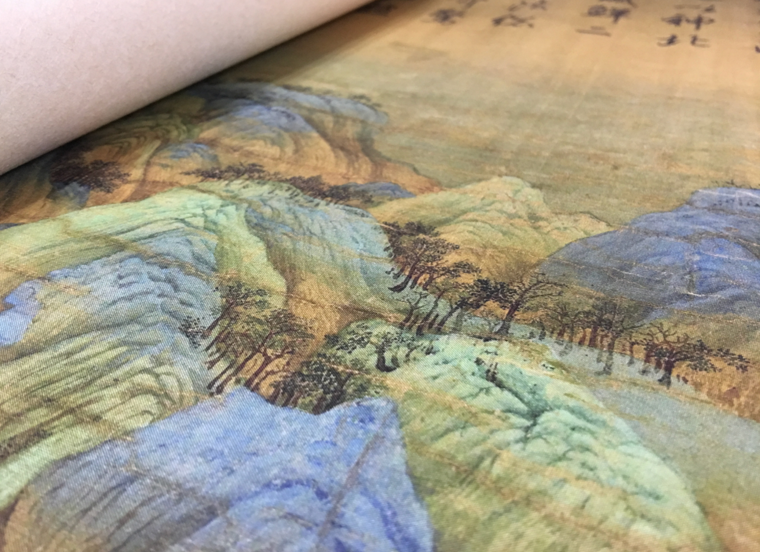
The core essence of traditional copying is simple information transfer, essentially "physical replication," which only solves the problem of information retention and struggles to restore the color layers, brushstroke texture, and historical charm of the original, making it a standardized industrial process. Simulated replication printing is the "pinnacle" of printing technology, with the mission of "ultimate restoration," integrating high-precision digital acquisition with traditional intangible cultural heritage printing techniques to provide a "second life" for rare ancient books, famous calligraphy and paintings, and precious cultural relics, achieving permanent preservation and living transmission of cultural heritage. Through color fine-tuning and material matching, the artistic soul of the original work is reproduced, endowing cultural assets with lasting vitality, making it a high value-added cultural service.
From the perspective of business implementation to technical application, simulation replication printing has eight core business characteristics:
01
Extremely high accuracy in reproduction
Dimensional errors are strictly controlled at the millimeter level, with wide color gamut standards, achieving a three-in-one replication of "shape, color, and texture," accurately reproducing the original brushstrokes and color layers.
02
Carefully selected special printing media
Carefully selected natural substrates such as Xuan paper, silk fabric, antique-style acid-free paper, and professional oil canvas perfectly reproduce the texture and the sense of time in the original, preserving the soul warmth of the artwork.
03
Collection-grade lightfast pigment ink
Uses imported lightfast pigment ink, offering excellent oxidation and UV resistance, color stability for over a hundred years, fully meeting the national first-class cultural relic protection standards.
04
Strict and complex process flow
After high-precision scanning, digital restoration and color correction, repeated sample confirmation, micro-spray output, manual aging, and multiple rounds of rigorous quality inspection, more than ten processes are closely linked.
05
Small batch customization
Breaking the constraints of traditional mass production, it supports a flexible model of "individual piece printing, on-demand customization," precisely responding to museums and collectors' personalized reproduction and restoration needs, without compromising on minimum order quantities.
06
Specific application scenarios
Deeply engaged in the cultural and museum field, its core applications include museum exhibition replacement, permanent backup of precious archives, high-end art collection and replication, as well as teaching copying and academic research in universities and research institutions.
07
High costs and long cycles
Using professional-grade equipment and high-end consumables, combined with tasks like ancient book restoration and color proofreading requiring experienced craftsmen to manually polish them, resulting in high costs and long production cycles, making it a high-investment, technology-intensive service.
08
Strict copyright restrictions
In accordance with the Copyright Law, legal authorization must be obtained before reproduction. The finished product must clearly be marked with the word "replica," strictly avoiding passing off fakes as genuine, and upholding the industry's legal and compliant bottom line and business ethics.
Integration and Empowerment: How digital printing companies can expand their simulation and copy printing business
01
Business implementation
Many peers are interested in developing simulation replication printing businesses, but there is widespread confusion about how to implement them. In fact, digital printing companies investing in high-end replication businesses do not need to start from scratch with new investment; the core is to awaken the company's accumulated "dormant resources," transforming customer trust, technical reserves, and equipment capacity into new growth engines. The combination of traditional craftsmanship and modern digital technology is the core support and value foundation for business expansion.
(1) Client needs and resource mining
The vast majority of printing companies have long-term accumulations of government-enterprise, individual, and existing customer bases, which contain a large amount of potential demand. Companies only need to sort through existing client resources, dig deep into the digitization of government and enterprise client archives, develop museum cultural creativity, and reproduce personal art collections, thereby activating the potential value of the existing market.
(2) Upgrading the employee skill system
Most traditional printing practitioners are just equipment operators, mainly performing standardized printing and copying tasks, lacking professional skills in color management and image restoration. Companies can build targeted talent training systems to promote employees' ability leaps from "equipment operators" to "color managers" and "image restorers," creating a versatile talent pipeline that understands art and proficient in technology.
(3) Efficient reuse of equipment capacity
Currently, most digital printing companies have high-end hardware foundations for scanning, printing, and micro-inkjet printing, but many high-precision functions remain idle for a long time and are not fully utilized. Companies can revitalize high-precision scanning and printing equipment, converting idle capacity into core productivity for art reproduction, maximizing the return on equipment investment.
(4) Compliance and adaptation of business qualifications
Enterprises must proactively verify and confirm that the "Printing Business License" covers the category of reproduction, complete compliance filing for special businesses such as cultural relic reproduction, and lay a solid legal foundation for business development.
02
AI empowerment
In addition, the rapid iteration of AI technology provides new support for improving the quality and efficiency of simulation and replication printing services. It should be made clear that AI is an efficient auxiliary tool that can improve replication efficiency and data accuracy throughout the entire process, but it cannot replace manual core control. Core steps such as artistic aesthetics, detail refinement, and final quality review still require manual oversight by experienced restorers and traditional technicians. The application of AI technology in simulation and replication printing mainly includes the following three aspects:
(1) Image quality reshaping and color restoration
Relying on intelligent repair functions, the system can automatically identify and remove stains and mold spots, with super-resolution technology restoring fine brushstroke details. At the same time, a mapping model is established based on the original color swatches for precise color calibration, restoring the natural texture and layers of mineral pigments.
(2) Physical simulation and process efficiency improvement
Digital technology can simulate the fiber texture of xuan paper and silk fabric, accurately predicting ink penetration and blending effects. It also supports automatic typesetting, intelligently splicing and aligning long scrolls of ancient books, generating multi-format samples with one click, greatly saving manual layout time.
(3) Time reproduction and copyright protection
Algorithms can simulate the natural aging cracks, creases, and oxidation colors of ancient paintings, restoring the sense of historical weight and replicating the texture of time. It can also integrate digital anti-counterfeiting technology to embed invisible digital watermarks and unique traceability codes, confirming rights at the source and effectively protecting the copyright of replicated works.
Steady Progress for Long-Term Success: Core Precautions and Pitfalls Guide for Copy Printing Business
Simulation and copying printing combine cultural, technical, and legal attributes, and behind its high value lies high standards and strict requirements. To steadily lay out plans and operate sustainably, avoid industry risks, and uphold business bottom lines, companies must clarify core business norms and pitfall guidelines.
01
Compliant Operations - Qualifications and Authorization Are the "Lifeline"
Qualification access is the foundation for solid compliance in operations. Those engaged in bulk reproduction and printing must legally obtain a "Printing Business License" and verify the corresponding business categories; enterprises must ensure complete license categories and compliant information; For special categories such as cultural relics and ancient books, prior application to the cultural relics authority and special approval must be obtained; At the same time, timely updates of business scope must be submitted to the market supervision department to ensure the business license matches the actual business scope.
The copyright red line is an inviolable legal boundary. Reproduction and printing businesses must retain a written copyright authorization letter signed and stamped by the customer, refusing verbal agreements or ambiguous authorization; Strictly comply with copyright law, paying special attention to copyright protection periods within 50 years after the author's death; Strictly prohibit unauthorized reproduction of museum cultural relics and unauthorized original works by living or well-known calligraphers and painters.
02
Risk prevention - order acceptance process and anti-counterfeiting standards
At the risk control level, enterprises need to establish standardized order review mechanisms and anti-counterfeiting traceability and identification standards. On one hand, establish printing registration ledgers, with relevant records kept for at least two years for reference, ensuring full traceability of the entire business process; When undertaking documents and invoices, strictly verify official certification materials and authorization documents, implement drawing review responsibilities, and resolutely eliminate confidentiality, prohibited content, and violations of public order and good morals. On the other hand, implement anti-counterfeiting traceability and identification standards, embed invisible digital watermarks in products through technology empowerment to achieve unique identity identification and traceability; Ensure clear rights and responsibilities, prominently mark "reproduction" on contracts and finished products, and explicitly indicate the legal attribute of non-originals; Implement limited quantity controls, assign unique numbers to replica works, and strictly control distribution quantity and circulation channels.
03
Quality and Management-No unnecessary actions
Quality management is the key to building core competitiveness for enterprises. Industry operations must adhere to museum-level replication standards and reject shoddy industrial workmanship. Uphold the restoration aesthetic of "restoring the old as it is," carefully selecting professional art micro-spray equipment and museum-grade acid-free consumables, ensuring color reproduction and durability from the source, so that every replica retains its original historical warmth and artistic charm, rather than superficial artificial aging or crossing legal and moral boundaries.
To this end, we have established a three-level business guideline. The business encouraged by Green Light is to fully support the compliant production of clients' original design works, protect original copyrights, and promote healthy development of artistic creation and commerce; Huang Deng Shenxing's business involves rigorously verifying and verifying that there are no existing exclusive authorization restrictions for reproducing rare ancient books whose copyright period has expired, thereby avoiding potential legal and copyright dispute risks; The business strictly prohibited by Red Light involves unauthorized reproduction of famous calligraphy and paintings, or selling high-quality imitations as antiques. Such actions constitute fraud and seriously cross legal red lines and the bottom line of business ethics.
Summary and Outlook: The home turf moments of supporting roles
Looking at the development landscape of the digital printing industry, traditional copying has long been the core business of printing companies, while simulation and copying printing was once just a supporting "supporting role" business. However, against the backdrop of intensified industry competition, continuous upgrading of cultural consumption, and deepening cultural confidence strategies, the market value and development potential of this business continue to be unleashed, providing all the conditions to transform from a "supporting role" to the "main player" in core enterprise growth. Digital printing companies can base themselves on their core foundation, leverage inherent advantages in equipment, technology, customers, and qualifications to consolidate their business foundation, turning resources into solid barriers for differentiated competition. At the same time, they enter with a lightweight and precise approach, focusing on lightweight scenarios such as personal works, family archives, and cultural and creative merchandise, opening market gaps with low-barrier, high-emotional value businesses. Adhering to a thousand stores and thousands of stores, rejecting standardized copying, combining regional culture with personalized user customization services to create an irreplaceable cultural service experience.
In the short term, this business is an effective extension of traditional copying services, enriching store service scenarios, increasing user stickiness, and serving as a valuable supplement to existing operations; In the long term, as the cultural industry continues to heat up, market demand for high-end replication and cultural restoration will keep expanding. The business will shift from meeting basic needs to carrying emotions and memories, gradually growing into the core "protagonist" of stores, thus extending from single services into the cultural industry, uncovering deep value, and building a sustainable profit model and brand moat.
From "copying" to "copying," what has changed is technological iteration, the precision of replication, and the leap in commercial value; What remains unchanged is the reverence for the original historical appearance and the unwavering commitment to ultimate quality. In the future, digital printing enterprises can rely on technological empowerment, compliant operations, and deep craftsmanship, turning former business supporting roles into core players in corporate value growth, upgrading the printing industry into a high-quality cultural enterprise that carries cultural memory and inherits craftsmanship, driving high-quality transformation and upgrading of the digital printing industry.