


You need to master these four major methods
During the production of adhesive labels, the quality of die-cutting directly affects the production efficiency of the next process-the labeling stage. Poor die-cutting can easily lead to label tearing or misalignment during high-speed labeling, causing significant trouble and losses for label printing companies. It also directly affects the appearance of the final product and the customer's user experience. Many factors influence the quality of die-cutting, and different label products have varying requirements for the process, methods, quality, efficiency, and cost control of die-cutting. Addressing these issues, this article starts with commonly used die-cutting methods and summarizes the current application status, advantages, and disadvantages of various die-cutting methods in the market for reference.
Currently, there are roughly four types of adhesive label die-cutting methods: CNC cutting machines, flatbed die-cutting, rotary die-cutting, and laser die-cutting.
01
CNC Cutting Machines
From a cost-saving perspective, flatbed die-cutting and CNC cutting machines save the most material costs, especially CNC cutting machines. Their consumable costs are not only low but also fast and convenient, requiring no preparation of physical cutting dies. A single electronic die file can be executed via computer or mobile app to issue cutting commands, with one or multiple specialized cutting heads working simultaneously, following preset cutting lines or using cameras for automatic edge detection. The cutting depth of the heads is set according to the material thickness and the pre-established label process requirements, and minor adjustments can be made to the cutting heads during the process based on the actual cutting traces.
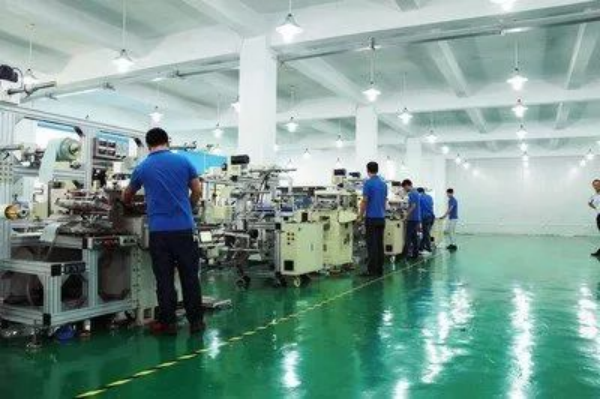
In addition, the working area of CNC cutting machine tools ranges from 300mm to over 2000mm. The larger the cutting width, the lower the positioning accuracy and repeatability. The cutting speed range of CNC cutting machines is 400mm/s to 2000mm/s. The more cutting heads there are, the faster the paper feed speed. Because CNC cutting machines are relatively inexpensive, they are suitable for small label printing companies, print shops, or for proofing. However, the die-cutting efficiency and accuracy of CNC cutting machines are lower compared to the other three die-cutting methods, making them more suitable for manual labeling.
02
Flatbed Die-Cutting
Compared with CNC cutting machines, flatbed die-cutting is the earliest and most commonly used die-cutting method chosen by label printing companies. Flatbed die-cutting has low knife-making costs and fast knife-making speed (depending on the complexity of the patterns). The cutting dies for flatbed die-cutting are generally produced by manual knife arrangement or laser cutting. That is, CNC automatic bending and knife arrangement install the blades on medium-density fiberboards, and finally, the blade-arranged die is mounted on the die-cutting machine's knife holder.
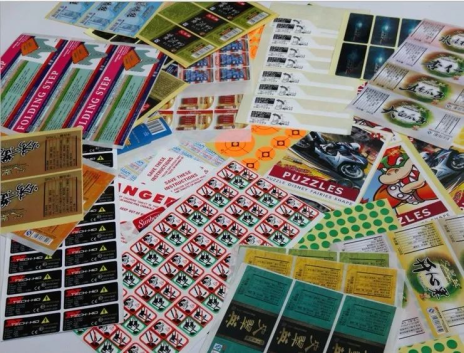
The die-cutting efficiency of flat press flat die cutting is much higher compared to CNC cutting machines. The paper feed speed ranges from 20 m/s to 100 m/s, and the price of flat press flat die cutting machines ranges from tens of thousands to hundreds of thousands of yuan. It is suitable for small orders, urgent orders, samples, printing with relatively narrow web width, non-high-speed automatic labeling, and orders where strict requirements for backing paper cut marks are not necessary.
03
Rotary Die Cutting
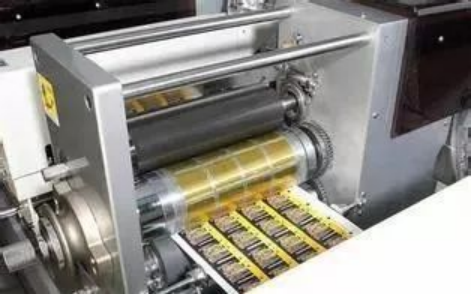
Rotary die cutting, also known as rotary knife die cutting, was first used in the post-press processing field and was later widely adopted by the daily chemical, electronics, and pharmaceutical industries. In recent years, with the rapid development of flexographic printing technology and the higher production efficiency requirements of label printing companies, this die-cutting method has gradually become the main die-cutting method.
From the perspective of production linking, rotary die cutting can be divided into in-line die cutting and offline die cutting. In-line die cutting mainly occurs on flexographic presses equipped with a rotary die cutting unit, allowing the die-cutting requirements to be completed simultaneously with label printing. Among the clients served by the author, in-line die cutting accounts for about two-thirds, with speeds ranging from several tens of meters per minute to 200 m/min, greatly improving production efficiency. Offline die cutting is convenient for offline die-cutting requirements of offset, gravure, and flexographic printing.
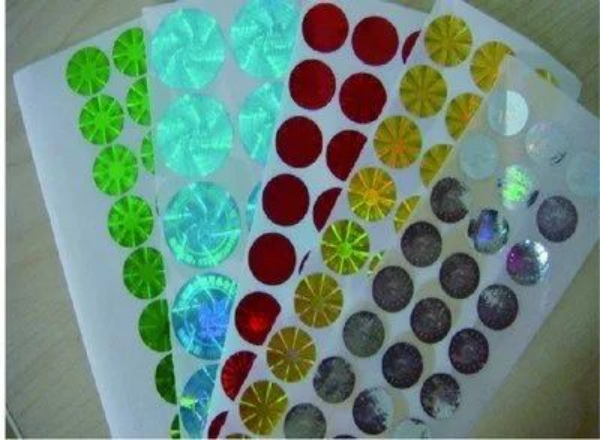
Currently, rotary die-cutting is the most efficient die-cutting method and offers the best control over die-cutting precision (±0.0025mm, meaning the die must cut through the adhesive layer without damaging the silicone layer). It has significant advantages for high-speed automatic labeling, ultra-thin release liners (Glassine below 40g, PET below 0.030mm), requirements for seamless finishing, special blade angle control of materials (40°–60°), and special blade treatments such as wear-resistant coatings (dense chromium oxide 5–10μm), anti-stick coatings, and more.
The tools used in rotary die-cutting are divided into engraved knives and flexible blades, and rotary die-cutting with flexible blades is increasingly replacing rotary engraved knives and flat die-cutting methods.
A rotary engraved knife is a blade made by directly milling the knife tip (cutting line) on a 45# steel roller using computer-controlled three-axis or multi-axis (CNC) machining, followed by treatments for the tip hardness and other properties. The rotary engraved knife and the blade roller are integrated, with flatness controlled by CNC precision, resulting in high flatness and simple operation. The blade roller just needs to be placed into a sliding slot and pressed. The drawbacks are high cost and inconvenient replacement; when the knife tip wears, it must be sent back to the supplier for sharpening or a new tip, which involves significant maintenance time and logistics costs. Typically, printing companies keep multiple spare blade rollers to ensure a cycle of sharpening, transportation, and use, guaranteeing continuous production.
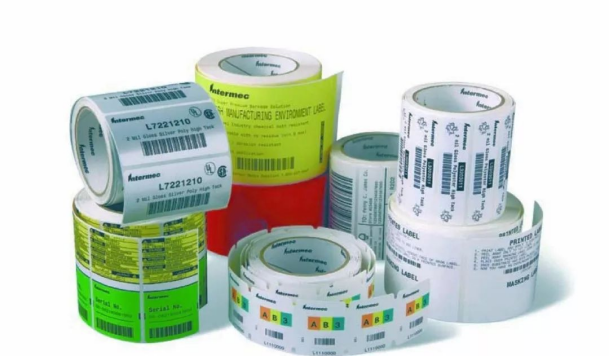
Since domestic label printing companies mostly use domestically produced engraving knives, the wear resistance of the knife tips varies, and knife tips with poor wear resistance wear out very quickly. Operators often resort to pressing harder when the die-cutting effect is not good, but they often overlook an issue: the deformation rate and hardness of the back-up roller's shoulder iron beneath the die-cutting unit, and how much pressure the back-up roller or support roller bearings can withstand without being damaged. Once the shoulder iron or bearings are damaged, it is difficult to ensure that the back-up roller rotates concentrically, which brings certain difficulties for precision die-cutting. The author suggests using pressure according to the technical guidelines of the die-cutting base.
Round-press flexible blades are generally made from high-quality, high-hardness European spring steel, etched through a strictly controlled chemical process and engraved by computer-controlled equipment (CNC). The precision of round-press flexible blades can be controlled within ±2.5μm to ±5μm of the designed height to ensure uniform die-cutting. The higher the requirements for blade precision and lifespan, the higher the price, which is determined by the combination process and the knife-line length. Label printing companies need to customize different process requirements according to the needs of their actual products.
Compared to round-press engraving knives, round-press flexible blades have more precise dimensional accuracy between the edges and can meet various customized process requirements. Especially when the wear-resistant coating of the blade is only 5μm–10μm, its hardness can reach 73°–75°, which meets the lifespan requirement and protects the equipment well, reducing the chances of damage from heavy pressure. Moreover, the delivery time for round-press flexible blades is relatively short, usually within 4–5 days, the cost is lower, and replacement and backup are more convenient. However, round-press flexible blades require purchasing high-precision magnetic rollers, and when attaching the blades, it is necessary to keep the magnetic roller surface and blade bonding surface clean to avoid dust or other debris from sticking between the blade and the magnetic roller, which could ruin blade flatness and cause uneven backing paper cuts.
04
Laser Die-Cutting
Laser die-cutting utilizes a laser beam emitted by a laser, focusing it on the printed material to cut evenly according to the designed knife-line shape, achieving cut marks at the micron level.
Laser die-cutting does not require making physical die plates and allows for rapid switching between different order graphics. Cutting designs can be completed on a computer, with various graphics and material parameters set, automatically generating the required cutting depth marks, and it can be repeatedly processed. The computer can retrieve previously programmed cutting routines to start production immediately, saving the time required for changing and adjusting traditional die-cutting molds.
At present, laser die-cutting is slower than traditional die-cutting machines, more expensive, and causes burning at the cutting edges. It also has a minimum line width issue at the cutting lines. It is mostly suitable for invitations, greeting cards, candy boxes, cake boxes, paper sculptures, paper-cutting art, and gift packaging boxes, but is less commonly used for adhesive labels.
In summary, considering cost control and small quantities, CNC cutting machines and low-speed flatbed die-cutting can be chosen; for product structures leaning towards low-speed automatic labeling or manual labeling with larger quantities, high-speed flatbed and low-speed rotary die-cutting machines can be selected; for large orders, with varied product processes and materials, strict requirements on cutting marks, and mostly high-speed automatic labeling order structures, rotary die-cutting is recommended for its cost-performance ratio. Laser die-cutting in the label printing field is still a more cautious option, and users can choose a suitable die-cutting method based on the product structure. The above represents only personal opinions, and I hope it helps everyone.