


Tips for Cleaning the Heidelberg Printing Press Oil Return Tank
During the water-based varnish (abbreviated as "water-oil") printing process on Heidelberg presses, the return oil tank, as an important component of the water-oil circulation system, is prone to issues such as oil drying and residual buildup after long-term operation, causing significant difficulties during post-production cleaning. Traditional cleaning methods are time-consuming and labor-intensive and cannot completely remove dried residues, posing risks of contaminating equipment and affecting the quality of the next print job. Through long-term practical exploration and process optimization, we have innovatively introduced the 'butter-wrapped film physical isolation method,' which has significantly improved the cleaning efficiency of the return oil tank and the level of equipment maintenance. The summary of this optimization work is as follows.
Problem Background and Current Situation Analysis
01/ Original Working Status
The original working status is shown in Figure 1. After long-term operation, it presents significant difficulties for cleaning, with the main issues as follows:
(1) During the printing process, the water-oil continuously circulates. After shutdown, the water-oil remaining in the return oil tank is exposed to air, leading to evaporation of moisture and oxidation drying;
(2) The dried water-oil forms gel-like or hard residues that adhere to the tank walls and are difficult to remove;
(3) Cleaning requires the use of strong cleaning agents, steel wool, or scrapers, which is time-consuming and labor-intensive, and there is a risk of scratching the tank or polluting the environment.
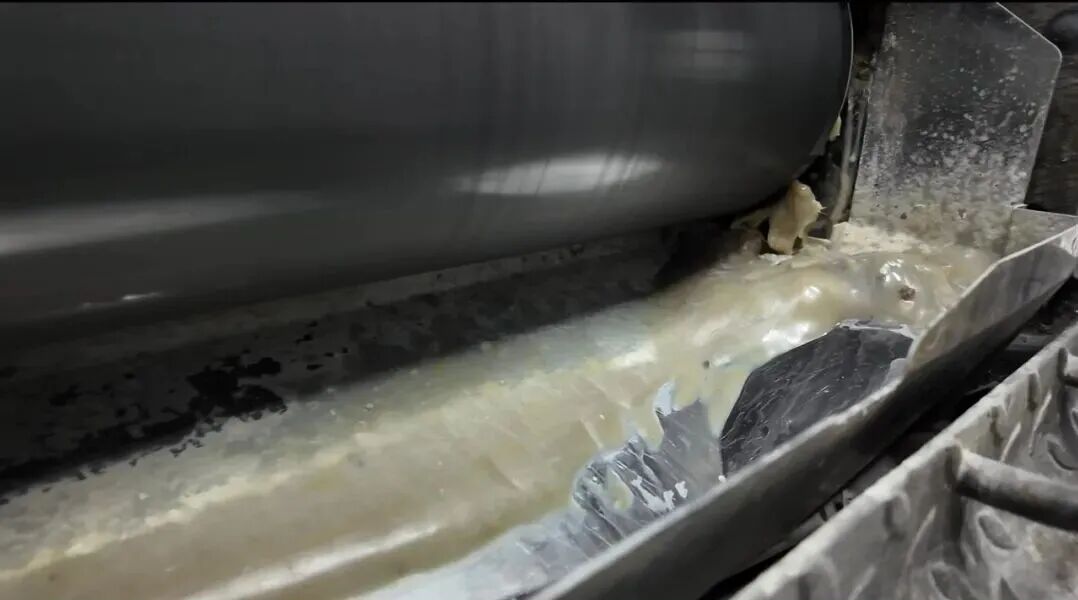 Figure 1 Original Working State
02/ Main Problems
(1) Incomplete cleaning, residue accumulation leading to cross-contamination;
(2) Increased equipment maintenance time, affecting production rhythm;
(3) Long-term accumulation may block pipelines or affect the stability of water-oil circulation;
(4) Large amounts of cleaning agents used, not meeting green production requirements.
Optimization Plan: Butter and Stretch Film
Physical Isolation Method
The core idea of this plan is not to directly confront the issue of hardening but to adopt a "prevention first, isolation protection" strategy. That is, to form a removable physical protective layer on the surface of the return oil tank (as shown in Figure 2), blocking direct contact between water-oil and the tank, thus preventing hardening. The specific operation process is as follows.
01/ Step One: Apply Butter Evenly
Before starting printing operations or during shift changes, use a clean brush or scraper to evenly apply a thin layer of butter on the inner wall of the return oil tank. The butter fills micropores and forms a lubrication film, preventing water-oil from penetrating the metal surface, thereby reducing adhesion.
02/ Step Two: Cover with Stretch Film
On the butter-coated return oil tank, cover it entirely with transparent stretch film (cling film); requirements: pull tight, adhere smoothly without wrinkles, fix the edges with tape to ensure sealing; the stretch film completely isolates water-oil from the tank.
03/ Step Three: Post-Printing Handling
After the printing task is completed and the machine is stopped, directly remove the top layer of stretch film; the hardened water-oil and residue are peeled off along with the film, leaving the return oil tank basically clean; after cleaning, the tank only requires a simple wipe before being covered with a new stretch film for the next printing job.
Key control points of this plan: the butter must be applied evenly in a thin layer to avoid excessive thickness that may cause contamination or affect circulation; the stretch film should be industrial-grade, moisture-resistant, and high in tensile strength; check for damage or bubbles after covering to ensure complete isolation; remove the film gently to avoid tearing residues.
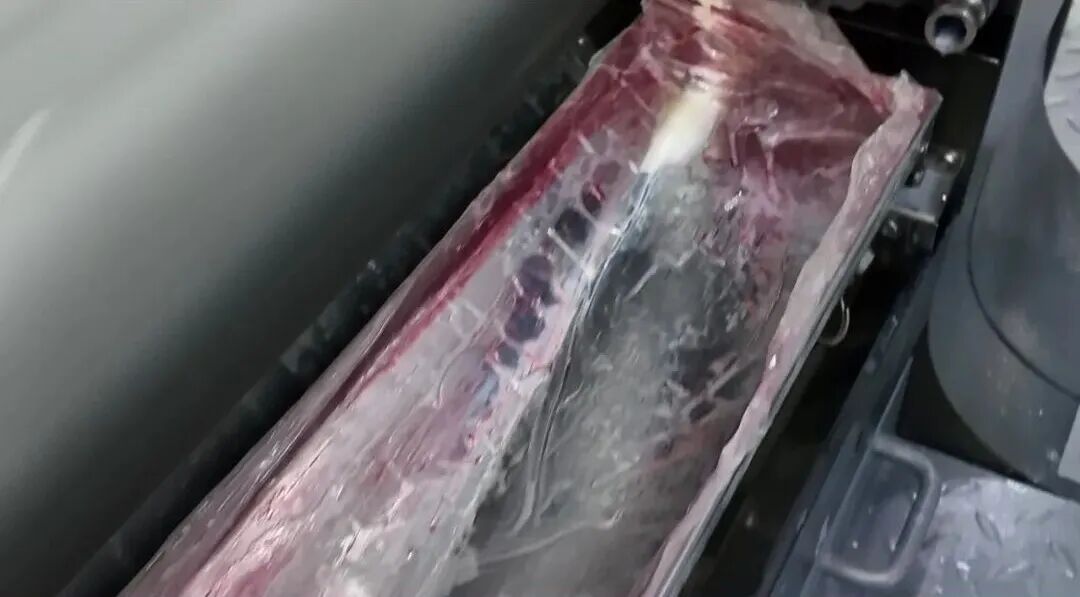 Figure 2 New Physical Isolation Method
Implementation Effects and Advantages
After the current renovation, good results were achieved in seven aspects, as detailed in Table 1:
Table 1 Renovation Implementation Effects
| Item | Before Optimization | After Optimization |
| Cleaning Difficulty | High, requires scrubbing and scraping Very low, cleans in one peel |
| Cleaning Time | 30~60 minutes/time | 3~5 minutes/time |
| Cleaning Thoroughness | Unstable, prone to residue | High, virtually no residue |
| Equipment Contamination Risk | High | Significantly reduced |
| Solvent/Cleaner Usage | Heavy use | Basically none |
| Operational Safety | Risk of scratches | Safe, no contact |
| Environmental Friendliness | Poor, large amount of waste liquid | Green, low pollution |
Overall, the "Grease + Stretch Film Physical Isolation Method" has five core advantages:
(1) High efficiency and time-saving: greatly shortens cleaning time and improves equipment utilization;
(2) Equipment protection: avoids corrosion by chemical cleaners or mechanical scratches;
(3) Cost reduction: reduces cleaner consumption and labor costs;
(4) Environmentally friendly: aligns with green printing and sustainable development;
(5) Strong replicability: simple operation, easy to apply to other units or models.
Technical Principles and Innovations
01/ Technical Principles
(1) Interface isolation principle: uses stretch film for physical barrier, blocking contact between water/oil and metal;
(2) Low surface energy adhesion: grease layer lowers surface tension, making water/oil difficult to wet or adhere;
(3) Peelable dried residues: dried water/oil only attach to film surface, easy to remove entirely.
02/ Innovations
Transforms 'passive cleaning' into 'active protection,' with an advanced concept; utilizes common materials (grease + stretch film) to solve complex problems with low cost and fast results; achieves a closed-loop management of 'protect when in use, clean after use.'
This optimization of Heidelberg printing press return oil tank cleaning process, through the innovative method of 'coating with grease + stretch film isolation,' successfully resolved the common industry problem of difficult-to-clean dried water/oil. The scheme is simple to operate, low-cost, and effective, achieving a shift from 'post-cleaning' to 'pre-protection,' greatly improving equipment maintenance efficiency and printing stability.