


It takes a trick! The hot stamping process of cigarette packs has been improved, making it easy to improve quality and efficiency
Industry perspective: multiple challenges and opportunities in cigarette pack production
As the image business card of tobacco products, cigarette packs carry the important task of brand communication, and their visual effects will directly affect consumers' purchasing decisions. This requires cigarette packs not only to have high-end craftsmanship quality, but also to have excellent recognition and certain anti-counterfeiting performance. The electrochemical aluminum hot stamping process transfers the electrochemical aluminum foil with a metallic texture to the surface of the printed matter by precisely controlling the temperature and pressure, and its characteristics perfectly meet the needs of cigarette packs for technology, recognition and anti-counterfeiting performance, so they are widely used in the production of cigarette packs.
As an important subdivision of packaging printing, cigarette pack printing has the characteristics of large production batches and high quality standards. Under the guidance of the policy of "strict conservation and opposition to waste", the tobacco industry has been deeply involved in improving quality, reducing costs and increasing efficiency for many years, and has now entered the stage of overcoming difficulties. In this regard, cigarette pack printing companies urgently need to deeply tap their own potential through technological innovation and optimization of process flow to cope with multiple challenges such as upgrading customer demand and increasing cost pressure.
At present, the hot stamping process of cigarette packs mainly presents four major characteristics: many hot stamping points, fine hot stamping patterns, rich and diverse hot stamping materials (such as plain foil, laser foil, anti-counterfeiting foil, etc.), and a variety of processes (such as hot stamping first and then offset printing, first hot stamping and then screen printing, etc.). With the comprehensive application of QR code technology in cigarette pack printing, customers have put forward higher requirements for process accuracy and delivery timeliness. In this context, how to achieve the efficient utilization of electrochemical aluminum materials and the steady improvement of production efficiency has naturally become the core concern of enterprises in the hot stamping process.
Problem analysis: The material waste dilemma of direct pull method in special situations
The amount of electrochemical aluminum is mainly determined by the width of the electrochemical aluminum and the jump length of the electrochemical aluminum. Under the conventional direct pull method, the width of electrochemical aluminum = the width of the hot stamping pattern The margin on both sides (the margin on both sides refers to the width of the electrochemical aluminum that is 6~10mm wider than the hot stamping pattern in order to prevent the swing of the electrochemical aluminum during production and the hot stamping on both sides of the pattern is incomplete). However, when the hot stamping pattern is narrow (as shown in Figure 1, the "square" hot stamping pattern is only 7mm wide), and the hot stamping process needs to run at a high machine speed of 6000 sheets/hour, the width of the electrochemical aluminum must be increased to more than 20mm in order to ensure that the electrochemical aluminum baked at high temperature does not have abnormal conditions such as aluminum foil deformation, hot stamping weight or even foil breakage during the pressure drive of the foil feeding wheel.
Referring to the above data (not considering the jump step of electrochemical aluminum for the time being), the utilization rate of electrochemical aluminum is [(7 10)/20]× 100%=85% according to the allowance of 10mm on both sides. If the allowance on both sides is calculated as 6mm, the utilization rate of electrochemical aluminum is only [(7 6)/20]×100%=65%.
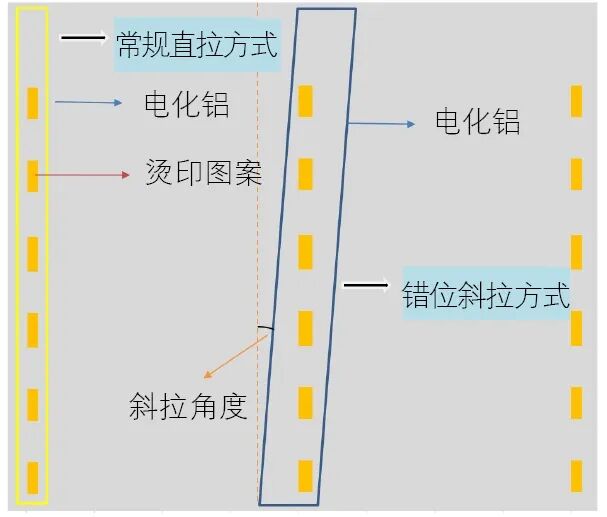
Figure 1 Examples of Conventional Straight Pull Method and Staggered Diagonal Pull Method
The improvement of the electrochemical aluminum diagonal pull process is a customized method of aluminum handling designed for special situations with relatively narrow hot-stamped patterns. It aims to increase the utilization of electrochemical aluminum while ensuring the smooth operation of the hot stamping process. As shown in the "Staggered Diagonal Pull Method" in Figure 1, by adjusting the diagonal direction of electrochemical aluminum on the hot-stamping honeycomb plate, the aluminum is converted from the conventional straight pull method to the diagonal pull method. This allows the cleverly utilization of the leftover space on the side after the diagonal pull for staggered hot stamping, thereby achieving more efficient utilization of the electrochemical aluminum.
Verification and Implementation: Data Comparison Before and After and Practical Experience Sharing
Figure 2 visually shows the layout of single-row flat hot-stamping positions on several cigarette package products, as well as a comparison of the actual hot-stamping effects of electrochemical aluminum under the conventional straight pull and staggered diagonal pull methods. Table 1 provides a detailed data comparison, further verifying the differences in electrochemical aluminum usage for several products when using the conventional straight pull versus the staggered diagonal pull methods, providing solid data support for the effectiveness of this improvement.
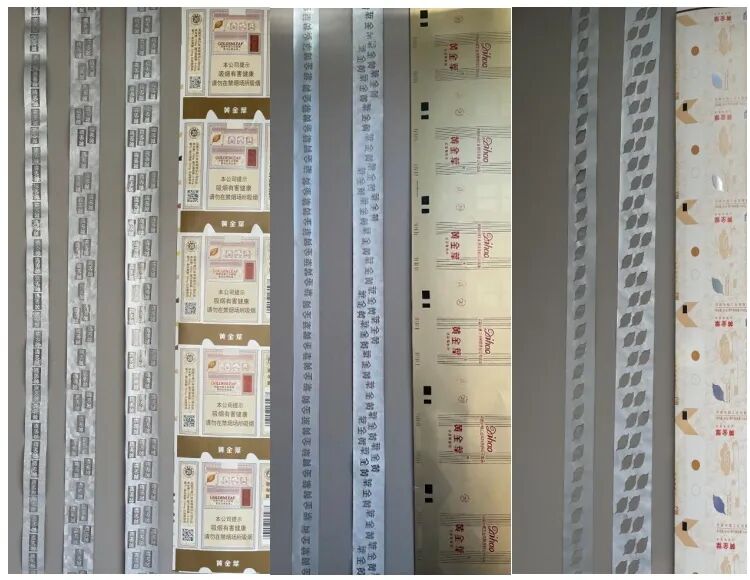
Figure 2 Embossing positions of various cigarette pack products and effect diagrams of conventional straight pull and staggered diagonal pull
Table 1 Aluminum foil usage and comparison between conventional straight pull method and staggered diagonal pull method

In practical operation, the number of misalignments in offset slant hot stamping is not fixed, but needs to be adjusted according to the utilization rate of electrochemically deposited aluminum and the actual hot stamping effect. Figure 3 presents a comparison of the application effects of different numbers of misalignments for multiple products during offset slant hot stamping. It can be seen that an increase in the number of misalignments is accompanied by a widening of the aluminum foil and an increase in the inclination angle. While this can improve the utilization rate of the aluminum foil to some extent, when the equipment operates at high speed, the likelihood of folded edges, wrinkling, swinging, and overprinting (mostly lateral overlap between misaligned patterns) also correspondingly increases. Therefore, it is necessary to comprehensively consider various factors, balance the utilization rate of aluminum foil with smooth stamping operation, and ensure the optimal production outcome.
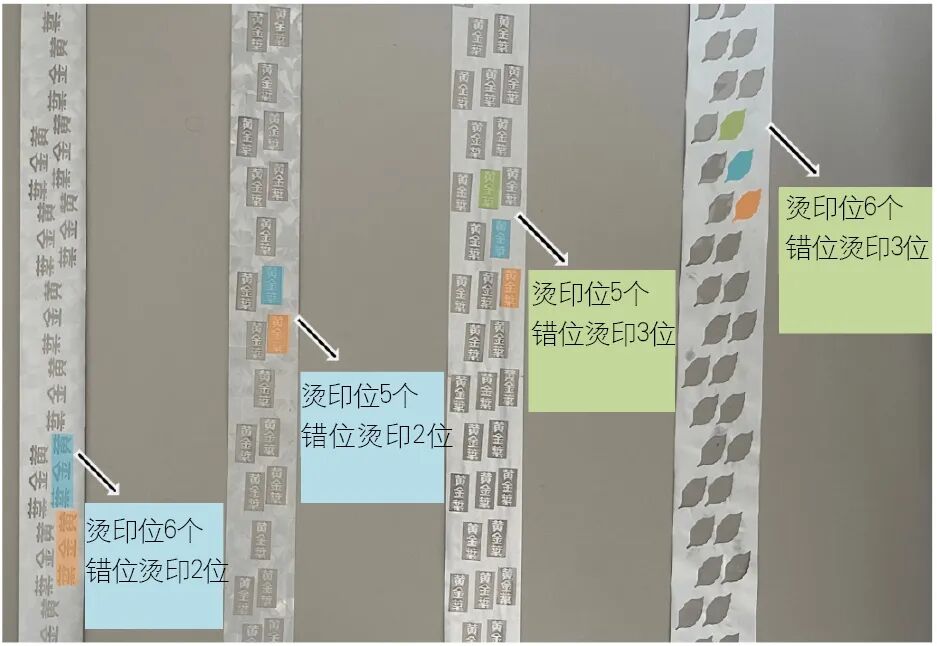
Figure 3 Comparison of the application effects of multiple products with different numbers of misaligned positions during skewed hot stamping:
In terms of step calculation, although the calculation method for aluminum foil skewed stamping differs from the conventional straight stamping, the core principle is the same. When calculating steps, you only need to subtract the number of misaligned stamping positions from the original number of stamping positions to get the number of stamping positions in the skewed stamping method. The original stamping pattern length and the original spacing between stamping positions remain unchanged and steps are still calculated according to the conventional straight stamping method. As for the horizontal spacing between the two misaligned stamping positions, it can be adjusted by fine-tuning the skew angle of the aluminum foil.
It should be noted that since the aluminum foil step (denoted as a) is calculated based on the straight stamping mode, the preset aluminum foil step length (a) will deviate from the actual running aluminum length (denoted as c) when operating in the skewed mode:
Let the skew angle be A, then a = c × cosA. When A = 0, a = c; when A > 0, c > a.
This deviation can cause the actual stamping results on the aluminum foil to differ from the expected effect set during step calculation. In this case, operators need to repeatedly try and adjust the original stamping pattern length, spacing between stamping positions, vertical spacing of stamping patterns, and other data according to the stamping results on the aluminum foil, so that the parameters such as stamping spacing and step length simultaneously meet the operational requirements of the stamping process, ensuring product quality stability and smooth production processes.
Innovation is not out of reach; it is hidden in every detail of daily production. A spark of inspiration or a slight adjustment in the process can bring significant changes. Innovation is the core driving force and competitive cornerstone of enterprise development. We should encourage employees to continuously explore, accumulate small innovations into major breakthroughs, and work together to advance the enterprise and the industry to new heights.