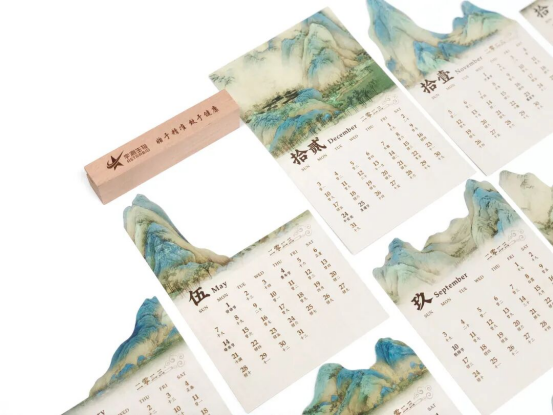
Don't slack off on year-end marketing! Personalized calendars can easily help you rake in hundreds of thousands
 新年
Does a desk calendar not only have practical value but also reflect brand characteristics and personal taste? Today, let's take a look~
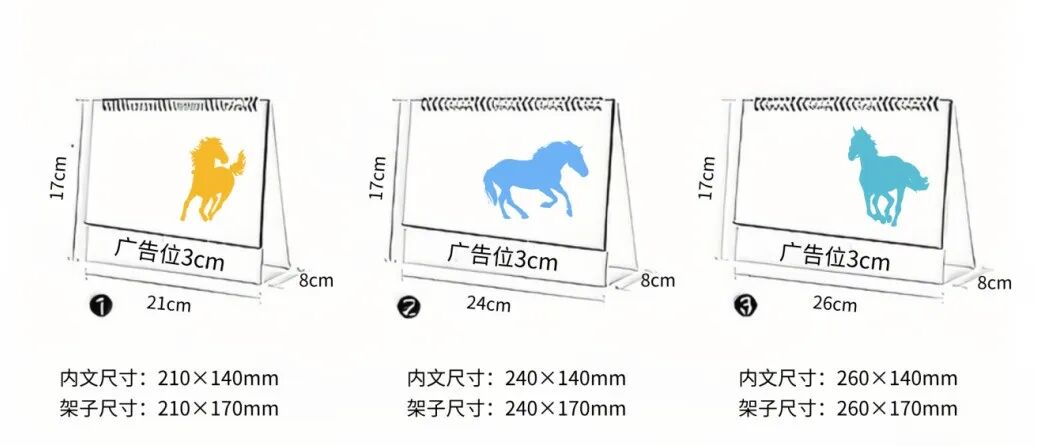
Specifications and Sizes
The choice of desk calendar size directly affects its usability and visual appeal. Depending on different usage scenarios and needs, the following are some commonly used and suitable sizes.
Number of Pages in a Desk Calendar
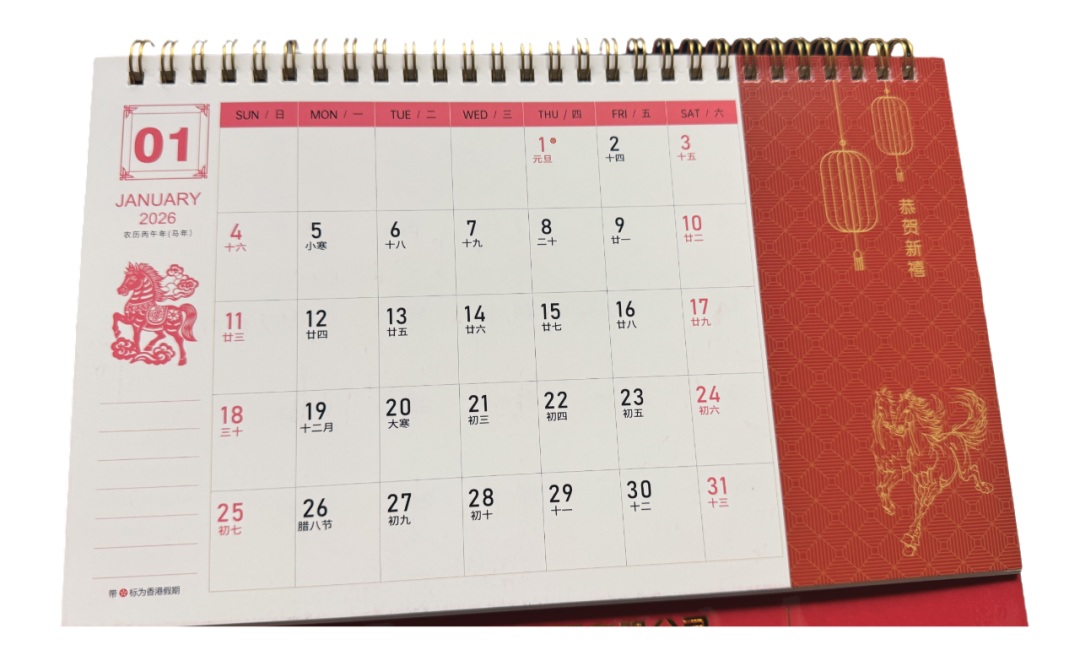
Desk calendar pages are usually divided into: weekly, semi-monthly, monthly, and bi-monthly. Including the cover, this corresponds to 52, 25, 13, and 7 pages, and you can add extra pages based on the actual content.
Paper Material
When printing a desk calendar, you can choose paper with a weight between 105–300g/m². However, when deciding the thickness, be sure to consider the number of pages. For a 52-page weekly calendar, it's not recommended to choose paper over 200g/m², otherwise the coil might not fit well. For a 7-page bi-monthly calendar, try to avoid paper under 157g/m², as it will feel too thin. For a 25-page semi-monthly calendar, if you go with 300g/m² paper, don't use a triangular stand, otherwise it will be top-heavy and unstable. You can choose coated paper, art paper, or matte paper.
Common Techniques
01
Cover UV Printing
This process involves applying a layer of colorless transparent coating on the surface of the cover, creating a thin and even shiny layer. It not only protects the printed content of the calendar, making it resistant to corrosion and friction and less prone to scratches, but also gives the calendar a three-dimensional look, greatly enhancing its visual appeal.

02
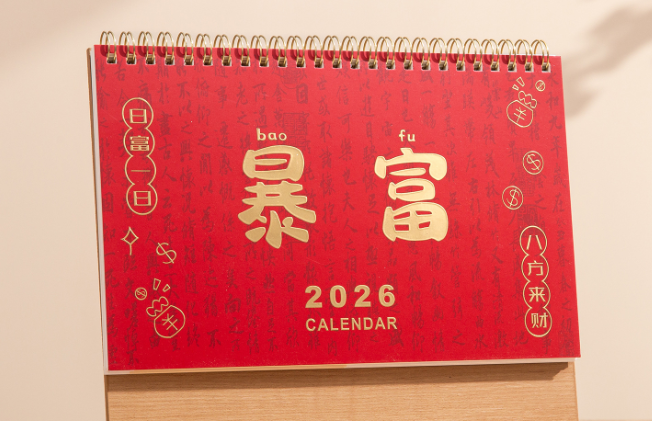
Gold Printing on Covers
Gold printing refers to a process where special techniques are used to apply special metallic powders to specific areas of product packaging or labels to achieve a metallic shine. Unlike foiling, the gold printing process is simple, low-cost, and perfect for covering large areas.
03
Embossing Process
Embossing is a technique that uses molds with raised and recessed patterns to create plastic deformation on printed materials under a certain amount of pressure, giving the surface an artistic touch. After embossing, the surface of the printed material shows patterns and textures of varying depth, giving it a clear 3D embossed feel.
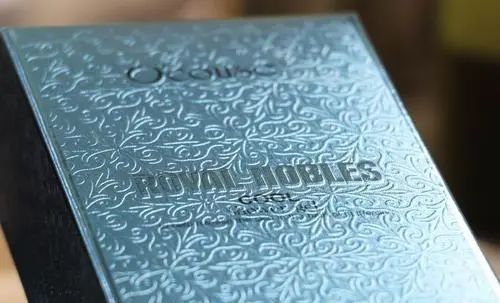
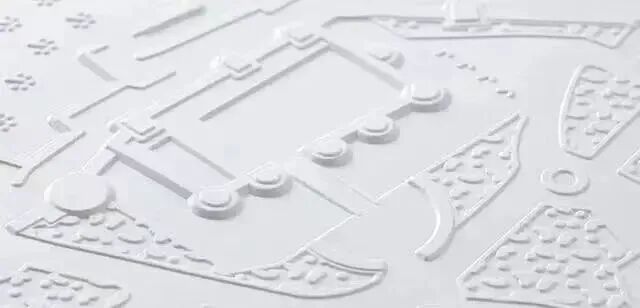
04Embossed Cover Technique
This involves using a closely matched pair of a recessed plate and a raised plate to sandwich the cover. Under a certain pressure, the surface of the cover forms patterns or text similar to those on the raised plate. Unlike debossing techniques, embossing usually only applies to text, images, etc., and the height of the embossing depends on the thickness of the packaging material.
05
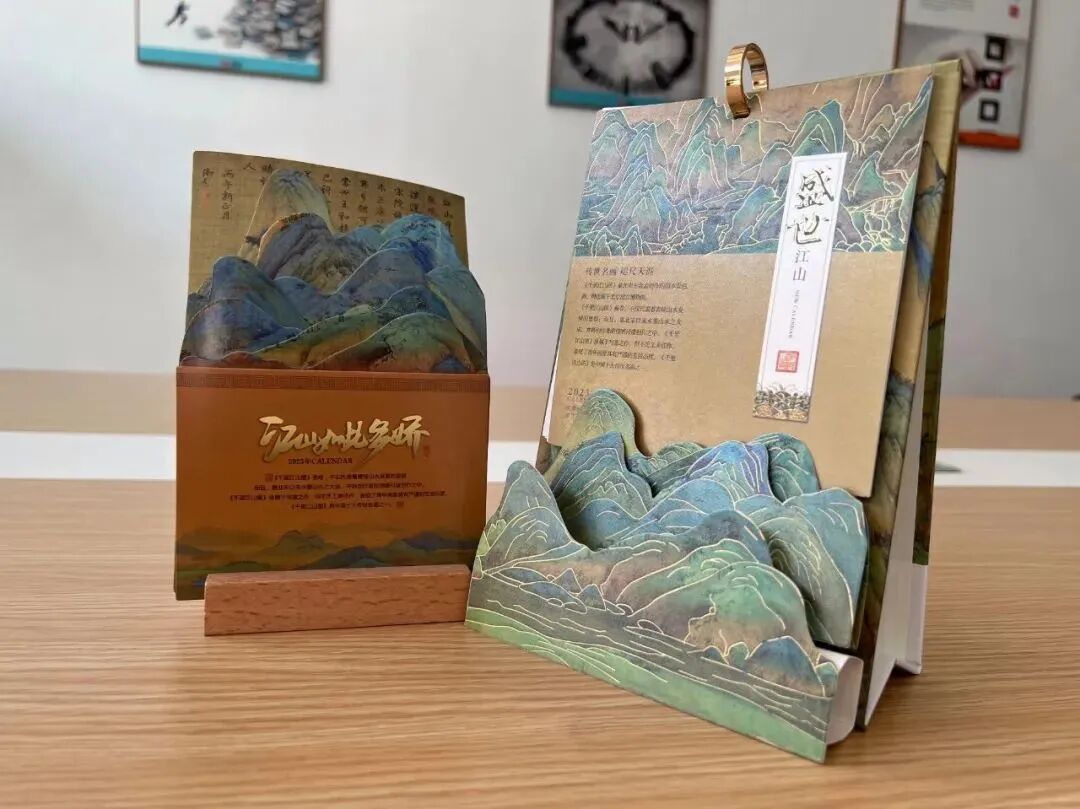
3D Cover
The upcoming flat printed graphics are combined through folding or sticking, making the desk calendar more three-dimensional. Compared to a flat cover, it offers a unique way of presenting information and is more versatile than a traditional desk calendar.
06
Cover Lamination
Cover lamination is a process where a plastic film coated with adhesive is bonded to the cover through heat and pressure. After lamination, the cover surface becomes smoother, with better gloss and color durability. The images and text appear more vibrant and three-dimensional, and the cover also gains water, stain, wear and tear, and corrosion-resistant properties.

07
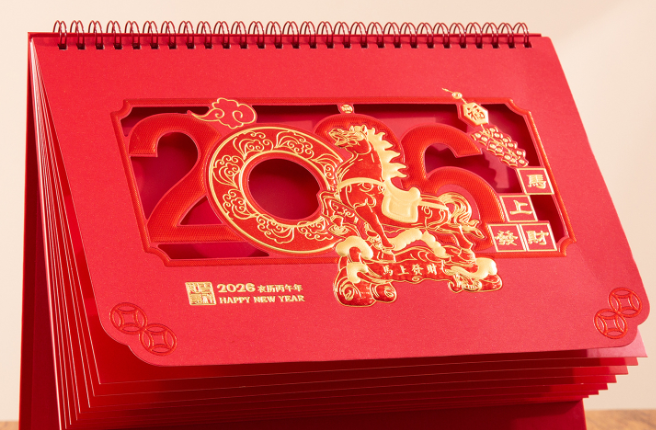
Hollowed Cover
This refers to hollowing out a specific spot on the cover to reveal part of the second page underneath. By using techniques like borrowing the scene or changing the scene, the pages of the calendar can connect organically, guide the viewer's visual focus, increase reading interest, and also enhance the aesthetic appeal of the calendar pages, making the overall expression of the calendar more dynamic.
08
Custom-shaped covers
The shape of a desk calendar isn't limited to rectangles; it can be cut into any shape. Custom die-cutting allows clients to fully unleash their imagination, creating a unique corporate culture and boosting brand awareness.