


Summary of Common 'Difficult Problems' in the Processing of Film-Type Self-Adhesive Labels
With the continuous development of China's economy, self-adhesive labels are becoming more and more widely used in various product packaging fields. In recent years, people's requirements for exquisite packaging and appearance have become higher and higher, and the amount of film self-adhesive materials has also increased. Film self-adhesive materials are different from paper self-adhesive materials, which have higher requirements for processing technology and are prone to some problems during processing. Here are some common problems and solutions in the processing of film self-adhesive labels.
Printing ink drops
1
Poor surface coating
The surface tension of film materials is low, and it needs to be coated before being made into self-adhesive raw materials, and poor coating will lead to ink loss in printing. It usually manifests as a large area of ink peeling off, especially during tape testing, where the surface ink will stick to a large area by the tape. At this time, the raw material supplier needs to replace a batch of qualified materials, or the printing company needs to print another layer of primer oil to increase surface tension, but it will increase the cost.
2
Poor matching of ink and material
Ink drops caused by this usually appear in patches or sporadic. Considering factors such as material costs and customer needs, it is not possible to replace materials. At this time, the ink supplier can find out which ink matches the material. At the same time, printing factories can also take some auxiliary measures, such as corona treatment of materials in advance.
3
Corona has a poor effect
The ink loss of the film material is related to the surface energy of the material, the stronger the surface energy, the stronger the ink adhesion, and vice versa. However, the corona effect will decay over time, and ink may fall off during printing. This phenomenon is more common in cheap BOPP and PE materials, which are corona treated by most manufacturers considering the high coating cost. In such a situation, the manufacturer or supplier should re-corona before pressing.
4
UV Drying Issues
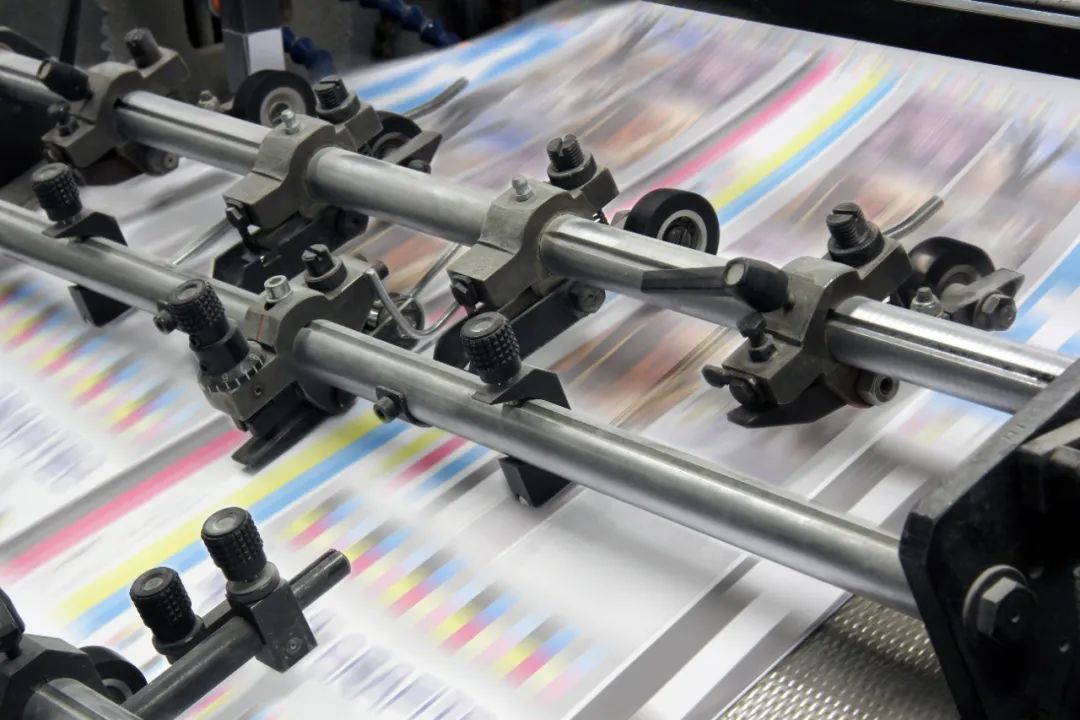
Most adhesive materials use UV ink for printing, so incomplete drying can lead to ink smudging. This issue usually appears as one or two colors smudging and can be resolved by increasing the UV lamp power or replacing the UV lamp tube.
Printing Inconsistencies, Blurriness, and White Spots
1. Material Surface Flatness
Generally, the surface flatness of film materials is better than that of paper materials. However, some special materials, such as thermal synthetic paper with a thermal coating, may cause printing inconsistencies or blurriness. This is due to poor coating flatness, which can be seen as densely packed white spots when magnified. In this case, applying a primer ink on the material surface can improve flatness.
2. Dust
Dust on the material surface can cause white spots during printing. Dust can originate from various sources, commonly from fibers generated during slitting or from the material itself shedding powder. This usually appears as a small number of large white spots, and over time, dust accumulation can increase the number of white spots. To address this, a dust removal cloth can be added before the printing unit, and for strict or large area solid-color products, a primer ink can be printed before the first color group to prevent white spots.
3. Printing Pressure
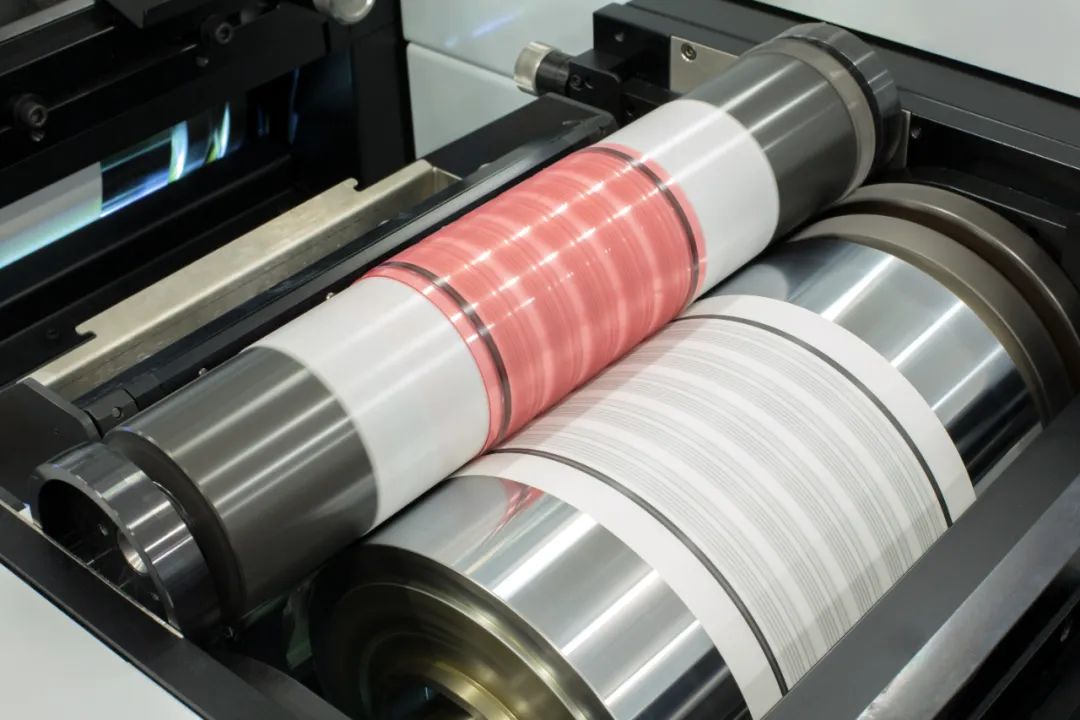
The printing pressure directly affects printing quality. Excessive pressure may cause image distortion, while insufficient pressure can result in printing inconsistencies or blurriness. This usually appears as a regular pattern of poor printing, which disappears when the printing pressure is increased.
Large Printing Color Difference
1. Color Difference of Film Substrate
Color differences between different batches of film substrates are inevitable. After printing, the reflection of light can make the color difference more noticeable. In this case, the only solution is to replace the material. There is no film material with absolutely no color difference, so when developing new products, the upper and lower limits of label color should be agreed upon with the customer and the acceptable color difference range confirmed to avoid potential risks.
2. Difference in Ink Absorption on Substrate Surface
Even film materials from the same batch can show color differences when printed. This is due to differences in ink absorption caused by instability in the surface energy of the material. For materials with color differences, the size of the dots on the surface layer will vary after printing. In this case, an undercoat can be applied, but ultimately the raw material needs improvement.
3. Difference in Substrate Flatness
The flatness of the material directly affects the reproduction of printing dots, which can lead to color differences. The printing color differences caused by this phenomenon show obvious dot size variations. In this case, an undercoat ink can be applied first, and if it still cannot solve the problem, material replacement should be considered.
Misregistration in Printing
1. Printing Tension Settings
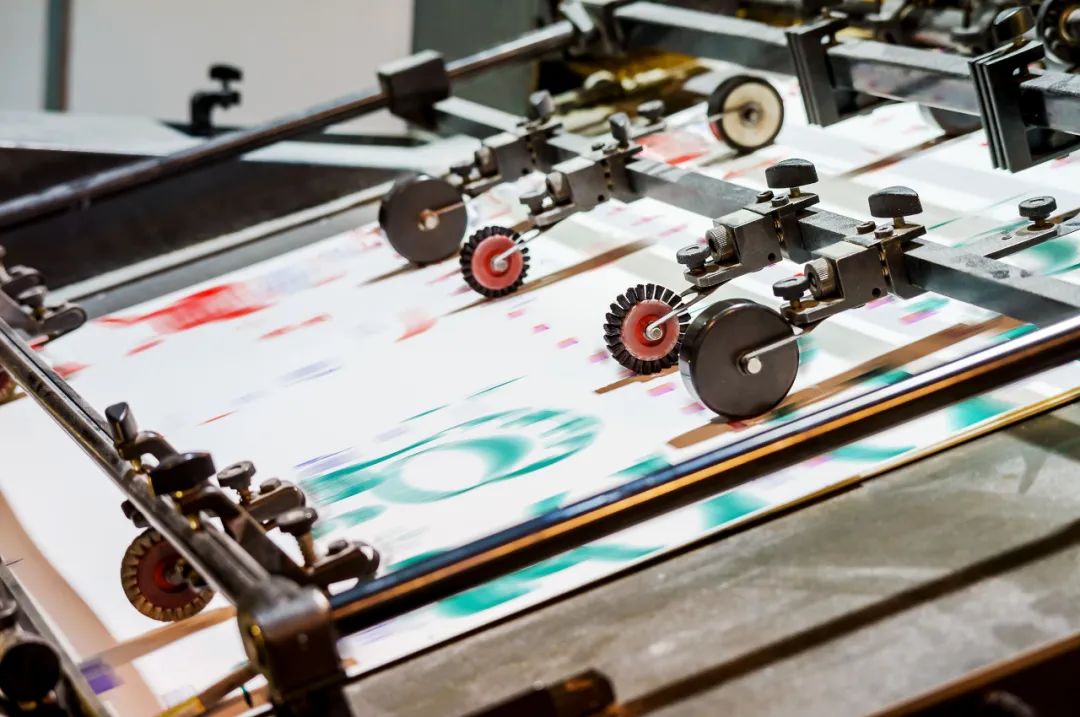
The printing tension directly affects the registration accuracy of film-type materials. If the tension is too low, the relaxed material will show registration errors; conversely, if the film material is stretched, it will also affect registration accuracy. Therefore, when printing film-type self-adhesive materials, the printing tension should be set to the minimum value that ensures registration accuracy.
2
UV lamp temperature is too high
Film materials are obviously affected by temperature, and if the UV lamp temperature is too high during printing, it will deform the film material and affect the overprinting accuracy. The UV lamp power can be reduced to reduce its temperature. However, in actual production, it is often more contradictory, the power of the UV lamp is high, the material is deformed, and the overprinting is inaccurate; The power of the UV lamp decreases, and the overprinting is accurate, but the ink is not easy to dry. Therefore, it is necessary to solve problems comprehensively, such as priming ink, choosing inks suitable for materials, or changing the printing color sequence, first printing inks that are not easy to dry, etc.
3
Poor material slitting
The end face of the material is uneven, and there will be overprinting and running during printing. If the width of the material is sufficient, secondary slitting can be carried out, and 2mm can be cut off on both sides; If the material width is not enough, the material can only be replaced.
4
The material tension is inconsistent
Film materials are very sensitive to tension, if the tension at both ends of the material is inconsistent, it is easy to deviate during printing and cause inaccurate overprinting. Usually if one end of the material is flat and the other side is tight, ruffles will appear. At this time, it is recommended to use a continuous paper pass printing machine with correction equipment to reduce overprinting accuracy.
5
Material thickness error
There is a deviation in the amount of glue coated by self-adhesive materials, and sometimes the amount of glue coated has a large deviation, which will cause thickness errors at both ends of the material, causing printing deviations and affecting the accuracy of overprinting. At this time, it is necessary to replace the material or change the material to a smaller one.
Die-cut overflowing glue
1
The glue is too thick or too soft
The glue is too hard and not easy to overflow, but it will reduce the fluidity and stickiness; If it is too soft, it is easy to spill glue. Generally, the coating amount of film self-adhesive material glue is 16g/m², and excessive amount often causes glue overflow. Therefore, it is recommended to choose this type of material to pay attention to these two points.
2
The tension of the winding is too great
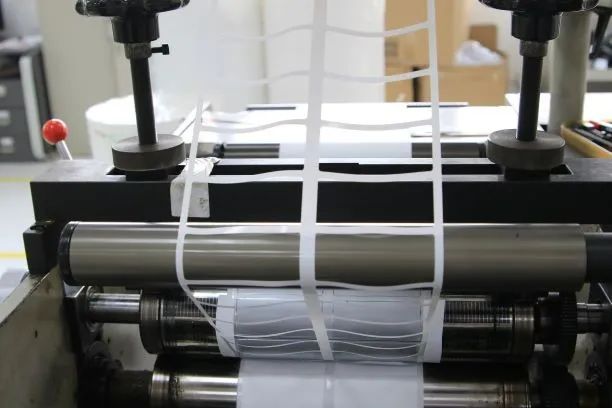
The bonding force between film materials and glue is poor, and when the winding tension is too large, it is easy to cause glue overflow on all sides of the label. At this point, the winding tension needs to be reduced.
3
Die cutter problem
Sometimes there is a glue overflow on one or both sides of the label, most of which is caused by the die cutter, such as severe wear on some parts of the die cutter. At this time, the die-cutting knife bar needs to be replaced.