


Deeply analyze the factors behind the curling of cigarette inner liner paper-grasping these points is crucial!
Cigarette inner liner paper is the packaging paper used on the inside of soft or hard cigarette packs, and it is an important type of cigarette packaging material. As the initial packaging layer of cigarettes, its main functions are to preserve fragrance, maintain moisture, block light, and act as a barrier, while also enhancing the aesthetic appeal of the cigarette. With the continuous development of the tobacco industry, the production processes for packaging materials have been constantly increasing, the variety keeps growing, and the quality keeps improving. Inner liner paper can be classified by material into aluminum foil composite liner, direct-coated liner, direct-coated transfer liner, composite transfer liner, and non-aluminum liner; by color into gold, silver, and white liner; by embossing process into normal liner and transfer liner; and by weight into 52g/m², 57g/m², 62g/m², 80g/m², and 90g/m² liners.
In cigarette production, the runnability of the liner paper directly affects the quality of the cigarette product and production efficiency. Flatness and smooth feed are key indicators for measuring the runnability of liner paper. How to produce flat liner paper with strong machine suitability has always been the goal for liner paper manufacturers.
Analysis of the factors causing liner paper curling
The basic raw materials of inner liner paper are paper, aluminum foil, adhesive, ink, direct-coated aluminum, or laser direct-coated aluminum. The simplest liner paper consists of four parts: paper, adhesive, aluminum foil, and ink, as shown in Figure 1.
 Figure 1 Schematic of Inner Liner Paper Cross-Section
The main component of the liner paper is ultra-fine wood fiber. During the papermaking process, fillers are added, and adhesives are used to bind the fibers and fillers together. After multiple pressing processes, the inner liner paper is formed. During pressing, tiny pores exist between the wood fibers, fillers, and adhesives, and these pores retain some moisture. As environmental temperature and humidity change, the pores absorb and release moisture to the air. Normally, the moisture content of liner paper is 5.0%±1.5%. If the moisture content is too high, the inner liner paper wrinkles when rolled; if too low, the paper's elongation decreases, crack resistance drops, and it is prone to tearing during use.
Aluminum foil serves as the surface layer of the liner paper. It is smooth, has some metal ductility and metallic luster, and a thickness of 0.006mm. It has excellent ink adhesion and is minimally affected by environmental temperature and humidity. Ink is a resin liquid dispersed with colored powder, available in water-soluble and oil-soluble types, and is printed on the aluminum foil surface to enhance the visual appeal of the liner paper.
The main function of the adhesive is to bond the liner paper and aluminum foil together. Adhesives are divided into wet composite adhesive and dry composite adhesive. Wet composite adhesive mainly consists of acrylic emulsion, while dry composite adhesive mainly includes base resin, curing agent, diluent, and other additives. The base resin usually uses polymers such as polyurethane, polyester, or acrylic, which have good stickiness and adhesion. The curing agent chemically reacts with functional groups in the base resin to cure the adhesive into a film, significantly affecting the curing speed, extent, and strength of the adhesive. The diluent mainly adjusts viscosity and improves flow, enhancing the adhesive's penetration and wetting.
Among the components of liner paper, adhesives, aluminum foil, and ink are relatively stable and less affected by the environment; the paper itself is more affected, showing noticeable changes. Changes in paper moisture are the main cause of inner liner paper curling, followed by slitting tension.
01/ Changes in Paper Moisture
The fibers, the main component of the paper, are sensitive to changes in environmental humidity. Individual fibers swell when absorbing moisture or shrink when losing moisture, causing changes in fiber shape and, consequently, paper dimensions. For individual fibers, changes in humidity cause less than 1% change in fiber length, but up to 20%–30% in the radial dimension.
When the inner liner paper absorbs moisture, the paper surface expands while the aluminum surface remains relatively stable. Based on the bimetallic strip principle, the liner paper bends toward the aluminum side (see Figure 2). When the inner liner paper releases moisture, the paper surface contracts, and the paper bends toward the paper side (see Figure 3). Moisture is the main factor affecting the transverse curling of inner liner paper.
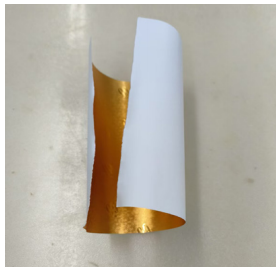
Figure 2 Lateral Aluminum Surface Bending
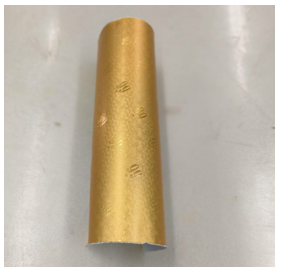
Figure 3 Lateral Paper Curling
02/ Slitting Tension
If the slitting tension of the liner paper is too high, it stretches as a whole, loses tension, while the aluminum foil remains unchanged. The liner paper shrinks, causing the inner liner paper to curl along the lengthwise direction of the paper, as shown in Figure 4.
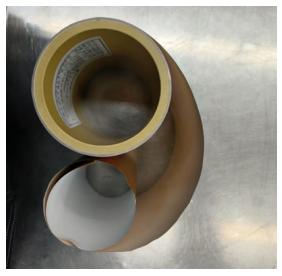
Figure 4 Longitudinal Paper Surface Curling of Liner Paper
Measures to Prevent Liner Paper Curling
Curling of cigarette liner paper is inevitable; it can only be mitigated, not completely eliminated. As someone who has been involved in liner paper production for over 30 years, I'd like to share five ways to prevent liner paper from curling.
01/ Strictly Control Moisture
During production, test the moisture content of the liner paper in advance, and then strictly control the oven temperature, machine speed, glue amount, and ink application according to the performance of the production equipment and environmental temperature and humidity. Maintain steady-speed production and ensure the finished product moisture is 5% ± 2%. This can effectively control liner paper curling. This method is low cost, but when environmental temperature and humidity change, it is difficult to maintain consistent moisture.
02/ Increase Back Coating
Add a back coating during production to seal the back of the product and prevent moisture exchange between the product and the environment. This method is relatively more expensive, but the product quality is stable, moisture does not change significantly due to storage conditions, and the product has good stability and adaptability on the machine.
03/ Increase Embossing Process
During product design and development, if not specifically stated otherwise, use embossing whenever possible. This changes the physical properties of fibers in specific areas and reduces product shrinkage. Embossing patterns generally include regular mesh, mesh with text, or designs. After embossing, the fibers inside the liner paper are compressed and displaced, forming raised areas like grid walls and recessed areas like grids. The raised parts act like reinforcements, increasing strength and preventing curling. The physical characteristics change too; once the pressure is removed, compressed areas are less likely to return to their original state, so deformation is greatly reduced, shape retention improves, curling decreases, and product usage is stable.
Embossing is low-cost, keeps product characteristics stable, is less affected by environmental temperature and humidity, and is widely used. Over 95% of liner papers use this process.
04/ Reduce Slitting Tension
During slitting, tension is added to the liner paper roll, stretching the aluminum foil, ink, adhesive, and liner layers simultaneously. The liner stretches, fibers lengthen and thin, lose tension, and shrink longitudinally, returning to their original state. The aluminum foil lengthens, thins, and due to its ductility, retains its stretched state once the tension is gone.
When liner paper is used on cigarette machines, it is usually cut every 125mm; each cut effectively releases the tension, causing the inner liner layer to shrink longitudinally while the foil remains unchanged, leading the liner paper to curl towards the paper side. Therefore, reducing slitting tension can effectively control liner paper curling.
05/ Use Sealed Packaging
Use sealed bags for packaging so the paper can be used immediately. If it can't be used right away, keep it sealed to shorten exposure to air and reduce moisture exchange with the environment, lowering the risk of curling. This method is low-cost, but the production process must be strictly controlled to ensure the paper is flat and not curled before packaging.