


Cool tips for sticker labeling! Try this method to judge and set the labeling pressure!
Today,
let's revisit an old topic
and have another chat about
how to adjust the label pressing pressure when applying self-adhesive labels.
Self-adhesive labels, also known as pressure-sensitive labels, mean that the glue on the label needs to be pressed with a certain amount of force to form a good initial bond with the surface being labeled. So, how much force is actually considered necessary for labeling? This has long been a question for people in the labeling industry. Because different surfaces, different adhesives, different environments, different equipment, and different labeling speeds all require different pressing pressures, even a single label may need different pressures in different spots depending on the surface shape to meet labeling requirements. Overall, there isn't a standard force to measure the pressing pressure for self-adhesive labels.
If the pressing pressure is too low, problems like edge lifting, bubbles, or labels falling off can occur; if the pressing pressure is too high, it can cause wrinkles or a flared edge. In practical applications, when issues like lifting or bubbles appear, the problem is usually addressed by adjusting the pressing pressure. However, issues caused by too-low pressing pressure don't show up immediately-they often appear a few hours or even a day later. This is a real headache for labeling manufacturers and is often the biggest point of contention between label printing companies and labeling service providers. So, how should the pressing pressure for self-adhesive labeling be set? How can we tell if the pressing pressure during labeling is appropriate?
01
Labeling transparent bottles or with transparent labels
After labeling a transparent bottle, you can shine a strong light from the side onto the label's adhesive surface and look through the bottle to see how the adhesive connects with the bottle surface. This helps evaluate whether the pressing pressure is appropriate, as shown in Figure 1.
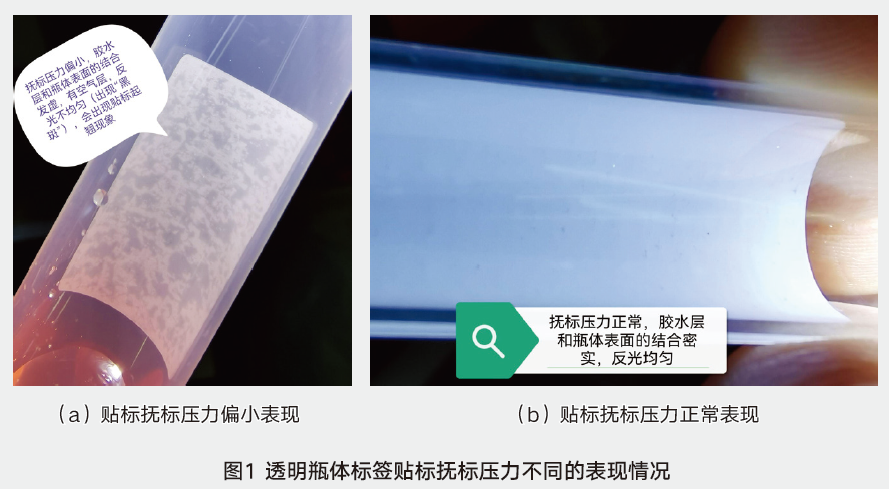
As shown in Figure 1(a), looking through the bottle, you can see that the bond between the glue layer and the bottle surface is weak, with air pockets and uneven adhesion. These air pockets cause uneven light reflection, resulting in 'black spots.' This problem is usually due to insufficient labeling pressure. To fix this, it's generally recommended to increase the pressure of the labeling device. As shown in Figure 1(b), looking through the bottle, the glue layer is tightly bonded to the bottle surface, and the glue's reflection is very even, which indicates that the labeling pressure is normal.
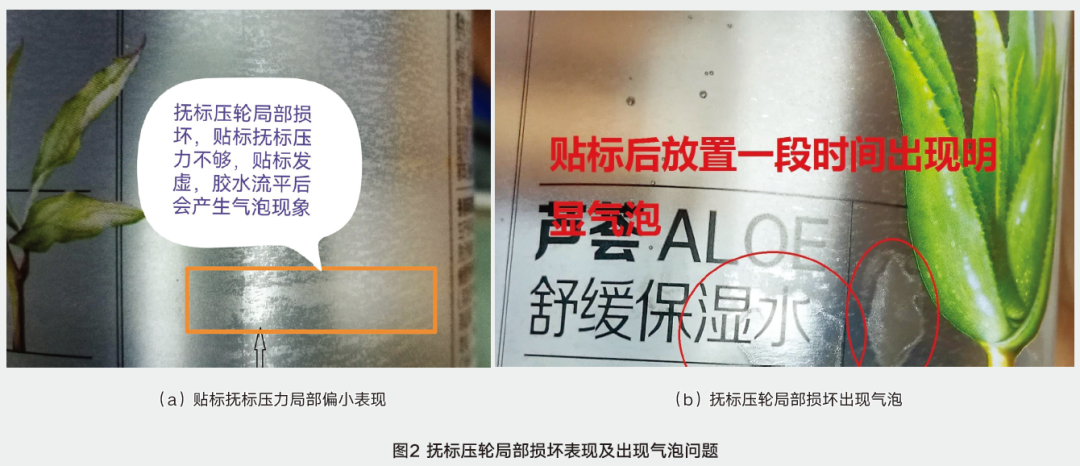
The labeling pressure is not only related to the structure of the labeling device but also to its aging and wear. As shown in Figures 2 and 3, part of the pressure wheel on the round bottle is damaged, leading to insufficient pressure in that area. This causes weak adhesion, air pockets, and after the glue levels out, bubbles may form in that spot. In such cases, it's recommended to replace the affected parts of the labeling device.
02Opaque bottle with opaque label
Since both the bottle and the label are opaque, you can't see how the adhesive is sticking to the bottle surface. At this point, you might consider using a transparent label to test the labeling effect and evaluate the baseline pressure for applying the labels. Once the testing is successful, switch back to the actual product you want to label and make any necessary adjustments. Using this method can help shorten the setup time for labeling while still ensuring good labeling results.
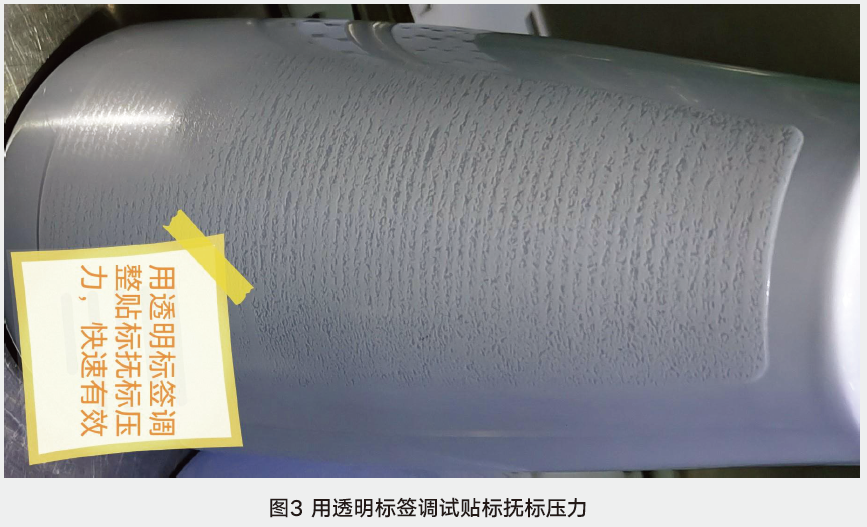
As shown in Figure 3, the customer originally requested white bottles with white opaque labels. During the labeling process, they kept reporting issues with air bubbles, and the cause needed to be investigated. It was recommended that they try using transparent labels for testing to observe how the glue adhered to the bottle surface during labeling. In the end, using this method, the customer found the cause of the bubbles and improved the labeling results.
In short, choosing the right labeling device and pressure is very important for the success rate and stability of self-adhesive labeling, so everyone should pay special attention to it.