


A Quick Guide to Common Varnishing Techniques for Labels!
Varnishing refers to applying a layer of colorless, transparent varnish on the label surface. The purpose is to increase the gloss of the printed material, as well as to protect it from stains, moisture, and damage to the graphics and text. Generally, varnishing can be divided into full varnish, spot varnish, and reverse varnish. In this article, I will mainly explain these three varnishing techniques and dive into their characteristics and key points for use.
Full Varnish
Characteristics of Full Varnish
Full varnish, also called overall varnish, involves applying a layer of colorless transparent varnish across the entire label surface. After leveling, drying, pressing, and curing, it forms a thin, uniform, glossy layer that smooths the label surface and enhances the printed graphics.
It's worth noting that full varnish is different from lamination. Lamination refers to applying a transparent plastic film, 0.012–0.020mm thick, onto the label surface after printing using heat or pressure, so the label and film are combined together. As shown in Figure 1 (left) is pre-coated film material that requires heat for lamination, and Figure 1 (right) shows film material that requires pressure for lamination.
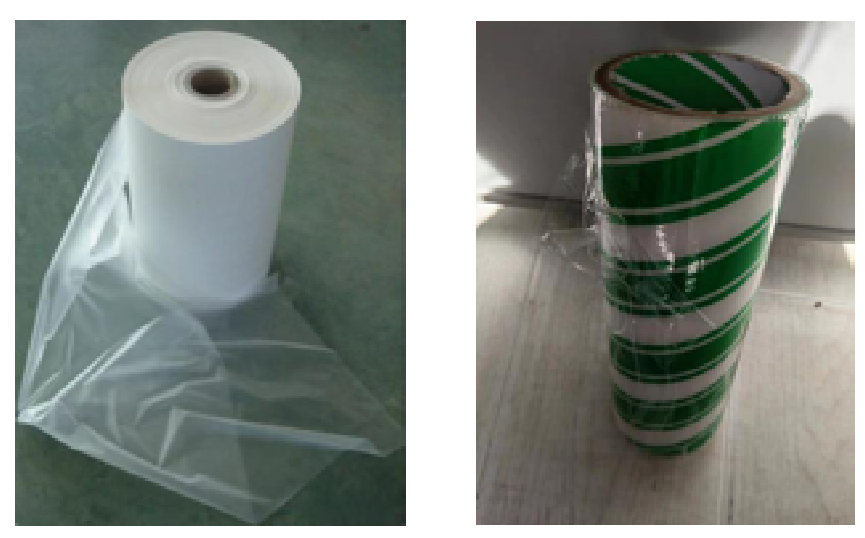 Figure 1
Since the laminating process requires the use of plastic film as a raw material, from an environmental perspective, the coating process is more eco-friendly than lamination, especially water-based coating and UV coating. Water-based coating is non-toxic, non-irritating, free of volatile organic compounds, cost-effective, and uses widely available materials. At the same time, it has high transparency, good gloss, and under long-term strong sunlight, it is not prone to yellowing. It is also wear-resistant and scratch-resistant. UV coating contains almost no solvents, requires relatively less energy for curing, adheres strongly to ink, making it firmly attached. The surface of printed items becomes more resistant to wear, chemicals, and maintains good stability, and can be cleaned with water and ethanol. Overall, UV-coated products are not sticky, and can be stacked immediately after curing, which saves a lot of time for the next process and improves production efficiency.
General Coating Precautions
When using the overall coating process to enhance the gloss of labels, to ensure the quality of the coating and the smooth operation of production, attention should be paid to the following four aspects: First, control the thickness of the coating; second, choose the right coating, because there are many types of coatings, you should select the appropriate one based on the type of substrate and coating method; third, control the coating's viscosity and surface tension, since viscosity affects leveling, drying speed, and surface gloss. Therefore, adjust the viscosity according to different substrates. At the same time, pay attention to changes in surface tension. The coating's surface tension should be lower than that of the ink layer to ensure proper wetting, adhesion, and penetration on the label surface; fourth, coordinate coating speed, coating amount, pressure, and curing equipment power. Adjust these based on how the coating wets and absorbs on different substrate surfaces.
Spot Coating
Spot Coating Features
Spot coating refers to applying coating only to certain prominent areas on a label, making them contrast more brightly and vividly with the surrounding text and images, creating a stronger three-dimensional and unique artistic effect. Common spot coating techniques today include spot gloss, spot matte, spot snow, spot frosted, spot foaming, spot refraction, and spot wrinkling.
Spot coating can be applied after lamination or directly on printed materials. However, to better highlight the effect of spot coating, it is generally applied after lamination, mostly using matte film lamination (accounting for about 65% of spot coating products). Figure 2 shows the effect of spot coating on a label.
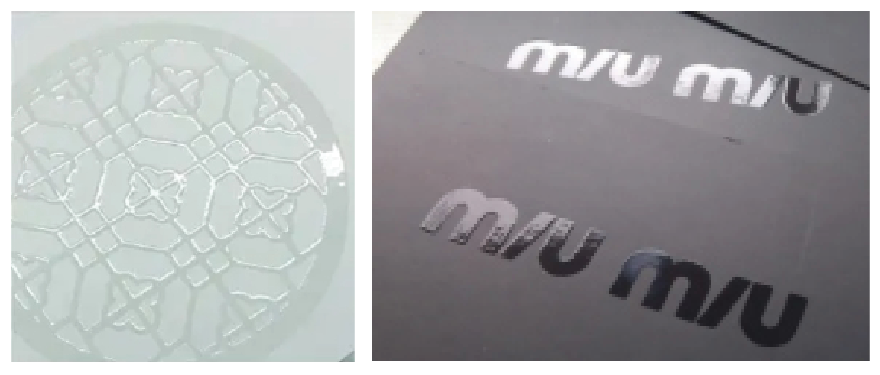 Figure 2
As you can see, labels that have undergone partial varnishing have a more textured and three-dimensional feel, giving certain parts of the label higher brightness, transparency, and wear resistance, creating a strong visual impact.
Precautions for Partial Varnishing
Partial varnishing can be achieved through screen printing, flexographic printing, and other methods. Since the ink layer in screen printing is thicker compared to offset, gravure, or letterpress printing, using screen printing for partial varnishing will produce a more noticeable effect. However, there are a few things to keep in mind when using screen printing for partial varnishing:
First, the formula for UV varnish differs between winter and summer, so you should adjust according to the season and temperature. Usually, UV varnish for winter has a lower curing content than that for summer. Using winter formula UV varnish in summer can result in incomplete curing, leading to problems like tackiness. Conversely, using summer formula UV varnish in winter can affect leveling, causing bubbling or skinning.
Second, UV varnish should be thoroughly stirred before use. Since UV varnish is made from various chemical ingredients, leaving it unused for a long time can cause the components in the container to separate, forming layers. Therefore, it's important to mix it well before application.
Reverse Varnishing
Characteristics of Reverse Varnishing
Reverse varnishing combines partial varnishing and partial matte finishing to achieve high contrast effects for specific graphics. This technique can be completed in one pass on a printing press or applied offline.
Reverse varnishing allows the label surface to display both glossy mirror-like areas and matte areas simultaneously, creating a stronger contrast in brightness. This not only serves as an anti-counterfeiting measure but also enhances aesthetics. First, a matte base varnish is printed over the non-gloss areas of the design using offset printing. Then, a full-coverage topcoat is applied and cured on the label. The topcoat reacts with the printed base varnish to create a matte effect on non-gloss areas, while the areas without the base varnish turn glossy. Since offset printing is used for the non-gloss areas, registration is very accurate, ensuring the precision of the glossy graphic elements.
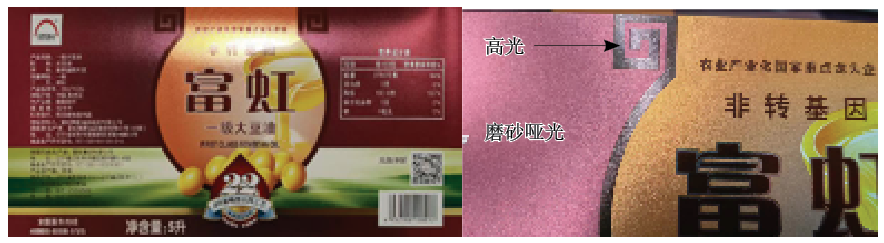
Figure 3
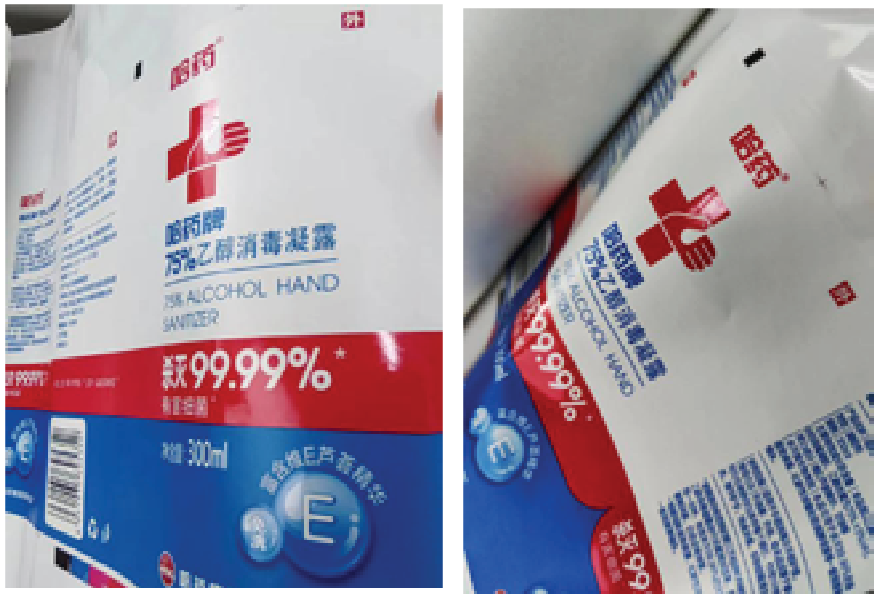
Figure 4
As shown in Figures 3 and 4, the label product uses the reverse upward gloss process. Among them, the right image in Figure 4 shows the local enlarged effect of the label, with bright areas and matte areas marked in the illustration. In Figure 5, the red printed area on the label shows a glossy finish, while the white and blue areas have a matte finish.
Precautions for reverse uplighting
When using reverse upgloss technology, attention must be paid to: first, ensure that the ink used in conventional graphic printing on label products is thoroughly dried or cured. If the ink layer is not dry, the varnish will not cure thoroughly, resulting in no contrast effect; Second, when designing files, avoid using small text and small patterns for reverse glowing; if the font or patterns are too small, it will cause smudging issues; Third, the thickness of the frosted texture depends on factors such as press speed, printing pressure, varnish thickness, varnish type, and the flatness of the substrate surface. If the printing machine is fast and the oil layer is thin, the matte texture is rougher, and the substrate surface is smooth, the matte texture effect will be very noticeable.
In summary, reverse upflashing can achieve contrast effects that ordinary printing cannot achieve, making printed products more exquisite and serving as the finishing touch, elevating label printing quality to a higher level.
Facing increasingly stringent national requirements for environmental protection and pollution prevention, as well as consumers' preference for bright and novel printed products, and in the increasingly competitive market environment, more and more label printing companies are beginning to use various post-press finishing techniques on labels, especially varnishing techniques. Through small changes in post-press finishing techniques, product design diversification is promoted to adapt to new environments, meet new demands, and add stronger visual impact to label products.