


Stamping the 'Seven Wolves (Blue)' cigarette pack wrapper perfectly is tricky, but this trick will show you how to easily fix it!
Project Overview
Detecting the register accuracy of hot stamping has always been a big challenge in the printing industry. It not only affects production speed but also wastes materials and creates a lot of scrap. In recent years, many improvements have been made for checking register accuracy in the first printing process, but there's still relatively little research on detecting register accuracy during hot stamping. This article focuses on defects like background color showing through caused by misalignment during the hot stamping process. Inspired by the principles of registration, we propose an efficient and intuitive "T"-shaped detection method, and we tested it on actual machines over multiple batches. The experimental results show that this method greatly reduces scrap rates caused by bad stamping, proving its effectiveness. It not only improves quality inspection efficiency but also helps effectively monitor the precision of hot stamping machines, holding significant potential for wider application.

Project Background
Currently, the main production processes for cigarette product packaging (i.e., cigarette cartons) include printing, hot stamping, die-cutting, and inspection. During the first printing process, registration accuracy testing mainly uses trimming lines as the inspection method, supplementing the upper, middle, and lower limits of trimming lines. During production, you can judge whether the registration bounces by checking the trimming size and line appearance patterns. After die-cutting, the product can also be measured to determine the registration runout by measuring the distance and magnitude changes at the product bite after die-cutting. However, the hot stamping process lacks detection methods for inaccurate registration, so the lack of methods in this process can lead to some defects.
Current situation and problem analysis
01/ Analysis of the causes of inaccurate hot stamping and registration
(1) Pattern position shifts during hot stamping plate making
The cross-cutting and side profiles are accurate, but operators may misposition the stamping pattern due to loose screws or heating and expansion during installation.
(2) Abnormal precision of the hot stamping machine
The hot stamping machine has 7 tooth rows, and if one of the teeth rows wears out or changes position, it can easily cause registration errors. In this case, product defects that do not appear in the registration show regularity and can be verified through product phenomena.
(3) Human error during operation
Operators did not promptly adjust the needle position changes in the cross-cutting and side gauges. In this situation, inaccurate registration presents irregular product defects, making it impossible to accurately determine the direction and position of misalignment in the registration process. During adjustment, the main cause cannot be quickly identified, which easily leads to defective products and material waste.
02/ Manifestations and consequences of inaccurate hot stamping and registration
Taking the company's flagship product as an example, inaccurate hot stamping and registration of "Septwolves (Blue)" strip boxes can cause the wolf mark area to show "white" (as shown in Figure 1). Because colored ink is not printed at the wolf mark position, to shorten the stamping time after printing, only a layer of transparent varnish is printed at that spot. Therefore, when the product enters the stamping process after printing, it is impossible to quickly visually identify whether the stamping and overprinting are accurate; only the ability to judge by whether white exposure appears after stamping. In such cases, inaccurate product registration indicates significant deviation. Moreover, when products with inaccurate registration go through post-printing inspection, due to camera resolution limitations, the inspection machine cannot detect and remove all white exposure at that area, resulting in missed products flowing to customers, leading to customer complaints and the impact of assessment indicators. Figure 2 shows the actual product showing customer feedback on inaccurate hot stamping and registration.
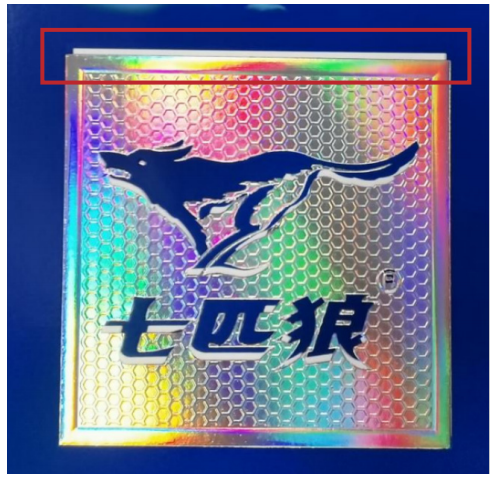
Figure 1 'Seven Wolves (Blue)' carton product 'Luo Bai' sample
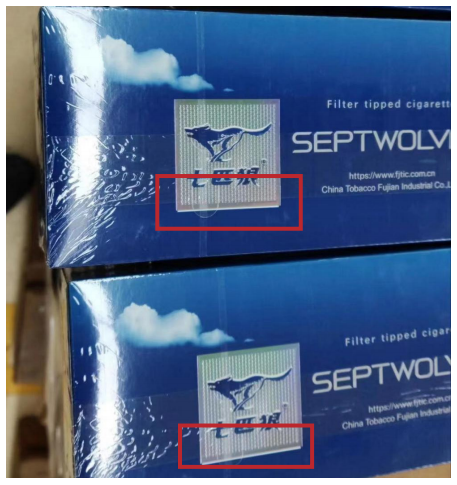
Figure 2: Actual product photo showing customer feedback on misaligned hot stamping
03/ Feasibility Analysis
In the hot stamping process, the current method for detecting misalignment is generally visual inspection by humans. This traditional approach makes it difficult for operators to quickly identify and correct issues, leading to defective or even wasted products. Therefore, there is an urgent need for a more effective method to quickly detect misalignment during hot stamping.
A known method is to add more hot stamping points, which involves determining several stamping points on a hot stamping plate and compensating for the plate's thermal expansion before production. This helps address the problem of plate expansion due to heat. However, applying this method to add registration marks can be problematic: even slight line expansion can obscure the marks, making it hard for operators to notice minor errors. Consequently, a method that is unaffected by temperature changes and easy to interpret is needed to resolve misalignment issues.
Borrowing from printing registration principles, where different color plates overlap accurately, registration marks (like "+" or "T" shapes) can be added during printing, and raised plates in corresponding shapes can be added during hot stamping. During hot stamping, aligning these marks in horizontal and vertical directions allows operators to directly check if the product's "T" embossment aligns with the printed registration marks to determine accuracy. This method does not need to consider whether the electroplated aluminum registration marks are affected by temperature, reducing errors. As is well known, even when print registration has slight deviations, "+" and "T" shapes are intuitive and have been widely used in production. Therefore, existing "T" shaped raised plate modules can be directly used for modeling experiments in this project.
Experiment Design
This project will use the company's main product, the "Seven Wolves (Blue)" cigarette pack, for trials.
01/ Hot Stamping Registration Line
If the original multi-color registration lines are used for hot stamping, excessive heat may cause multiple lines to expand significantly, increasing registration errors. Therefore, a new registration line must be set as the hot stamping registration mark. Deep blue is one of the color sets in the first printing process of the "Seven Wolves (Blue)" pack and serves as the reference color for hot stamping. To avoid misalignment from other colors affecting the stamping, deep blue is chosen as the color of the hot stamping registration mark.
02/ Position and Number of "T" Shaped Plates
As analyzed earlier, the experiment will use "T" shaped registration marks and hot stamping plates for clarity and convenience.
The usual principle for selecting stamping line positions is to choose areas without graphics that are more sensitive to positional shifts. During paper transport, central areas show minimal lateral deviation, so the two sides of the sheet without graphics are ideal. The first printed semifinished product of the "Seven Wolves (Blue)" pack contains 18 boxes, corresponding to 18 parts on the hot stamping plate. In theory, 18 "T" shaped registration marks and plates should be set. However, only the non-graphic side areas can hold the "T" registration marks. To reduce costs without affecting detection, the experiment will use two "+" shaped printed registration marks and two "T" shaped hot stamping plates, as shown in Figure 3. Figure 4 shows a zoomed-in view of the printed "T" shape.
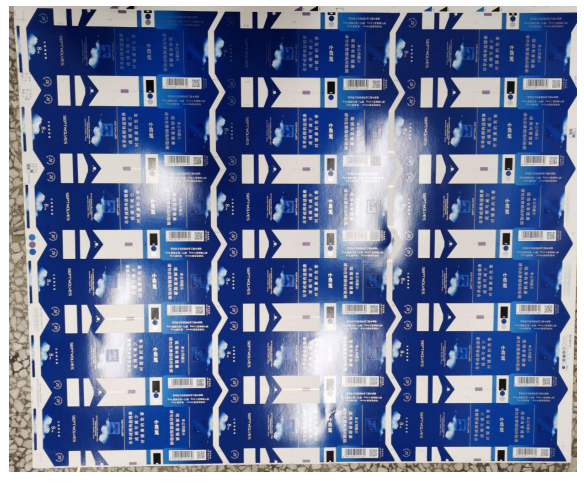
Figure 3 Diagram showing the 'T'-shaped registration mark on the printing plate
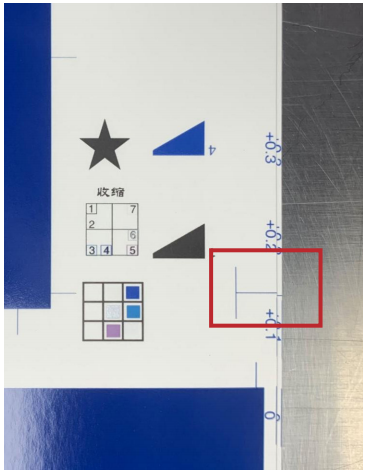
Figure 4: Enlarged view of the printed 'T'-shaped section (line width 0.3mm)
03/ 'T'-shaped Material Selection and Style Design
In the early stages of testing, the project team used copper stamping blocks for trial production. Because copper is soft and not very wear-resistant, after some use, it shows wear as seen in Figure 5. The worn lines become thicker, which affects the inspection of the stamping registration. To reduce the usage of the 'T'-shaped stamping blocks, minimize material wear, and cut down on waste from replacing blocks, steel was chosen as the material for the 'T'-shaped stamping blocks, with a height of 1.25mm, as shown in Figure 6. The steel material not only lowers the cost of the stamping process but is also more stable.
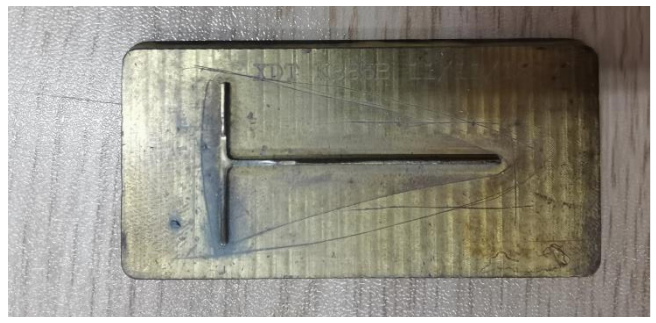
Figure 5 Diagram Showing Wear on Copper Plate Stamping Section
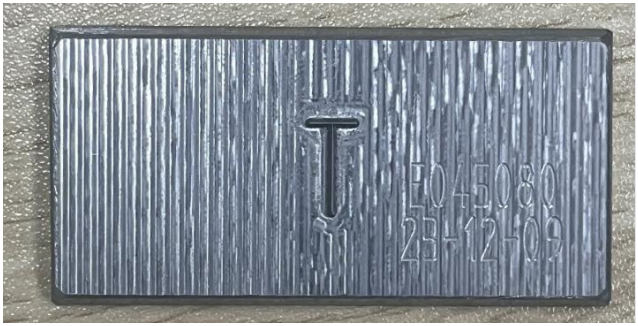 Figure 6: 'T'-shaped Steel Plate Hot Stamping Block
04/ Possible Problems During Testing and How to Handle Them
In actual production, issues like workshop conditions or improper operation can easily lead to hot stamping defects or even failures. To reduce waste and malfunctions and ensure smooth testing, the following points need attention.
(1) Surface dents or scratches appear on the product at the 'T'-shaped vertical die position. It's important to distinguish the types of defects caused by different problems. Surface dents or scratches might result from uneven pressure across the plate or uneven edges of the 'cross'-shaped steel plate. First, make sure the surface of the 'T'-shaped steel plate is smooth.
(2) Misalignment of the 'T'-shaped stamping. Each time a product is randomly checked for printing quality, both the graphics and the 'T'-shaped alignment need to be compared. If the graphics are aligned correctly but the 'T'-shaped stamping is not, the 'T'-shaped hot stamping block may have shifted, and its position should be adjusted. If both the graphics and 'T'-shaped stamps are misaligned, it may be due to paper deformation during printing, and the 'T'-shaped positioning needs to be readjusted. If the comb teeth are inaccurate, causing paper feeding errors, the comb precision should be corrected.
(3) Incorrect pressure settings for 'T'-shaped stamping. This stamping uses an embossing method. If the pressure is too low, embossing lines are unclear, making it hard for operators to check alignment. If the pressure is too high, paper may tear, and operators cannot determine if alignment is correct.
After installing the 'T'-shaped hot stamping positioning block, local product pressure needs fine adjustment. The added 'T'-shaped positioning block requires the embossing to be visually noticeable and comparable, without a specific depth requirement. Therefore, local pressure changes can be adjusted by adding pressure sheets at corresponding positions on the base plate, as shown in Figure 7.
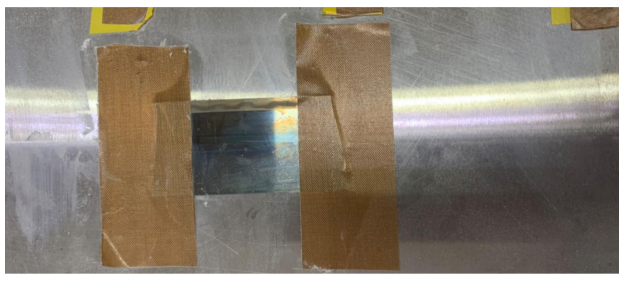
Figure 7: Add extra pressure paper at the corresponding positions on the base plate and stick it in place.
Test Results and Analysis
The 'T'-shaped registration inspection method allows operators to more intuitively see whether the registration is accurate and make timely adjustments, and its effectiveness will be directly reflected in the reduction of defective products in later processes. To minimize the influence of other variables, the same hot stamping machine and the same inspection machine will be used, and 100,000 sheets of products from the same batch will be selected for the test. The test was conducted according to the proposed plan. The effect of adding the 'T'-shaped registration plate indentation is shown in Figure 8, and the hot stamping effect is shown in Figure 9.
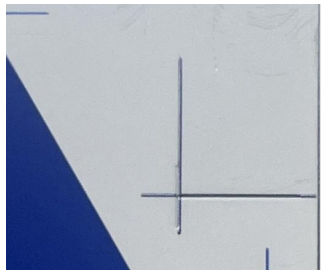
Figure 8 Effect of adding a 'T'-shaped stamping plate indentation
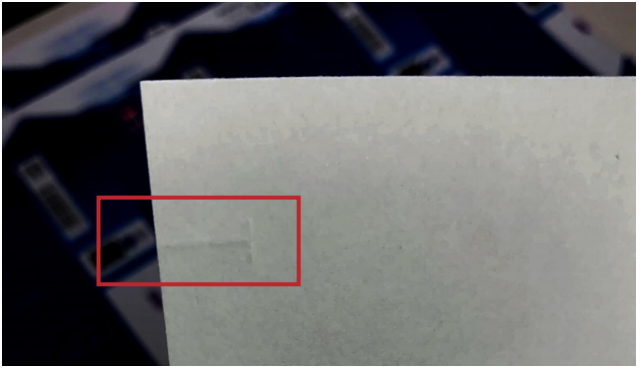
Figure 9: Backside Impression of the Added 'T'-Shaped Overprinting Plate
As shown in Figure 10, when this kind of regular jumping occurs, it indicates that the equipment's precision is abnormal or fluctuating. In this case, we can fix the issue by adjusting the machine's gear rack precision. When irregular jumping happens, it means the equipment's precision is fine, but there's an issue with paper feeding being abnormal or unstable. This can be resolved by adjusting the paper feeding parameters or the timing of the front and side guides.
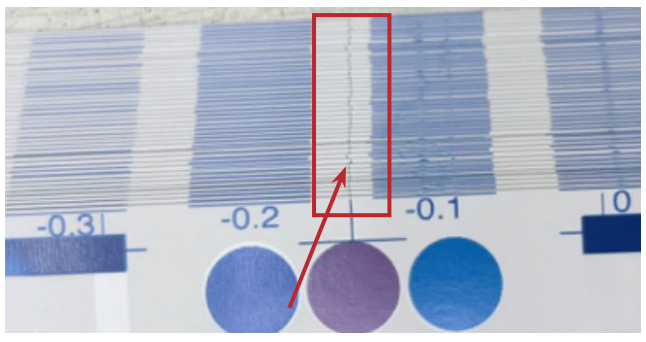
Figure 10 Side view of the indents on the 'T'-shaped hot stamping positioning block (showing the regular 'bent corner' jumps)
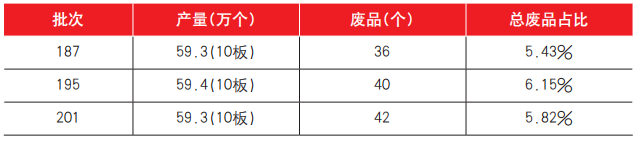
The experimental results are shown in Tables 1 and 2. By comparing the data, it can be seen that for the 'Seven Wolves (Blue)' carton products, the number of defective items removed due to misalignment on the hot stamping machine is significantly reduced. Therefore, it is believed that the 'T'-shaped detection method helps improve the accuracy of operators checking hot stamping alignment, reducing the workload of re-inspectors and lowering the risk of missed defects by the inspection machine.
Table 1 Number of defective items removed before improvement due to misalignment on the hot stamping machine
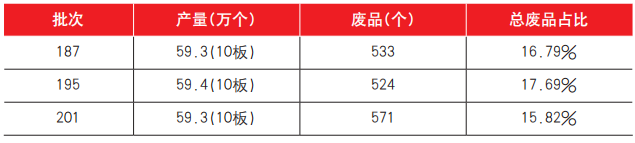
Table 2 Number of defective items not removed by the improved inspection machine due to misalignment of the hot stamping machine
Using the above method to detect misregistration in hot stamping, you can quickly tell whether the product has any misalignment issues. This is especially helpful for spotting tiny misalignments or catching misregistration problems early by looking at the impressions on the product. Plus, by noticing patterns in the impression effects, you can quickly figure out the cause, which helps cut down on waste and reduces setup time when adjusting the machine. Also, this detection method for hot stamping misregistration can be extended to checking if embossing steps are off as well.