


One trick to solve deadly problems, old Heidelberg printing machines get a 'youthful' boost
Many old Heidelberg printing presses are still running hard, but their production efficiency and quality can't really meet the high standards that clients have today. The most serious issue is the potential for blank pages in finished products, which can have an immeasurable impact on the reputation of printing companies.
Current Situation Analysis
The main reason for blank pages is that most existing old Heidelberg presses are only equipped with a single mechanical double-sheet detector and haven't been upgraded with advanced ultrasonic double-sheet sensors. The mechanical detector works by manually adjusting a switch based on paper thickness to detect double sheets, which has the following drawbacks:
(1) For different paper thicknesses, manual adjustments are needed before printing, leading to lower production efficiency;
(2) For thinner paper, mechanical detectors have larger errors and double sheets are easily missed. If post-printing processes don't catch these in time, they end up as blank pages in the final products.
Adding an ultrasonic double-sheet sensor can easily solve these issues.
Improvement Method
First, let's briefly look at how an ultrasonic double-sheet sensor works. It sends out ultrasonic waves from the transmitter, which are received on the other side after passing through the paper. If there's a double or multiple sheet situation, the signal received is much weaker than that of a single sheet. The sensor determines whether it's a single or double/multiple sheet by detecting the signal strength.
Many companies are now adding these ultrasonic sensors. Here are two typical examples, followed by a recommended solution specifically for old Heidelberg presses.
01/ Case One
This case uses the double-sheet signal detected by the ultrasonic sensor as the power source for a proximity switch. The switch works during the feeder adjustment time. When the feeder starts to adjust, if the sensor detects double or multiple sheets, the switch sends a signal to the machine control circuit, stopping the feeder and leaving the double/multiple sheets at the front register.
02/ Case Two
This approach programs the PLC with control points for each part. In addition to the ultrasonic sensor, it introduces a magnetic sensing mechanism to detect overlapping paper through programming to accurately identify double-sheet issues.
Both solutions overcome the weaknesses of mechanical detectors and effectively detect double sheets. However, for old Heidelberg presses, these solutions have clear drawbacks:
(1) Besides the ultrasonic sensor and its mount, extra equipment must be purchased, which is costly;
(2) Separate control circuits with complex wiring are required, making maintenance troublesome;
(3) Simply stopping the feeder may still risk double sheets being dragged into the machine improperly.
Optimized Solution
Figure 1 shows the ultrasonic double-sheet sensor installed on new Heidelberg models. Our company can replicate this exactly. ...
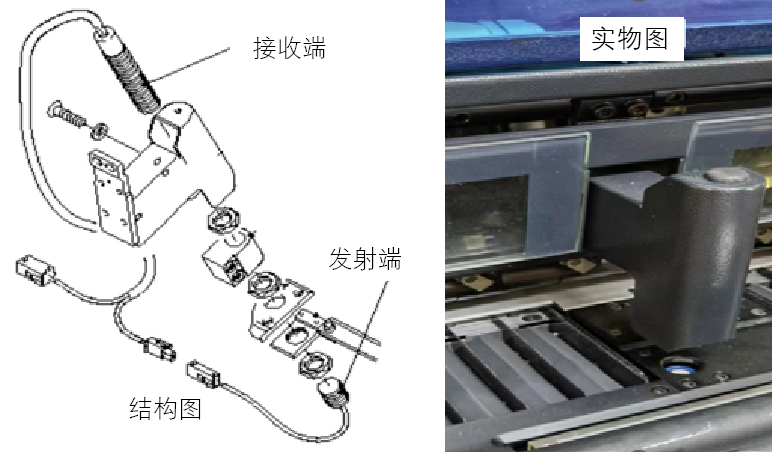
Figure 1 shows the ultrasonic double-sheet sensor on the new model.
(1) First, we chose to purchase the ultrasonic double-sheet sensor from Pepperl+Fuchs (UDC-18GM50 or DBK-4/CDD) and made the corresponding bracket;
(2) Then we installed the sensor using the mounting holes already on the machine (Figure 2) and adjusted the distance between the sensor's transmitter and receiver according to the standard shown in Figure 3;
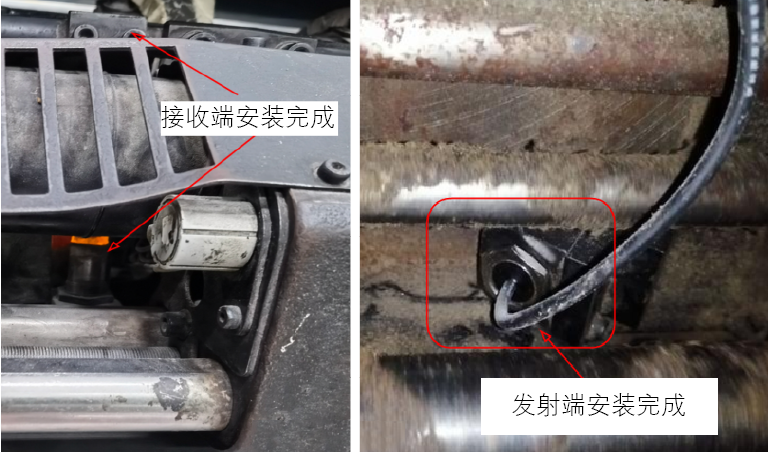
Figure 2 Installing the Ultrasonic Double-Sheet Sensor
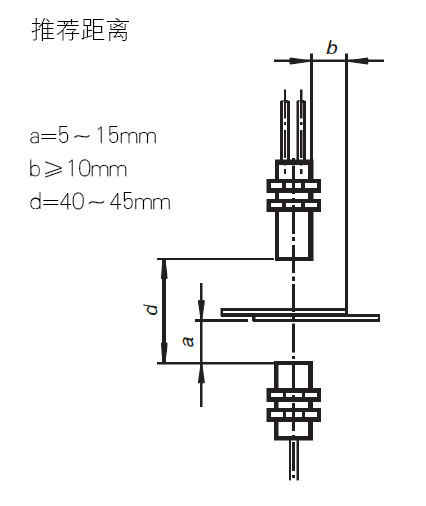
Figure 3 Adjusting the standard distance at both ends
(3) Connect the line numbers of the ultrasonic double-sheet sensor according to the corresponding circuit diagram (the transmitter plug and receiver plug are connected directly);
(4) Update the printer configuration table, call up the functional icon of the ultrasonic double-sheet sensor, and select it.
Printing Test
Manually stick two sheets of paper together to make a "double sheet," and mix it into a normal stack of paper for a regular print test. You can see that when the double sheet reaches the front guide, the ultrasonic double-sheet sensor triggers an alarm, the machine automatically stops the feeder, and the Stop Finger immediately presses the "double sheet" against the front guide. The swinging teeth open and stop grabbing paper, and both the feeder and the computer screen display a double-sheet fault. This allows the machine to run normally while detecting the double sheet error, as shown in Figure 4.
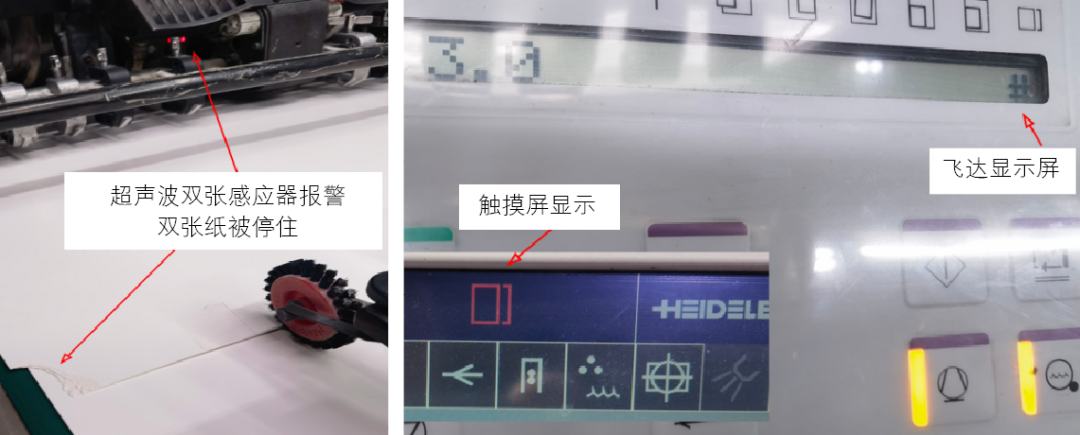 Figure 4 Detection of Double Sheet Anomalies
The above solution only requires purchasing an ultrasonic double-sheet sensor and making the corresponding bracket (Heidelberg offers a complete kit). No extra circuit design is needed (you can use the existing circuit). By taking advantage of the reserved functions and holes on older Heidelberg presses, you can perfectly solve the pain points of mechanical double-sheet detectors. In production, no adjustments are necessary, allowing old Heidelberg presses to regain efficiency and quality control like new, and the added device feels just like it came standard from the factory.