


Poor machine adaptability of slim box cigarette packs? The choice of die-cutting process is very important
In recent years, slim hard pack cigarettes have become a driving force for the scale expansion and structural upgrading of many cigarette brands. More and more cigarette brands are centering on consumer demand, promoting product iteration and upgrades, and jointly driving the accelerated development of the slim hard pack cigarette category. As the market share of slim hard pack cigarettes continues to grow, the speed of slim cigarette packaging machines is also constantly increasing, reaching speeds of 600 to 700 packs per minute. Poor die-cutting and forming of cigarette packs will greatly limit their adaptability to the machines. According to machine tests on cigarette packaging machines, round-to-round die-cutting produces slim hard pack cigarettes with better machine adaptability compared to flat-to-flat die-cutting.
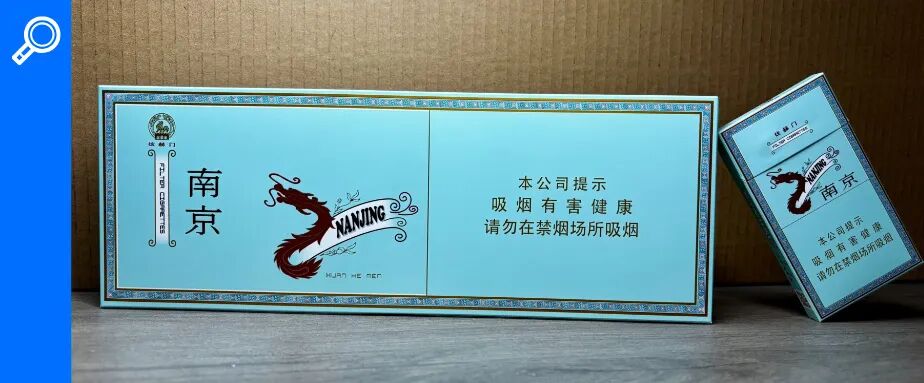
Selection of Die-Cutting Process
In the die-cutting process, slim cigarette packs are more difficult to produce compared to standard cigarette packs. Comparing the sizes of the pack boxes, as shown in Figure 1, the slim pack measures 260.3mm × 77.0mm, while the standard pack measures 245.0mm × 98.0mm. The slim pack is longer in length, and the paper web width basically reaches over 770mm. Horizontal imposition will be 50–60mm wider than the standard pack, and the increased horizontal layout will affect the accuracy of die-cutting dimensions. In terms of vertical imposition, the slim pack is narrower, and if too many units are imposed vertically, it will make registration at the cutting tabs and plate ends more difficult.
As seen in Figure 1, the minimum crease line spacing for the slim pack is 8.0mm, which is 4.0mm smaller than that of the standard pack. Due to the "force competition" factor, the smaller the crease line spacing, the more difficult it is to control the uniformity of crease depth. The distance between the crease line and die-cut edge for the slim pack is 11.0mm, while it is 21.5mm for the standard pack. The closer this distance, the greater the force needed to open the pack during forming. If the crease depth is insufficient or the adhesive performance is poor, it will cause frequent stoppages of the cigarette packing machine. Currently, domestic slim packs all use the flat-on-flat die-cutting method. To better control the die-cutting forming effect and ensure stable suitability for machine feeding, our company conducts test verification using the rotary die-cutting method.
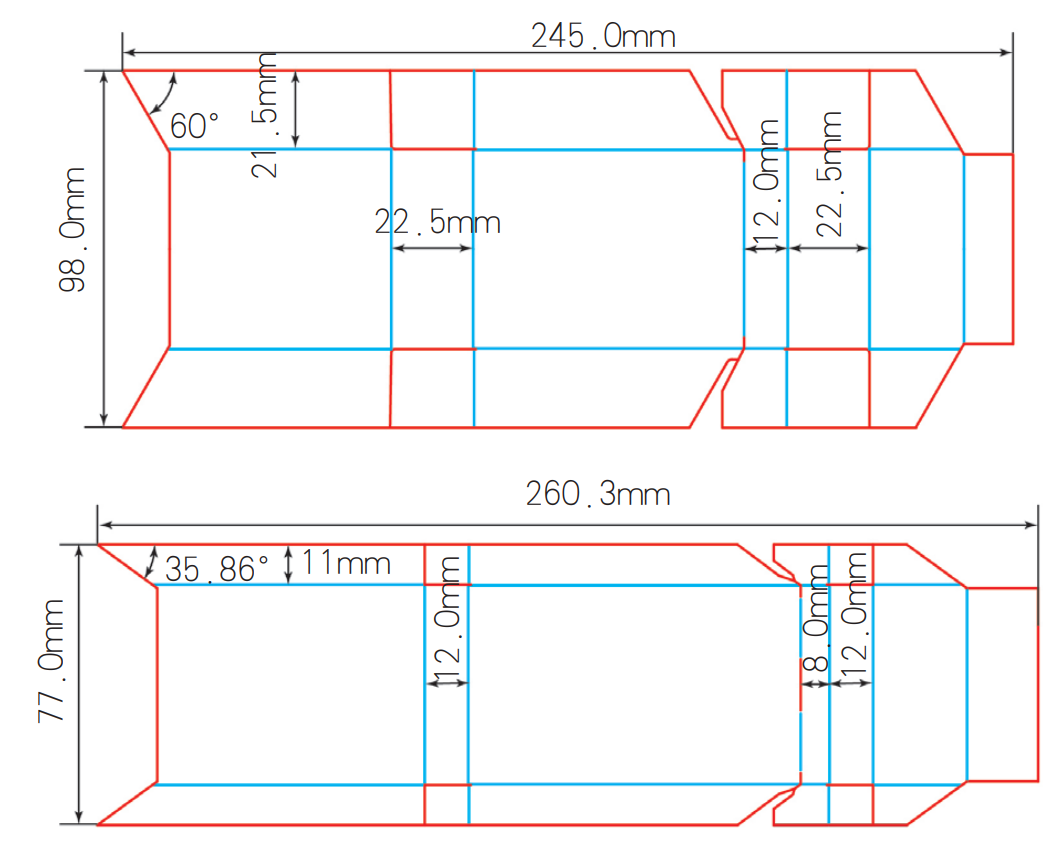 Fig.1 Schematic diagram of the size of standard (top) and fine (bottom) box cigarette packs
In the early process planning and analysis, we compared it with the flat and flat die-cutting method, and found that the circular die-cutting method has the following five advantages.
01/ High production efficiency
According to the die-cutting machine speed of 210,000 sheets/hour, the production efficiency of circular die-cutting is twice that of flat die-cutting (speed of 105,000 sheets/hour).
02/ Using the same length of paper has a higher product yield
The circular die-cutting adopts the roll feed method, which does not need to leave a mouthpiece and tip position during typesetting, and can also achieve continuous cross-nesting, which can save about 6% of paper. According to the width of the cigarette pack box of 77mm, 1.48 million more small products will be produced for every 10,000 boxes.
03/ More uniform pressure and better die-cutting quality during indentation and die-cutting
Since the circular die cutting and pressing method is line contact, the die-cutting roll is equipped with a high-precision four-axis machining center, which can ensure that the dimensional accuracy of the product is controlled within 0.2mm, and the plane shape is accurately converted into a three-dimensional processing pattern. Because this method adopts the line pressing method with less pressure, the pressure uniformity of indentation and die-cutting is much higher than that of flat pressing and flat die-cutting compressing, and the molding of cigarette pack products is more stable.
04/ High die-cutting accuracy
The circular die-cutting machine is equipped with a high-precision registration device and a die-cutting phase adjustment device, which can achieve high-precision die-cutting. The tension control system can improve the positioning accuracy of printing, die-cutting, and indentation. Since the error between the entire die-cutting, indentation plate circumference and the printing process plate circumference can be evenly distributed to each cigarette box in the circumferential direction, the problem of large differences in the tail die-cutting sleeve of the flat die-cut bite plate can be avoided, and the size of a single box is more accurate.
05/ High print resistance of die-cut plates
The circular die-cutting plate has a long service life, the die-cutting roller can be re-ground 3 times, and it can also run 500~10 million revolutions after each regrinding, and the service life is much higher than that of the flat die-cutting method.
Die-cutting process selection risk
The thin branch box type cigarette pack round pressing round die-cutting tool is basically made of imported powder steel, which is vacuum quenched after rough machining, and the hardness can reach more than HRC60. In order to ensure that the circular die-cutting box pack process meets mass production and can maintain effective and stable on-machine adaptability, we need to consider the following four risk points when planning the process.
01/ The risk of "swallowtail" sharp corners "breaking knife"
As shown in Figure 1, the tip angle of the fine box cigarette pack is 35.86°, which is much smaller than the 60° of the standard box cigarette pack. The smaller the angle, the more likely it is to cause the risk of "chipping" when the sharp corners are squeezed by the paper during die-cutting and pressing.
02/ Indentation line width and depth selection risk
According to the different types of paper (transfer paper, laminated paper, white cardboard), different thicknesses, and the difference in the required indentation depth and width at different positions of the box type, it is necessary to choose the appropriate indentation edge and indentation groove width, angle and height. Once the choice is unreasonable, it is easy to lead to the problem of "oblique mouth", "sky and earth" or "earth covering the sky" after molding.
03/ Die-cutting edge width and edge angle selection risk
Tools with different blade widths and edge angles are selected according to the paper and ink to maintain sufficient print resistance and die-cut edge finish. The die-cutting edge angle range is 35°~55°, and the edge width range is 0.02~0.05mm. The types of paper can be roughly divided into white card, transfer card, and laminated card. The types of inks can be roughly divided into ordinary inks, white inks, and UV inks. Different papers and inks have different choices for die cutting edge width and edge angle.
04/ Risk of choosing the number of die-cut circumferential cigarette packs
The selection of the number of die-cut circumferential cigarette boxes, first, needs to be selected according to the difficulty of controlling the printing card position, and try to use the same number of cigarette boxes as the printing circumference to die-cut; The smaller the number of circumferential cigarette boxes, the lighter the self-weight of the roller, and the longer the horizontal length of the fine box cigarette pack panel than the standard box type cigarette pack, which is more likely to lead to die-cutting and insufficient indentation pressure in the middle box. Although the one and four axes shown in Figure 2 are added to compensate for the lack of pressure, the larger the diameter of the die-cutting roller and the sufficient weight, the stability of the intermediate pressure of the fine branch box type cigarette pack is more favorable.
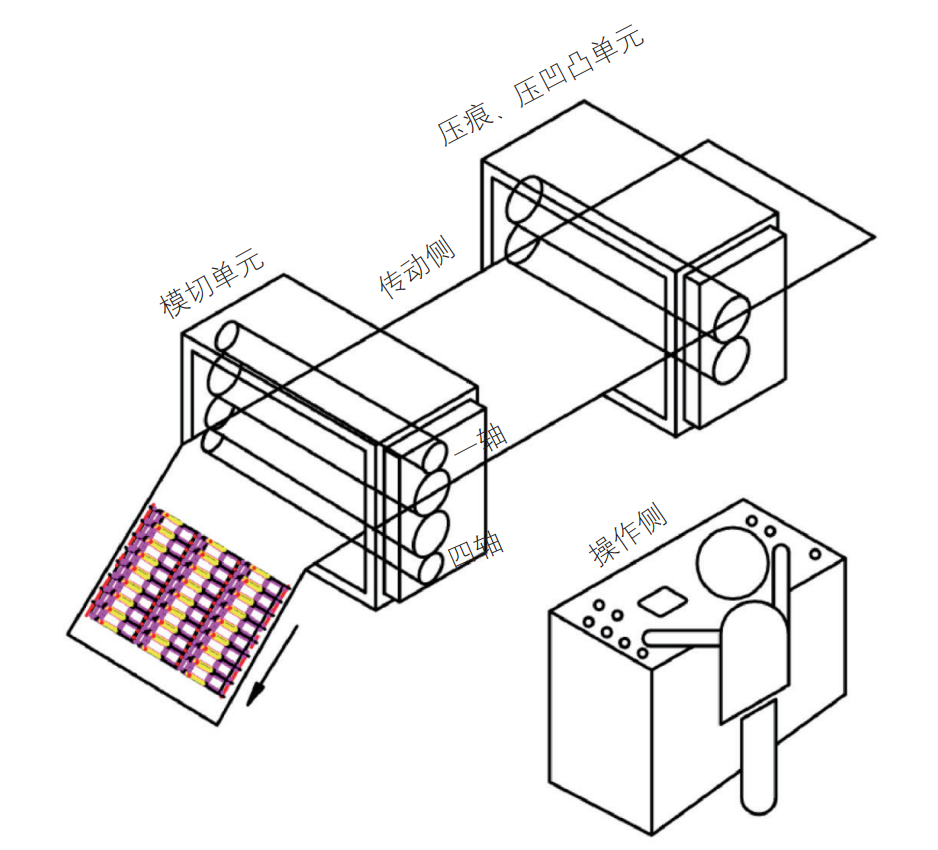
Figure 2 Schematic Diagram of the Round-Pressure Round Die-Cutting Workstation
In addition to maintaining better and more stable machine adaptability for slim-pack cigarette boxes, round-pressure round die-cutting can also expand downstream connections to inspection equipment, automatic collection equipment, automatic turning equipment, automatic bundling equipment, and automatic palletizing equipment, and can be integrated with AGV automatic guided vehicles to achieve an intelligent production mode. The application of round-pressure round die-cutting on slim-pack cigarette boxes has proven its high efficiency and stability. In the future, we will also conduct broader application research.