


Why are digital proofs and bulk samples different? How many of these reasons do you know?
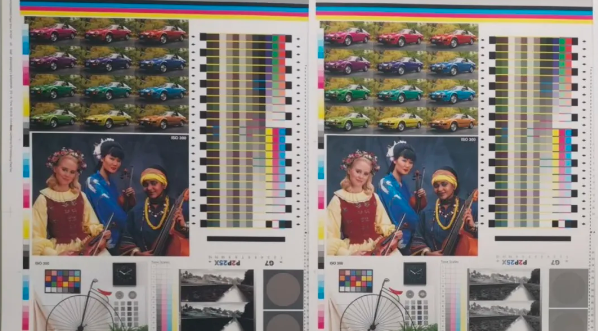
Do you often run into this problem? In printing production, the products from digital proofs and traditional proofs can be different. Friends who are new to printing might find this confusing, but it's mainly because of differences in printing technology, materials used, and process flow. Today, let's follow Xiao Shu to take a closer look at these differences~
Digital proofs are samples made using digital printing equipment. They have the advantages of a short production cycle, strong color performance, and high customization. They skip the traditional printing plate-making process and directly convert digital files into printed products.
Bulk samples are samples made before large-scale production. Their main purpose is to show the craftsmanship, control quality, and estimate costs. They are not only a key reference for checking product quality but also an important step to ensure the production process is correct.
Technical differences
Digital prototyping: Mainly uses inkjet printing technology, utilizing inkjet printing equipment or professional digital prototyping equipment. This technology can output directly from computer files onto paper or other substrates, offering advantages of speed, flexibility, and relatively low cost. This method uses digitized original documents (electronic files) to obtain verification samples.
Traditional proofing: Using traditional offset printing, the overall workflow includes: original draft, customer requirements→ design, color separation→ film output→ plate exposure→ proofing→ printing according to the sample (during which re-printing, re-output, and exposure may be required), → post-processing (including lamination, oiling, polishing, electrochemical aluminum stamping, punching, cutting/cutting and cutting, folding, binding/mounting, etc.). It offers excellent image quality and cost-effectiveness for high-volume printing.
Material differences
Different paper: The paper or other substrates used for digital prototyping may not be exactly the same as the materials produced in bulk production. The type, thickness, and gloss of paper all affect the printing effect, so even the same design may present different visual effects on different materials. Take coated paper as an example: digital proofing coated paper is generally specially made and tends to be matte (mainly to reduce wear on equipment), while coated paper used in bulk production is brighter than digital proofing paper.
Different inks: The ink used in mass production is also different from that used for digital proofing. Digital proofing generally uses specialized ink, while traditional proofing uses ink. The ink formula, drying method, and other factors all affect the final printed color and texture.
Color gamut difference: Digital proofing produces colors made by mixing at least 8 or 11 inks, while offset printing only blends 4 inks. Digital proofing sheets generally have a wider color gamut than those produced in bulk production, and the colors of images and text in digital proofing are more vivid and saturated than those printed by mass goods.
Different thicknesses: Digital prototyping is thicker than mass production. Because bulk products must be pressed under the strong pressure of laminating and pulverizing machines, the tissue and the paper fit better together, so the thickness appears thinner than the digital version, but the hardness remains the same.
Differences in process flows
Digital proofing is usually a relatively simple process, allowing you to directly export the design file. However, offset printing involves multiple steps, including pre-processing of design drafts, plate making, equipment debugging, printing, and post-processing. The nuances of each step can affect the final product.
In terms of color management, digital proofing and offset printing may differ in color reproduction. Digital proofing often reproduces colors in design documents more accurately, but offset printing is affected by factors such as ink, paper, and printing equipment, so color reproduction may be offset.
If you can't achieve 100% resemblance to the product, does digital prototyping have no meaning?
The answer is, of course: meaningful!
The main purpose of the prototyping stage is to verify the feasibility and effectiveness of the design, ensuring that potential issues are identified and resolved before formal production. Through proofing, you can intuitively see whether the design content is correct. Because it's often hard to see issues with the design draft on the computer.
Environmental differences
Changes in temperature and humidity directly affect the material's performance and stability. For example, certain materials may expand, deform, or soften under high temperature or high humidity conditions, while becoming hard and brittle under low temperature or humidity. These changes may not be obvious during the prototyping stage, but during mass production, differences in environmental conditions can lead to significant variations in size, shape, or performance. Especially during the production of paper products, changes in environmental humidity have a significant impact on the elasticity of the paper, which may lead to dimensional instability.
Light and ultraviolet radiation have degrading effects on certain materials (such as plastics, inks, etc.), and long-term exposure to these factors can lead to aging, discoloration, or performance degradation. Prototyping is usually conducted in a well-controlled indoor environment, while the production site may face more complex lighting conditions, which can lead to differences in product quality.
To reduce these differences, it is possible to use the same paper and ink as the final production for digital prototyping at the early design stage to better match actual production results; Multiple test prints and adjustments are conducted before mass production to ensure the print results meet expectations; Strengthen communication with the printing factory to ensure both parties have a clear understanding of design requirements and printing processes. This ensures that the final product's color, texture, and dimensions closely match the design draft~