


Embossing and die-cutting in one go-efficient and cost-saving!
In response to the national call for energy saving and emission reduction, and to help achieve the ambitious goals of carbon peaking and carbon neutrality while minimizing the company's production costs, we've combined the embossing and die-cutting processes into a single step.
In the conventional production process, you first need to install the embossing plate on a large honeycomb board for the embossing step, securing it with locking screws, as shown in Figure 1. These locking screws not only hold the embossing plate in place but also allow adjustment of the plate's position with a special wrench, depending on the screw type. After that, the die-cutting step is carried out with a die-cutting plate. Although this method makes it easy to adjust the embossing plate's position, it requires two separate steps, which leads to higher production costs.
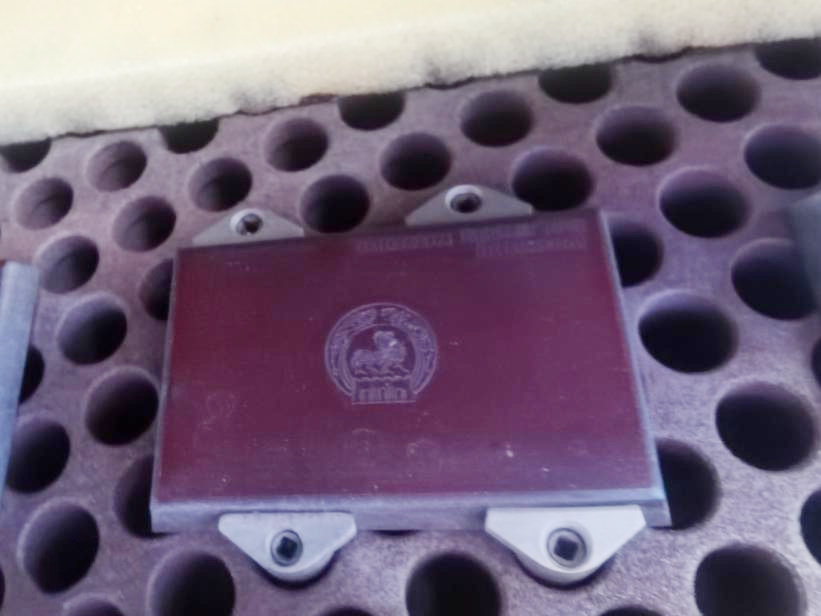 Figure 1: Installation Diagram of Large Honeycomb Panel
To cut costs, some processes directly install the embossed plate onto the die-cutting plate with screws, combining the embossing and die-cutting steps. However, this approach has obvious drawbacks - it's hard to precisely fine-tune the position of the embossed plate, which also lowers production efficiency. So, how can we solve this problem?
After careful study, we found a very simple and practical method: first, install the embossed plate onto a mini honeycomb panel with scales, then mount the mini honeycomb panel onto the die-cutting plate. This effectively solves the problem.
Function of the Holes in the Mini Honeycomb Panel
Every hole in the large honeycomb panel is the same in size and function, but this special mini honeycomb panel with scales has holes of different sizes and functions, as shown in Figure 2. At the same time, the positions on the mini honeycomb panel that correspond to the embossed plate also need to be drilled (as shown in Figure 3). A single mini honeycomb panel has 14 holes, covering 4 different functions (Figure 4).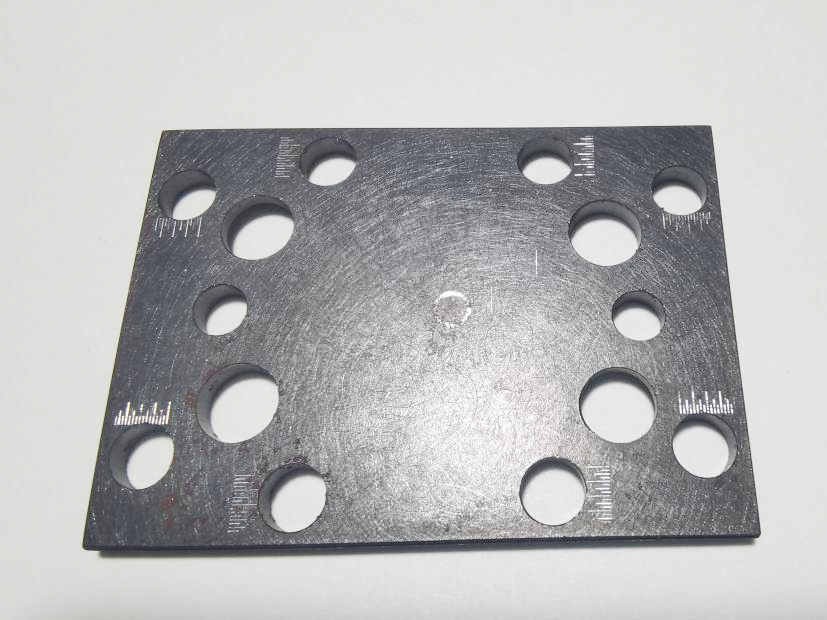
Figure 2 Mini Honeycomb Panel
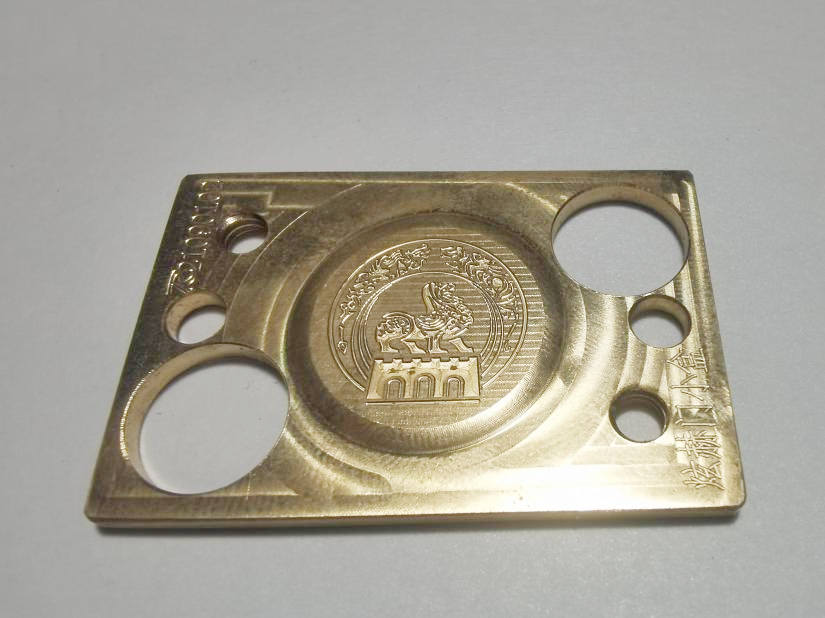
Figure 3 Embossed Version
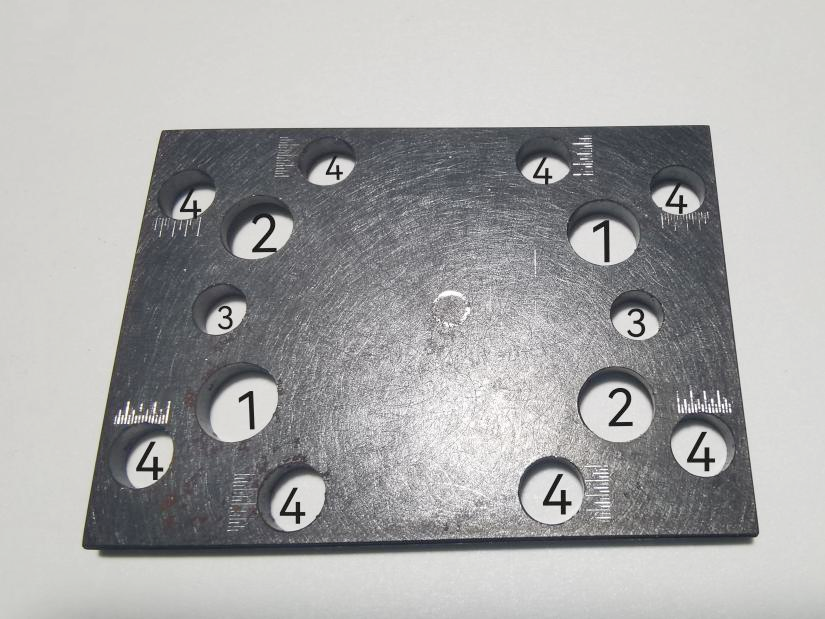 Figure 4: 14 holes in a miniature honeycomb panel
01/ Honeycomb panel mounting holes (2 pieces)
Function: Fixes the miniature honeycomb panel onto the die-cutting tool plate.
02/ Raised Plate Fixing Holes (2 pieces)
Function: Fixes the concave-convex panel onto the miniature honeycomb panel.
03/ Theoretical positioning holes (2)
Function: Used for the first installation of miniature honeycomb panels and concave-convex panels. During installation, insert the positioning pin into the theoretical positioning hole to align the upper and lower positioning holes. The theoretical positioning holes on honeycomb panels must be the same size as those on concave-convex boards. Ideally, after inserting the positioning pins, the position of concave-convex boards theoretically does not require further adjustment.
04/ Low-Profile Position Fine-Adjustment Holes (8 pieces)
These holes only have fine-tuning holes on the micro honeycomb panel; no fine-tuning holes are needed on the concave-convex panel. Each side of the micro-honeycomb panel has two fine-tuning holes, totaling 8 holes. The edges of the concave-convex panel must be pressed in the middle of the fine-tuning holes. The function of the fine-tuning holes is to precisely adjust the position of the concave-convex board according to the actual misalignment of the convex and convex positions. Because only under ideal conditions does the position of the convex board need no fine adjustment, but in actual production, under the combined influence of environmental factors such as tension and temperature and humidity, the paper is highly likely to shrink and deform, so the position of the convex plate must be finely adjusted.
To leave enough room for adjustment of the embossed plate position, pay special attention to the following two key points:
(1) Key Point One (as shown in Figure 5): When fixing the screw edges of the miniature honeycomb panel to the edges of the corresponding concentric holes in the concentric panel, a 1mm adjustment gap must be reserved.
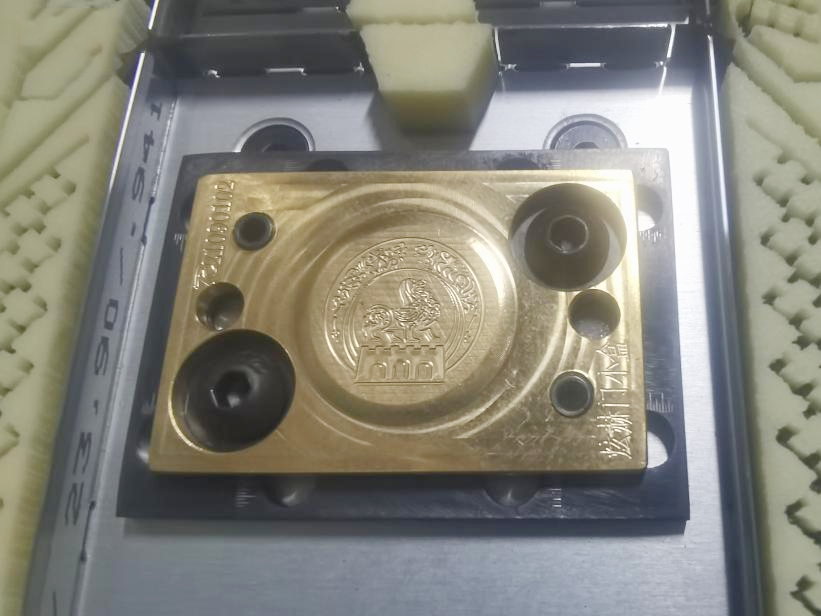
Figure 5 Front view after fixing
(2) Key point two (as shown in Figure 6): On the back of the miniature honeycomb panel, leave a 1mm adjustment gap from the edge of the screw that fixes the embossed plate to the edge of the corresponding concentric hole on the miniature honeycomb panel.
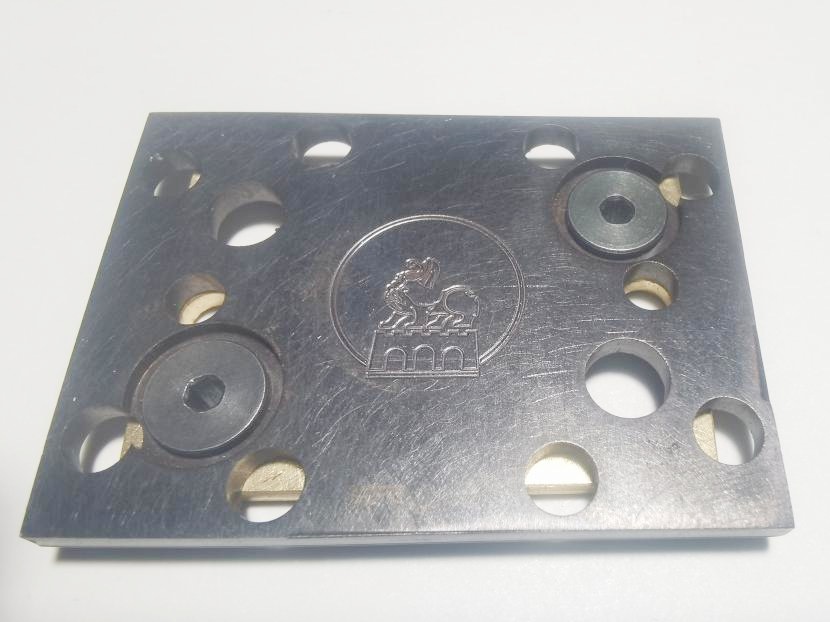
Figure 6 Back after being fixed
Steps for precise adjustment of the embossed plate position
(1) Loosen the fixing screw of the embossed plate, as shown in Figure 7;
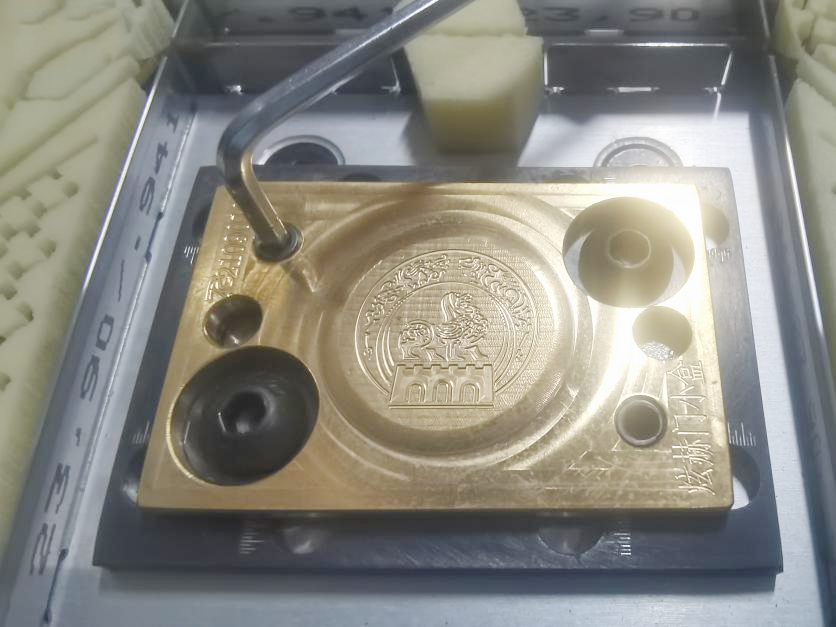
Figure 7 Loosen the screws securing the embossed plate
(2) Insert a small pry bar into the position fine-tuning hole of the embossed plate (the diameter of the small pry bar must be smaller than the diameter of the fine-tuning hole), and adjust the offset direction according to the embossing shift, as shown in Figure 8;
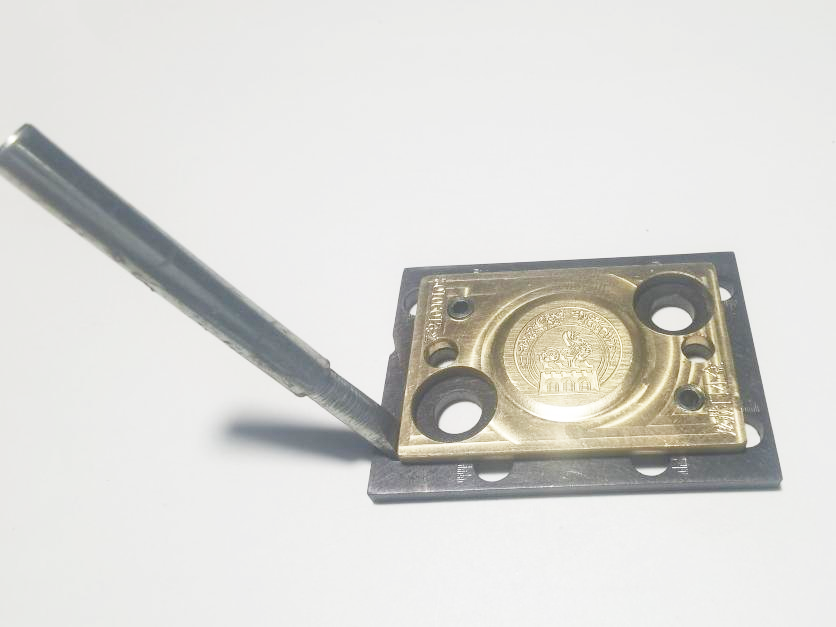
Figure 8 Adjusting the Offset Direction
(3) Carve a ruler along the edge of each side of the micro honeycomb panel. The edge of the embossed plate must press at the midpoint of the ruler, and the ruler should also be positioned near each fine-tuning hole. Carve 2 rulers on each side, totaling 8. Adjust the offset amount according to the embossing offset situation, as shown in Figure 9;
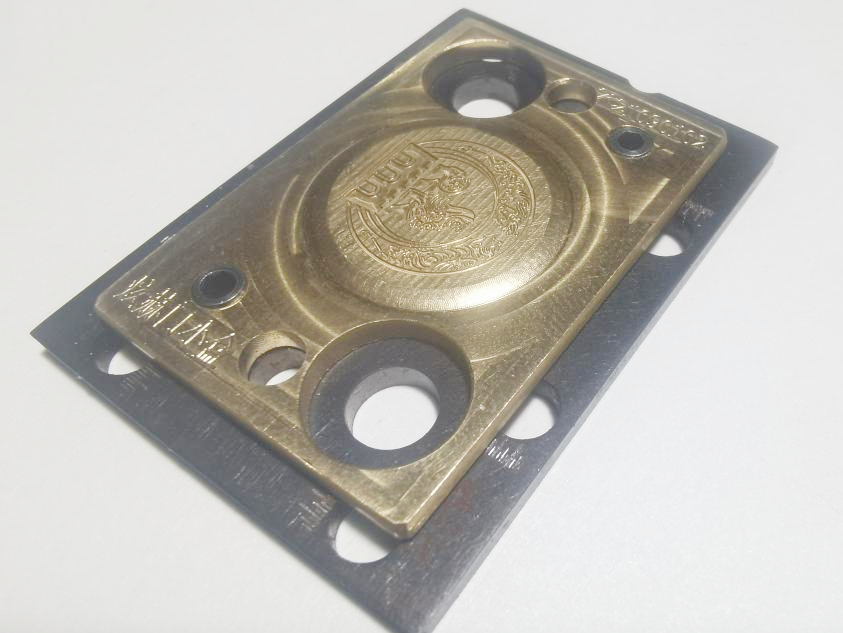
Figure 9 Adjust the offset
(4) Once adjusted, tighten the embossing plate fixing screws.