


Leading Bun Packaging Company Xintianli Goes Public: Revenue Peaks While Profit Continues to Rise During Transformation
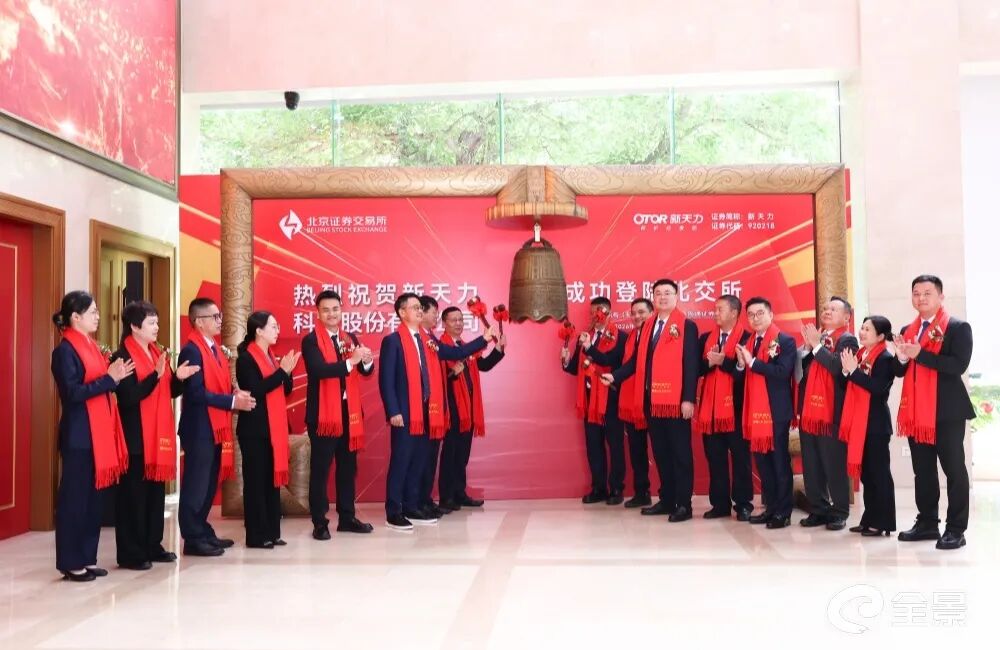
On May 29, Xintianli Technology Co., Ltd. was listed on the Beijing Stock Exchange, with its closing price on the first day rising about 270.80% above the issue price. Beyond the short-term surge, another set of less conspicuous data is worth the attention of the packaging industry: this domestic leader in thermoforming food containers has seen its revenue cease growing over the past three years, even declining year-on-year in 2025, while its net profit attributable to shareholders has continued to rise annually.
The contrast between the price increase and fundamentals puts two industry issues at the forefront: first, whether industry demand is nearing its ceiling; second, why do leading companies choose to continue expanding plastic capacity when the direction of plastic restriction policies remains unclear? These two questions better reflect the industry's current state than the first day's stock price.
Listing Background and Corporate Positioning
Xintianli Securities code is 920218, established in 2005. It is a national-level "Little Giant" specialized and innovative enterprise recognized as a leading enterprise in the domestic thermoformed food container industry. The company mainly engages in the research, development, production, and sales of food containers, providing customers with one-stop comprehensive solutions. As of its listing, the company holds 238 patents, including 13 invention patents, has participated in formulating 18 national and group standards, and has developed industry-representative processes such as ultra-thick multilayer co-extrusion and thermoforming high-tensile preparation. These technological accumulations are the foundation that distinguishes it from small and medium-sized manufacturers and earns recognition from leading customers.
The offering price was 12.19 yuan per share, with a price-to-earnings ratio of 14.99 times, with a public offering of 23.4178 million shares and a total fundraising of 285 million yuan. On its first day of trading, it closed at 45.20 yuan, with an intraday high of 58.18 yuan, and a total market value of about 4.234 billion yuan. In terms of equity, the actual controllers of the company are He Linjun and Wang Weibing, who are in a 'brother-in-law' relationship, together controlling 95.02% of voting rights, making decision-making highly concentrated.
Price fluctuations in the early stages of new stock listing are influenced by multiple factors such as market sentiment and liquidity, making it difficult to judge the company's long-term operational quality based on this. Turning our focus back to operating data, we can see a curve that does not align with the stock price trend.
Revenue peaked, but profits continued to rise
From 2023 to 2025, Xintianli's operating revenue is expected to be 1.022 billion yuan, 1.101 billion yuan, and 1.057 billion yuan respectively. In 2025, revenue is expected to decline by about 4% compared to the previous year, with revenue showing a trend of first rising then falling over three years. Net profits attributable to shareholders during the same periods were 57.77 million yuan, 68.4 million yuan, and 76.16 million yuan respectively, marking three consecutive years of growth.
In the first quarter of 2026, the company's revenue was 257 million yuan, a year-on-year increase of 5.95%, and net profit attributable to shareholders was 15.14 million yuan, up 8.98% year-on-year. The company expects revenue for the first half of 2026 to be between 540 million and 580 million yuan, with net profit attributable to shareholders of 43 million to 46 million yuan. Looking at the first quarter and half-year guidance, revenue has resumed moderate growth, but the growth rate remains in the single digits, which is still insufficient to reverse the previous assessment of revenue peaking.
Revenue stagnated or even declined, while profits continued to rise-this divergence is key to observing the company. There are several possible explanations:
The first is product structure adjustment. If the company increases the proportion of higher value-added products, even if total revenue does not increase, the margin for gross profit may expand.
Second, changes in raw material costs. The main raw materials for plastic food containers are related to oil prices, and when raw material prices fall, manufacturers' profit elasticity increases. Third, cost control and capacity efficiency improvement.
It should be noted that all of the above are inferred based on publicly available data, and the company has not given a single conclusion about the source of profit growth. But regardless of the reason, the stagnation in revenue growth itself is a signal that cannot be avoided. If an industry leader relies mainly on cost rather than scale to maintain profitability, the sustainability of its growth depends on the external cost environment, and this foundation is not solid. Once raw material prices rebound or expense rigidity emerges, the divergence between profits and revenue becomes difficult to sustain in the long term.
Large industries, small enterprises
To understand this divergence, we need to look back at the industry landscape. The plastic food container sector has long exhibited the characteristics of "large industries, small enterprises." By the end of 2023, there were about 2,109 large-scale plastic packaging box and container manufacturing enterprises, with an average main business income of about 76.53 million yuan. Overall, concentration is low, and there are many small and medium-sized production entities with relatively outdated processes.
Meanwhile, end-user demand for food containers has not stagnated. Driven by increased consumption of fast food and processed foods, as well as the expansion of e-commerce delivery, the global food container market is still growing moderately, with most institutions predicting a compound annual growth rate of around 4%. This forms a noteworthy contrast: while the industry's total volume continues to expand, this leader's revenue has already declined.
Against this backdrop, there are two sources for leading companies' profit growth: one is the rising tide from market expansion, and the other is the pressure of leaders squeezing the existing market share of small and medium-sized manufacturers. The two have completely different meanings for the industry. If New Tianli's growth comes more from the latter, then its profit improvement is actually a redistribution of shares within the existing market, rather than an expansion of its own scale. Compared to the fact that revenue has peaked and the industry volume continues to grow, this possibility deserves recognition. It means that the profit margins of leading companies are increasingly dependent on the pace of industry consolidation rather than the natural pull of terminal demand.
Bind both sides of a leading brand
Xintianli's client list includes food industry enterprises and chain catering brands such as Xiangpiaopiao, Mixue Bingcheng, Yili Co., Mengniu Group, Xibei, and Nongfu Spring. Binding with top clients is an important source of stable revenue for the company and one of the reasons it is favored by the market. Its customization capabilities and stable supply can create high customer loyalty.
But this structure has another side. A high concentration of customers means the company's bargaining power and order volume are highly dependent on a few large clients. When the growth of core customers slows, the growth space for suppliers will also shrink. Ready-to-drink beverages and chain catering have expanded rapidly in recent years, supporting container demand, but once these brands enter a phase of slowed store openings or adjustments in the single-store model, demand fluctuations will be directly transmitted up the supply chain. In other words, the stability brought by aligning with top brands and the ceiling reflected in revenue peaking are essentially two sides of the same issue; the upper limit of a supplier's growth partly depends on the upper limit of its customers' growth.
Timing the Expansion of Plastic Capacity
The core target of this fundraising is the expansion project for producing 36,000 tons annually of high-quality plastic food containers, along with upgrades to the R&D center and a supplement to working capital. Judging that revenue has already peaked, the company still chooses to increase plastic production capacity. This decision carries a directional implication.
Coexisting with this is the policy risk the company discloses in its prospectus. Xintianli plastic food containers primarily target the domestic market. Since the issuance of the 2020 document 'Opinions on Further Strengthening Plastic Pollution Control,' domestic plastic restriction policies have continued to advance, imposing temporary constraints on non-degradable disposable plastic straws, cutlery, and other categories. The company explicitly points out in its documents that it does not rule out the possibility that stricter plastic restrictions could make degradable food containers the mainstream in the market. If it cannot have the corresponding technical reserves and mature production lines in place by then, it will cause significant adverse effects on its continued operations.
This creates a tension. On one hand, the company believes that current plastic container demand can still support the new capacity; on the other hand, it acknowledges that policy trends may pose a risk of replacement for that capacity. Including both judgments in official documents shows that the timing of the transition itself is still undecided. Expanding plastic capacity is reasonable under the current demand structure, but whether its return cycle can cover the uncertainty of policy remains an open question. Whether the R&D center upgrade will tilt towards degradable materials will be a specific window to observe the company's approach to strategy.