How can family-owned paper companies start a new chapter? Check out the digital transformation journey of Taiwan's Fuli/Fusheng Paper!
On August 27, 2026, stepping into the production workshop of 'Fuli/Fusheng Paper' in Daliao District, Kaohsiung, Taiwan, you're immediately greeted by a busy yet harmonious scene: accompanied by subtle and steady startup sounds, batches of corrugated cardboard are rapidly swallowed by a machine, and in the blink of an eye, beautifully printed large display boards and packaging boxes with various designs are completed. Fuli/Fusheng Paper's general manager, Zhang Zhimin, along with his son Zhang Binglun, are calmly organizing the site with the employees, making the final preparations for the customer factory open day scheduled for the next day (August 28).


"As you can see, everything at the event-from the welcome backdrop and equipment display boards to the sample boards, various packaging boxes, and even the tables and chairs-is made of corrugated paper, and all the images were printed with the Elite2504," Zhang Zhimin said with a smile.
As a long-established company in southern Taiwan's packaging and printing industry, Fuli/Fusheng Paper, founded in 1983, has been deeply involved in the industry for over forty years. Today, this family-run packaging company spanning two generations has leveraged the HanHua Industrial Elite2504 Single Pass digital printing equipment to achieve a profound transformation focused on environmental protection, digitalization, and generational inheritance.

[Pain Point] How a third-tier packaging factory survives in the cracks
The predecessor of Fuli/Fusheng Paper can be traced back to 1983, originally founded by Zhang Zhimin's father-in-law. In 1989, Zhang Zhimin and his wife officially took over the factory.
"In Kaohsiung and the southern region, large-volume orders are mostly monopolized by big paper groups like Cheng Loong, YFY, and Rongcheng," Zhang Zhimin explained. In a market surrounded by giants, they didn't get the chance to handle large standardized orders. A third-tier factory has to survive in the cracks - producing products like fruit boxes, food boxes, freezer boxes, and industrial boxes became the daily grind for Zhang Zhimin and his wife.
Over the decades, relying on differentiated, flexible, and agile market strategies, as well as a diligent and perfectionist work attitude, Fuli/Fusheng Paper gradually established a foothold amid fierce competition.
"Back then, we had three traditional watermark machines, and it was just two of us leading the employees, working our muscles to get the job done no matter how tight the schedule was," Zhang Zhimin said. If time had just passed quietly, he might have stayed with those three old machines until retirement. But a few years ago, fate threw him a challenge: his son was joining the company. How should the next generation run it?
The factory is built on farmland, and the wastewater from the traditional watermark machines has been a hidden pain Zhang Zhimin dared not tackle for over a decade. Even with treatment before discharge, environmental concerns weighed heavily on him. Even trickier was the 'people issue' - traditional printing relies heavily on experienced masters, but nowadays in Taiwan, it's hard to attract and retain young talent in traditional watermark technology.

[Turning Point] Discovering Digital Opportunities During a Peer Visit
A new opportunity came from a research visit.
While serving as chairman of the Kaohsiung Paper Products Association, Zhang Zhimin once led a team to Taipei to inspect the digital workshop of Xin Ji Packaging. There were no complicated printing plates, no wastewater to discharge, and the highly automated production process along with the fast-changing production and business models left a strong impression on everyone. Since then, Zhang Zhimin has kept a close eye on digital printing and has attended relevant exhibitions both at home and abroad.
However, when evaluating the right timing to introduce new equipment, this packaging veteran showed his seasoned technical insight: 'Scan-based digital machines are too slow and can't achieve large-scale output; if we want to enter the market, we have to choose a Single Pass machine with industrial-grade high-speed output.' In the end, he settled on Han Hua Industrial's new Elite2504.
Zhang Zhimin originally estimated that installing the machine and training would take over six months, but with remote and on-site guidance from Han Hua's technical team, the Fuli team became skilled in order layout and machine operation in just two months. 'Now we've moved all the orders the company has ever done onto this Elite2504.'

[Exploration] The High-Premium Blue Ocean of Digital Printing
As a new-generation paper packaging professional, Zhang Binglun grew up surrounded by factory scrap paper and old machines. In his memory, the process on traditional watermark machines was extremely slow: just feeding the paper, attaching the plates, and doing test prints would take forever. Even if you worked hard all day, you could only print two to three thousand sheets, and rush orders were impossible to deliver quickly. Plus, dealing with waste liquids was a big problem.
But the arrival of the HanHua Elite2504 completely changed his business perspective.
"In the past, it took two to three months to learn to operate a watermark machine, and you might not even attach the plate correctly," Zhang Binglun said. "Now it's totally different. As long as the designer prepares the artwork on the computer and enters the order details, vibrant full-color images can be printed on cardboard instantly."

This technological leap has directly opened up a high-margin blue ocean for Fuli/Fusheng Paper - the small-scale agricultural market in southern Taiwan.
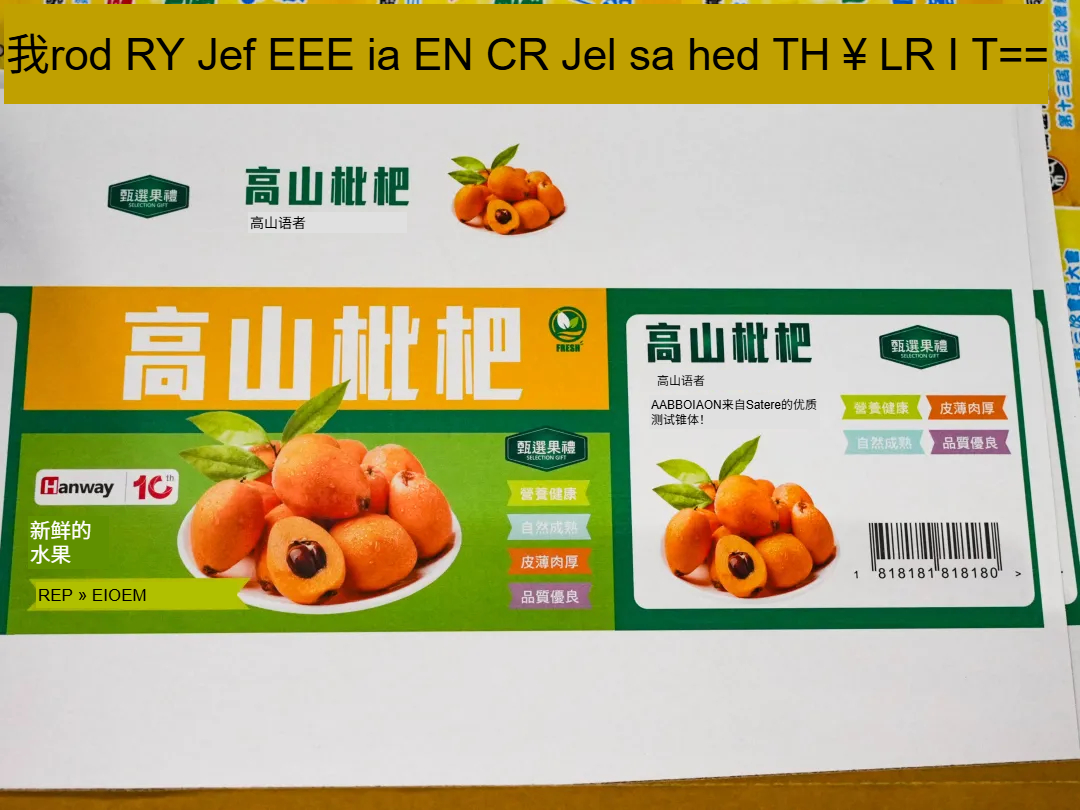
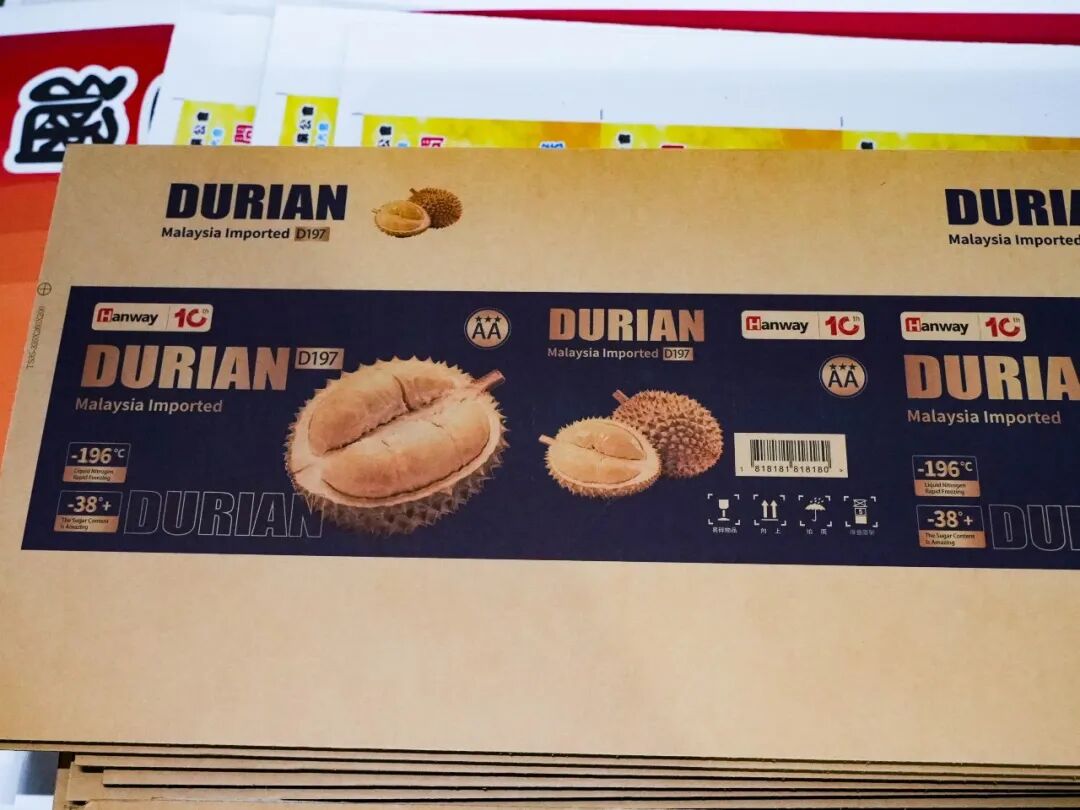
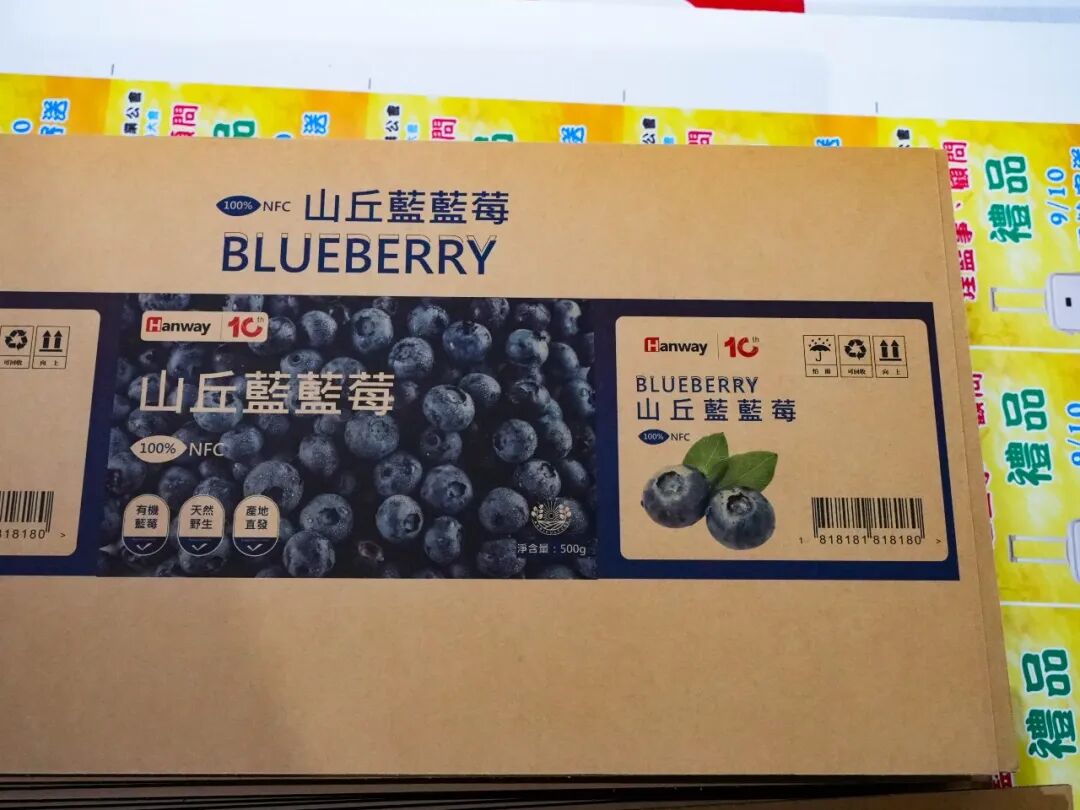
"We have a lot of small farmers in the south, and most of them now are second-generation taking over," Zhang Binglun said as he picked up a brightly colored fruit carton to show us. "The new generation of successors has a strong sense of branding. They want to capture the juicy color and fresh texture of their fruits on the packaging to build their personal brand. Even if digital printing costs a bit more per piece, they're okay with it. With the old equipment, the high plate-making fees and minimum order requirements would scare them off, and they'd have to settle for standard cartons."
[Standard cartons: these refer to ready-made boxes with common specs and sizes, fixed material and weight-bearing capacity. Factories usually have them in stock or on hand, making delivery fast and prices low. They're suitable for general-purpose packaging.]
Now, thanks to digital printing's features - "single-print capability, no plate fees, and high-detail reproduction" - Zhang Binglun can perfectly replicate clients' creative designs on cardboard. "When these boundary-breaking products are put in front of clients, they're amazed - and this is also why our custom orders and outsourced work from peers keep increasing."