


Germany's long-established post-press company Kama, with a history of 130 years, has filed for bankruptcy protection and is fully looking for someone to take over the business.
KAMA, a well-known German equipment manufacturer in the global mid- to short-run post-press processing and digital folding carton forming sector, has entered preliminary bankruptcy proceedings after the Dresden District Court officially issued a protective order.
According to the official announcement from the Dresden District Court in late September (Case No.: 535 IN 1746/26), the court has formally appointed Reinhard Klozer, an experienced restructuring expert from Dresden, as the provisional bankruptcy trustee.
Currently, this century-old precision machinery manufacturer, famous worldwide for its highly automated die-cutting, hot-stamping, and folding-gluing equipment, is working under the trustee's supervision to save itself. They are urgently looking for strategic investors to secure the long-term development of the company and its approximately 110 employees.
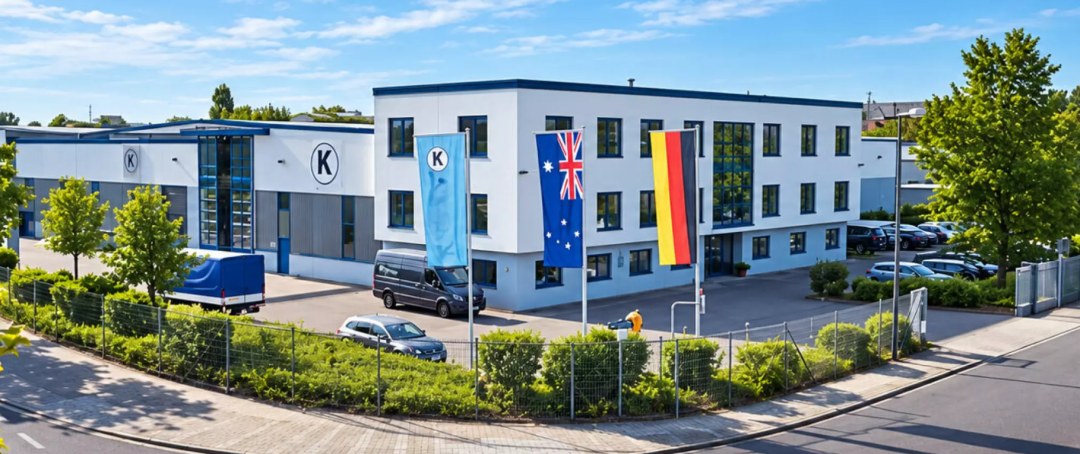
Establishing a "Consent Retention" in the Initial Protection Stage
It's important to note that the current legal actions at the Dresden District Court fall under Germany's bankruptcy law as protective asset preservation measures. This is not the same as the company entering bankruptcy liquidation or formal bankruptcy proceedings.
In this crucial transitional assessment phase, the court established a strict principle of "general consent retention" in its directives. This means that while KAMA's current management team retains a certain degree of autonomy in daily operations, any handling of assets that might potentially become part of bankruptcy property in the future, major business decisions, or fund transfers must first receive written approval from the interim bankruptcy administrator, Reinhard Klozer.
Klozer and his professional audit team have now fully taken over the company. Their core responsibilities include reviewing and verifying KAMA's current book assets, outstanding debts, existing order reserves, and actual cash flow pressures, while closely monitoring all fund inflows and outflows.
Although this assessment stage may cause some business uncertainty for suppliers, agents, and equipment purchasing clients along the supply chain, the underlying goal is to secure a few weeks to months of breathing room under judicial protection. This prevents creditors from rushing to seize assets and causing a collapse in the company's real value, thus creating legal space for subsequent asset restructuring or attracting new investors.
Dresden Factory Remains Operational While Speeding Up Investment Talks
According to local German industry media, KAMA's Dresden factory continues to carry out manufacturing, assembly, spare parts supply, and customer after-sales support in an orderly fashion. The management team is doing its best to keep the supply chain running smoothly to ensure that global clients are unaffected in terms of machine delivery and on-site technical services.
The specific causes behind the company's liquidity crisis have not been officially disclosed, but industry analysts generally speculate that over the past two years, the overall high-interest-rate environment in Europe has continuously squeezed capital expenditures for commercial printing and packaging plants. This, combined with Germany's high domestic energy costs, the burden of hiring highly skilled engineers, and long delivery cycles caused by some global supply chain geopolitical frictions, has collectively eroded this mid-sized equipment manufacturer's risk-buffering capacity.
Currently, finding strategic industrial capital or financial investors with potential synergies has become the core task for KAMA and its bankruptcy managers in their self-rescue efforts. The company hopes to reach a clear equity transfer or restructuring investment agreement before the court makes a final ruling on whether to formally open bankruptcy proceedings, thereby completely escaping the financial quagmire.
Over 130 Years of Technical Expertise: The 'Hidden Champion' of Small-to-Medium Batch and Digital Postpress
In the printing and folding carton packaging industry, KAMA, founded in 1894, is far from ordinary. Over more than a century of precision machinery evolution, this Dresden-based company has built a strong reputation in high-end industrial circles thanks to its deep expertise in die-cutting, creasing, hot stamping, and high-speed folding-gluing technologies.
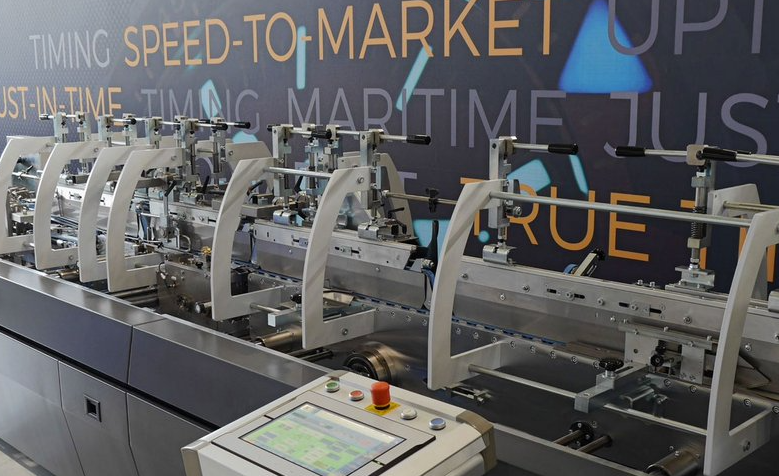
So far, KAMA claims to have delivered and installed over 800 high-performance postpress machines in more than 80 countries and regions worldwide. Its core product lineup has created a clear and unique differentiated competitive moat.
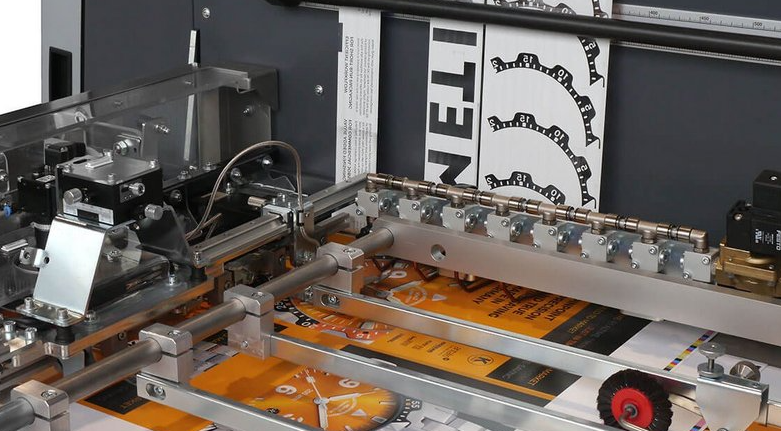
The ProCut series multifunctional die-cutting and hot stamping platform was developed for high-value surface finishing, integrating precise flat pressure die-cutting, deep embossing, microscopic anti-counterfeiting cold embossing, and high-precision hot stamping all in one. With extremely short machine adjustment times and minimal sample wastage, it has been widely praised in pharmaceutical packaging, high-end cosmetic boxes, and commercial premium post-printing sectors.
FlexFold and ProFold gluing machines break the limitations of traditional large-scale folder-gluers, which are complicated to change jobs and suited only for huge orders of hundreds of thousands of long sheets. They are specially designed for small-batch, multi-variety, irregular boxes, and quick job-change scenarios, making them key tools for small and medium-sized packaging OEMs to boost production efficiency.
Facing the global trend of packaging orders shifting from 'large-volume single-spec' to 'high-frequency, short lead time, and customized,' KAMA has long anchored its product development focus on automatic alignment and rapid job changing after digital printing, making it a crucial post-printing partner for mainstream digital printing brands.
The value of precision engineering remains, and successful restructuring depends on industrial capital taking over.
At a time when Europe's heavy-asset manufacturing is generally facing cost headwinds, KAMA's financial setbacks once again highlight the maximum pressure mid-sized specialized equipment manufacturers endure at the bottom of the macroeconomic cycle. But unlike technology-lagging traditional machine tool companies that face liquidation after market elimination, KAMA owns highly dynamic technological assets and a solid global installed base.
In the long-term transformation of the global folding carton market toward 'automation, deskilling, low scrap rates, and agile job changing,' KAMA's patents and software systems in high-speed automation and short-run industrial control still hold significant scarcity and commercial value.
The current preliminary bankruptcy proceedings essentially serve as a watershed for the company to implement a bankruptcy-protection-style reorganization. In the coming weeks, the asset audit conclusions of the temporary bankruptcy administrator and progress in attracting capital will ultimately determine whether this century-old German post-press pioneer can successfully start a new chapter of rebirth.