


Driving the smart manufacturing revolution, Danli buys 15 more HP digital presses, contract locked until 2029
In the global commercial printing, packaging, labeling, and direct mail marketing markets, which are rapidly moving toward an industry cycle of "small batch, fast delivery, data-driven, and highly customized," global printing communication and supply chain leader RR Donnelley (RRD) and digital printing technology pioneer HP have officially announced a major expansion strategic agreement.
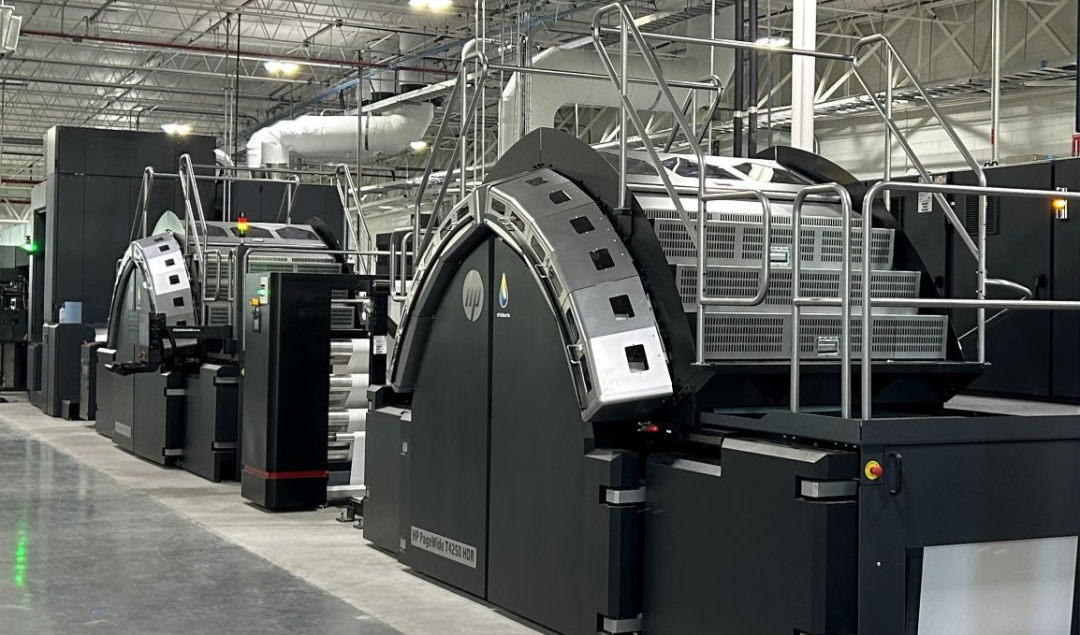
Under the agreement, the two parties will officially extend their strategic partnership, which has lasted more than 30 years, through 2029. As a key step in implementing this agreement, RRD will deploy 15 advanced HP digital presses at its global core manufacturing sites.
This investment builds on a long-term investment plan reached by both parties during the 2024 Drupa exhibition. It not only greatly expands RRD's digital printing production capacity and cross-regional agile delivery capabilities but also marks the deep integration of these high-end digital presses into RRD's self-developed global SMART (Systematic Manufacturing, Automation, and Robotics Transformation) intelligent manufacturing system.
Breaking Traditional Procurement Logic: Technological Advancements Deeply Embedded in Mid-to-Long-Term Strategic Plans
For this multi-year strategic partnership, executives from both sides clearly emphasized that this collaboration is far more than just a simple 'hardware equipment purchase.' It represents a joint evolution aimed at the digital transformation of the printing and packaging industry.
Allan Gardner, Senior Vice President of Engineering and Process Management at Danaher, pointed out that the core value of this agreement lies in ensuring that cutting-edge digital imaging and printing engineering innovations can be seamlessly integrated into Danaher's future strategic vision and factory project planning in real time. Through deep engineering collaboration, the two companies will continuously drive iterations in core machine technology, production line automation, and functional features, helping Danaher maintain extremely high delivery barriers amid global supply chain restructuring.
Orlan Sokol, Vice President of Strategy and Solutions for HP Printing Solutions, also stated that for decades, Danaher has focused on investing in technologies that translate into real business and operational advantages. Entering this new phase of collaboration not only confirms Danaher's strong trust in HP's digital printing technology but also demonstrates the shared commitment of both companies to lead the global graphics industry toward a 'connected, highly agile, and digitally driven future.'
Currently, multinational brand clients' demands are fundamentally shifting in areas like billing statements, direct mail marketing, high-end commercial print, and precise folding cartons and self-adhesive labels. Traditional large-scale long-run printing is quickly being replaced by short-run orders characterized by high frequency, strong personalization, and short lead times.
Craig Robertson, President of Marketing and Operational Printing at Danaher, analyzed this market pain point. Whether dealing with complex transactional statements, highly customized direct mail ads, or functional consumer packaging, end customers increasingly expect printed materials to offer stronger personalization and immediate responsiveness.
Even more importantly, while clients seek customization and flexibility, they are unwilling to compromise on the stable color, consistency, and high reliability required for industrial-scale production. This expansion gives Danaher the confidence to strike a balance between the two, allowing its production lines to handle extremely complex and highly data-driven work with greater efficiency and throughput.
Deep Integration into the SMART Framework: Data-Driven Industrial IoT Revolution Across Continents
The newly introduced 15 HP digital presses will be fully integrated into Danaher's recently promoted SMART manufacturing framework across the group. This intelligent system, designed to eliminate 'data silos' in the traditional printing industry, relies on a standardized shared data foundation and industrial IoT technology, connecting factories and core machines across continents to create a modern production network covering the entire operational process.
With synchronized data across three continents, sensor data from key machine nodes is directly linked to the company's top-level ERP system. A unified standard data model enables North American, European, and Asian manufacturing bases to achieve millisecond-level dynamic coordination in production scheduling, raw material inventory, and real-time warehousing, thereby enabling dynamic capacity balancing across the global network and smoothly resolving regional supply chain disruptions.
AI algorithms take charge of dynamic scheduling and predictive maintenance. The system leverages industrial-grade AI and machine learning algorithms to analyze massive streams of production line sensor data around the clock, autonomously handling work order scheduling based on order urgency, and accurately predicting consumable lifespan and mechanical failures, triggering predictive maintenance before unplanned machine downtime occurs.
Human-machine collaboration and closed-loop quality inspection reduce setup waste. In the physical execution on the shop floor, digital presses deeply collaborate with flexible cooperative robots and online automated scanning quality inspection devices. Digital closed-loop calibration significantly shortens the time required for traditional press setup and alignment, substantially reducing paper and material waste while pushing the overall utilization of a single machine to a new high.