


It is difficult to find the cause of the label breakage.
Label web break refers to the phenomenon of the backing paper of a label breaking during the automatic labeling process. This is one of the most common problems that can occur during automatic labeling. Once a label web break occurs, the entire automatic labeling machine must stop until the label is reconnected before it can continue working. Handling a label web break usually wastes 3–10 minutes each time. Occasionally encountering this problem during labeling is acceptable, but frequent occurrences will inevitably affect labeling production efficiency. More seriously, many companies have labeling lines connected to production lines. If the labeling line stalls, it can also halt the production line, causing significant economic losses for the company. So, what are the causes of label web breaks?
PART 03
Backing Paper Strength Issues
In addition to the above points, the strength of the backing paper itself is also crucial. Many manufacturers nowadays, in order to save costs, require material suppliers to provide more competitively priced materials. To reduce costs, material suppliers often use cheaper backing paper to produce adhesive materials. Since the surface layer needs printing, changing the printing suitability could have a significant impact, and the adhesive is key to ensuring the performance of the adhesive product. If there is poor adhesion after replacement, it could lead to considerable economic losses. Therefore, backing paper is often the first choice for cost savings. However, most economical backing papers use shorter fiber raw materials during papermaking, which results in lower tensile strength - in other words, the paper is more fragile and cannot withstand stretching.
Adhesive materials made from this kind of backing paper generally do not cause problems in the manual labeling field. They also perform adequately in low-speed automatic labeling. However, problems are likely to occur in high-speed automatic labeling. High-speed automatic labeling machines operate quickly and under high tension, requiring high tensile strength of the backing paper. Some special products even require using films with higher tensile strength as backing paper for adhesive materials, because paper-based materials can no longer meet the requirements of automatic labeling equipment.
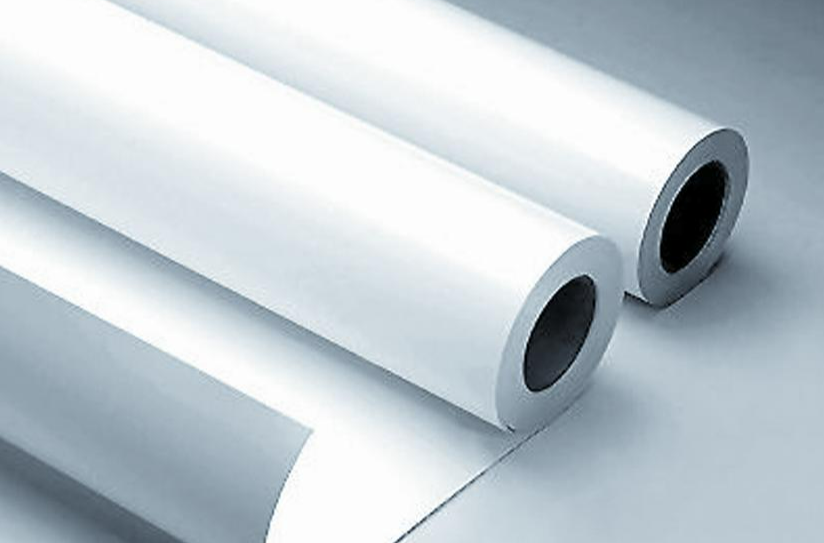
Generally speaking, label breakage caused by the tensile strength issue of the backing paper itself tends to occur irregularly, and the break is relatively clean without delamination. This type of problem is often the hardest to identify the cause of. Therefore, it is recommended that companies with the capability purchase a tensile tester to measure and record the tensile strength of the backing paper for each batch of raw materials. If the end user complains about automatic labeling breakage and the cause cannot be found, the tensile strength data of the backing paper from the problematic batch can be compared with that of other batches to see if there is a significant difference.
Apart from differences in backing paper strength caused by raw materials, another factor that should not be ignored is the decrease in strength due to the backing paper losing moisture during the printing process. Currently, the vast majority of pressure-sensitive label printing uses UV ink, which requires exposure to UV lamps to fully cure. Conventional UV lamps emit a large amount of heat during operation. If the heat from the UV lamp is too high, or the equipment operates too slowly, the material will spend a relatively long time under the UV lamp, which can easily cause the moisture in the backing paper of the adhesive material to evaporate, resulting in a decrease in the tensile strength of the backing paper.
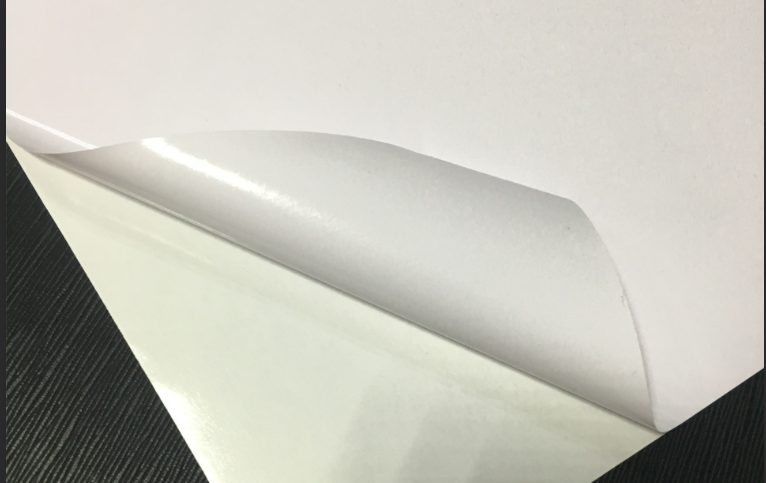
Therefore, in the production process of self-adhesive labels, for orders that require automatic labeling and where the production process involves the material passing under multiple sets of UV lamps during printing, it is recommended to install a humidification device at the paper receiving station of the equipment to rehydrate the material. Enterprises that have the conditions can also install a temperature and humidity control system in the workshop to maintain a relative humidity of 50%–60%, which can effectively solve the problem of adhesive label backing paper losing tensile strength due to dehydration caused by UV lamp baking. Additionally, in recent years, LED-UV lamps have begun to be widely used. This UV light source is a cold light source, producing very little heat, and can also effectively address the problem.
PART 04
Problems with Silicon Coating on Backing Paper
Sometimes, when we observe broken materials, we find that the fracture surface shows delamination, and there are some very small spots at the fracture where there is no silicone oil. This is caused by defective silicon coating, leading to label breakage during application. In the self-adhesive label production process, silicone oil needs to be coated on the backing paper. The role of silicone oil is to prevent the adhesive from seeping into the backing paper, ensuring that the face layer and the backing paper do not stick together. Generally, about 8–12 grams of silicone oil are applied per square meter of backing paper. Since the silicone oil layer is very thin, high precision is required for silicon coating during the production of self-adhesive materials, as well as a high level of cleanliness in the workshop. During the silicone coating process, if small dust particles fall onto the coated silicone layer, it is very easy to form point-like silicone defects, often referred to as 'spot-free silicone.' Because these defects are very small, they are often not easily detected during printing and processing, but they cause problems during automatic labeling. Since each label must be applied to a product, if the backing paper beneath one of the labels has spot-free silicone areas, the face layer and backing paper will stick together. During automatic labeling, as the face layer is scraped off by the applicator, it often tears the backing paper, causing breakage.
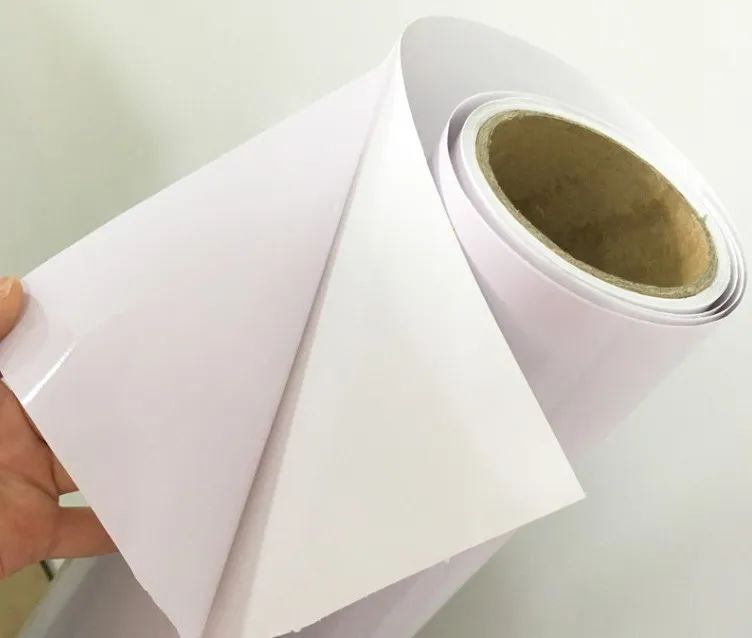
These kinds of problems are caused by defects in the material itself, which neither the printing factory nor the end user can solve. Fortunately, the occurrence of dot-shaped silicone-free spots is usually low, and the number is very small. If it happens occasionally, you can negotiate with the customer, ask them to continue using it, and finally compensate them for some losses. If dot-shaped silicone-free spots appear on a large scale, they are usually discovered during die-cutting and waste removal at the printing factory and will not reach the end user. In the rare case that a significant number is found when the end user is labeling, the goods can only be replaced.
The above summarizes several causes and solutions to material breakage issues during the automatic labeling process. In actual application, there are other reasons that can also lead to labeling breaks, but due to limited space, they are not listed one by one. It is hoped that peers who read this article can draw lessons and share the valuable experiences you have summarized in your daily production process with everyone.