


2 main categories, 4 subcategories, digital hot stamping has actually developed to this extent!
Since the drupa printing exhibition in 2016, the digitalization trend has received matrix-level responses in printing applications worldwide. For the domestic printing market, digital printing and supporting post-press enhancements have long been familiar to the printing industry.
Under the current demand for short, fast, and rapid packaging products combined with the Internet, the upgrade of digital post-press finishing is even more critical. Post-press enhancement is a key trigger point for quickly empowering printed products in the printing field. As the most eye-catching and shelf-artistic finishing effect in post-press enhancement, the hot stamping process has also undergone digital upgrades and improvements over nearly a century of evolution.
Traditional Hot Stamping
Before the 1930s, gold and silver that were not easy to oxidize in air were used for hot stamping. Utilizing their excellent ductility, they were hammered and rolled into extremely thin metal foils, with a coating applied to one side, and then used for stamping. In contemporary hot stamping processes, gold foil has been replaced by vacuum-metallized aluminum. Due to the low cost and good metallic luster of vacuum-metallized aluminum, the hot stamping technology using it has rapidly developed and been widely applied, yet we still habitually refer to it as 'hot stamping.' Currently, there are three main equipment forms for achieving the hot stamping process: flat-on-flat, roll-on-flat, and roll-on-roll.
01 Flat-on-Flat

Flat Pressing Process Structure Diagram
Flat Pressing: The automatic flat pressing hot stamping machine has a structure basically the same as the manually operated flat pressing type; the only difference is that paper feeding and paper collecting are done by mechanical grippers. The stamping area of a flat pressing hot stamping machine can range from the size of a credit card up to 1050mm. The positioning stamping speed is 1000 to 7000 sheets per hour. In flat pressing hot stamping machines, representative equipment brands include Boss and Geiss from Switzerland, as well as domestic brands like Yahua and Yutian. Currently, hot stamping and die-cutting dual-purpose machines are the most popular type of flat pressing hot stamping machine.
02 Rotary Flat Press
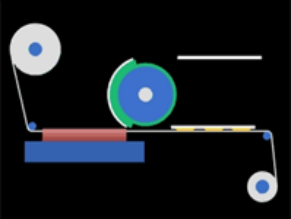
Round Pressing Flat Process Structure Diagram
The round pressing flat hot stamping machine belongs to medium to large-sized machines and is mostly modified from round pressing flat printing machines.
The round pressing flat hot stamping machine uses a flat hot stamping plate and a round embossing roller. The flat hot stamping plate is easy to produce, while the round embossing roller makes the stamping pressure linear, compensating for the shortcomings of the flat pressing flat hot stamping process. The disadvantage of round pressing flat hot stamping is that it cannot achieve hot stamping and embossing in a single operation, and the production speed is relatively slow, usually 2000–2500 sheets per hour.
Its positioning stamping speed is 1000–3000 sheets per hour, generally using small-diameter foil rolls, so it is rarely used for high-speed mass production. During stamping, there is linear contact between the stamping foil and the substrate, which can be used for stamping non-porous materials, such as polyester materials or smooth surfaces coated with varnish, and can also perform large-area stamping-tasks that are difficult for flat pressing flat printing machines to accomplish.
03 Round Pressing Round
The round pressing round process is usually applied to rotary printing production lines, such as narrow-web rotary flexographic presses, and can achieve combined processing. Round pressing round hot stamping technology is mainly applied to roll paper printing and print-post combined production lines.
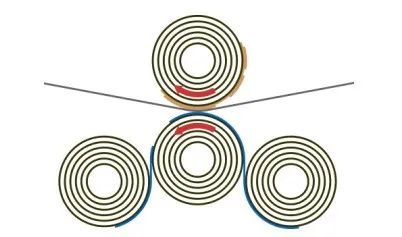
Cross-Rolling Process Structure Diagram
From the perspective of the structural composition of electro-deposited aluminum, as shown in the following figure:
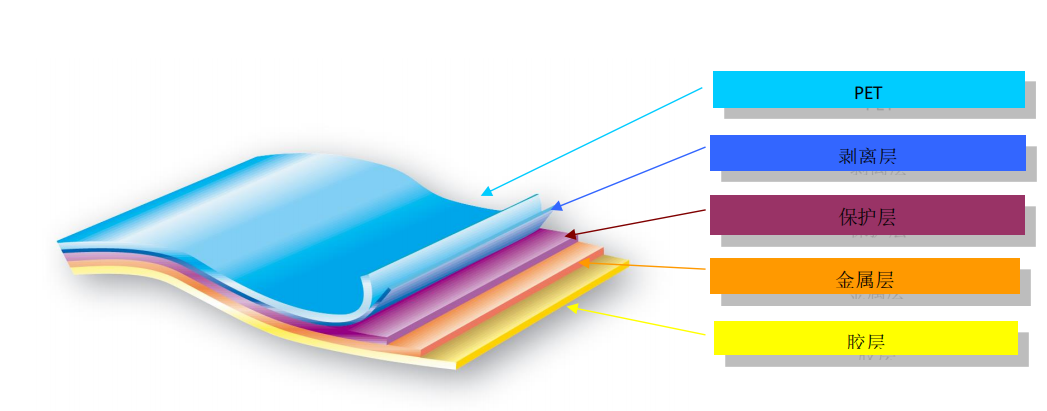
Composition of electrochemical aluminum structure
PET: The vast majority of PET substrates have a thickness of 12μm, and the use of this thin mylar substrate is conducive to improving the clarity of the hot stamping pattern.
Peel layer: This layer has the properties of adhesion and peeling, and in its normal state, it ensures that the transfer layer is adhered to the mylar substrate; Under the right temperature and pressure conditions, the transfer layer can be separated from the mylar substrate. With careful control of the peeling layer, the transfer effect we need can be achieved.
Protective layer: usually the thickness is usually 1~3μm, which plays a protective role in the hot stamping graphics, so that the hot stamped patterns are wear-resistant and scratch-resistant, so that they are not easy to wear and scratch, and can also make the hot stamping graphics resist the corrosion of certain chemicals.
Metal layer: A reflective metal layer with a thickness of only 0.03μm formed by metal evaporation of aluminum under high temperature vacuum conditions can produce a mirror metal decorative effect on hot stamping graphics.
Adhesive layer: usually coated with a layer of hot melt adhesive, which can directly contact the substrate during hot stamping. Under sufficient hot stamping temperature, pressure, and time conditions, the entire transfer layer is firmly bonded to the hot stamping substrate through adhesive.
The traditional hot stamping process is only suitable for stable long orders. Once the hot stamping plate is determined, the hot stamping film and post-press equipment can only produce a single unchanging hot stamping content and effect. In the whole production cycle, the traditional hot stamping process has large debugging losses and long test cycles, and it is difficult to adjust according to market demand after machine confirmation, which brings inconvenience to actual production.
Reviewing the current digital printing application trend, it is not difficult to find that the traditional process is incompatible with the younger market entry point when dismantling the traditional hot stamping process. Since then, the application of digital hot stamping has been greatly improved, and its variable hot stamping effect combined with the high production efficiency of no plates has quietly reorganized the process of printing and finishing.
Digital hot stamping
01
Ultra-fine 2D digital hot stamping: integrated digital "post-stamping" digital "post-stamping" digital "post-stamping"
(1) Digital stamping
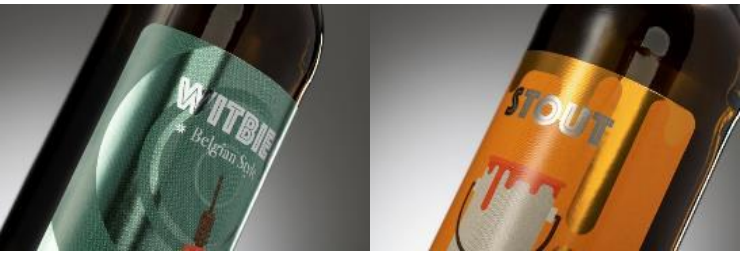
Foil Stamped Labels for Alcohol - Digital Foil Post-Printing Process
Digital foil post-printing is an entirely new combination that integrates traditional cold foil techniques with digital plate-less technology. It applies digital or traditional printing processes to the effects of variable foil stamping, providing printing with a special metallic texture as a new approach.
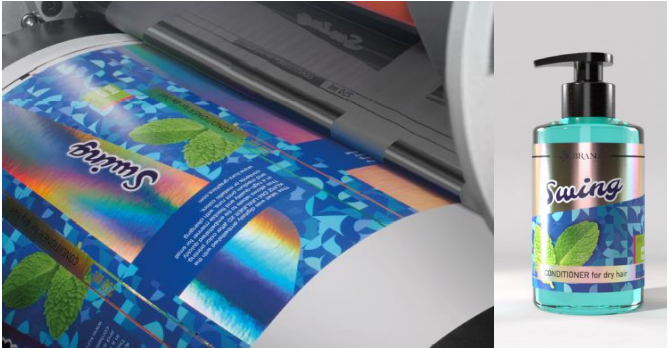
Digital Hot Stamping - Variable Foil Cosmetic Labels
(2) Digital Printing followed by Hot Stamping
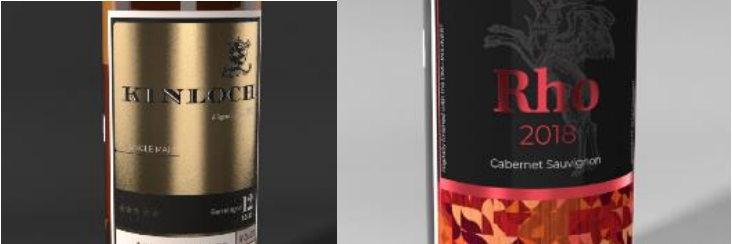
Alcohol Labels - Digital Post-Printing Foiling Process
Digital post-printing foiling refers to completing the digital hot stamping process on pre-printed traditional or digital substrates. It can more directly display variable foiling finishing effects, highlighting the foiling on each printed product while also achieving a unique pattern foiling effect for each item.
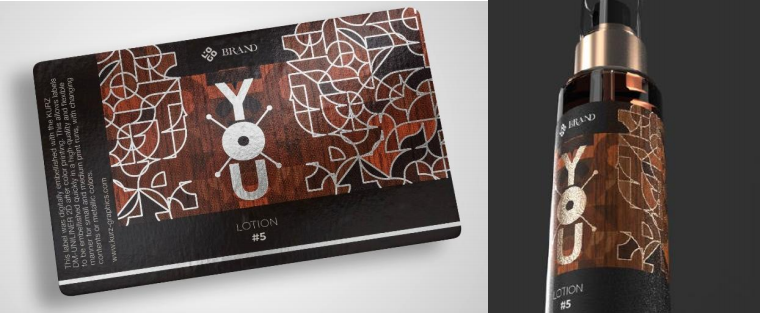
Digital Post-Printing Hot Stamping – Daily Chemical Labels
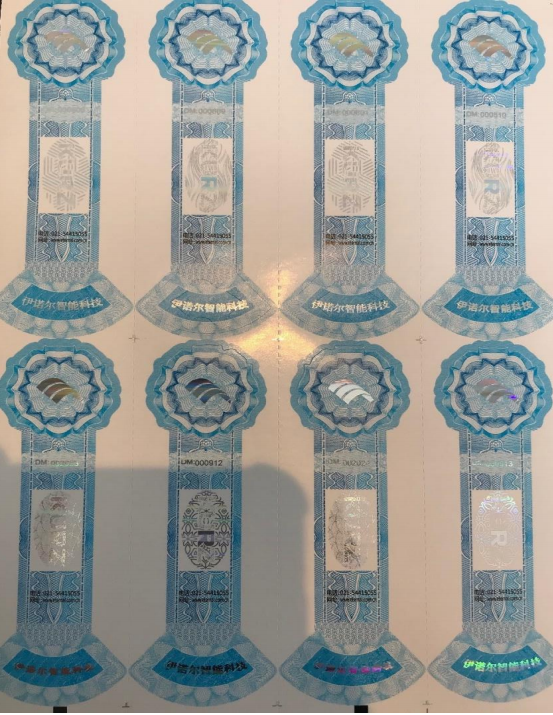
Digital Hot Stamping Multi-Process Anti-Counterfeit Special-Shaped Labels
Ultra-Fine Variable Digital Hot Stamping Anti-Counterfeit Rosettes, Variable Hot Stamping Large Database
Digital post-print hot stamping integrates the efficiency-enhancing advantages of the hot stamping process, while forming a closed loop with variable hot stamping. Under the condition of ultra-fine hot stamping quality that cannot be replicated, it not only enhances the added value of the product but also achieves a decorative effect of unique hot stamping anti-counterfeiting for each item. The digital production efficiency of this equipment can reach 75m/min, and production materials can be reused up to three times, effectively improving production efficiency and reducing usage costs.
02
Digital 3D Hot Stamping, Digital 3D, UV Varnish
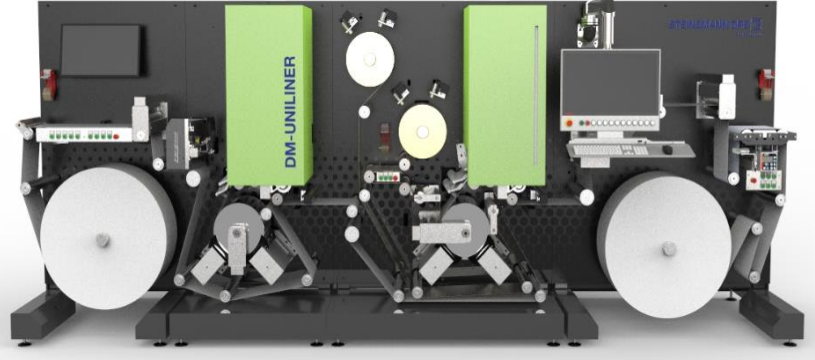
Industrial-grade Roll-to-Roll Digital 3D Foiling Equipment
The 3D digital foiling process generally uses DOD (Drops on Demand) digital printheads as the 'creator' of variable foiling patterns. The digital foiling adhesive is jetted onto the substrate with variable droplets, and then cured using a UV drying lamp. Before the foiling base, the digital adhesive is activated to go through a series of processes such as bonding, peeling, and foiling attachment with electroplated aluminum, thereby achieving the digital foiling effect.
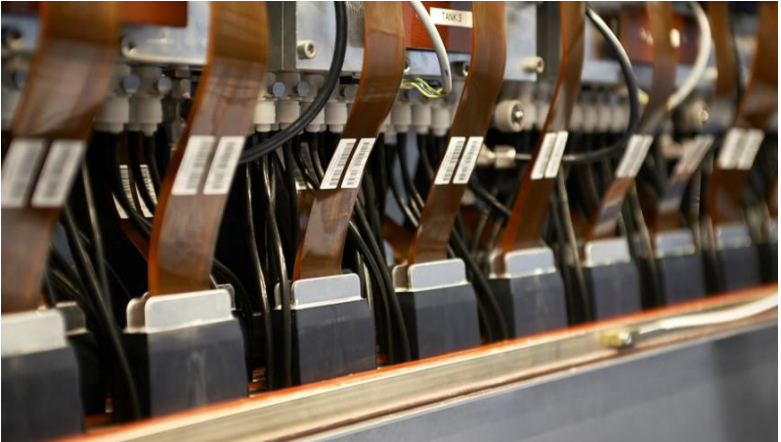
Industrial-grade 3D Hot Stamping Print Head Module
The 3D UV varnish effect is largely similar to the principle of 3D digital hot stamping. Both use DOD inkjet methods to spray glue or varnish onto the substrate to build up height, then the area that needs hot stamping is bonded and transferred with electroplated aluminum, while the non-stamping areas do not bond with the electroplated aluminum and can go through the paper path directly after printing.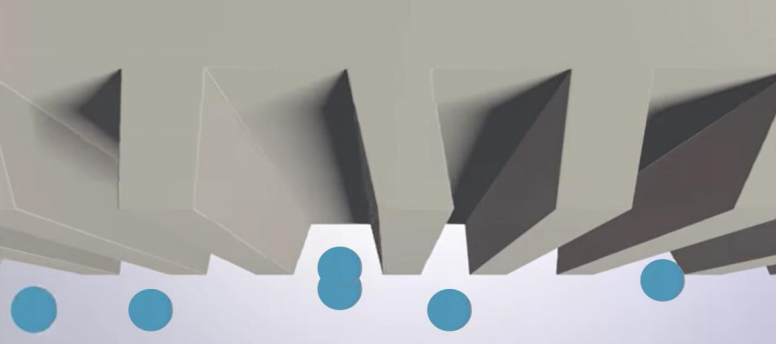
Digital UV varnish/digital glue spraying a static image from the nozzle
Moreover, inkjet technology can basically achieve the function of variable droplets, which also lays the foundation for its unique digital effects: embossed hot stamping effect. In traditional processes, hot stamping and embossing need to be combined, whereas with digital hot stamping, it can be achieved in a single pass of the paper.

3D Digital Foil Stamping Process Lines Matte Effect
Digital post-press foil stamping based on multi-ink droplet technology can also achieve eye-catching effects at different heights on the same sheet of substrate, and is compatible with various special textures such as solid areas, lines, and matte finishes. In special applications, by changing the levels of foil stamping dots, it is possible to achieve a gradient effect in digital foil stamping from solid areas to fine matte. In terms of the height of digital foil stamping, it can achieve height variations ranging from 4 to 200µm.
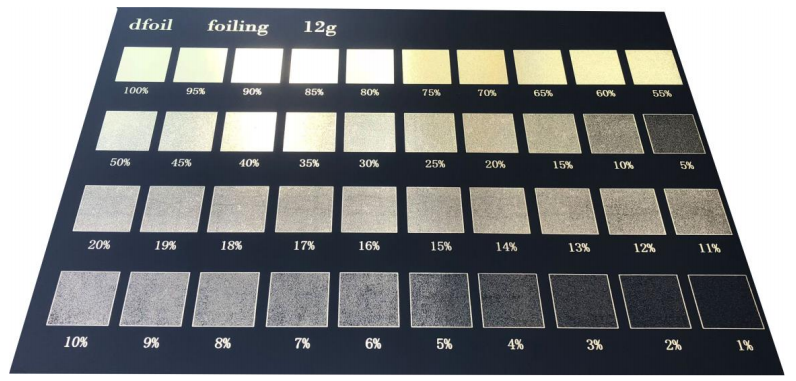
3D Digital Foil Gradient Effect
The 3D UV varnish effect can be used independently or combined with 3D digital foil. The tactile feel of the UV varnish can vary in height from 4 to 200 µm. In terms of effect, it can achieve variable height spot UV, matte, fine embroidery lines, and varnish gradients.
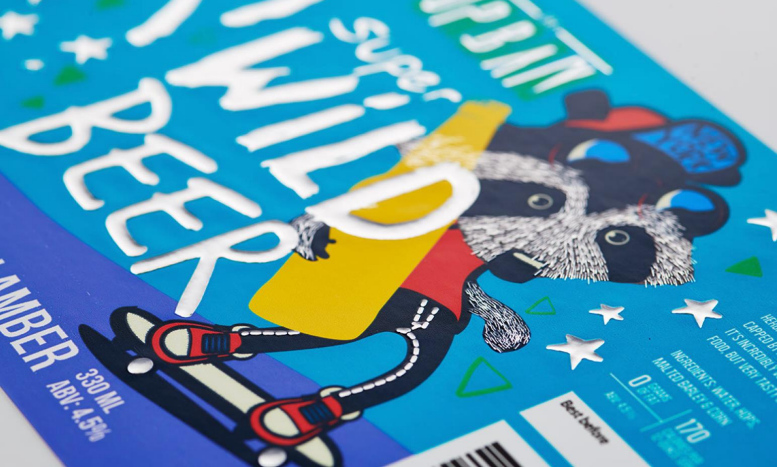
Beverage Craft Label - Digital 3D UV Varnish Effect
The world's high-end digital hot stamping equipment, under the premise of a single pass of the paper, can not only achieve the unique digital hot stamping effects mentioned above, but also replace traditional post-screen printing processes, accommodating both 'digital hot stamping' and 'digital UV' dual digital finishing processes, guiding digital finishing towards a more comprehensive and high-end design direction.
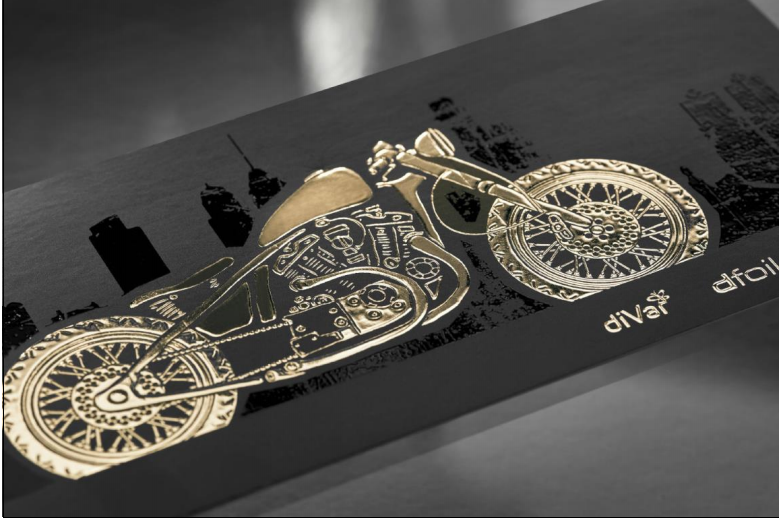
Digital UV Varnish and Digital Foil Stamping Dual Craft Effects
The wheels of time keep moving forward, and the early labor-intensive printing industry has gradually begun to shift towards the digital track during the pandemic. As a brand-new growth point in the industry, digital foil stamping still faces issues such as slightly higher costs and lower production efficiency compared to traditional printing. However, it is precisely during this transitional period that innovative processes are increasingly aligning with product enhancement and small-batch market demands. Opportunities are driving the practical implementation of digital hot stamping applications, while also pushing us to dismantle the unfavorable factors of traditional printing, reorganize market resources, and build an industry stronghold that integrates traditional and digital methods and fosters collaborative innovation.