


When Newspaper Printing Problems Appear Intermittently, See How Established Newspapers Pinpoint the Key Factors!
Industry Characteristics and Background
Newspaper printing is a relatively special type of printing, with its uniqueness mainly reflected in its contradictions: on one hand, the public is generally tolerant of newspaper printing quality issues, such as color deviation, misregistration, or even dirty pages; as long as normal reading is not affected, these issues are usually not taken seriously and seldom trigger complaints. On the other hand, the paper and ink used in newspaper printing are special, which causes newspapers to encounter many problems during printing that are rarely seen in commercial printing. In addition, newspaper printing is somewhat monopolized; apart from newspapers themselves, almost no other companies are involved in this field. Therefore, discussions on newspaper printing quality are actually limited to industry exchanges between different newspaper printing factories. Even in university printing textbooks, discussions on newspaper printing quality are relatively lacking, as the textbooks focus more on commercial printing content. Based on these points, the author has organized some quality issues encountered in work into this article to share with peers for reference.
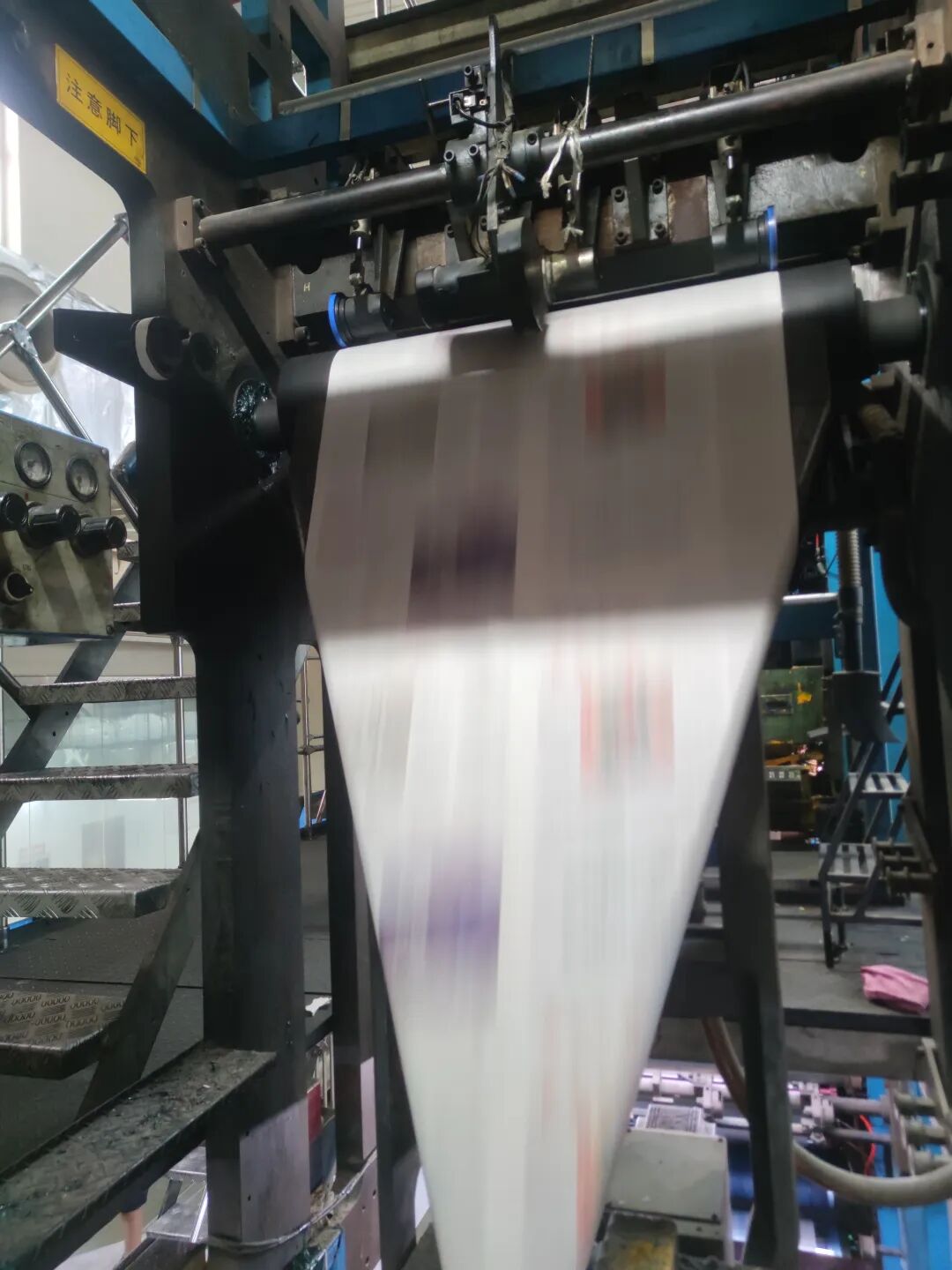
Newspaper printing production process
About twenty years ago, with the popularization of color newspapers, the industry commonly added various shapes of color blocks at the base of newspapers to control the printing quality of color images. Later, as printing factories improved their color newspaper printing technology, many manufacturers gradually abolished the color measurement and control strips, and our printing factory is one of the few that has not removed the measurement and control strips. Because of this, we now have a key "weapon" to solve the next printing problem.
Problem Discovery and Investigation
The problem occurred quite accidentally: we found that the printed red and yellow solid ground two-color main headings often appeared grayish, and when observing the yellow solid part of the control strip, we noticed it was noticeably grayish, as if the ink was too dirty. Initially, we suspected the yellow ink was contaminated, so we took a series of measures, including regularly cleaning the ink fountain and adding a separate lid to the yellow ink to prevent contamination when wiping the black rubber cloth. However, none of these measures had any effect. Next, we further observed the printing effect after the yellow ink was cleaned and compared it with the actual results of yellow ink directly taken from the ink pipeline printed on newsprint. However, we found that sometimes the printing effect was normal, sometimes abnormal, which put the problem in a difficult position.
Although this issue has not caused a serious impact on actual production and is intermittent, it has always troubled us. Therefore, I instructed every employee in the workshop to pay close attention and try to identify the key factors affecting this issue. During the investigation, we also discovered a phenomenon: after printing, the black PS plate appeared with the first three color patterns. We use CMYK for printing color codes, but this phenomenon is not continuous.
The reason behind this phenomenon is that the ink printed on the paper by the pre-order printing unit is transferred by the rubber cloth of the subsequent printing unit onto the printing plate, forming a certain degree of lipophilic foundation. Essentially, the hydrophilic zone of the printing plate is damaged by friction, commonly referred to in the industry as "rubbing." If the black printing plate is removed and examined at this time, it will be found that in the control strip area, the black plate originally only had black solid blocks and 50% mesh blocks, but where the yellow solid blocks should have appeared, patterns matching the shape of the yellow solid blocks appeared, with a yellow color tinged with gray. This undoubtedly indicates that the color blocks that should have been printed only in yellow ink are now slightly covered by a layer of black ink. It is said "slightly" because, when observing the yellow solid color mark, one can see that the grayness is excessive and looks dirty, but it is not the color produced by overprinting yellow and black ink.
Root Cause Locking and Resolution
Could it be a printing pressure issue? After a lengthy and comprehensive check, we confirmed that all the stress was fine, which left us confused again. Could it be a problem with the plate material? We have always used plates from the same manufacturer and have never changed them, but this issue has come and gone and is not constant. So, we began investigating ink. We have long alternated between inks from two manufacturers; here is the background. Moreover, newspaper printing ink is transported using large ink cans; after the manufacturer delivers the ink to the printing plant, it is pressed into our ink cans. For convenience, we use the pinyin initials of the last character of the two manufacturers' names, called J Factory and Y Factory, respectively.
Through long-term observation and comparison of preserved samples, we discovered a key pattern: when using J Factory's black ink, the yellow color marker always displays abnormal gray bumps; After switching to Factory Y's black ink, the yellow color marker returns to normal yellow. At this point, observing the black printing plate removed from the machine, you can see that the corresponding yellow area on the control strip on the black plate is blank.
Subsequently, we contacted Factory J to inform them that there was a quality issue with the black ink, but they initially did not accept it. Later, we had them send people to the workshop to first test Factory J's black ink printing. The next day, the same machine used Factory Y's small bucket black ink printing to observe and compare the printing results and the condition of the control strips. Only then did they accept our judgment.
Subsequently, Factory J proactively admitted that because the ink grinding process consumed a lot of electricity and took a long time, they deliberately reduced the number of grinding times during production to reduce costs, resulting in coarser ink pigment particles and triggering the "plate rubbing" phenomenon, which in turn led to a series of printing quality issues. However, if the printing factory lacks professional measuring equipment, the ink problems at Factory J cannot be detected with the naked eye alone. Later, Factory J proactively replaced us with qualified black ink, and the previous problems disappeared. However, the entire process of resolving the problem took quite a long time. This situation arises partly because newspaper print readers tend to be more tolerant of print quality; On the other hand, if we do not adhere to a "break the clay pot and ask to the end" attitude, these hidden problems would be hard to discover. Moreover, the small number of ink manufacturers also gives some manufacturers room to exploit shortcuts.