


The achievement of industrial chain collaboration, a new paradigm of sustainable packaging: paper-plastic separated 'Fresh Box' wins the 2026 World Star Packaging Award
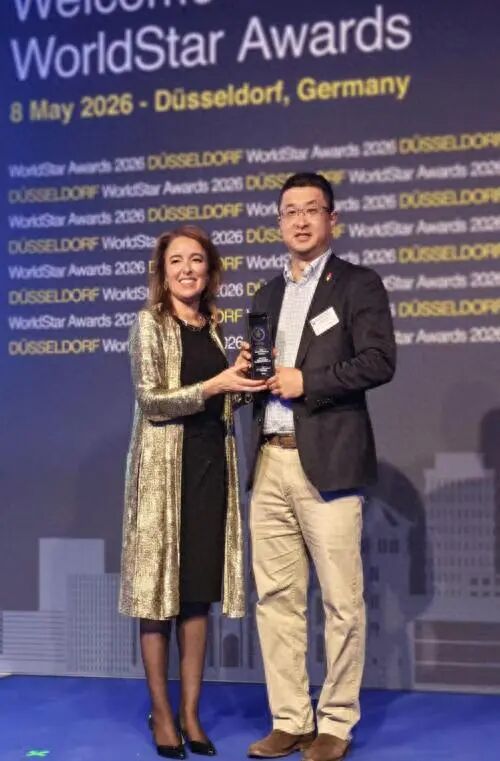
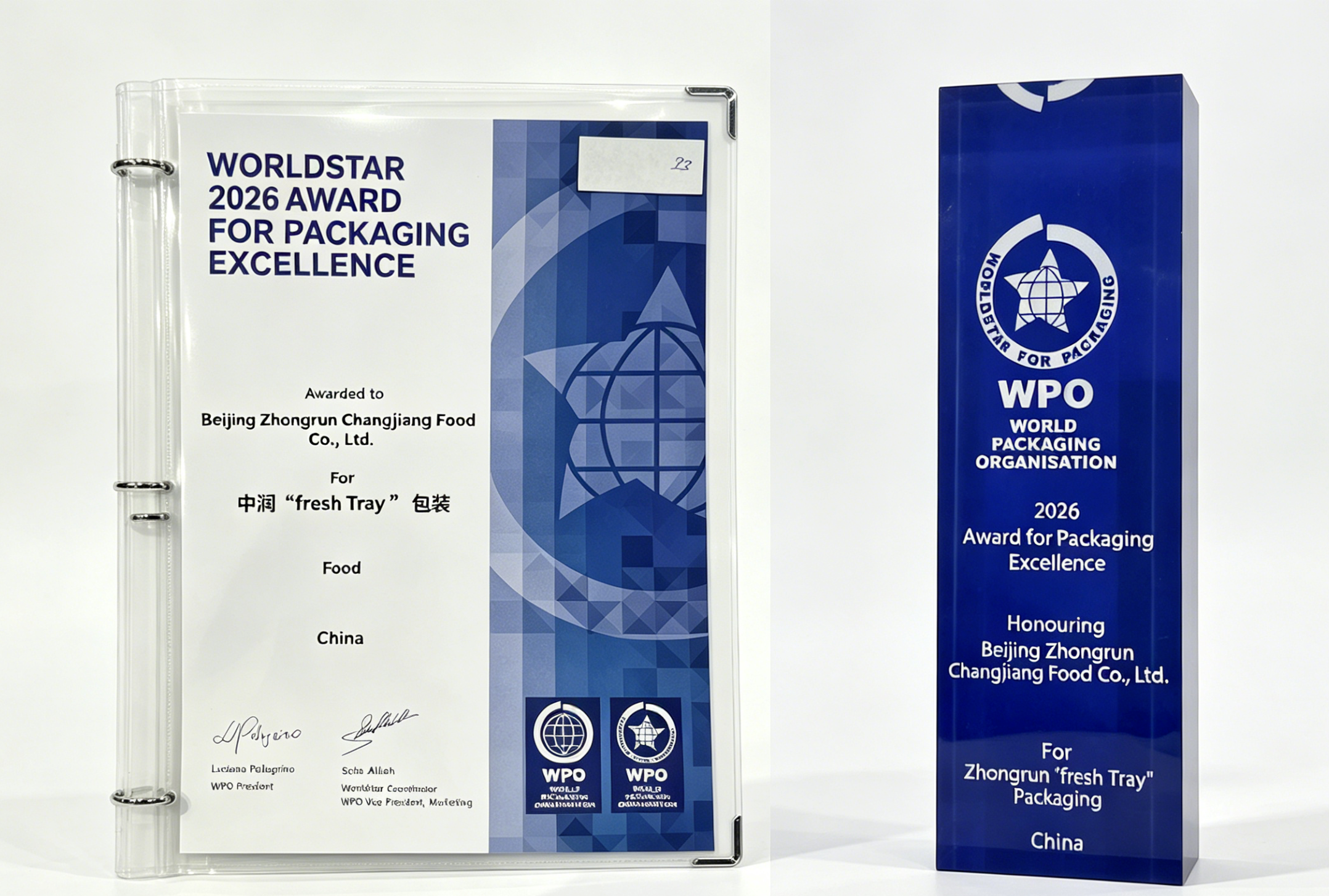
On May 8 local time in Germany, the 2026 WorldStar Awards were announced. The MAY brand, jointly created by consumer packaging company Amcor, equipment company Mondelez, and paper packaging company Yutong Technology, was ultimately applied to Zhongrun Yangtze's "Little Fresh Box" paper-based modified atmosphere packaging (hereinafter referred to as Zhongrun "Little Fresh Box"). With its breakthrough innovations in rapid paper-plastic separation, plastic reduction and carbon footprint reduction, and efficient freshness preservation, it stood out from hundreds of entries worldwide and won the 2026 WorldStar Awards.
The WorldStar Awards are presented by the World Packaging Organization (WPO) and represent the highest standards in global packaging design and technological innovation. The award for Zhongrun "Little Fresh Box" is a recognition of the collaborative innovation model involving the brand owner, packaging company, and equipment supplier, and also provides a replicable industry model for global sustainable packaging.
Structural Innovation in Fresh Food Packaging, Forging a Sustainable Future in Packaging
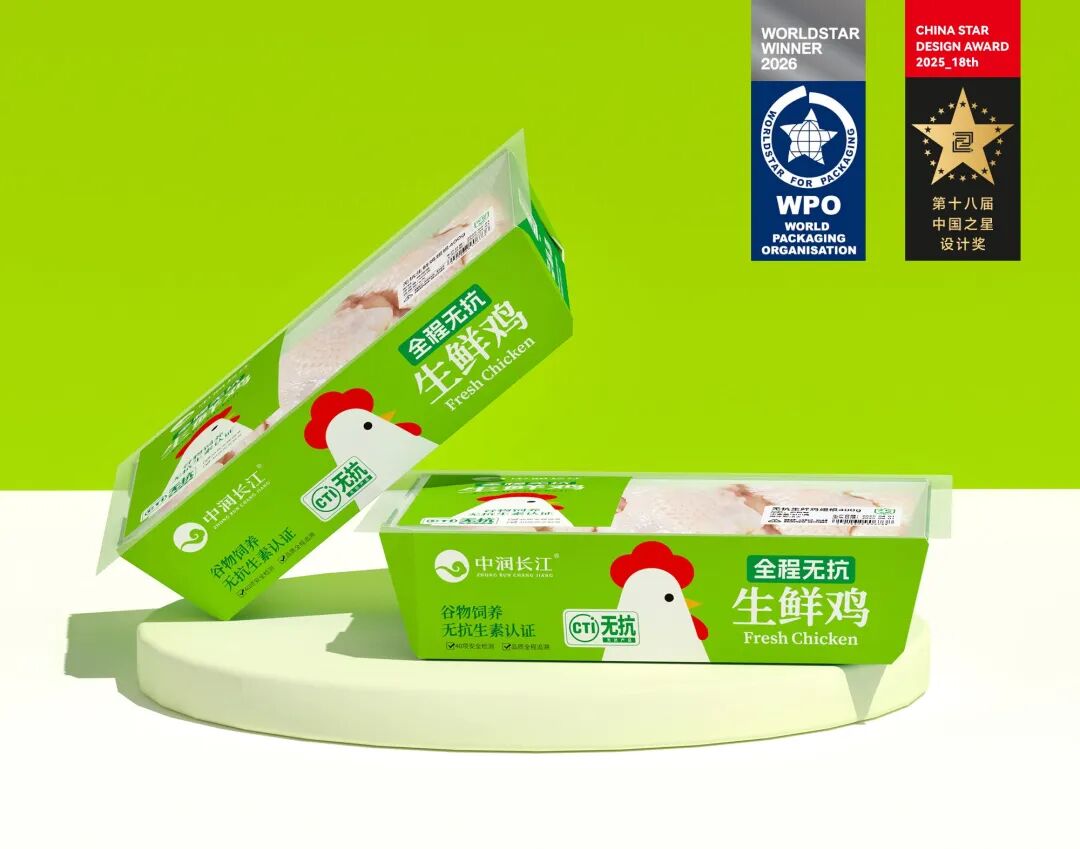
The core theme of this year's WorldStar Awards is sustainable packaging, emphasizing driving environmental protection, low carbon, and efficient resource use through innovative design. Zhongrun's "Xiaoxian Box" revolutionizes traditional meat preservation packaging, achieving up to 60% plastic reduction, easy paper-plastic separation, and efficient recyclability, balancing commercial value with environmental responsibility.
Zhongrun's "Xiaoxian Box" groundbreakingly combines an eco-friendly paper outer box with high-performance stretch film. Its paper-based tray, made from recyclable materials such as white kraft paper and corrugated cardboard, significantly replaces traditional plastic trays, paired with high-barrier plastic lids and inner liners. This effectively extends meat freshness to 8–10 days while ensuring transport safety, significantly achieving 60% plastic reduction and 30% carbon reduction. At the same time, its innovative design allows consumers to easily separate paper and plastic after use, greatly improving waste sorting and material recycling efficiency, addressing the pain point of traditional composite materials being "recyclable but not separable," and laying the foundation for future recycling systems.
Sun Zesheng, General Manager of Zhongrun Yangtze, stated: "As a global packaging honor awarded by the World Packaging Organization (WPO), this recognition is the highest affirmation of our environmentally innovative design of 'paper-plastic separation, plastic and carbon reduction.' From the original intention of creating the Zhongrun Xiaoxian Box to stepping onto the global stage, we showcase China's sustainable food concept to the world through recyclable packaging and traceable quality. With craftsmanship for innovation and responsibility for the future."
Ni Weimin, General Manager of the Meat and Dairy Packaging Division of AMCOR Greater China and Group Vice President, also said: "Sustainability is no longer optional; it has become an industry consensus and a mainstream consumer expectation. The award for Zhongrun's 'Xiaoxian Box' is just the beginning. We look forward to using this opportunity to promote more green packaging from concept to widespread adoption, making environmental protection a collective choice and conscious action across the entire industry chain."
Multi-dimensional Collaboration, Replacing Zero-Sum Games with Global Optimization
Currently, both upstream and downstream industries of the packaging sector widely face misaligned demands: equipment seeks stability, materials demand innovation, and brands pursue speed. Independent decision-making by each party easily falls into the trap of 'local optimization.' The award-winning success of Zhongrun's 'Little Fresh Box' based on MAY demonstrates that only through joint creation along the value chain can a truly optimal solution be achieved.
The implementation of Zhongrun's 'Little Fresh Box' relies on a standardized process supporting cross-organization collaboration-Amcor and Yutong Technology provide the plastic and paper packaging components respectively, while MondiWick provides packaging equipment and debugging, ensuring stable adaptation and efficient production on the production lines. As the end-brand, Zhongrun Changjiang deeply participates in scenario testing, freshness verification, and terminal experience optimization. Through synchronized design, joint testing, and iterative optimization, the product eventually reaches trial sales.
'Local optimization often leads to zero-sum games; only value chain co-creation can achieve global optimization,' said Nick She, President of Amcor Greater China and North Asia. 'Amcor aims to break corporate boundaries, working with brands, equipment suppliers, and paper material suppliers to establish a collaborative mechanism with aligned goals, resource sharing, joint R&D, and synchronized testing, incorporating material adaptation, equipment compatibility, production line implementation, and terminal experience into a unified optimization system, tackling the inefficiencies in cross-organization collaboration from the source.'
From the birth of MAY, to the debut of Zhongrun's 'Little Fresh Box' at the Expo, and eventually winning international packaging awards, Amcor supports local industry chain collaboration, strengthens joint innovation capabilities, and leverages full-chain packaging solutions to deepen its presence in the Chinese market. Relying on a complete industrial system and a dynamic consumer market, it actively responds to consumption upgrading and promotes high-quality, sustainable development in the packaging industry.