


Kangmei reported 17.8 billion yuan in revenue for the first three quarters and turned a profit of nearly 1.7 billion yuan, confirming it will resume dividends next year.
In the complex backdrop of diverging global liquid food consumption recovery and geopolitical disruptions driving up cross-border shipping fees and aluminum-plastic raw material costs, SIG Combibloc, a global leader in aseptic paper packaging and filling technology, has released its financial report for the third quarter and first three quarters of 2026.
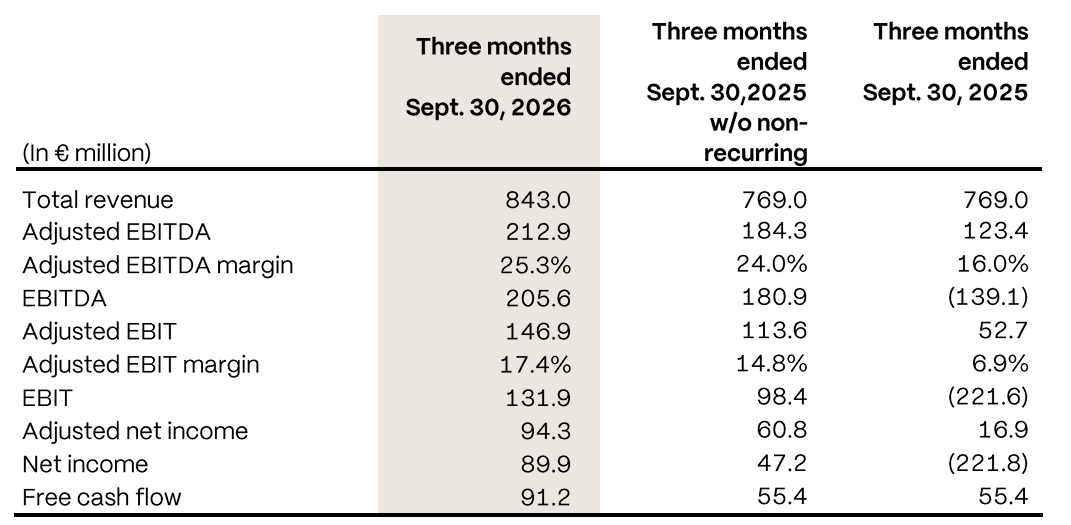
The data shows that in the third quarter of 2026, the company achieved an operating revenue of 843 million euros (about 6.258 billion RMB), up 9.6% from 769 million euros in the same period last year; net profit was 89.9 million euros, compared to a net loss of 222 million euros in the same period last year, and a net loss of 47.2 million euros after non-recurring items.
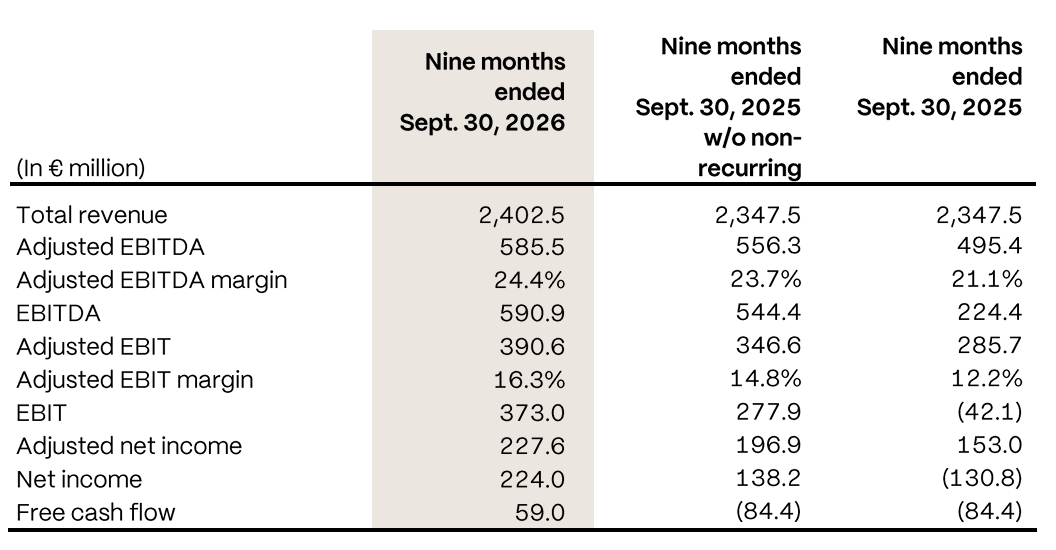
From January to September 2026, the company achieved a total revenue of €2.403 billion (about RMB 17.838 billion), compared to €2.348 billion in the same period last year; net profit reached €224 million (about RMB 1.663 billion), completely turning around the passive situation of a net loss of €131 million in the same period last year.
Thanks to the effectiveness of operational efficiency measures, optimization of fixed asset dilution, and smooth pass-through of product surcharges, SIG Combibloc CEO Anni Eckens announced an upward revision of the 2026 full-year adjusted EBIT margin guidance to 16.0%–16.5%, and explicitly stated that cash dividends will officially resume in 2027.
Aseptic cartons become the main growth driver, while the flexible packaging segment faces pressure and adjustment
From a product category perspective, SIG Combibloc's three main product lines show clear structural differentiation under constant exchange rates and fixed resin prices.
Under constant exchange rates, core aseptic cartons achieved a steady 4.2% revenue growth. As a high-margin staple business, this segment saw significant volume growth in emerging regions such as the Americas, India, and the Middle East & Africa, fully demonstrating the essential resilience of ambient liquid dairy and non-carbonated beverage packaging.
Under constant exchange rates, refrigerated carton revenue slipped slightly by 2%, mainly due to fluctuations in local European consumption habits for pasteurized milk and fresh juice, as well as discount-driven supermarket competition.
Under assumptions of both constant exchange rates and fixed resin prices, bag-in-box and spouted flexible packaging revenue declined 4.4% year-on-year, as food and daily chemical liquid clients were cautious in placing orders during inventory reduction cycles, leading management to launch a special restructuring initiative.
Asia-Pacific and the Americas steadily lead, while Europe and the Middle East face mixed challenges
Looking closer at regional markets, SIG Combibloc has built an efficient dynamic balance between emerging growth markets and mature stock markets.
The Americas region saw revenue grow 4.5% at constant exchange rates and resin calibers to 678 million euros in the first three quarters, contributing 245 million euros in the third quarter.
The U.S. market performed strongly in the instant food application sector, especially in small-size "single-portion" sterile dairy packaging for outdoor and fitness scenarios, maintaining high demand; Mexico's liquid dairy orders continued to grow rapidly; In Brazil, while dairy consumption expanded, it successfully mitigated upstream bulk fluctuations by precisely implementing raw material cost surcharges.
In the Asia-Pacific market, revenue grew 3.2% at constant exchange rates and resin caliber to 643 million euros in the first three quarters, and Q3 revenue was 232 million euros, continuing to outperform the regional market.
The company has made breakthrough progress in emerging lower-tier retail channels such as campus student milk and bulk snack collection stores; It is closely capitalizing on the upgraded demand from Asia-Pacific consumers for whey protein drinks and functional high-calcium milk, with the penetration rate of high value-added packaging materials rising rapidly; While Southeast Asian dairy products are steadily recovering, the company is deeply advancing the commercial mass production of differentiated packaging "DomeMini" with key strategic clients, building competitive barriers through highly recognizable shelf formats.
Excluding currency and resin price disturbances, IMEA region's revenue grew 5.8% in the first three quarters to 332 million euros, with third-quarter revenue reaching 115 million euros.
The core of growth came from surging sales of sterile carton in markets such as Egypt, Saudi Arabia, several North African countries, as well as South Africa and Mauritania, with the previously low base providing some flexibility; Despite repeated disruptions in cross-border shipping chains caused by the Red Sea situation and geopolitical turmoil in the Middle East, the company maintained overall commercial progress in the region through dynamic adjustments of supply chain plans and surcharges.
As the market most directly impacted by inflation and weak macro consumption, Europe's revenue in the first three quarters fell slightly by 1.2% on a fixed basis to 749 million euros.
The core obstacle was the general decline in juice consumption across Europe, combined with low-level raw milk purchase prices at downstream farms that have remained low and volatile for years, putting severe pressure on the balance sheet of dairy processing customers; However, the third quarter alone still rebounded and stabilized at 251 million euros, mainly thanks to the smooth conversion and commissioning of a newly completed new high-speed filling line, as well as the successful imposition of special surcharges on the market in response to rising raw material premiums in the Middle East.
Operating leverage released, adjusted EBIT margin jumps to 16.3%
On the cost and expense side, SIG Combibao demonstrates strong industrial operation optimization and cost transfer capabilities.
In the first three quarters of 2026, the Group's adjusted EBIT reached €391 million (compared to €347 million excluding non-recurring expenses in the same period of 2025); the adjusted EBIT margin reached 16.3%, a significant improvement of 150 basis points compared to the same period last year (14.8% excluding non-recurring expenses).
During the reporting period, rising PE and aluminum foil prices pushed up the total purchase bill, and cross-border shipping surcharges were introduced. However, the company effectively offset imported inflation through refined operational leverage, increased proportion of high value-added product portfolios, and the immediate "raw material cost-linked surcharge" applied to customers.
Thanks to the organizational streamlining and lean workshop manufacturing project launched in 2025, the Group's sales, general, and administrative expenses as a percentage of revenue decreased from 11.7% in the same period last year (excluding non-recurring items) to 11.1%, showing significant results in fixed cost control.
In the first three quarters, statutory net profit turned positive to 224 million euros, driven mainly by the acquisition price allocation of the massive intangible asset amortization set during the private equity fund Onex's acquisition, which will be fully depreciated by the end of 2025.
Business spin-off establishment, 250 million yuan impairment provision, and dividend restoration
Along with the release of the third-quarter report, SIG Combibao unveiled a clear roadmap for the next phase of profitable growth at the "Capital Market Day" event.
The Group announced a complete streamlining of its existing business structure, officially dividing it into two independent global core reporting segments: "Aseptic Carton" and "Pocket-in-Box and Spout Soft Bag."
This move aims to eliminate friction losses in matrix management and strengthen the accounting responsibility and decision response for each product line to independently respond to market changes. As a direct financial result of the organization's adjustment, the company expects to make approximately EUR 250 million in non-cash goodwill and asset impairment provisions in the fourth quarter of 2026.
To address the purse-in-box and open-mouth soft packaging businesses, which drag down overall performance, SIG has formulated a special turnaround strategy: completely eliminating low-margin, highly homogeneous products, and focusing polymer membrane materials and specialty valve technologies on high-barrier, high value-added industrial and commercial "sterile flexible packaging" niches, restoring profitability through lean workshop optimization.
The medium-term goal is to achieve an annual compound growth rate of 3% to 5% in endogenous revenue across the group, driving the group's adjusted EBIT margin to surpass 18%, with the core pillar "sterile cartons" business requiring an adjusted EBIT margin to fully exceed 20%, an industry-leading level.
Assuming constant exchange rates and resin prices, the forecast of total annual revenue growth of 0% to 2% is maintained, but the adjusted EBIT margin range is officially raised to 16% to 16.5%; Capital expenditures are strictly locked in the 6% to 8% revenue range, with an estimated effective tax rate of 26% to 28%.
It clearly stated that by 2027, cash dividends will be fully restored based on actual operating performance for fiscal year 2026, with 30% to 50% of the adjusted annual net profit directly returned to shareholders in the form of dividends.