


Digital printing giant Xerox posted a net loss of over 6.7 billion in Q3, facing a serious cash flow crunch
Against the backdrop of a continuing shift in global traditional office printing demand, reduced IT spending by companies, and persistently high macro refinancing rates, global office equipment and production digital printing pioneer Xerox Holdings has officially released its financial report for the third quarter of 2026 and simultaneously lowered its full-year 2026 guidance for adjusted operating profit and free cash flow.
Hit by underwhelming performance, large non-cash impairments leading to huge accounting losses, and the lowered guidance, Xerox's stock price plunged sharply after the earnings release. The core numbers in the report show a clear split: "huge apparent losses, slight improvement in the main business, but a sharp drop in cash-generating ability."
Quarterly revenue reached $1.87 billion (about 12.44 billion RMB), down 4.7% year-on-year; excluding the negative impact of exchange rate fluctuations, it actually fell 4.5% YoY. According to US GAAP, the Q3 net loss hit $1.015 billion (about 6.75 billion RMB), translating to a diluted loss of $7.73 per share; this was $255 million wider than the net loss in the same period last year.
The immediate cause of the sharp net loss expansion was the company taking a concentrated non-cash goodwill impairment of $955 million (pre-tax $959 million) for certain business segments. Excluding the goodwill impairment and one-off restructuring gains and losses, Q3 adjusted net profit was only $7 million (compared with $27 million in the same period last year).
Quarterly adjusted operating profit was $124 million, up $59 million year-on-year against the trend, with an adjusted operating margin of 6.6% (up 330 basis points YoY). However, cash generation was severely hit: operating cash flow was only $30 million (down $86 million YoY), and free cash flow plunged to just $7 million (down $81 million YoY).
Equipment business sees a rise for the first time in three years, but four major headwinds eat into the defense lines
During the investor call after the earnings release, Xerox CEO Louis Pasterg confirmed that Q3 showed "two completely different realities": on one hand, the reorganized core printing equipment achieved a rare organic expansion; on the other hand, segments facing external cycles and cost volatility deteriorated much faster than management could hedge or absorb within the year.

1. The Upside: Hardware Shipments See First Organic Growth in Three Years, Production Printers Get Stronger Against the Trend
This marks the first time in nearly three years that Xerox has achieved year-on-year organic growth in its equipment sales. Since Xerox began segmenting its equipment statistics, entry-level printing device revenues have for the first time in history surpassed mid-range devices.
This shift clearly reflects that global companies are leaning toward practical products with lower procurement costs for office printing; at the same time, it confirms the strong support provided by the compact device lineup that Xerox expanded through its acquisition of LMI.
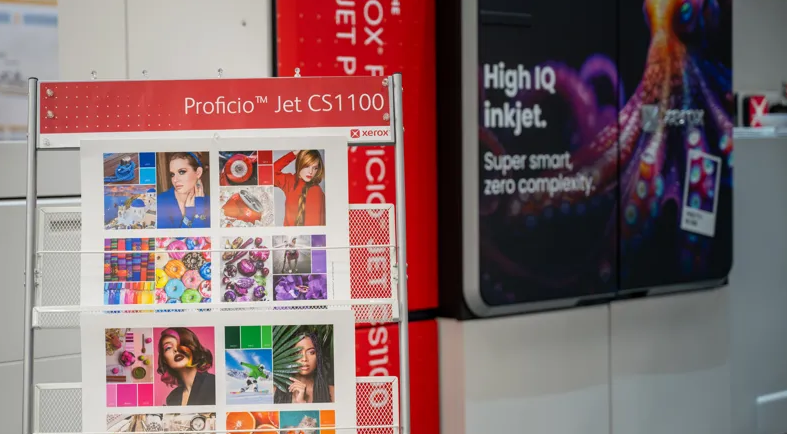
As the core area for professional commercial printing and industrial publishing, production printer installations have grown 13% year-on-year against the market trend, with corresponding equipment revenue up 14% year-on-year. It's worth noting that this growth was achieved even before the three brand-new platforms that Xerox unveiled last month at the professional printing expo are slated for commercial production next year.
By establishing a deep strategic partnership with industrial digital printing pioneer Seiko, Xerox has successfully integrated digital inkjet and toner technologies into the high-demand industrial labels and specialty paper packaging market, laying a crucial foundation for its future push for market share in industrial-grade digital printing.
2. The Downside: Four Major Negative Factors Align, Dragging Down Full-Year Expectations
Pastor seriously pointed out that Xerox is facing four external pressures that are too big to digest in a single quarter: stubbornly high inflation in micro parts, logistics, and tech labor; although entry-level device sales have surged, their per-unit gross margin and subsequent consumable lock-in value are significantly lower than mid-to-high-end machines, passively diluting overall gross margin conversion; the push for paperless offices and hybrid work is continuing to suppress printing frequency; and the enterprise IT services and digital workflow segment, originally hoped to smooth out hardware cycle swings, is underperforming in both delivery and customer acquisition.
Due to the combined impact of these negative factors, Xerox management has officially lowered the 2026 full-year financial guidance: total revenue is now expected to be around $7.6 billion; adjusted operating profit for the year has been revised down to a range of $450 million to $475 million; and full-year free cash flow has taken a steep hit, now expected in a tight range of $50 million to $100 million, compared to previous rosy expectations.
The third-largest family shareholder publicly pressures: supports a pause-and-defend strategy and calls for launching a strategic review of the XFS financial business
Xerox's aggressive defensive measures and sluggish secondary market valuation directly triggered deep involvement and public statements from key institutional investors.
Starteepo, a well-known European investment firm based in Prague and led by Chairman František Bostel, as Xerox's third-largest strategic shareholder, quickly voiced its opinion after the earnings report, giving a strategic response that both supported and pressured management's actions.
Bostel clearly stated that he fully understands and supports the board's decision to suspend dividends on common and preferred shares, calling it an 'extremely responsible move aimed at fully preserving cash for the company.' At the same time, he praised management's execution in extending debt maturities and reducing $53 million in debt principal through a debt swap.
Starteepo pointed out that the third-quarter report clearly shows that Xerox must significantly improve organizational execution efficiency by 2027, putting full focus on 'fully restoring cash generation capabilities and deleveraging.'
Starteepo specifically applauded Xerox for, in the third-quarter presentation materials, detailing for the first time the operations of 'Xerox Financial Services' (XFS) separately. XFS has long been responsible for providing customized leasing, installment credit, and asset-backed financial support for commercial customers purchasing Xerox printing equipment worldwide.
Bostel emphasized that XFS is a seriously undervalued 'hidden gem.' Given the significant gap between Xerox's current apparent share price and the company's true intrinsic value, Starteepo solemnly urged Xerox's board and management to take more proactive measures to unlock value.
This includes immediately hiring professional financial advisors to explore all potential 'strategic alternatives' for the XFS financial services business and the entire Xerox group, including sales, spin-offs, or bringing in strategic restructuring capital. The firm clearly requested that this strategic assessment process run in parallel with the company's current deleveraging and cost-reduction efforts.