


Say Goodbye to Ineffective Packaging! Senior Design Consultant from a Well-Known Pharma Company Breaks Down Packaging Innovation Trends
On September 10-11, 2026, the Printing and Packaging Industry Economic Forum and the National Printing Managers Annual Conference were grandly held in Hefei, Anhui. Industry peers gathered together, and many experts shared insights to inspire new ideas and broaden horizons for attendees. We will gradually compile the highlights from the conference speeches, so stay tuned for more impactful viewpoints.
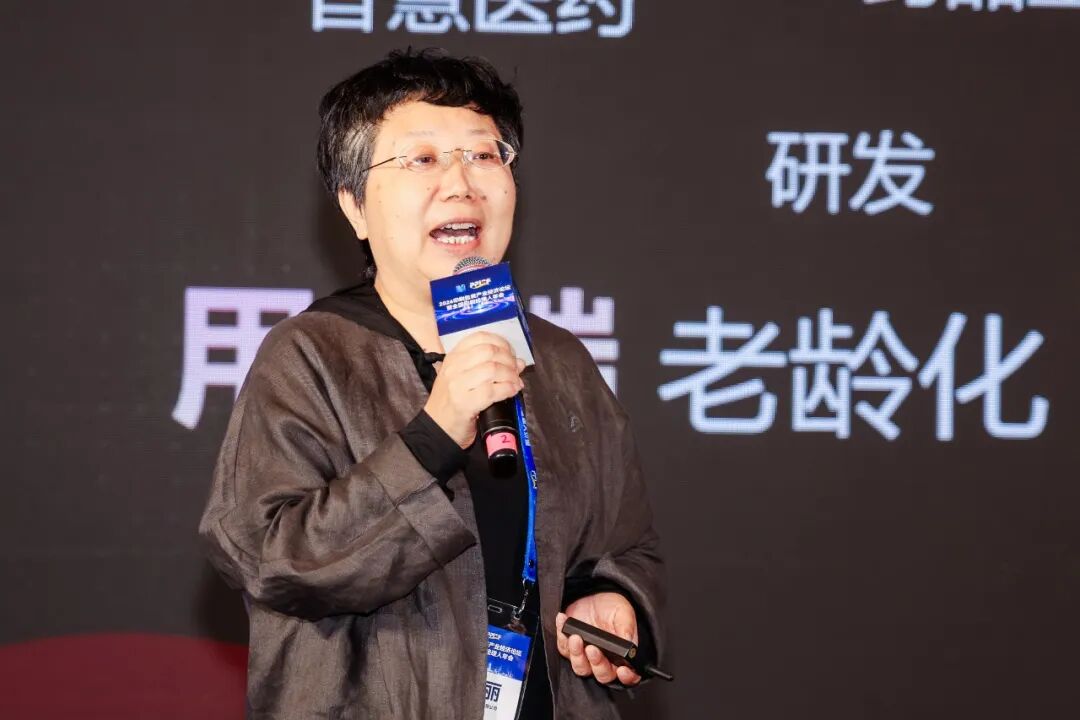
This issue shares the speech content by Gao Li, a design consultant from Yabao Pharmaceutical Group Co., Ltd., titled 'Looking at Pharmaceutical Packaging Innovation Trends from Changes in the End Market.'
 Pharmaceutical packaging is facing multiple changes, clarifying the priority of packaging value
In recent years, the pharmaceutical packaging industry has been under multi-dimensional external pressures. On the manufacturing side, automated production lines demand higher compatibility from packaging materials; on the policy side, centralized procurement continues to advance, with stricter requirements for environmental protection and compliance; on the channel side, smart hospital pharmacies are being implemented, imposing rigid constraints on packaging box sizes; and on the user side, as the population ages, medication safety and easily understandable information have become rigid demands. These multiple factors are pushing pharmaceutical packaging to move beyond the traditional focus on visual beautification and upgrade toward comprehensive value in compliance, safety, cost reduction and efficiency, and green low-carbon practices.
Pharmaceutical packaging has a clear value priority, with compliance and safety taking top priority, ensuring accurate transmission of drug information and safeguarding the baseline of medication safety. On this basis, packaging can then convey brand identity, integrating corporate philosophy and culture into the design to achieve end-point brand display. At the same time, packaging design shouldn't be an afterthought; it should be involved during the drug development planning stage, coordinating box selection, production line compatibility, storage, logistics, and other elements in advance to avoid high costs from later adjustments.
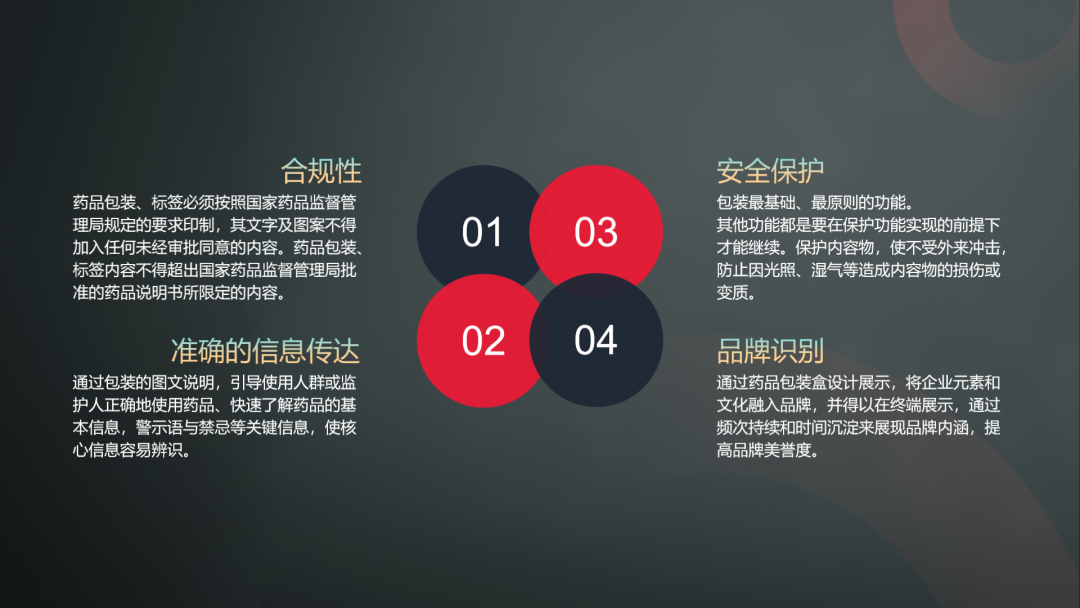
 Promoting Four Major Practice Directions and Implementing Packaging Consolidation
Based on Yabao Pharmaceutical's own experience, the integration of drug packaging mainly focuses on four areas: specification management, space management, process design, and standardization.
In terms of specification management, as a pharmaceutical company with over 40 years of development, Yabao Pharmaceutical has accumulated a wide variety of existing packaging specifications. The small boxes, instructions, ampules, and logistics carton specifications are scattered, leading to issues like complicated mold categories, fragmented procurement, and difficulties in adapting to automated production lines. To address this, Yabao Pharmaceutical consolidated specifications for various packaging materials and promoted the standardization of instruction sizes. For the 6ml ampules, custom optimization was carried out, keeping the same diameter as the 5ml ampules and only adjusting the height, which helps improve the internal space utilization of small boxes. At the same time, the specifications for small boxes and logistics cartons were unified, adjusting the quantity per box to improve storage and pallet loading efficiency.
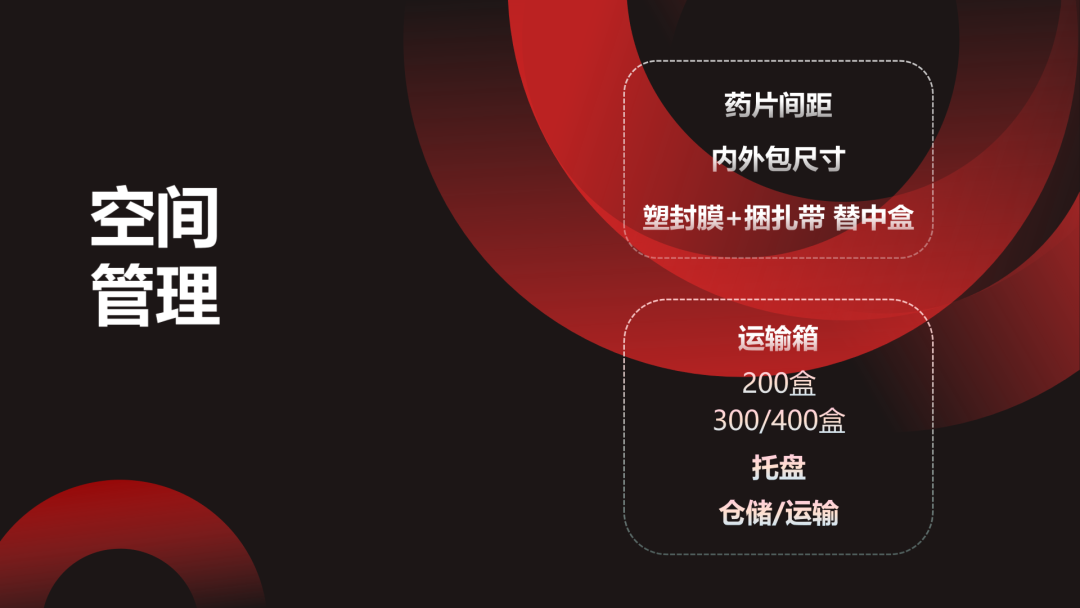
In terms of space management, while fully ensuring collision prevention and transport safety, Yabao Pharmaceuticals has optimized the internal gaps of tablets, injections, and packaging boxes to reduce redundant space inside the packaging. Since packaging size can have a chain effect on the entire supply chain, even millimeter-level deviations can impact production line modifications, warehouse stacking, and logistics costs. Therefore, Yabao conducts a comprehensive evaluation during the new product development stage, comparing how different size options actually affect production lines and costs. At the same time, they cross-check box sizes against actual stacking conditions in warehouses and pallets, building a packaging material database that collects the dimensions, materials, and weight information of various packaging materials, laying a solid data foundation for future packaging iterations and optimizations.
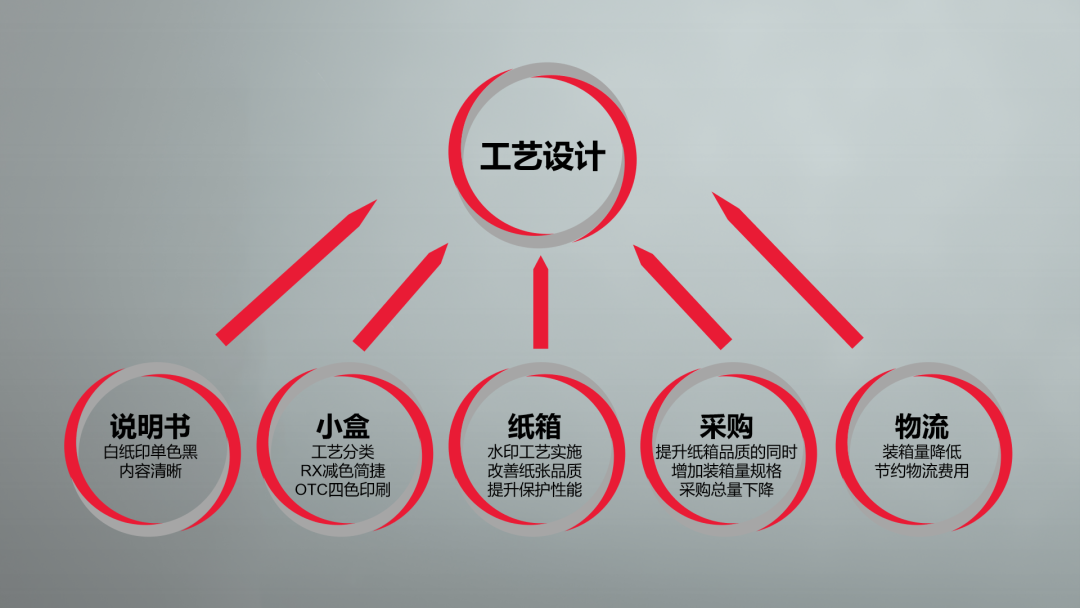
In terms of process design, Yabao Pharmaceutical prioritizes packaging options with lower environmental impact. For paper boxes, they generally avoid paper-aluminum-plastic composite materials. The instruction manuals use single-color printing; for small prescription drug boxes, printing processes are simplified; and logistics cartons are switched from white card color boxes to kraft paper boxes, with seven-color printing adjusted to single-color watermark printing. Simplifying and optimizing processes and structures doesn't mean weakening the brand value. Take the Dinggui series OTC products as an example: Yabao Pharmaceutical removed the unique protruding structures from the packaging boxes and moved the brand identification elements to the top of the box. The front of the box keeps the original brand color scheme, while the back carries all the information. This allows cost reduction while maintaining brand perception for end consumers.
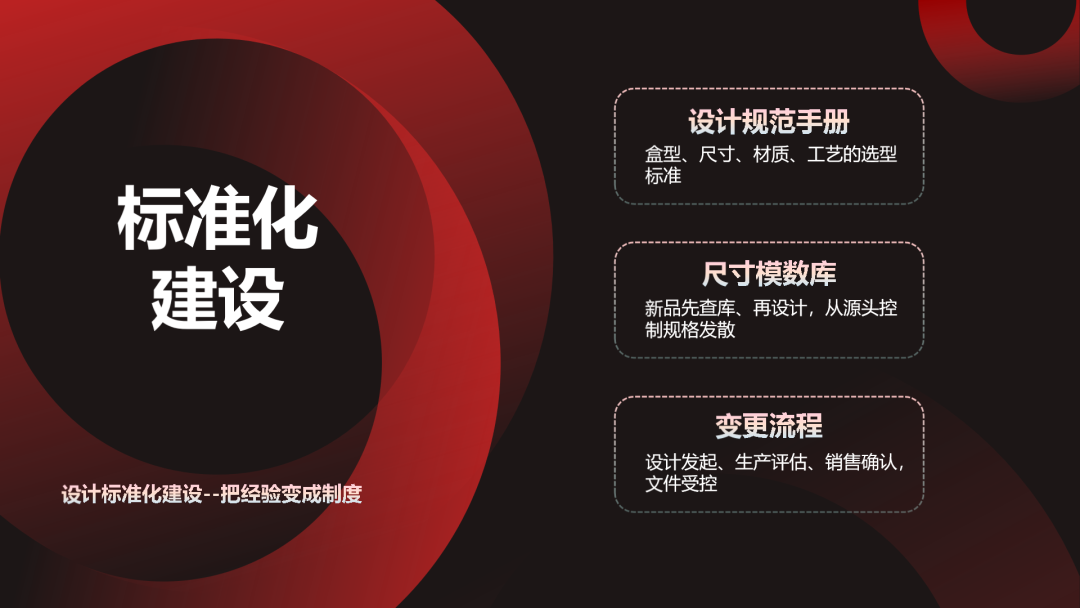
In terms of standardization, Yabao Pharma realized that optimizing scattered projects alone couldn't bring long-term benefits, so they needed to turn their practices into formal systems. They put together a packaging design manual specifying box types, sizes, materials, and process standards. They also built a dimensional module library, so that before designing new products, they could check existing specifications first, helping prevent random new specs from popping up. At the same time, they set up a complete packaging change control process: design initiates change requests, production evaluates feasibility, and sales confirms market impact, ensuring the entire documentation process is controlled. After a series of improvements, Yabao Pharma saved 7.53 million yuan in 2019, and the benefits continued, reaching a total saving of 21 million yuan by 2022, with the logistics sector also seeing significant cost reductions.
 Stepping Out of a Single-Company Perspective to Promote Collaborative Innovation Across the Entire Industry Chain
Relying on just one pharmaceutical company to push for packaging standardization can only unlock limited value. To achieve larger cost reductions and efficiency gains, pharmaceutical companies, printing and packaging firms, and equipment manufacturers need to collaborate, promoting shared box types and modular use across the industry, and connecting the entire logistics module chain from inner packaging, middle packaging, outer boxes to pallets, reducing losses caused by frequent equipment line changes.
Looking back at Yabao Pharmaceutical's ongoing efforts in centralized practices and considering changes in the end market, pharmaceutical packaging innovation can be summarized in three main directions: First, structural reduction-simplify redundant packaging layers, optimize structural design, and standardize complex structures; second, specification convergence-promote size and module standardization, make molds and equipment more generic, and precisely match quantities to retail, chronic disease households, hospital prescriptions, etc., reducing waste and secondary repackaging; third, restrained design-create a clear information hierarchy, avoid overly cluttered visuals, so users can quickly get key information.
"Less one layer of packaging, fewer specifications; more standards, more long-term benefits." Printing and packaging are a key part of the industry chain. We look forward to continued collaboration upstream and downstream, steadily advancing packaging centralization, and jointly promoting high-quality development in the pharmaceutical packaging industry.