Hongbo Intelligent DPES 2026 New Products Attract Attention
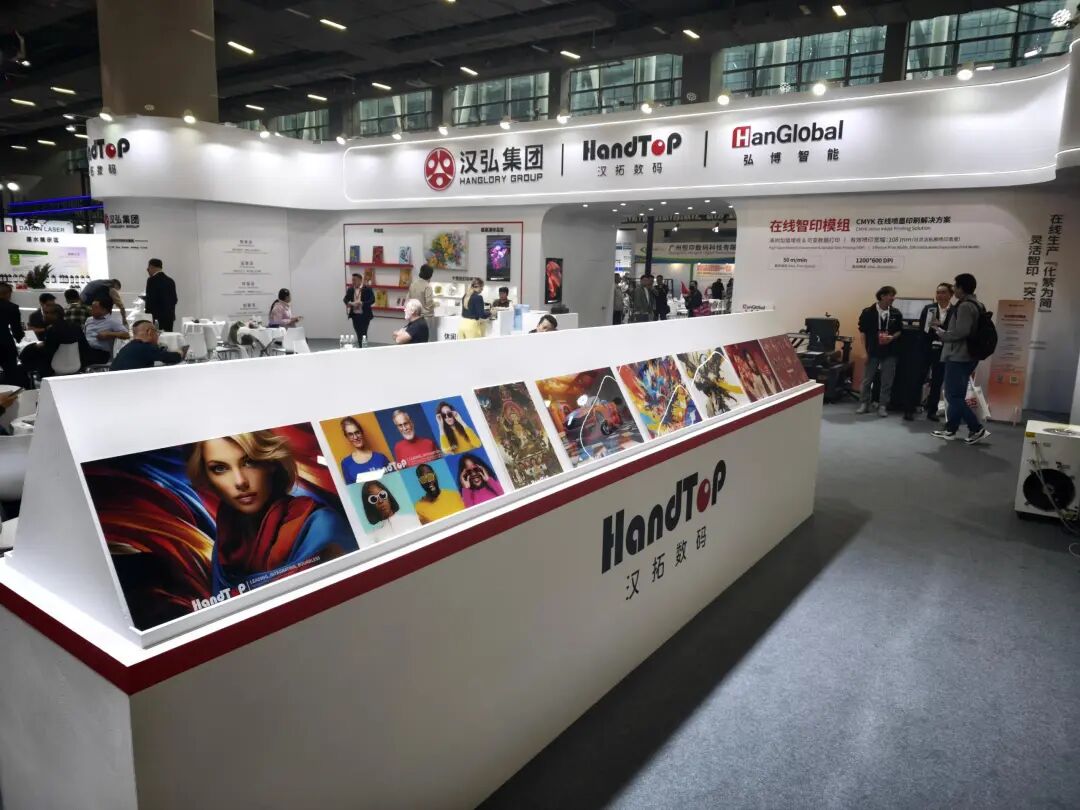
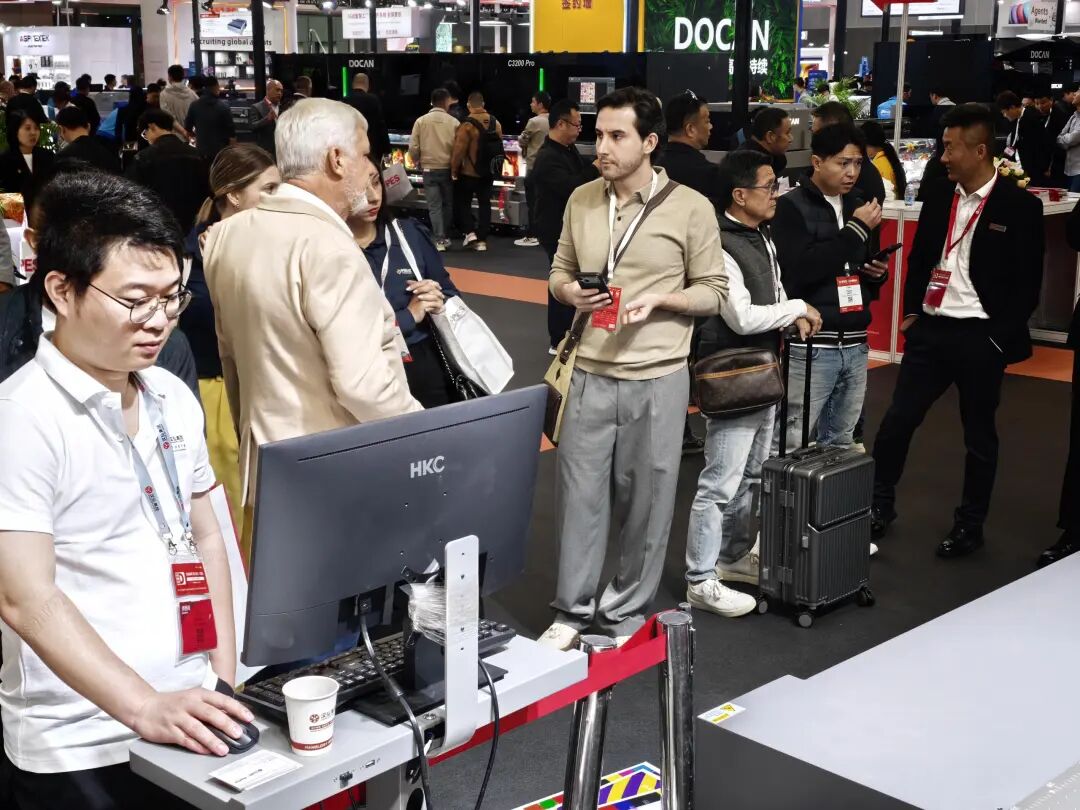
From March 10 to 12, 2026, as the annual trend indicator of the industry, the 33rd DPES Guangzhou Spring Exhibition was grandly held at Area D of the Canton Fair Complex. Hongbo Intelligence, in collaboration with Hantuo Digital, participated in the exhibition (Booth: Hall 20.1 C05).
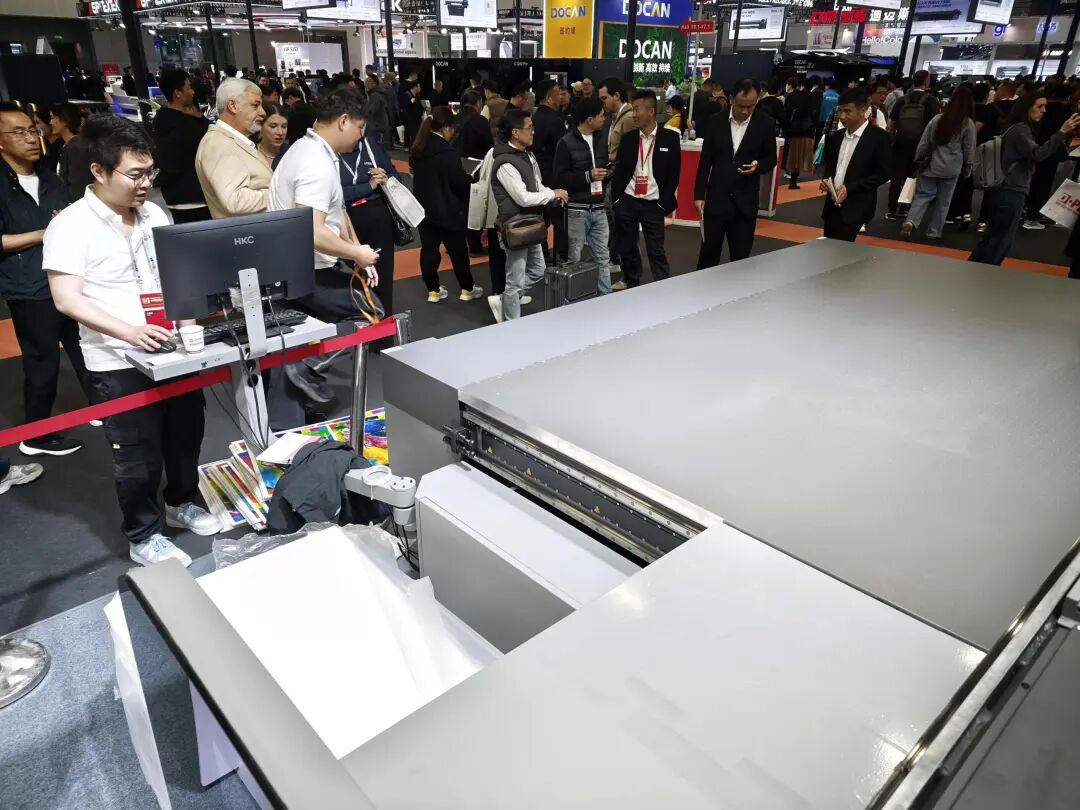
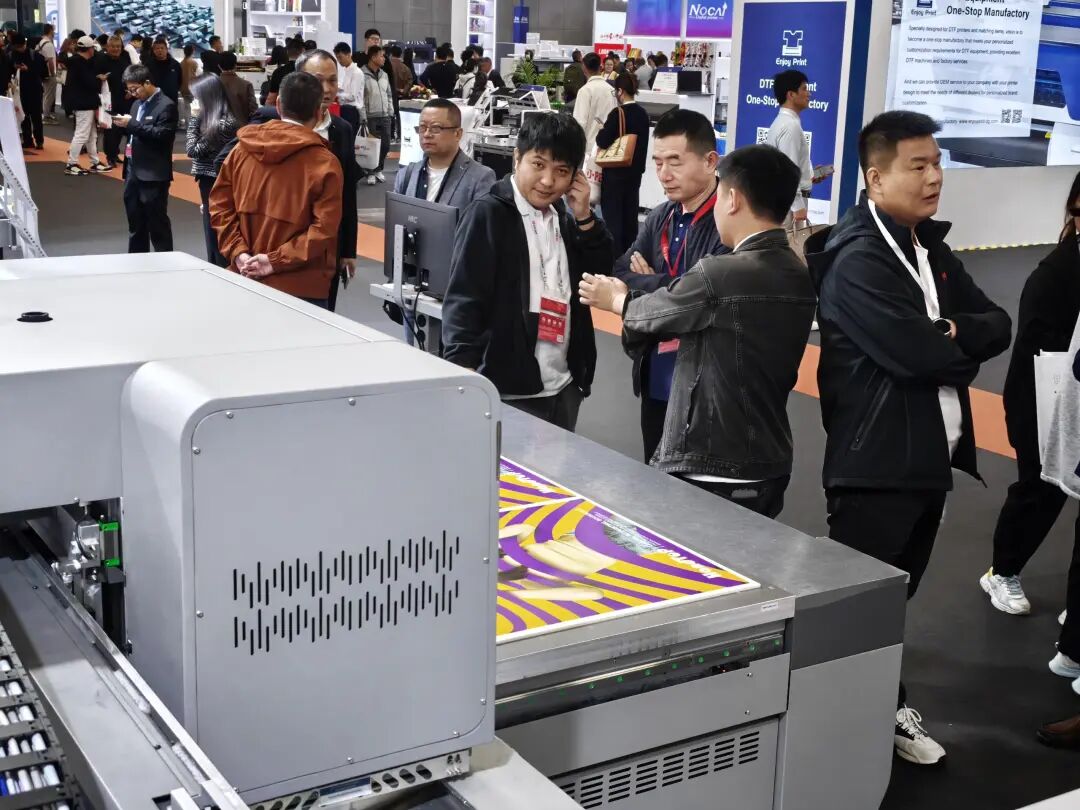
It is reported that, in addition to showcasing the new generation digital inkjet printer LabStar 330mini, Hongbo Intelligence also launched the "Online Intelligent Printing Module," allowing the printing process to flexibly adapt to the industrial-scale flexible production needs of various industries. The release of this new product attracted widespread attention at the exhibition.
--Click! More new product introductions of LabStar 330mini
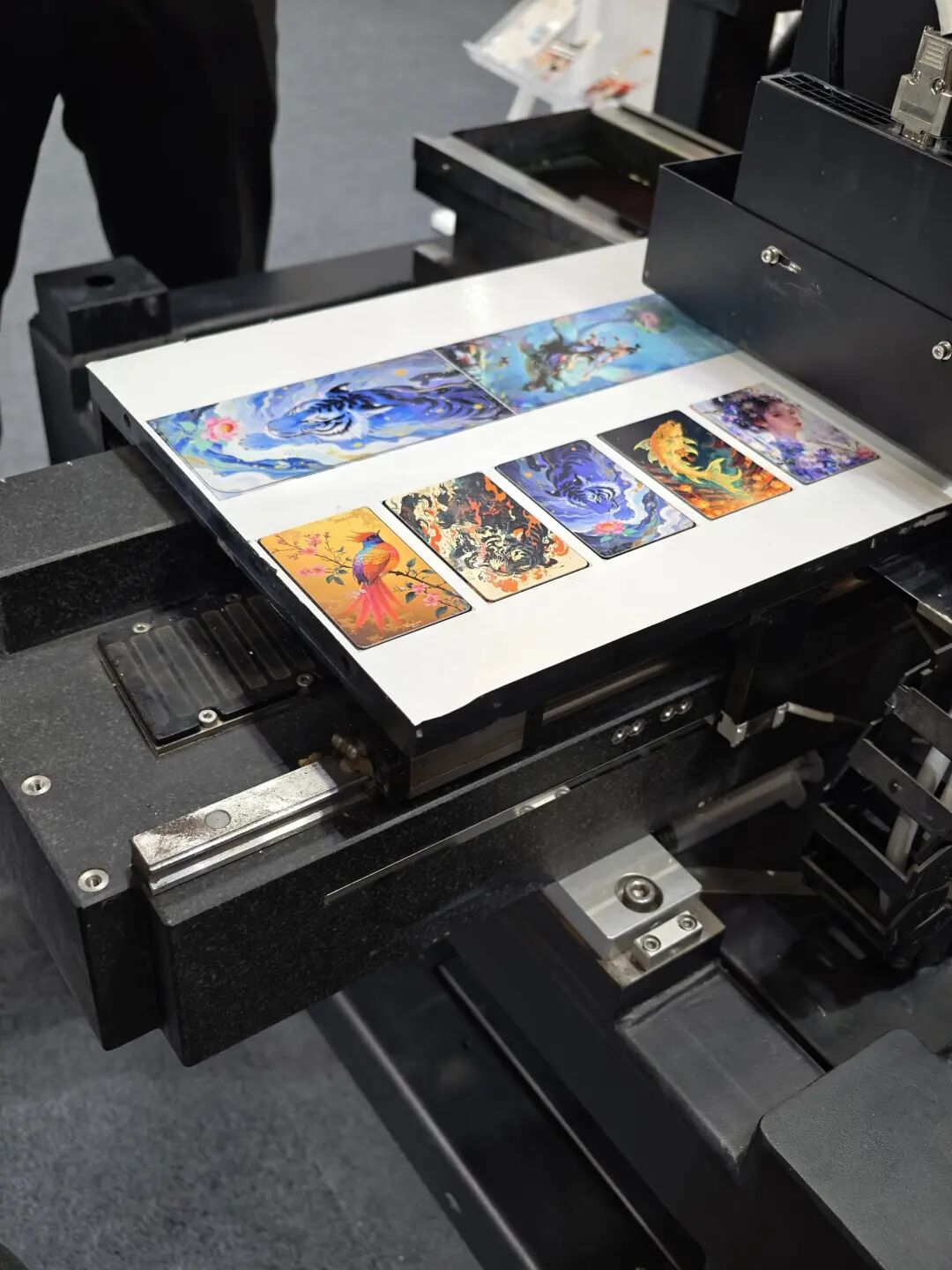
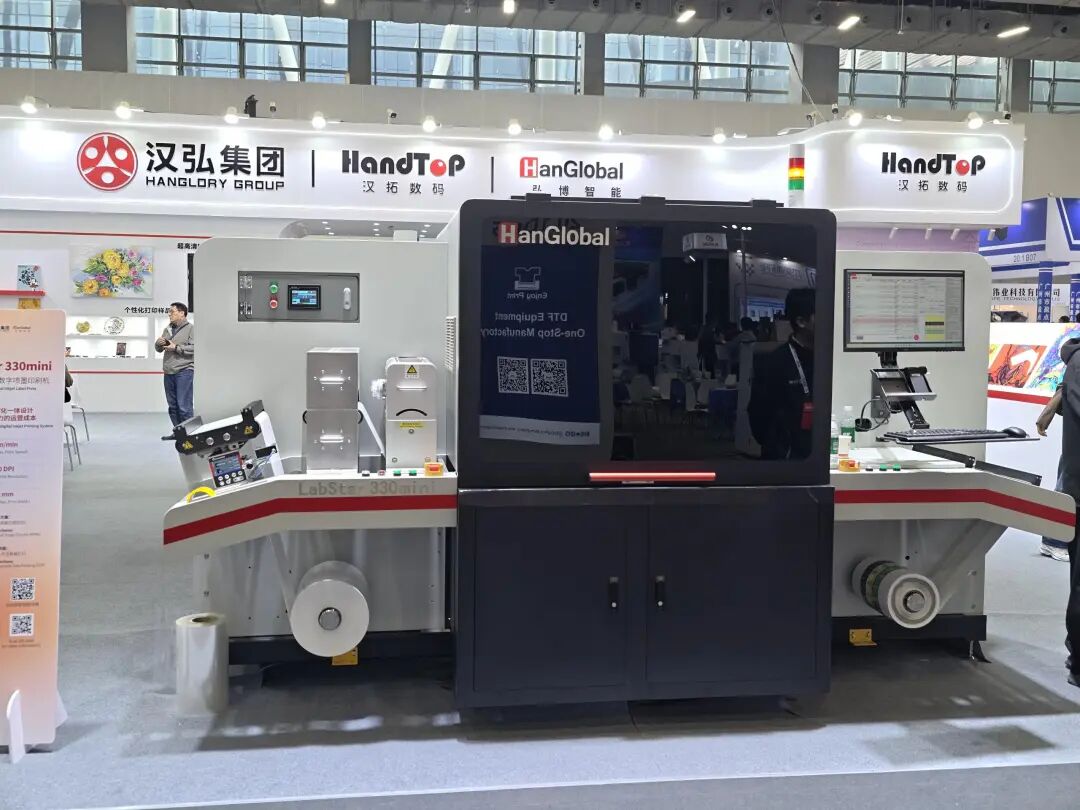
After labels and book inkjet printing, where will Hongbo Intelligent turn its attention next? Recently, by integrating in-depth interviews conducted earlier with managers, R&D personnel, and solution leaders involved in the Hongbo online printing project (hereinafter collectively represented by the interviewee HanGlobal), we attempted to comprehensively reconstruct Hongbo's strategic thinking in focusing on and developing the 'online intelligent printing module,' and to explore in depth how the 'online printing model' will open new empowerment paths for the printing industry.
Q1: After focusing on labels and book inkjet printing, why is Hongbo Intelligent paying attention to and strategizing around 'online printing'?
HanGlobal: We have been continuously exploring the next growth direction for digital printing. In the process of serving customers in the label and book industries, we discovered that many enterprises still view printing as a 'packaging cost' rather than a 'technology investment,' yet printing is an indispensable part of many industrial production processes. Take the home appliance industry as an example: the use of markings and labels is essential, but the traditional practice often involves 'outsourcing labels and applying them upon delivery,' resulting in a significant accumulation of label inventory and inefficient manual labeling within the production chain.
Based on the competitive market landscape and extensive industry application research, we decided to focus on the new 'online printing' track, building on our existing mature applications in label and book inkjet printing. We are dedicated to developing 'industrial digital printing modules' and embedding them into the production lines across various industries. In doing so, we aim to expand the functional capabilities of digital inkjet technology, enhance the promotion of digital printing products in more industrial niche scenarios, and continuously create greater value for our customers.
Q2: How does Hongbo Intelligent understand the 'online printing model,' and what differentiated advantages does this model have? Please provide a detailed analysis.
HanGlobal: We can understand online printing as a digitally efficient and integrated model that evolves from 'offline processes' to 'online functions.' At this point, the digital printing module is no longer an independent machine but becomes a 'digital link' connecting various segments of industrial production. Simply put, it embeds the printing process directly into the production line, achieving key printing steps for 'zero inventory' and 'large-scale customization' through synchronized production of labels and products.
Take refrigerator production as an example. Previously, after manufacturers produced the bare fridge, a series of 'procurement and transfer' steps were still required, specifically: ① design label identification-② generate internal material code-③ procure outsourced production orders-④ inspect incoming materials and store-⑤ production material picking-⑥ label application on the production line. This process involves multiple disconnected steps and requires coordination among design, procurement, warehousing, and production departments. It is not only time-consuming but also prone to material waste and label mismatches.
Hongbo Intelligent's online printing technology requires only two steps: design the label identification - integrate it into the refrigerator production line printing.
This achieves the ultimate simplification of the process, eliminating the need for cross-department collaboration and greatly reducing communication and coordination risks; at the same time, the plate-free on-demand inkjet eliminates material waste, and the labeling delivery cycle is synchronized with the refrigerator production rhythm. In addition, this technology also has the advantage of digital empowerment, enabling one-code-per-item, product traceability, anti-counterfeiting customization, small-batch rapid response, and the flexibility to meet the demand for mass personalized production, helping manufacturers reduce costs, improve efficiency, and achieve digital transformation.
Q3: When applied to specific products, how does Hongbo Intelligent's online intelligent printing module translate the above advantages into practical capabilities?
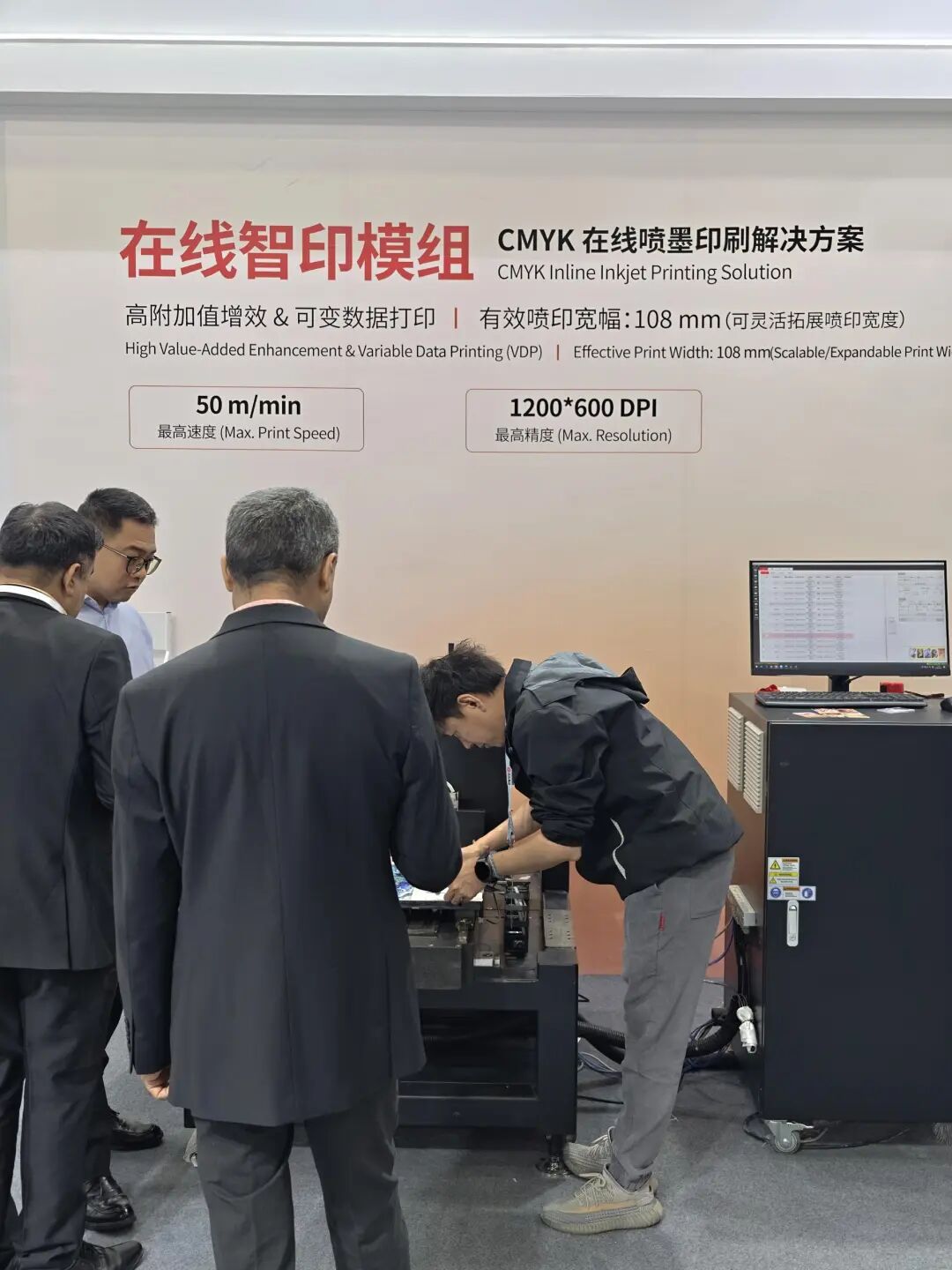
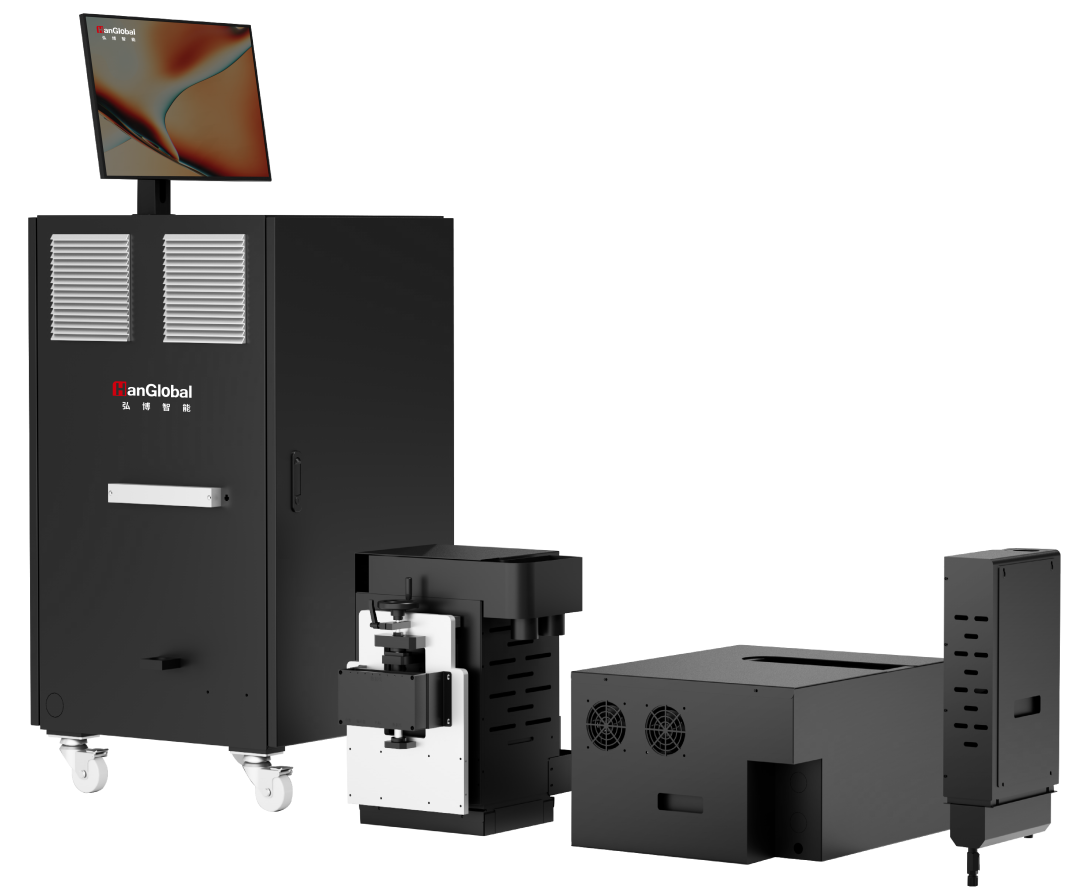
HanGlobal: Hongbo Intelligent's latest online intelligent printing module is an "efficient, intelligent, and flexible" online inkjet printing solution. It requires no plate, prints on demand, enables value-added special effect image printing, and supports various dynamic variable data & image printing.
It can be flexibly integrated into production lines across various industries, perfectly adapting to the flexible industrial-scale production requirements.
Dual Breakthrough in Speed and Precision:
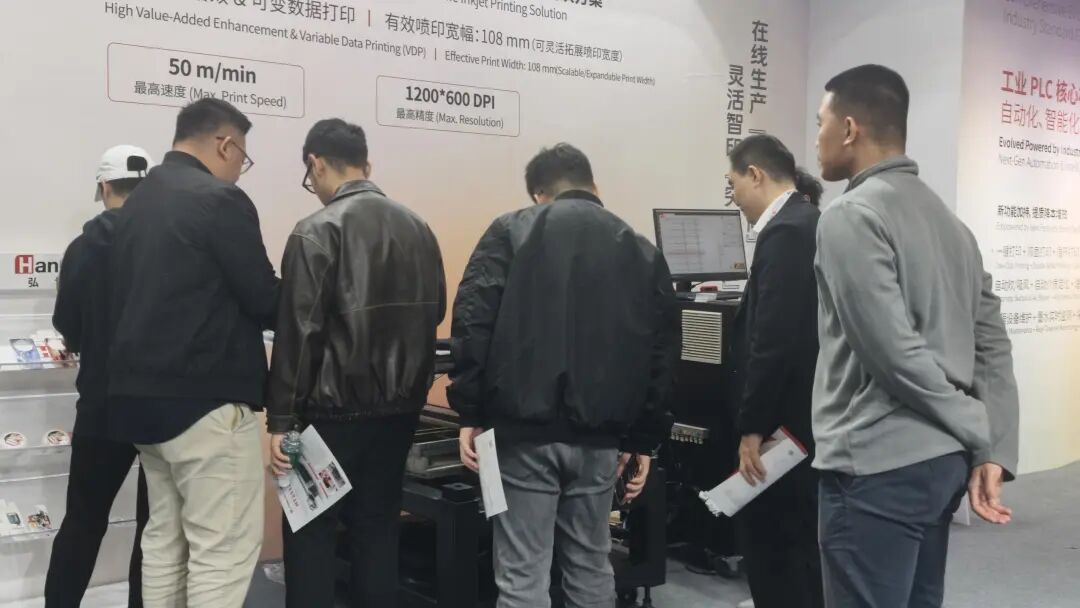
The most concerning issue for industrial embedding is "dropping the ball." The Hongbo Intelligent Online Printing Module can reach a maximum operating speed of 50 m/min, perfectly matching the continuous operation pace of mainstream industrial production lines. At the same time, it achieves a maximum resolution of 1200*600 DPI, ensuring that patterns remain clear and delicate and colors stay uniform even at high speeds. The effective printing width is 108mm, and it supports flexible expansion to adapt to products of different specifications, offering strong compatibility.
High-Value-Added Processes to Enhance Product Efficiency:
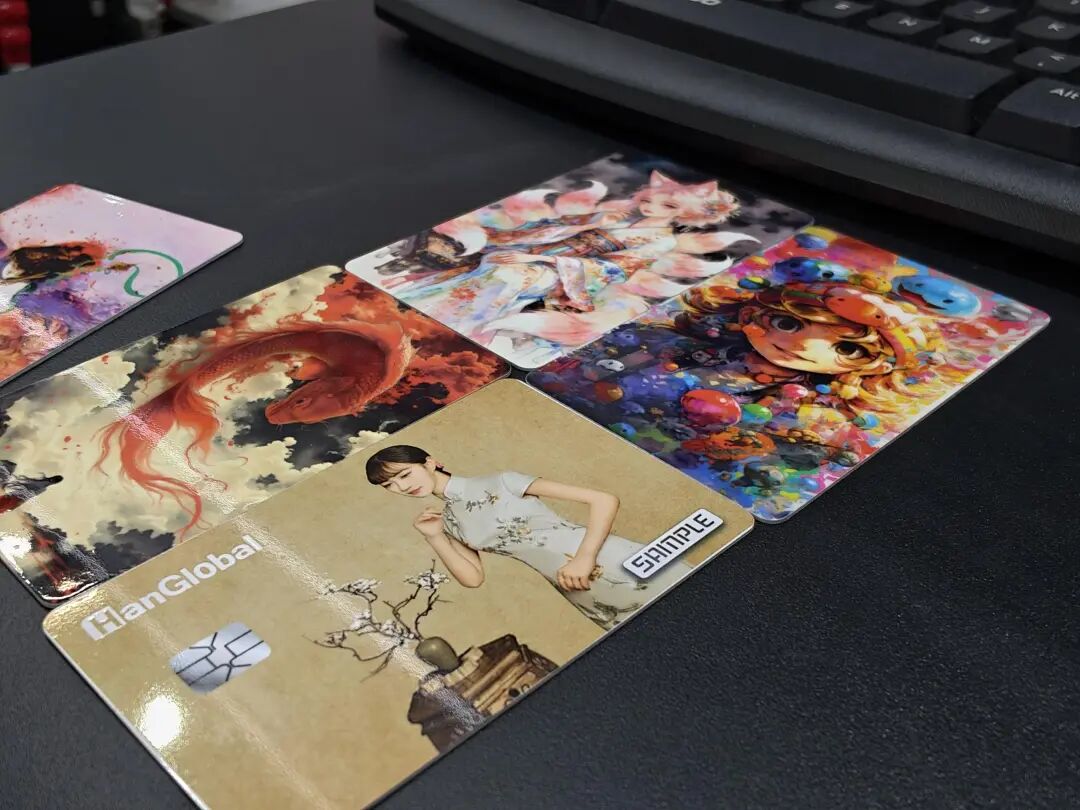
The Online Intelligent Printing Module supports a variety of high-value-added processes such as "variable UV, localized coating, 3D, Braille, digital foiling," and more. This integrated multi-process capability helps customers enhance the texture and grade of their product markings and labels, making them stand out in market competition.
Variable Data Printing for Flexible Coding Empowerment:
Addressing the current demand for unique codes and traceable anti-counterfeiting, the Online Intelligent Printing Module enables precise printing of dynamically variable data and personalized graphics, including "1D barcodes, QR codes, database information, dates, times, batch numbers, shifts, and serial numbers," without the need for additional processes.
Q4: From the perspective of industrial applications, where do you think the potential market for 'online printing' lies in the future?
HanGlobal: When it comes to the release of application scenarios, we have a very clear focus: dark factories.
What is a dark factory? It is an intelligent factory that is automated and unmanned. In such a production environment, all processes must be highly integrated, stable and reliable, and capable of being centrally coordinated by a control system. The inherent 'digital' attribute of HanGlobal's intelligent online printing module perfectly matches the needs of a 'dark factory.' It is no longer an independent workstation requiring manual monitoring but becomes an 'execution terminal' on an automated production line, much like a robotic arm or an automatic inspection camera.
Q5: The metaphor of an 'execution terminal' is vivid. What exactly does it mean?
HanGlobal: It means it must have three characteristics: plug-and-play, interoperability, and unmanned operation.
Plug-and-play means that the module can be quickly embedded into existing production lines like a standard component, without complex modifications or adjustments. Interoperability means it can connect in real time with the MES production management system, ERP order management system, etc., through industrial IoT protocols, to receive instructions, return data, and execute commands. Unmanned operation means that it does not require much manual intervention during operation, can automatically complete printing tasks, and can automatically detect defects and provide alerts.
When the online printing module possesses these three characteristics, it is no longer just a 'machine' but an indispensable piece of the digital puzzle of a dark factory.