


"'Going Global' Sample' Zhejiang Pangdu: The Southeast Asia Layout Logic Behind the Production Launch of the Thailand Factory"
Amid the waves of global supply chain restructuring and adjustments in the geopolitical and economic landscape, Chinese printing and packaging enterprises are encountering new opportunities and challenges on their path to going abroad. As one of the leading companies in China's printing and packaging industry, Zhejiang Pangdu Environmental Protection Technology Co., Ltd. (hereinafter referred to as Zhejiang Pangdu) leverages keen market insight and a steady strategic layout, taking Southeast Asia as the core base for overseas production. By 2025, it plans to complete the construction and commissioning of its factory in Thailand, with the second-phase plant being built simultaneously. This journey from Zhejiang to the Southeast Asian market is not only the company's proactive choice in responding to industry transformation but also a typical example of the global upgrade of China's printing and packaging industry.

 Strategic Anchoring: The Underlying Logic of Southeast Asia Layout
Global economic downturns and a complex, volatile market environment have made supply chain security a core issue for enterprises. The intensifying uncertainty in foreign trade has also made 'being closer to customers and having a more stable supply chain' a central demand for printing and packaging companies. Against this backdrop, Zhejiang Pangdu has positioned the Southeast Asian market as its core strategy for going overseas, considering both risk hedging and incremental growth value.
From the market perspective, the explosion of e-commerce, consumption upgrades, and the demographic dividend of young populations in Southeast Asia create a superimposed effect. Young consumer groups have become the market mainstay; they value product quality and functional innovation and are willing to pay a premium for personalized goods with brand stories. This aligns closely with Zhejiang Pangdu's deep involvement in the eco-friendly paper packaging sector.
Analyzing from the geographic advantage, Southeast Asia is close to China, which reduces logistics costs and increases supply chain response efficiency, effectively shortening delivery cycles and better serving regional customers. Simultaneously, the continuous expansion of the food service and retail industries in Southeast Asia has boosted demand for standardized, large-scale packaging solutions. Periodic demand peaks brought by holiday consumption scenarios provide stable incremental opportunities for packaging companies.
From the industry upgrade perspective, Southeast Asia is at a critical stage of upgrading from 'basic supply' to 'quality and compliance-driven' demand. The advancement of environmental policies and the entry of international brands have continuously increased the market demand for sustainable packaging and compliance with food safety standards, creating a competitive advantage for Zhejiang Pangdu with its technical capabilities and systematic solutions.
Based on this, Zhejiang Pangdu decisively set up operations in Thailand, completing its capacity layout. This not only achieves local reconstruction of the supply chain but also accurately captures regional market growth opportunities. Currently, the Thailand factory has officially started operations, with Phase II construction steadily progressing. By expanding local production capacity and improving the supply chain layout, Zhejiang Pangdu further enhances delivery efficiency and overall competitiveness.
 Localization and headquarters coordination: breaking the challenge and efficiency upgrade
Zhejiang Pangdu takes "Global Local" as the core principle and builds an integrated operation system of "headquarters overall planning and territorial operation", which maximizes the efficiency of headquarters and bases while solving localization problems, which is also the key support for its layout in Southeast Asia.
At the level of talent and management, Zhejiang Pangdu has clarified the boundaries of rights and responsibilities between the headquarters and the territory, forming a clear division of labor and cooperation model.
The headquarters focuses on core strategy, standard formulation, R&D technology, financial risk control, brand and key account management, uniformly outputs quality system, production process, digital management platform and global compliance standards, controls overall risks and core resources, and ensures that the overall development direction of the group is consistent and standards are unified.
The territorial team gives full play to its local advantages, is responsible for production execution, local market response, delivery services, personnel management and daily operations, quickly adapts to the individual needs of regional customers, and relies on Thailand's local location and manpower advantages to reduce logistics and fulfillment costs and achieve rapid response to market demand. This division of labor model not only avoids the "acclimatization" of overseas operations, but also ensures the unity of the group's quality and standards, and lays a solid foundation for localized operations.
Compliance and supply chain are the two core pillars of localized operations, and Zhejiang Pangdu attaches great importance to them. Enterprises strictly comply with local compliance requirements such as laws, labor, payment, and environmental protection in Thailand, and effectively avoid compliance risks in cross-border operations through in-depth cooperation with local ecological partners.
In terms of supply chain construction, relying on Thailand's local resources to optimize the whole chain of raw material procurement, manufacturing, logistics and distribution, and at the same time build a digital interoperability platform to realize production and marketing collaboration and real-time data sharing between the headquarters and Southeast Asian bases, further improving the stability and response efficiency of the supply chain.
Through digital tools, the headquarters can grasp the production progress, inventory situation and market order dynamics of the base in real time, and the territorial team can quickly feedback the changes in demand in the local market to form an efficient linkage mechanism, so that the global supply chain is no longer a simple capacity transfer, but truly realizes the integration and coordination of "headquarters R&D, territorial production" and "headquarters coordination and territorial services".
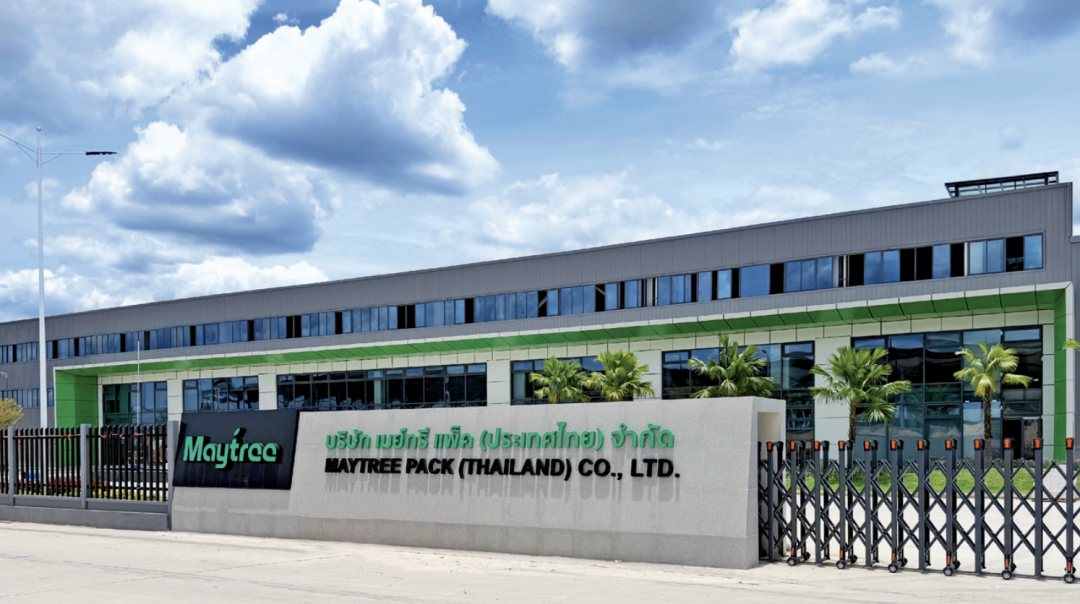 Zhejiang Pongdu Thailand Factory
In practical operations, Zhejiang Pongdu flexibly adjusts its strategies to adapt to the local market culture and consumption habits. While adhering to the group's core standards, it grants the local team a moderate degree of operational autonomy, finding the optimal balance between global standardization and local flexibility. This integrated management model not only addresses a series of core challenges in overseas expansion, including talent, compliance, and supply chain issues, but also fully unleashes the vitality of localized operations, ultimately achieving overall cost reduction and efficiency improvement as well as long-term growth, providing a solid guarantee for the continued advancement of operations in Southeast Asia.
 Future Layout and Insights: The Long-term Value of the Southeast Asian Market and the Path of Industry Advancement
The development potential of the Southeast Asian market provides solid support for Zhejiang Pangdu's long-term planning and the global transformation of China's packaging industry. From the perspective of demographic structure, Southeast Asia has a high proportion of young people, and consumption habits are shifting toward 'quality and cost-effectiveness,' placing higher demands on the functionality and sustainability of packaging. This aligns highly with Zhejiang Pangdu's core business in eco-friendly paper packaging.
From the perspective of industry trends, scenarios such as food delivery, ready-to-drink products, and convenience foods continue to expand in the region. Coupled with the rise of e-commerce and local brands, the market as a whole shows high growth characteristics. From the perspective of industrial competition, Southeast Asia is not merely a 'cost lowland,' but a strategic market that combines scale growth with value upgrading. Companies that achieve early deployment will gain long-term advantages in regional competition.
Based on this, Zhejiang Pangdu has clarified the core positioning of the Southeast Asian market. In the future, it will continue to promote the expansion plan for its Thailand base, improve local production capacity layout, and explore cooperation opportunities in other regional markets, further deepening its global layout.
Zhejiang Pangdu's overseas expansion in Southeast Asia also provides important insights for the global development of China's packaging industry: overseas layouts need to be based on long-term strategies, accurately grasp market trends and location advantages, rather than short-term cost arbitrage; the core of localized operations is 'integration,' with both global standards and local practices being indispensable, and compliance and talent serving as the two pillars of localization; the essence of global layout is the reconstruction and upgrading of the supply chain, achieving resource optimization and value maximization through coordination between headquarters and local entities.
Starting from Southeast Asia, Zhejiang Pangdu has embarked on a path of global advancement. Against the backdrop of global supply chain restructuring, this overseas journey is not only the growth trajectory of the enterprise itself but also reflects the inevitable trend of China's printing and packaging industry transforming from 'Made in China' to 'Intelligent Manufacturing in China with Global Layout.' In the future, with the continuous development of the Southeast Asian market and the deepening of global layout, Zhejiang Pangdu will continue to explore and advance on the track of overseas production capacity.