


Fujifilm major teaser, Jet Press FP790 upgrade incoming
As the global packaging and printing industry accelerates its transformation towards digitalization and flexibility, the technological iteration of equipment manufacturers has become a key variable driving the replacement of traditional processes. Recently, Fujifilm officially announced that it will globally debut the major functional upgrades of its flagship flexible packaging digital inkjet printer, the Jet Press FP790, at the Interpack 2026 packaging exhibition in Düsseldorf, Germany, from May 7 to 13. This upgrade focuses on broadening substrate compatibility and improving production efficiency, aiming to further narrow the cost and performance gap between digital printing and traditional flexographic and gravure printing for medium to long-run orders, helping printing companies better adapt to the new demands of industry development.
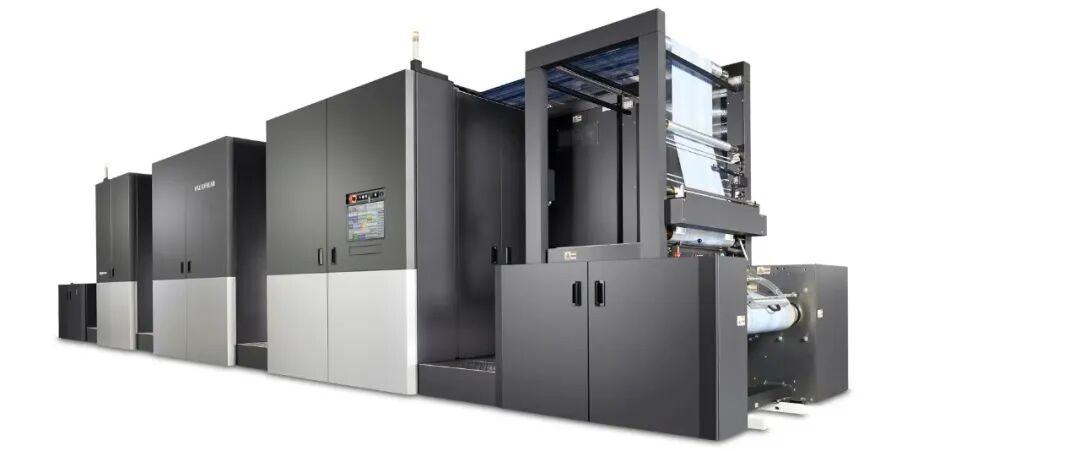
Jet Press FP790
Jet Press FP790
A number of core functions will be renewed
The Jet Press FP790 is Fujifilm's first digital press for flexible packaging. The equipment supports CMYK+ white five color printing, with a resolution of up to 1200dpi ×1200dpi, a maximum printing speed of 50 meters per minute, and a maximum width of 790mm, which can meet the multi-scenario printing needs of the flexible packaging field. It is reported that Eco Flexibles, a packaging company headquartered in Northampton, UK, became the first customer outside Japan to introduce the Jet Press FP790, and completed the installation and commissioning of equipment in its 3,716-square-meter factory in 2024. So far, four of the equipment have been deployed and put into operation in three countries in Europe, and another five are in the order stage.
This upgrade is the largest technology iteration of the Jet Press FP790 since its global launch in 2022, and all new features have passed internal testing to ensure the stability and reliability of the application.
01
The adaptation of substrates has been fully expanded, and the application scenarios have been further expanded
(1) Newly supported MDOPE, BOPE (minimum 20μm), paper and label materials within 100gsm, and the original PET and BOPP are still compatible.
(2) The maximum printing thickness is increased to 130μm; Thin-film substrates up to 40 μm.
(3) There is no need to configure additional special finishing processes, and can be directly connected to the standard back-end processing process, effectively reducing the production threshold and cost of enterprises and improving production efficiency.
02
Continuous optimization of speed and performance to benchmark traditional printing capacity
In response to the mass production demand of medium and long-length orders, Fujifilm is making every effort to upgrade the printing speed and performance of the Jet Press FP790, and the relevant improvements have entered the beta testing stage. It is reported that the complete upgrade parameters will be officially announced at the Interpack 2026 exhibition site, and the core goal of this optimization is to further benchmark the production capacity of traditional flexo printing and gravure printing, break the application bottleneck of digital printing in the field of medium and long-form orders, and help enterprises achieve capacity upgrades.
Digital printing has become a new engine for the growth of the flexible packaging industry
Industry insiders pointed out that the upgrade of Jet Press FP790 is not an iteration of a single product, but also an industry signal for flexible packaging digital printing to accelerate the replacement of traditional processes. In recent years, the global packaging and printing market demand has undergone profound changes, and short orders, small batches, multiple batches, and fast delivery have become the mainstream trend.
A number of industry reports confirm this trend. According to the "Future of Digital Printing and Packaging in 2030" released by Smithers, the global digital printing market will reach $22 billion in 2025, accounting for 4.1% of the overall printing and packaging market; In the next five years, it will grow at a compound annual growth rate of 10.9%, and the market size will climb to 36.9 billion US dollars in 2030, accounting for 5.8%, and the growth rate far exceeds that of traditional printing processes (overall compound growth rate of 3%~4%), of which digital printing of flexible packaging is the core growth highlight.
The latest report from Alliance Insights further points out that although the current penetration rate of digital printing in the flexible packaging field is still low, it has entered a golden window period of rapid growth. From 2025 to 2030, the global flexible packaging digital printing market will expand at a compound annual growth rate of 13.2%, and the market size will grow from US$6.81 billion to US$12.68 billion, with huge development potential in the industry.
However, the large-scale implementation of digital printing in the field of flexible packaging still faces multiple challenges. According to the data, 95% of digital printing flexible packaging enterprises need to carry out composite processing, 79% involve precision slitting, and 63% need to complete the bag-making process. If small batches of digital orders continue to use traditional high-volume post-processing equipment, it will cause serious resource waste and cost loss, so the digital adaptation of back-end processes has become a key problem that needs to be solved urgently in the industry. In addition, the adaptability of the substrate to the ink, the adhesion of the ink and the curing speed are also the core hard indicators that affect the quality of the product.
For the industry, the upgrade of industrial digital equipment represented by the Jet Press FP790 sends a clear industry signal: digital printing is no longer a supplementary tool to traditional production lines, but is gradually becoming the core production capacity that can participate in mainstream order competition. In the future, the mixed capacity model of "traditional process + digital printing" will become the mainstream of the industry, and digital printing will continue to seize the share of regular orders with its flexible and efficient advantages, and promote the high-quality development of the flexible packaging printing industry in the direction of more efficient, flexible and environmentally friendly.