


After the pilot plant in Sweden, Tetra Pak invested 150 million to build an innovation center in the United States!
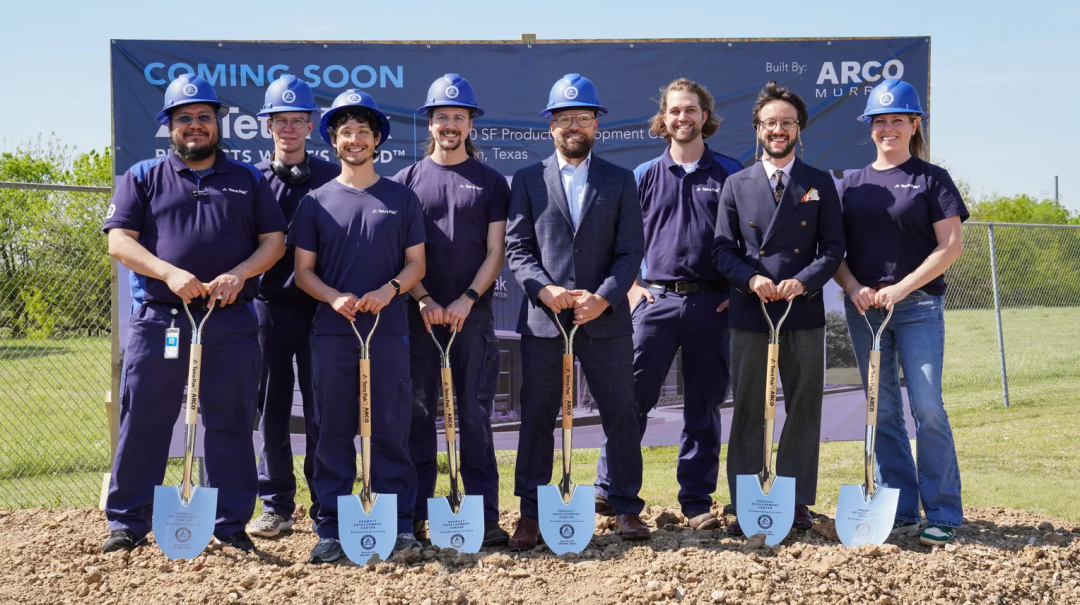
In January this year, Tetra Pak announced an investment of 60 million euros (approximately 480 million RMB) to build a state-of-the-art pilot plant at its headquarters in Lund, Sweden. Recently, Tetra Pak also officially broke ground in Denton, Texas, USA, investing 22 million US dollars (approximately 150 million RMB) to build a brand-new innovation center.
This center is closely connected to its campus in the US and Canada, and once completed, it will directly double the overall innovation capacity of the campus. Amid global economic fluctuations and rising cost pressures, Tetra Pak's intensive heavy asset investments are not only a reinforcement of its North American strategy but also a forward-looking positioning for the food and beverage consumption paradigm over the next decade.
The upheaval of the consumer wave: the encirclement of GLP-1 and "new and exotic" flavors
The underlying logic behind Tetra Pak's massive expansion is deeply rooted in the dramatic fluctuations of global consumer behavior. Julia Luscher, Vice President of Marketing, Tetra Pak, noted that the food and beverage industry is currently under unprecedented pressure to develop R&D.
On the one hand, the drug boom represented by GLP-1 is profoundly changing people's dietary structure. More and more consumers are looking for products that are high in protein, low in carbs and provide precise nutrition. Manufacturers must reformulate their products in a very short time to meet this "light burden" health appeal.
On the other hand, Generation Z's enthusiasm for "taste adventure" has forced companies to continue to launch high-impact cross-border products such as "sour and spicy" and "sweet and salty". In this rapidly iterative market environment, the traditional R&D model has become stretched, and enterprises urgently need a collaborative platform that can start from scratch and iterate quickly, and the Tetra Lak Danton Innovation Center was born for this purpose.
The art of pilot plants: finding a balance between "non-interference" and "high precision"
For the vast majority of food manufacturers, the "pilot" link in the process of new product research and development has always been a pain in their hearts. In the past, if a company wanted to try a new formula, it often had to face a dilemma: either forcibly shutdown testing on expensive commercial production lines, which not only meant huge waste of capacity, but also expensive raw material loss due to equipment mismatch; Either the sample is made in the laboratory, but the huge gap between the laboratory environment and industrial production often leads to taste deviations or stability problems during formal mass production.
The Tetra Lak Constantine Innovation Centre has solved this industry problem perfectly. Manufacturers can come here with wild ideas and test the physical properties of different formulations to the limit without interfering with the operation of their own commercial production lines.
For example, for fiber-containing juices or high-protein shakes, R&D can accurately measure the viscosity changes of the product at different temperatures, observe its stability after long-term storage, and fine-tune the taste characteristics.
Once the ideal formulation is confirmed in Tetra Pak's pilot facility, customers can confidently move it directly to the large-scale filling line, ensuring first-class quality performance from the first box to the millionth box. This "seamless translation" from the laboratory to the shelf is becoming the core weapon of modern food enterprises to reduce costs and increase efficiency.
In addition to technical parameter validation, Tetra Pak is also committed to helping customers break down the barriers of brand perception. Luscher gave a vivid example: in the traditional marketing context, juices are often anchored to breakfast consumption scenarios, but through the collaborative development of Tetra Pak Centre, juice manufacturers can try to develop concentrated bases designed for cocktails or mocktails, thereby extending the brand to the nighttime social scene.
Similarly, for those protein shake manufacturers who are deeply involved in the homogenous competition of "chocolate and vanilla", the taste matching technology provided by the Innovation Center can help them accurately blend complex flavors with more regional characteristics or seasonal limitations, thereby opening up a differentiated new track in the Red Sea market.
AI-Powered Design: Make packaging a visual hunter on the shelf
In this era of "appearance is justice", Tetra Pak's understanding of innovation has long gone beyond the liquid itself. Another core function of the Denton Innovation Center is the use of cutting-edge artificial intelligence technology to optimize packaging design. Tetra Pak uses AI eye tracking analysis to digitally simulate the visual movement of consumers.
This means that before the packaging officially enters the printing stage, the system can accurately predict where the consumer's eyes will fall first, whether the brand logo is prominent enough, and whether the information transmission is efficient. This digital marketing decision greatly improves the "customer acquisition efficiency" of packaging and ensures that products have instant appeal on a wide variety of shelves.
In addition, the expanded technical training center in the park plays the role of a "talent incubator". As Tetra Pak's main training base in North America, it not only teaches how to operate state-of-the-art processing and filling machinery, but also helps customer employees master the most cutting-edge production processes through a combination of online and offline courses, thereby building a comprehensive competitive barrier for enterprises from equipment to talent.
Global Collaboration and Privacy Escort: CIC and PDC work together
Tetra Pak's global presence demonstrates an extremely rational structural aesthetic. The Denton Centre is one of Tetra Pak's 12 Product Development Centers (PDCs) worldwide, and together with centers in China, Sweden, France, Japan and more, it forms a global R&D network. In terms of functional division, Tetra Pak divides innovation into two dimensions.
The Customer Innovation Center (CIC) is responsible for the "soul" of the project, i.e. the early trend analysis, consumer insights and creative ideation; The Product Development Center (PDC) is responsible for the "flesh and blood" of the project, that is, formula testing, process verification and commercialization. At Denton, these two capabilities are organically combined to form a closed loop from idea to product.
More importantly, Tetra Pak fully considers the cruelty of commercial competition in its space design. With a completely separate physical space and privacy protection, Tetra Pak is able to serve competing brands at the same time, ensuring that innovation experiments are conducted in absolutely secure and private environments.
With the official opening of the center in the first quarter of 2027, Tetra Pak will not only create more professional jobs in the North American market, but also set a new benchmark for innovation efficiency in the global food and beverage industry. In the future competition in the food industry, it may no longer be those companies with the largest factories that win, but those brands that can gain the fastest insight into consumers' eyes, the most stable control of formula viscosity, and the most flexible expansion of consumption scenarios. Tetra Pak, on the other hand, is trying to become the "super think tank" behind all brands through these innovation hubs around the world.