


The defect rate of cigarette pack overprinting has dropped by about 60%
In cigarette pack production, not only is exquisite craftsmanship required, but the quality standards are also very strict. Among these, registration accuracy is one of the core indicators for assessing the printing quality of cigarette packs. Currently, domestic gravure printing of cigarette packs generally uses an optoelectronic scanning automatic registration system (hereinafter referred to as "traditional registration"), which works by scanning the edges of printed patterns or specific cross marks and using the feedback signals to adjust the cylinder phase.
However, in actual production involving multiple brands, small batches, and frequent plate changes, there are still many pain points: different brands have vastly different pack designs, varying color sequences for registration, rollers' circumferences, and plate layouts; widely used substrates such as transfer silver cardboard and holographic cardboard have complex surface characteristics, such as high reflectivity and uneven aluminum layers. These factors often make it difficult for traditional registration systems to maintain stable tracking, causing periodic or random registration drift. In severe cases, the registration error can reach ±0.15mm or more (as shown by the registration marks indicated by the arrows in Figure 1), far exceeding the company's internal control standard (usually ≤±0.10mm), resulting in substantial waste and downtime for adjustments. To address this problem, there is an urgent need for a stable registration reference solution that is not affected by plate patterns or substrate surfaces.
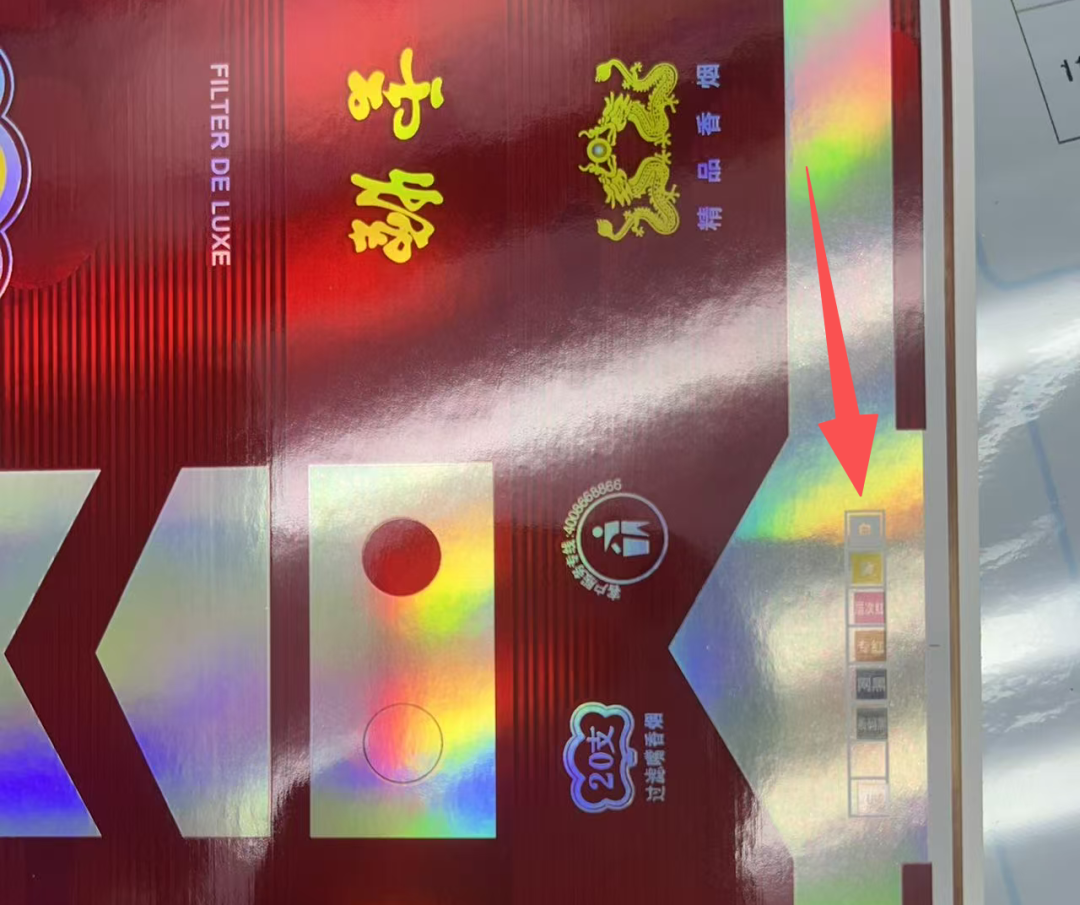
Figure 1 Pre-Improvement Overprinting Product
Analysis of Key Factors Affecting Overprinting Stability
Misregistration is a systemic problem rooted in a disruption of dynamic balance during the printing process. The following three factors are particularly critical.
01/ Impact of Printing Tension Fluctuations of Transfer Silver Cardboard
Tension is the 'lifeline' of the gravure press and has a decisive impact on overprinting accuracy.
(1) Material characteristics impact: Transfer silver cardboard is stiff and highly hygroscopic, prone to slight expansion and contraction during drying. Improper or fluctuating settings for unwinding, rewinding, and tensions between units can directly cause changes in paper path length, resulting in longitudinal misregistration.
(2) Tension matching requirements: The tension gradient between printing units must be precisely matched. Too little tension causes the paper to slack, leading to lateral drifting; too much tension stretches the paper, which shrinks after drying, both causing misregistration. For multi-color gravure, the response speed and stability of the tension system are crucial.
02/ Impact of Printing Cylinder Accuracy and Condition
The printing cylinder carries the image transfer; its quality directly affects registration accuracy.
(1) Radial runout and dynamic balance: New cylinders or restored cylinders, if their radial runout exceeds the standard (usually ≤0.02mm) or dynamic balance is poor, will generate periodic vibrations at a high speed of 250 m/min, which directly translates into periodic registration errors.
(2) Cylinder installation and thermal expansion: Eccentric installation, keyway wear, or uneven thermal expansion due to heat generated by friction during continuous printing will change the effective circumference of the cylinder, affecting longitudinal registration accuracy, and this effect accumulates over time during operation.
03/ Impact of Print Quality and Recognition of the Mark Indicator
Traditionally, mark indicators are printed directly on the substrate and act as the 'eyes' of the registration system.
(1) Printing effect: On silver cardboard, ink adhesion and drying speed affect the edge clarity of the mark indicator. If the mark is ghosted, frayed, or dirty, the photoelectric eye cannot detect it stably, causing frequent system corrections or even misactions.
(2) Positional interference: If the mark indicator is located in a complex image area or a highly reflective area, background interference can greatly reduce the signal-to-noise ratio, making tracking unstable.
'Plate-Following Registration' Innovative Solution
The core idea of this solution is to transfer the registration reference marker, the 'mark indicator', from the substrate to a set of independent, high-precision mechanical discs, as shown in Figure 2, thereby completely avoiding interference from the substrate surface condition and printed patterns.
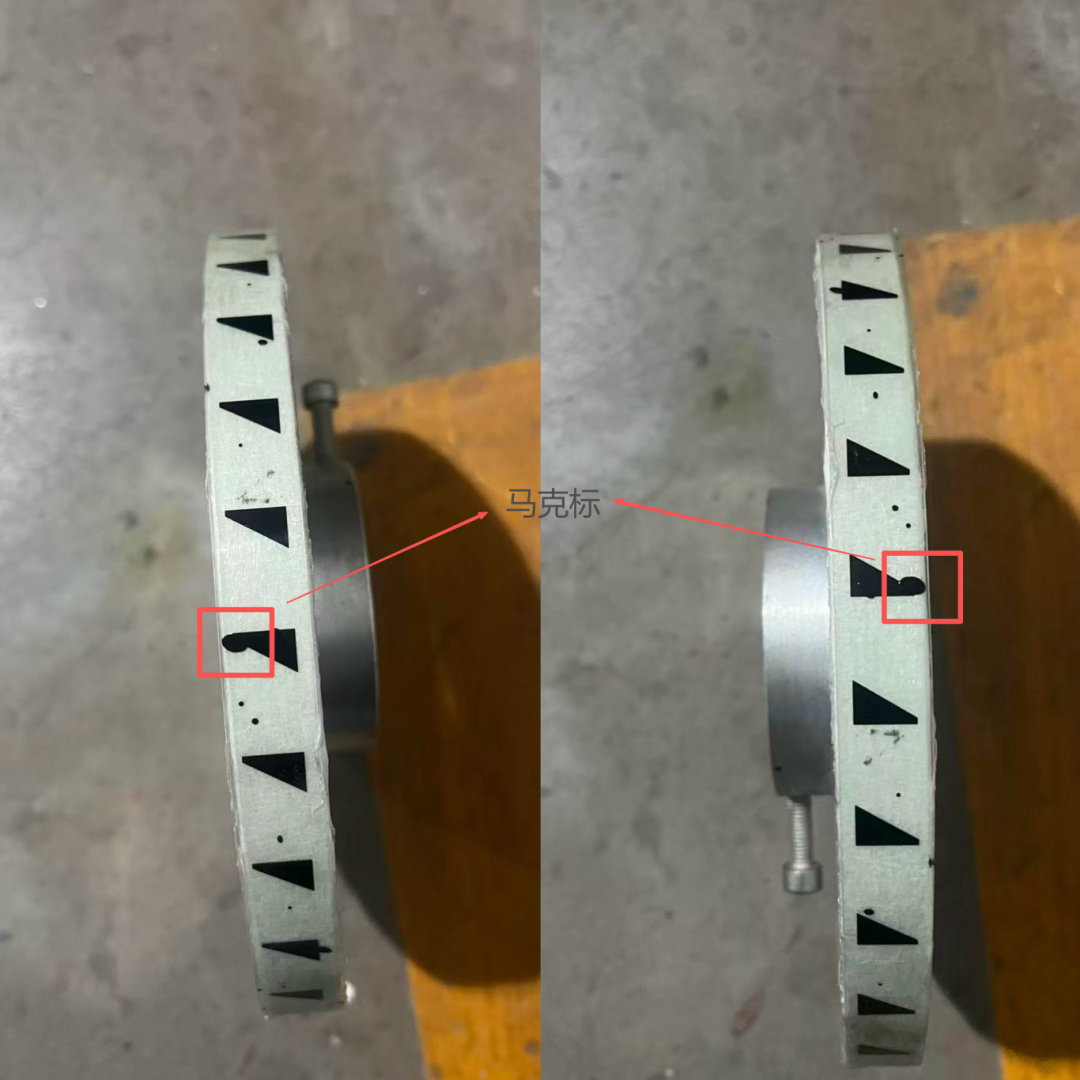
Fig. 2 Mechanical disc mark marking
01/ System Composition
(1) Special follow-up: the disc is made of aluminum alloy or composite materials with high rigidity and low thermal expansion coefficient, usually with a diameter of 150~200mm (customized by visual model), and a thickness of 15~20mm. The end face runout is required to ≤ 0.01mm, and the surface should be matted.
(2) High-precision markers: use high-contrast, sharp edges of special reflective or light-transmitting markers.
(3) Mounting base: Design a stable fixture to install the follow-up plate on the stationary parts of the printing unit header (near the driving side) to ensure that it is not directly mechanically linked with the plate roller system, but the position is fixed.
02/ Specific Steps
(1) Step 1: Installation and calibration
(1) Firmly install the follow-up plate on the rack near the plate head of the first color group (reference color group) through a customized fixture to ensure that the disc plane is parallel to the plate roller axis.
(2) At the precise position of the circumference of the follow-up disk, 0°, 90°, 180°, 270° marks are usually made, and high-precision markers are pasted. Use the dial indicator to calibrate the end face and radial runout of the follow-up disc to ensure that its comprehensive runout < 0.02mm.
(3) Adjust the photoelectric sensor of each color group or add a special sensor so that it can scan the mark on the corresponding tray, not the mark on the paper stably and clearly.
(2) Step 2: System parameter setting
(1) Tension parameters (taking a brand of 10-color gravure printing machine with a quantitative capacity of 125g/m² transfer silver cardboard as an example): the unwinding tension is set to 180~220N; The paper feed force is set to 200~240N; The tension increment between each color group is set to 8~12N (incremental). The winding tension is set to 260~300N, and it needs to be fine-tuned according to the specific paper and speed, and the goal is to pass the paper smoothly without vibration.
(2) Registration system parameters: the scanning mode is switched to the "follow-up" mode; The fault-tolerant window can be appropriately reduced to improve the sensitivity according to the accuracy of the follow-up mark. The response speed is medium to high to avoid excessive sensitivity and shock.
(3) Step 3: Closed-loop control operation
After the machine is turned on, the registration system continuously tracks the fixed mark on the tracking plate. Because the position of the follow-up is absolutely fixed, such as the phase change of any plate roller relative to the machine reference caused by vibration and thermal expansion, it will be detected by the system in real time, and the plate roller phase motor will be driven to compensate, forming a stable closed-loop control with the follow-up plate as the absolute reference.
Comparison of application effects and parameters
Since the implementation of this scheme on a major model, the effect has been very remarkable.
01/ Overprinting accuracy is significantly improved
The overprinting error of the traditional method fluctuates greatly, especially in the reel change and acceleration stage, the error can reach ±0.12mm to ±0.18mm; After follow-up overprinting, the overprinting accuracy is stable within ±0.08mm for a long time, and the best state can reach ±0.05mm, as shown in Figure 3, which is better than the industry advanced standard.
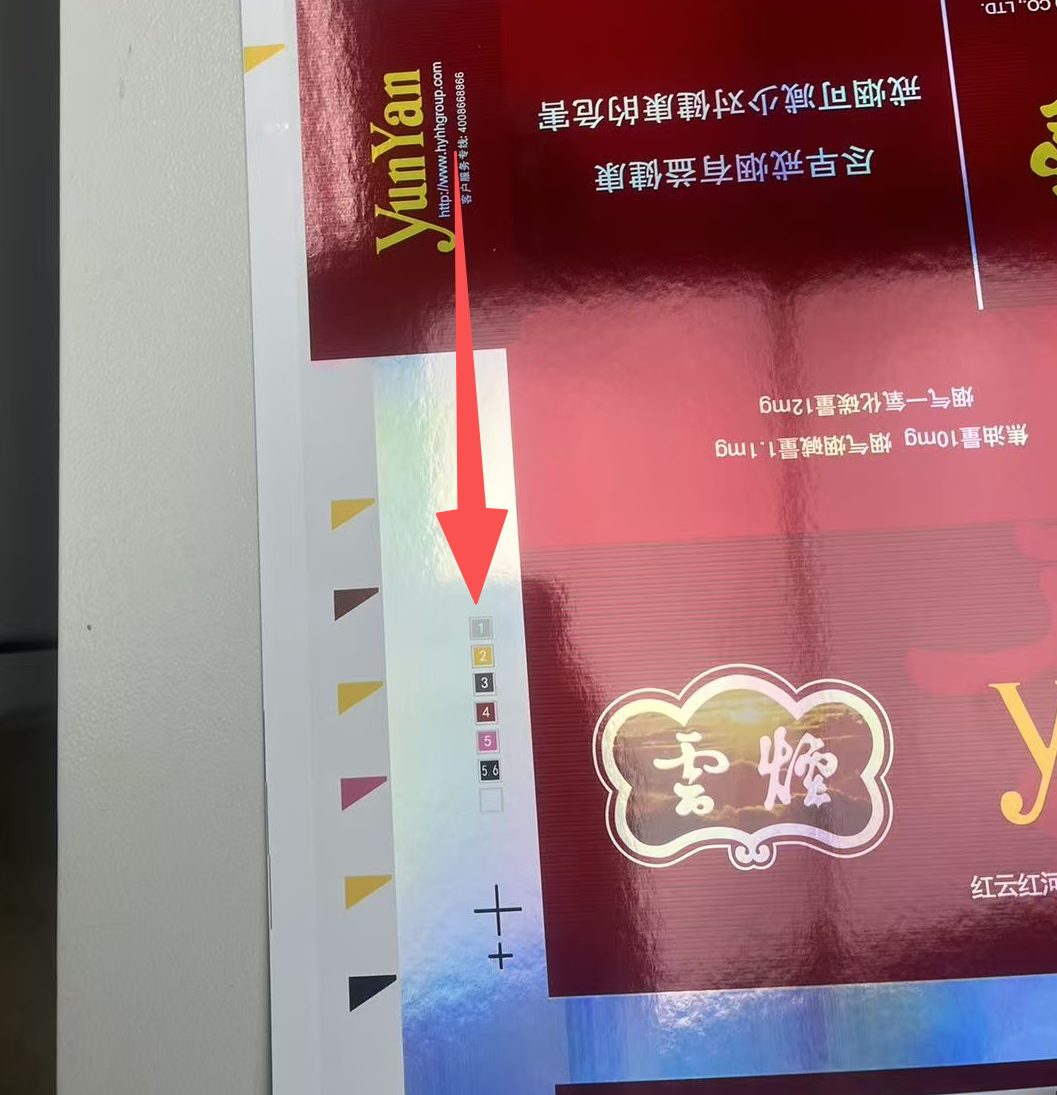
Figure 3: Overprinted products after using the tracking plate disk
02/ Enhanced Stability and Adaptability
Thoroughly resolves tracking loss issues caused by interference from reflective silver cardboard, layout barcodes, and other patterns; exhibits strong adaptability to various brands and rollers of different circumferences, with average initial overprinting adjustment time reduced by approximately 40% after plate change.
03/ Production Efficiency and Cost-effectiveness
The defect rate due to overprinting issues decreases by about 60%; consumption of auxiliary materials such as paper and ink during overprinting adjustments is reduced; equipment effective operating rate is significantly improved.
In response to the overprinting misregistration problems in cigarette packaging gravure printing caused by variable materials and rollers, the proposed 'tracking-disk overprinting' technical solution shifts the registration reference frame from the changing substrate to a fixed high-precision mechanical disk, isolating the main interference factors at the source. By finely controlling tension, ensuring roller quality, and using an independent tracking disk to provide a stable signal, the registration system transitions from 'passive following' to 'active stabilization'. Practical data demonstrate that this solution can effectively control overprinting accuracy to a high level of ±0.08mm, significantly improving production stability and economic benefits, and has value for widespread promotion in the high-end packaging printing industry. In the future, further exploration could integrate the tracking disk with roller temperature monitoring and tension online feedback systems to achieve more intelligent pre-compensation control.