


The current development of prepress laser engraving technology, explained in one article!
Laser Engraving
The technical level has improved, but still needs verification.
If prepress software determines the 'upper limit at the data level,' then laser engraving and the subsequent plate-making system determine whether this data can be stably and reproducibly converted into the text and image structure on the printing plate. In flexible plate-making technology in 2025, the laser imaging and exposure process remains the most technically intensive part.
Currently, the main issue restricting high-end flexography is that there is still a gap between the performance of flexible plates in highlights and solids compared to gravure printing, especially the lower solid density, which remains a significant challenge for flexible plates. Narrowing this gap mainly relies on screening, the printing plate, and plate-making technology for flexible plates. Theoretically, increasing the resolution of the solid screening means the printing plate can carry more ink transfer to the substrate, thereby further increasing the solid printing ink density and improving the uniformity of ink coverage. However, achieving screening technology is difficult, and besides the front-end algorithms, it still mainly depends on laser engraving and subsequent plate-making, with laser engraving being the hardest obstacle to overcome.
The advancements in laser engraving technology in 2025 mainly come from the European companies ESKO and XSYS. Additionally, China's domestic engraving machine manufacturer, Aiskai, has also made significant progress.
01
Quartz Laser Imaging Technology
An important upgrade following Crystal Laser Imaging Technology
At the 2024 Drupa exhibition in Germany, ESKO officially launched Quartz laser imaging technology. The term 'Quartz' comes from the English word quartz, and from the name itself, it can be reasonably inferred that this technology extensively uses high-grade quartz materials in the optical system. High-end quartz optical components are crucial for achieving high laser beam transmittance, low scattering, low distortion, and high energy density tolerance. Their function is to ensure that the laser reaches the imaging target surface in a stable and controllable state, thereby avoiding energy loss, beam spot distortion, or damage to the material surface.
Although Quartz laser imaging technology was publicly showcased in 2024, from a practical application perspective, it truly reached the user implementation stage in 2025. At the same time, in 2025, ESKO also launched a small-format Quartz laser engraver specifically for label printing applications and showcased a series of printed samples to reinforce the technology's positioning in high-precision, small-format application scenarios.
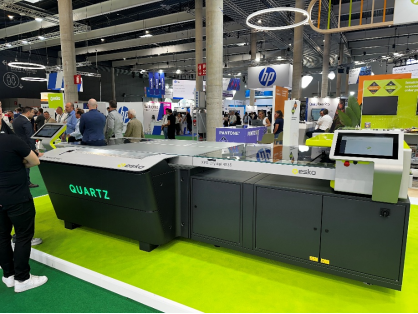
Figure 8 ESKO's Cyrstal XPS 4835 Quartz for Label Printing
From a technical system perspective, Quartz laser imaging technology is not a simple hardware upgrade, but a synchronized software and hardware upgrade solution by ESKO in screening and laser engraving processes. Compared with the previous generation Crystal laser imaging technology, Quartz laser imaging technology has achieved significant improvements in micro-hole screening capabilities, especially in controlling the microstructure of solid fields, effectively improving and eliminating the dark line issues commonly seen in the Crystal laser imaging system. This improvement has a direct significance for enhancing solid field printing uniformity.
Around the Quartz laser imaging system, ESKO simultaneously launched two dedicated screening solutions (Quartz VQ and Quartz SQ, as discussed above). The screening solutions paired with the Quartz imaging system are clearly benchmarked against Hamillroad's Bellissima dot system in the UK, and their overall technical route can be classified as a third-generation FM (frequency modulation) dot solution, emphasizing the simultaneous improvement of microstructure stability and visual resolution capability.
It should be emphasized that although Quartz laser imaging technology has made positive progress in technical concepts and experimental sample sheets, the types of printing plates it currently supports are still limited, and the complete testing cycle is relatively long. In high-end film printing and other fields that require more demanding stability, print run length, and ink transfer, whether Quartz laser imaging technology can achieve further breakthroughs still depends on more large-scale printing verifications under real production conditions.
02
Thermoflex Edge Laser Engraving Machine
Competitor Benchmark to Quartz Laser Engraver
In the fourth quarter of 2025, XSYS released its latest engraving machine, the Thermoflex Edge, referring to it as a third-generation laser engraving device. However, when it appeared at the 2025 European standard exhibition, it was not operating on site, nor were print samples provided. From the current official promotion, it can be seen that the Thermoflex Edge laser engraving machine supports imaging resolutions of 2400 dpi and 2540 dpi, compatible with Woodpecker Nano screening technology. At this resolution, the device can generate higher-precision micro-hole screened structures to enhance solid ink density and gradient quality. In terms of imaging efficiency, the rated speed of the device is 8.5 m²/h, which is somewhat higher than existing similar devices.
In terms of software architecture, the Thermoflex Edge laser engraving machine uses an open architecture that can connect with various existing workflow systems. XSYS claims that it can use almost all common output files, including ESKO's Len file format, reducing system integration difficulty. At the same time, the Thermoflex Edge laser engraving machine also introduces EcoFillX software to reduce solvent consumption.
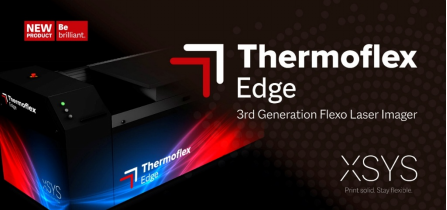 Figure 9 Thermoflex Edge Laser Engraving Machine
In terms of human-computer interaction, the Thermoflex Edge laser engraving machine is equipped with an updated user interface and offers modular automation options to reduce manual handling and operational steps. This design can lower operational errors and increase equipment utilization. In addition, remote service functionality has also been integrated to enhance the maintainability and operational lifespan of the equipment in production environments.
In summary, the technical features of the Thermoflex Edge laser engraving machine mainly focus on three aspects: first, high-resolution imaging capability (2400/2540 dpi, supporting high-grade microcell screening technology); second, efficiency optimization (8.5 m²/h output, EcoFillX reduces solvent consumption and energy use); third, system compatibility and operational improvements (open architecture, thick plate adaptation, automated interfaces).
Ensee's microcell screening technology Woodpecker has been available for a long time, but in actual use, it has not surpassed ESKO's Crystal XPS microcell effect. Therefore, judging by the installation numbers domestically and internationally, it still has a considerable gap compared to ESKO.
03
Xpose!330 Internal Drum Laser Engraving Machine
Can use traditional flexographic plates laser exposure machines
Lüscher Technologies AG, headquartered in Switzerland, has long focused on the development of high-precision laser imaging and exposure systems. Its products cover flexography, offset printing, screen printing, and printed circuit boards (PCB), among other applications. In the field of flexographic plate making, Lüscher has offered laser engraving equipment for black film engraving for many years, and its technological approach significantly differs from the current mainstream external drum laser engraving systems.
Lüscher consistently uses internal drum laser engraving technology. Within this technical framework, the printing plate or imaging material is fixed inside the internal drum, and scanning and imaging are completed through a high-speed rotating mirror combined with a single laser beam. The main advantages of this technical approach lie in two aspects: first, high imaging quality – the internal drum structure has inherent advantages in mechanical stability and optical path consistency, making it easier to achieve higher imaging resolution and better dot shape consistency; second, no plate mounting is needed – the imaging material is directly fixed inside the internal drum, eliminating the plate mounting and positioning steps required in external drum or flatbed systems. This significantly reduces operational complexity, especially in small plate-making scenarios.
At the same time, internal drum laser engraving technology also has relatively obvious engineering limitations: first, high manufacturing difficulty – the high-speed rotating system and high-precision optical components place higher demands on manufacturing and assembly; second, high equipment cost – due to structural complexity and precision requirements, such equipment is usually expensive; third, limited market acceptance – in the flexographic field, the installed base of internal drum equipment has long been low, and the user base is relatively small.
For these reasons, although internal drum laser engraving technology has significant advantages in imaging quality, it has not become the mainstream route for flexographic plate laser engraving equipment.
In 2025, Lüscher launched the Xpose!330 internal drum laser engraving machine, further expanding its technological layout in the flexographic field. A notable feature of this equipment is its support for three different types of laser configurations. Among them, the 380nm UV laser head can be directly used for exposure of traditional flexographic plates. This technical approach has a clear similarity to the CTCP (Computer To Conventional Plate) technology in the offset printing field.
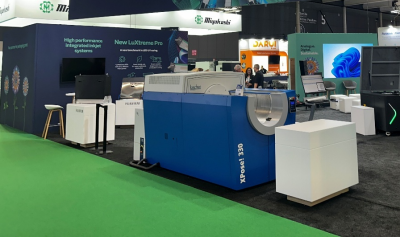 Figure 10 Lüscher Xpose!330 Internal Drum Laser Engraving Machine
The main engineering advantage of this solution is that users can continue to use the traditional flexographic plate making process without the need for film, thereby simplifying the plate making process to some extent and reducing dependence on consumables. At the same time, for users who need to engrave black films, the Xpose!330 device also supports configuring a laser head suitable for black film engraving, giving the equipment a certain degree of flexibility in application.
Overall, Lüscher's adherence to internal drum laser imaging technology in the field of flexographic plate making represents a technology choice that prioritizes imaging quality but involves significant trade-offs in terms of cost and large-scale application. Its latest equipment offers a diversified attempt in laser configuration, providing new possibilities for traditional flexographic plate making and filmless processes, but its prospects in the large-scale flexographic plate market still need to be further observed in terms of cost, efficiency, and user acceptance.
04
Vulcan 4835 Laser Engraving Machine
High-end breakthroughs of domestic laser engraving machines
ISCAN is a well-known domestic laser engraving machine manufacturer. The recently launched Vulcan engraving machine adopts an integrated high-power fiber laser source with a 256-channel independently modulated parallel system, capable of multi-beam synchronized engraving. The system has a maximum laser output power of approximately 300W, and under 4000dpi resolution, it can complete full-dot engraving of a 50×80 inch flexographic plate in about 26 minutes.
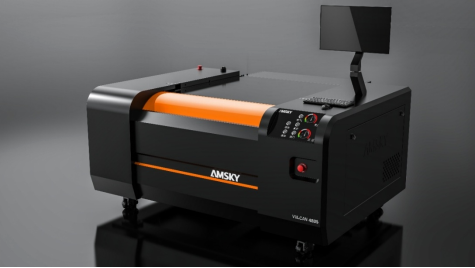
Figure 11 Aiskay 10160dpi Vulcan 4835 laser engraving machine
The light valve array combined with a high-magnification imaging optical system forms a square laser output structure. Under 4000dpi conditions, the minimum resolvable line width in both horizontal and vertical directions is about 6.35 μm, and the accuracy for diagonal and curved lines is about 15 μm, achieving single-pixel level clear imaging control. The device supports higher-density light valve module expansion, with a maximum engraving resolution of up to 10160dpi, corresponding to a laser spot size of 2.5 μm × 2.5 μm, which can be used for high-precision processing of microstructures below 5 μm. At the same time, a variable resolution modulation mechanism is introduced, allowing the circumferential resolution to be continuously adjusted within the range of 2400~10160dpi to adapt to grating structures and 3D microstructure plate-making processes.
The system integrates laser ranging with voice coil motor dynamic focus control technology, enabling real-time acquisition of the plate surface height changes during laser scanning and focus compensation, effectively reducing defocus errors caused by material thickness fluctuations and surface unevenness. In addition, through multiple overlapping scan strategies, real-time laser energy calibration, and temperature monitoring modules, the stability, consistency, and imaging repeatability of high-density graphic engraving processes can be improved.
Chinese domestically produced flexographic plate engraving machines had long used 830nm lasers commonly adopted in offset CTP, showing significant gaps in efficiency and engraving quality compared to international mainstream models. Aiskay's efforts have narrowed this gap, and in areas such as labels, preprinted and post-printed carton plate-making, it is even possible to achieve a cost-effective alternative to imported equipment.
The above outlines some of the recent advances in laser engraving technology. In the next issue, we will continue to look at new developments in plate exposure equipment. Stay tuned~