


Efficiency increased by 30% and costs reduced by 20%, the new die-cut embossing process solves production pain points
In the modern printing and packaging field, die-cutting and embossing processes are key steps to achieving both aesthetic appeal and functionality in packaging products. The die-cutting process is used to cut printed paper or packaging materials into predetermined shapes, while the embossing process creates raised images or text on the surface of the paper or packaging material, enhancing the product's visual effect and tactile experience. However, traditional die-cutting and embossing processes face issues in high-end packaging design, such as disrupted continuity of embossed graphics and high process costs. This article proposes a new die-cutting and embossing plate design aimed at addressing these problems and advancing printing and packaging techniques.
Technical Issues and Solutions
01/ Limitations of Traditional Processes and Technical Bottlenecks
In traditional die-cutting and embossing processes (as shown in Figure 1), when crease graphics overlap with embossed graphics, in order to achieve die-cutting and embossing in a single operation, the common approach is to simply splice the die-cut plate with the embossing plate. This often results in seams at the junctions of the crease and embossed graphics, thereby disrupting the continuity of the embossed graphics. To overcome this issue, the operations of creasing and embossing usually have to be done separately, which not only increases equipment investment, labor, and time costs but also reduces production efficiency. Such problems are particularly prominent in high-end packaging design. Thus, the main technical bottlenecks of traditional production processes include disrupted continuity of embossed graphics, high process costs, and low production efficiency, which largely restrict the realization of high-end packaging design. Therefore, an innovative technical solution is urgently needed to break through these bottlenecks.
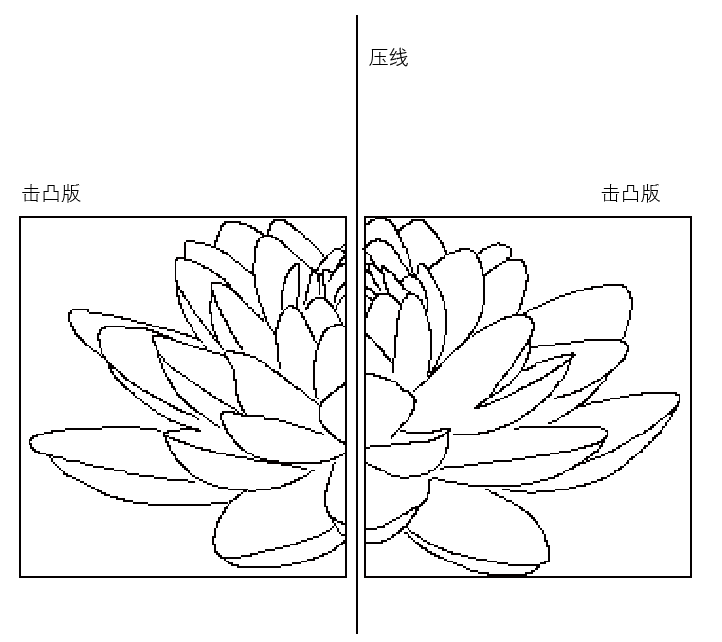
Figure 1: Schematic Diagram of Traditional Die-Cutting and Embossing Plate Layout
02/ Design Concept and Structural Design of the New Die-Cutting and Embossing Plate
As shown in Figure 2, the core design idea of the new die-cutting and embossing plate is to integrate the raised lines (positive) and embossed lines (negative) onto the same embossing plate, achieving one-time forming of die-cutting and embossing processes, thereby reducing process costs. This design not only fundamentally solves the issue of layout seams in traditional production processes, maintaining the continuity of embossed graphics and text, but also significantly improves production efficiency.
As shown in Figure 2, the new die-cutting and embossing plate includes a die-cutting plate, an embossed negative plate, and an embossed positive plate. The die-cutting plate consists of a base and raised lines, with the base material selectable from fiberboard, polymer plastic board, or metal plate. The raised lines are protruding lines fixed onto the base. The embossed negative plate is also fixed on the base, positioned between the raised lines to form continuous embossed negative text and raised positive lines on the plate; the embossed positive plate is fixed on the press plate of the die-cutting machine, with its graphics matching the embossed negative plate.
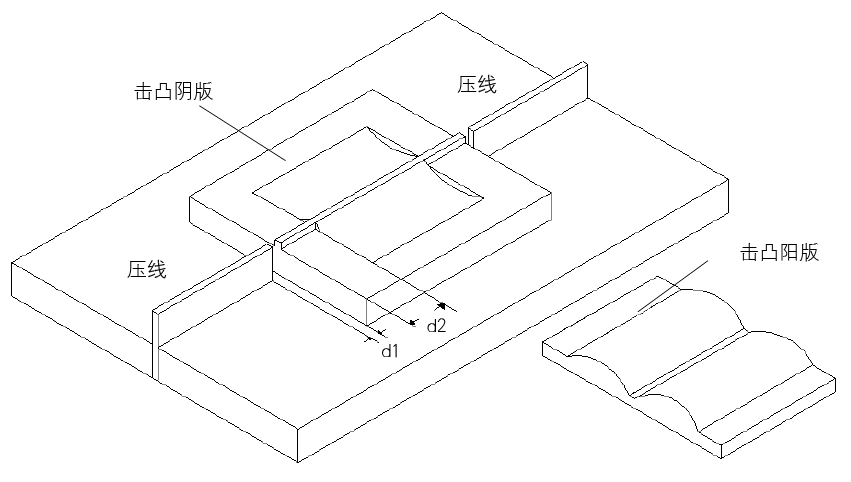
Fig.2 Schematic diagram of the new die-cut letterpress imposition
03/ Technical details and optimized design
The technical details of the new die-cut letterpress include layout optimization of the embossed yin and crimping lines, distance setting, die-cut line design, and auxiliary groove design.
The convex yin text is a coherent graphic text, and the pressing line is running through it, the length is greater than that of the embossed yin, and there is a distance d2 (such as 5mm) between the end point and the convex yin text, which can prevent the connection point from falling into the visual focus area. The distance between the embossed plate and the crimping line is set at d1 (e.g. 2mm) to prevent extrusion deformation due to thermal expansion during production. This distance setting further optimizes thermal stability during production on the basis of ensuring process stability.
In addition, multiple die-cutting lines can be provided on the base to accurately form the outline of the packaging box and improve die-cutting efficiency. The design of die-cutting lines not only optimizes the cutting process but also reduces material waste, further reducing production costs. The auxiliary groove can be placed on the pressure plate of the die-cutting machine to form an indentation. The width of the auxiliary groove needs to be greater than the sum of the width of the crimping line and the double width of the packaging material to ensure a clear indentation under pressure. This design not only improves the quality of the indentation but also helps to enhance the overall aesthetics of the product.
Technical principles and theoretical analysis
The technical principle of the new die-cutting letterpress is based on three dimensions: the synergy of die-cutting and embossing processes, material selection and thermal expansion control, and visual and tactile effect optimization.
The synergy between die-cutting and embossing processes is the key to the design of new die-cutting stamps. By integrating the crimping line and the convex yin text on the same tap, the die-cutting machine can complete the crimping and embossing operations in one operation. This synergy not only enhances production efficiency but also avoids the incoherence of graphics and text caused by separate operations in traditional processes.
In the process of implementing new processes, the thermal expansion of materials is a factor that cannot be ignored. The new die-cut stamping plate effectively avoids the extrusion deformation caused by the thermal expansion of the material by reasonably setting the distance between the embossing plate and the crimping line (d1). In addition, the choice of materials with a small coefficient of thermal expansion (such as copper) to make the convex yin plate and the convex positive can further improve the process stability.
In addition, the new die-cut letterpress optimizes the layout of the embossed yin text and the crimping yang text, which can avoid the impact of the connection point on the visual effect. There is a predetermined distance (d2) between the end point of the line and the convex yin text, which can ensure that the connection point does not fall into the visual focus area when observing the embossed image. This design not only enhances the visual effect of the product but also enhances the tactile experience of the product.
Experimental verification and practical application effect
01/ Experimental design and result analysis
In order to actually verify the performance of the new die-cut stamping plate, we designed a series of experiments to make the bumping yin plate and the bumping positive plate using different materials (such as resin, copper, aluminum) to test its performance under different pressure and temperature conditions. The experimental indicators include the consistency of the embossing graphics, indentation quality, production efficiency and process cost.
The experimental results show that the new die-cut stamping can complete the die-cutting and embossing operations in one operation, the coherence of the embossing graphics and texts is significantly improved, and the indentation quality is clear and stable. Compared to the conventional process, the production efficiency of the new die-cut letterpress plate has been improved by about 30% and the process cost has been reduced by about 20%. In addition, by properly setting D1 and D2, the new die-cut letterpress excels in thermal expansion control and visual effect optimization.
02/ Practical application effect and advantages
After practical verification, the new die-cut letterpress shows significant advantages in practical applications.
First of all, the design of the new die-cutting and embossing process realizes the one-time forming of the die-cutting and embossing process, which reduces the plate-making process and equipment investment by integrating the line pressing yang and embossing yin, significantly reduces the process cost, and avoids the additional cost caused by the separate operation of die-cutting and embossing in the traditional process. The one-time molding design also reduces the complexity of the process and improves production efficiency.
Secondly, the new die-cut letterpress avoids the impact of the connection point on the visual effect by reasonably setting the distance between the crimping line and the embossing yin text, and further improves the product quality. The design of the die-cut letterpress also overcomes the seam problem at the junction of the pressing line and the embossing graphic and text in the traditional process, so that the indentation process does not destroy the coherence of the embossing graphic and text, which not only improves the visual effect of the product, but also enhances the tactile experience of the product and meets the needs of high-end packaging design.
In practical applications, the new die-cut letterpress also demonstrates good adaptability and can be applied to a variety of materials, including but not limited to paper, plastic film, and composite materials. By adjusting the depth and shape of the crimping and embossing patterns, the processing requirements of different materials can be met. In addition, the design of the new die-cut letterpress plate also takes environmental considerations into account. Due to the reduction of plate-making process and equipment investment, energy consumption and waste emissions are reduced, which meets the environmental requirements of the modern printing and packaging industry.
03 Practical application case analysis
Taking the production practice of a high-end cosmetic packaging box as an example, the product needs to be die-cut and embossed separately in the traditional die-cutting and embossing process, and each process requires independent equipment and molds, resulting in a long production cycle and high cost. After using the new die-cutting letterpress and using the die-cutting and embossing process for one-time molding process, it was found that the production cycle was shortened by about 40% and the cost was reduced by about 30%. At the same time, the coherence of the embossing graphics and texts has been significantly improved, and the visual effect and tactile experience of the packaging box are better, which has been highly praised by customers. This case fully proves the application value of the new die-cut letterpress in the field of high-end packaging.
Analysis of innovation and application prospects
The innovation of the new die-cut stamping is the integrated design of the structure, which integrates the crimping line yang text and the convex yin text on the same plate, which solves the problem of imposition joints in the traditional process. At the same time, the one-time molding process design reduces costs, improves production efficiency, and optimizes visual and tactile effects.
To sum up, the new die-cut letterpress has broad application prospects in the field of printing and packaging. Its one-time design and integrated structure make it suitable for the production of various products that require die-cutting and embossing processes, especially in high-end packaging design. As the industry's requirements for quality and efficiency increase, this technology is expected to become mainstream.