


Four easy steps to create a masterplate with two holographic laser patterns!
Anti-counterfeiting laser packaging materials are widely used in cigarette packs, wine packs, toothpaste boxes, cosmetics, medicine packs and other packaging, as well as advertising, albums, decorations and other printed materials due to their anti-counterfeiting functions, as well as brilliant colors and patterns, or dynamic, 3D and other effects. This kind of packaging has an immediate effect on eliminating counterfeit and shoddy products, as well as promoting and promoting products. The research and development of new products of anti-counterfeiting laser packaging materials focuses on new holographic laser film products, and the key to research and development is to develop and produce holographic laser plates with various patterns, novelty and high quality.
Due to the high price of high-level holographic laser plate-making equipment and the lack of high-level holographic laser plate-making technology, high-quality holographic laser plate making is very difficult, and there are few excellent plates on the market, and the pattern of holographic laser plates (800mm×600mm and above) is relatively single, so new product development has limitations. In view of the defects in the existing technology, we have developed a laser master production method with two holographic laser plate patterns at the same time, and proposed a solution, that is, using the existing plate to superimpose the patterns of the two holographic laser plates on one plate in a personalized production way, and develop a new version.
The main principle of this technical solution
To select a suitable coating film, first use a hard-pressed single-plate molding machine to select a version with a relatively deep depth of the interference stripe groove of the holographic laser plate for a single molding. Then, use a double-press plateless seam molding machine to select the holographic laser plate with a relatively shallow interference stripe groove depth for secondary molding. Because the depth of the interference stripe groove of the holographic laser version of the second molding is not as deep as that of the first molding, and the interference stripe groove of the first molding cannot be completely covered, so there will be two laser plate patterns on the film molded twice.
The molded film is directly compounded, the molded information layer is facing outward, and then the gold nickel plate is turned into a gold nickel plate through silver plating and electroforming, and the laser master plate with two holographic laser plate patterns can be made at the same time.
Specific implementation plan
Choose a double-coated pre-coated film with good coating leveling and the coating not easy to peel off, without the problem of coloring on the coating surface, and the coating needs to be molded with good compaction, high brightness, and the cold area of the molded double-pressed plateless seam is not obvious.
First of all, use a hard-pressed single-plate molding machine to select a version with a relatively deep depth of the interference stripe groove of the holographic laser plate for a molding to ensure that the compaction is penetrated, and there can be no problems such as fracturing, whitening, and flowering. Then, use a double-press plateless seam molding machine with better molding cold zone effect, and select a holographic laser plate with a relatively shallow depth of interference stripe groove for secondary molding. Since the depth of the interference stripe groove of the holographic laser plate molded for the second time is not as deep as that of the first molding, the interference stripe groove of the first molding cannot be completely covered, so there will be two holographic laser plate patterns on the film molded twice, as shown in Figure 1.
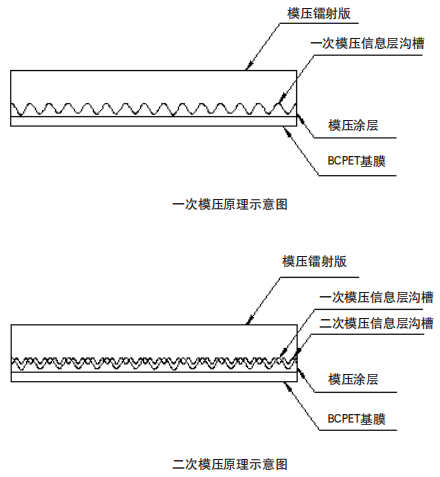 Fig. 1 Schematic diagram of the pattern process of two holographic laser plates at the same time
The relative brightness of the first and second moldings can be adjusted by adjusting the plate roller temperature of the second molding. The film that has been molded for the second time is not aluminized, and is directly sent to the composite workshop for compounding with glass cardboard, and the molded information layer faces outward, which needs to ensure the flatness of the composite surface to avoid abrasions, scratches and other problems. Finally, select and cut a piece of composite paper larger than one hard-stamped plate circumference, check the surface for flaws, and silver plating. After silver plating, electroforming is carried out, and the required laser master plate with two holographic laser plate patterns can be made, and the specific steps are as follows.
(1) Choose a double-coated pre-coated film with good coating leveling and the coating is not easy to fall off, without the problem of coloring on the coating surface, and the coating needs to be molded with good compaction, relatively high brightness, and the effect of the molded double-pressed plateless seam cold zone is better. Coating and leveling the pre-coated film to facilitate coating production and better molding effect; The coating is not easy to peel off to facilitate the film making process and the compounding process, as well as the silver plating and flipping process. The double-coated pre-coated film can avoid the problem of coloring on the coating surface, and also has a good molding effect. Generally, gravure transfer laser coating or composite laser coating suitable for double-pressing without plate seams is selected, which requires good film formation and relatively good adhesion.
The coating coating needs to have excellent molding performance, good compaction and high brightness; In addition, the coating should have excellent performance of molded double-pressed plateless seam film, with good transition in the cold zone and no obvious black shadow in the cold zone. Only by choosing high-quality laser coatings can we press good results and make better laser layouts.
(2) First, use a hard-pressed single-plate molding machine to mold once, and select a version with a relatively deep groove depth of interference stripes on the holographic laser plate. Then use a double-press plateless seam molding machine for secondary molding, and choose a version with a relatively shallow depth of the interference stripe groove of the holographic laser plate. By adjusting the temperature of the plate roll of the second molding, the relative brightness of the first and second molding is adjusted.
In the first molding, the hard-pressing single-plate molding machine is used to mold, due to the high hardness of the molding rubber roller, it can reach Shore D class, the pressure of the molded rubber roller is larger, which can reach 50~60kg/cm2, which can ensure a better compaction degree, and the relatively deep holographic laser plate interference stripe groove depth can be imprinted on the molding information coating, so as not to completely destroy the information layer of the first molding during the second molding. When choosing, you need to choose a version with a relatively deep interference stripe groove depth of the holographic laser version, such as a laser pattern with an interference stripe groove depth of more than 2U or a small lens version. The hard-pressed plate roller plate circle should be selected as much as possible, which is conducive to maximizing the size of the plate spacing direction during plate making, which also determines the specification size of the new plate making, and generally need to choose a plate roller with a plate circumference of more than 620mm, which can be suitable for most product specifications.
In the second molding, the double-pressure plateless seam molding machine with better cold zone effect can ensure that there are no plate seams and no obvious dark areas, so as to ensure that there are no plate seams and obvious shadows within the week of a hard pressing plate, and to ensure that the effect of the new holographic laser plate and the size of the plate circumference direction are maximized. The double-press plateless seam molding machine belongs to the medium press, and the hardness of the roll is 95~98 degrees (Shore A class), which is lower than that of the hard pressing rubber roller. The molding pressure is about 25~30kg/cm2, which is lower than the pressure of the hard pressing rubber roller, and the compaction degree will be worse than that of the hard press. In addition, the holographic laser version with a relatively shallow depth of interference fringe grooves is selected, such as the 400dpi high-point mirror light column version or the plain laser version.
Adjust the temperature of the plate roller of the second molding to adjust the compaction degree of the second molding. The higher the temperature of the plate roller of the second molding, the better the compaction, and the higher the brightness of the laser pattern. At the same time, the interference stripe groove of the holographic laser version of the first molding is more damaged by the second molding, and the brightness of the laser pattern of the first molding is relatively low. On the contrary, the brightness of the laser pattern of the first molding is relatively high. The relative brightness, angle, position, etc. of the two-time molded laser pattern can be individually designed and adjusted by the molding temperature and the cutting plate and molding operation.
Technical effects and advantages
In view of the problem that there are few excellent versions on the market and the pattern of the holographic laser version is relatively single, the existing version can be used to make the pattern of the two versions of the holographic laser version on one plate through secondary molding and superposition in a personalized production method to develop a new version.
This scheme overcomes the shortcomings and shortcomings of existing technology and equipment, innovates the laser plate production technology with two laser plate patterns at the same time, and solves the problem of few excellent plates on the market and the laser plate pattern is relatively single. Its advantages are that the existing version can be used to superimpose the patterns of the two versions on one plate to develop more new versions; second, various laser plates can be personalized to provide more space for laser packaging and printing design; Third, the development of plate making technology in this method is not difficult, high efficiency and low cost.
Through this method of plate making, more personalized plates can be developed according to the needs of the design. This technology can also be used to combine various imposition methods to carry out more laser plate making process combinations to meet the various requirements of customers, develop more laser packaging products, generate greater economic benefits, and inject new impetus into the colorful packaging industry.