


Finnuo Huichuan and Sappi jointly established a printing paper giant
Facing the triple pressure of continuously declining demand in the European printing paper market, severe overcapacity, and high energy costs, two industry giants-UPM-Kymmene and Sappi-announced on December 4 the signing of a non-binding letter of intent to establish a brand-new printing paper joint venture.
This collaboration is seen as a "decisive response" to structural changes in the industry, aiming to enhance the long-term resilience and sustainability of the printing paper business. According to the letter of intent, the new company will be equally owned by both parties at 50% each, operate as an independent company, and have autonomous management of operations, resources, and decision-making.
Massimo Renon, President and CEO of UPM-Kymmene, stated that this move will not only provide long-term supply security for customers but also optimize UPM-Kymmene's product portfolio and further strengthen its balance sheet.
Performance Pressure Forces Transformation: The Difficult Times for Industry Giants
This collaboration is not without reason; it is based on the recent severe financial pressures faced by both companies.
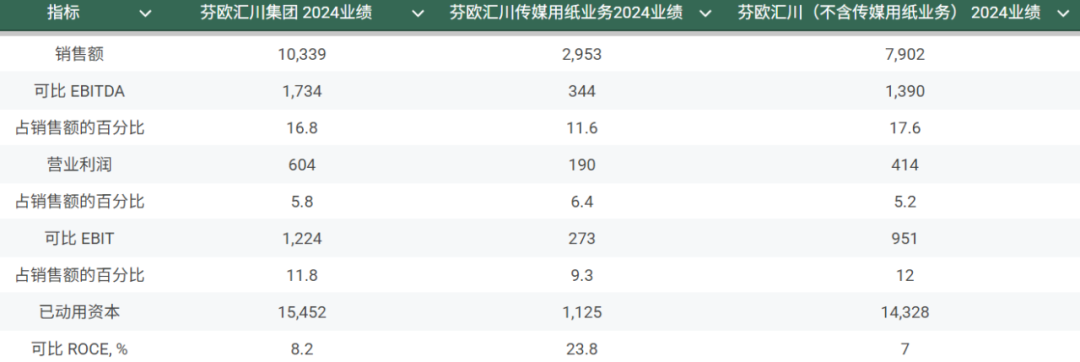
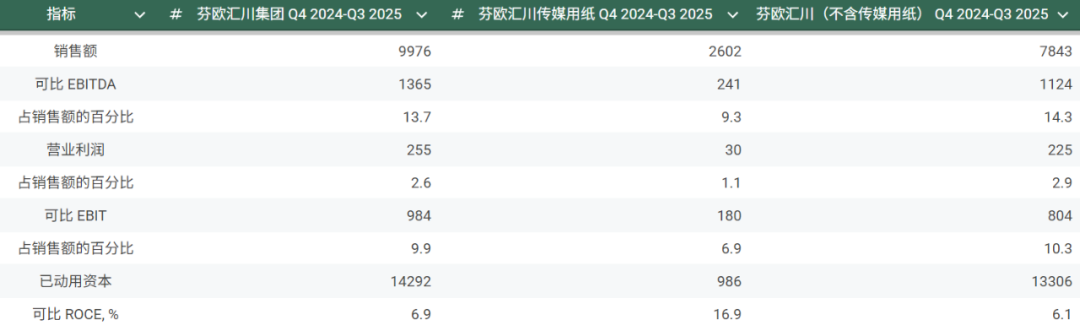
The latest financial report from Stora Enso indicates that the company is facing challenges in its performance. As of the first three quarters of 2025, the company's total sales amounted to €7.344 billion, a year-on-year decline; comparable EBITDA was €566 million, a significant year-on-year decrease of 30%, with the ratio to sales falling to 7.7%.
Among them, the media paper business is taking the hardest hit, affected by weak demand and export tariffs. To optimize assets, Stora Enso has made structural adjustments: including permanently halting paper production at the Kokkola mill in Finland, and selling the closed Pratteln paper mill in Germany to a local logistics company, in order to achieve a positive cash flow impact.
Sappi's situation is even more difficult. The fiscal year results as of September 30, 2025, show that the company suffered a net loss of as much as $177 million. The group's adjusted EBITDA shrank sharply from $684 million in the previous fiscal year to $501 million.
In Europe, Sappi's business revenue was €2.03 billion, but the adjusted EBITDA was only €58 million, mainly due to the general oversupply and weak demand in the paper market. Although the packaging paper and specialty paper (such as label paper) businesses grew, the overall weakening of profitability forced Sappi to seek large-scale structural adjustments.
 Sappi CEO Steve Binnie and Stora Enso President and CEO Massimo Renon
Core Objectives of the Joint Venture: Efficiency, Synergy, and Decarbonization
The core strategy of this joint venture lies in supply rationalization and improving operational efficiency, aiming to create a more efficient, adaptable, and sustainable printing paper business.
1. Integrate capacity and structurally reduce costs. The joint venture plans to strategically redistribute production volumes to the most efficient paper machines, achieving more sustainable capacity utilization and stronger operational performance. Overall, this transaction is expected to generate approximately €100 million per year in synergies through asset optimization, product portfolio rationalization, logistics optimization, procurement efficiency improvements, and operational efficiency enhancements. This will provide structural cost advantages and supply security for customers in Europe and globally, while also helping to build a more balanced and resilient European market.
2. Advance climate goals and achieve green development. The joint venture will further implement Stora Enso's ambitious climate action roadmap, which aims to reduce product emissions by up to 70% by 2030. By optimizing capacity utilization, improving operational efficiency, and continuously investing in decarbonization, the joint venture can reduce its overall climate impact, thereby helping to advance the goals of the EU Clean Industry Pact.

Transaction Details and Financial Arrangements
The scope of the proposed joint venture includes all of UPM's media paper business and Stora Enso's printing paper business in Europe, specifically: eight paper mills under UPM located in Finland (Kymi, Rauma, Jämsänkoski), Germany (Niederrhein, Augsburg, Schongau), the United Kingdom (Cairdony), and the United States (Brandon); as well as four European printing paper mills under Stora Enso, located in Finland (Kirkniemi – the world's largest coated publication paper mill, with an annual capacity of 750,000 tons), Germany (Eningen), Austria (Gratkorn), and the Netherlands (Maastricht).
According to the letter of intent, the business and assets contributed by both parties have a combined enterprise value of €1.42 billion (approximately RMB 11.7 billion), excluding the potential benefits from expected synergies.
The enterprise value of UPM's media paper business is €1.1 billion. UPM will receive €613 million in cash and a 50% stake in the joint venture, and transfer €406 million in pension liabilities to the joint venture. The enterprise value of Stora Enso's European business is €320 million. Stora Enso will receive €139 million in cash and a 50% stake in the joint venture.
After the transaction is completed, the joint venture will independently raise debt to pay the acquisition consideration to UPM and Stora Enso respectively. It is expected that within three years after the completion of the transaction, the joint venture will complete integration and realize synergies, at which point either shareholder may choose to sell its shares.
For UPM, the transaction is expected to have a positive impact on its profitability (EBIT as a percentage of sales), balance sheet, and leverage ratio. The company will also achieve a more focused business portfolio oriented toward growth markets, no longer directly selling in the shrinking European and North American printing paper markets.
Impact on the European Printing Paper Market
The joint venture plan between Finn-Orr & Huichuan and Sappi is one of the most significant consolidation events in the European printing paper market in the past decade. This is not only a strategic adjustment for the two companies but also an action taken by the entire industry to cope with structural decline, with far-reaching effects.
1. Ending the "price war" era and reshaping supply-demand balance
The fundamental problem long faced by the European printing paper market is the permanent demand shrinkage caused by digitalization, while capacity adjustment has not kept pace with the decline in demand, causing a persistent oversupply. This imbalance has forced all participants into brutal price competition, severely compressing profit margins, as reflected in Sappi's huge losses.
Through supply rationalization, the joint venture will concentrate production on the most efficient machines, which implies a de facto permanent capacity exit. The emergence of an entity jointly controlled by two major giants with high market concentration will significantly increase market pricing power.
The market will shift from "fragmented, highly competitive, and highly volatile prices" to "consolidated, rational, and relatively stable prices." For the remaining market participants, although there will be fewer competitors, the increased bargaining power of the new giant will force all participants to reassess their cost structure and capacity choices.
2. Optimization of Cost Structure and Enhanced Industry Resilience
The annual synergy of 100 million euros mainly comes from improvements in logistics, procurement, and operational efficiency, directly optimizing the cost structure of the new entity. In an industry with high variable costs (especially energy and raw materials), this type of cost reduction at scale is crucial. It enables the merged entity to better withstand future energy price shocks and economic downturns, enhancing the industry's overall resilience to risk.
3. Focusing on Core Business: Accelerated Strategic Transformation of Stora Enso
For Stora Enso, this transaction not only brings a cash flow of 613 million euros, but more importantly, achieves a focus on its business portfolio. Divesting or partially divesting mature and declining markets (printing paper in Europe and North America) allows the company to invest capital and management attention into growth businesses (such as specialty paper, packaging, and biomaterials). This marks a decisive step for Stora Enso in completely shedding the "traditional paper" label and moving toward becoming a provider of "sustainable material solutions."
4. Impact on the Chinese Market and Import Patterns
Although the joint venture mainly focuses on European business, there are indirect effects on the Chinese market:
Stora Enso and SAPPI are global companies, with the former ranked 8th and the latter 18th among the top 75 global paper companies. The optimization of their European capacities (retirement of inefficient capacities) will make the supply-side structure of global printing paper healthier. If European market prices stabilize and rise due to the consolidation, it may indirectly impact global trade flows and the prices of imported printing paper in China. Although the effect is relatively small, it will increase the strategic planning complexity for relevant Chinese domestic companies.
If the joint venture focuses on efficient production, it can ensure a stable supply of high-end printing paper. This serves as a guarantee of supply chain stability for Chinese publishing and printing companies with high-end paper import needs. The focus of relevant Chinese companies and investors will shift from "overcapacity" in the European market to the new pricing model under "oligopoly competition," requiring closer attention to the product strategy of the new giant.