


Die-Cutting Column | Looking at real cases: the dilemmas and solutions for coated tools
Right now, die-cutting tool processes still face technical bottlenecks in terms of precision, speed, and stability. For example, cutting electronic chip labels requires extremely high precision, but current tools are affected by wear, equipment vibration, and other factors, making it hard to achieve. During high-speed operation, tools wear out or deform easily, which affects cutting quality and tool life. When working for long periods, tool performance fluctuates, making it hard to ensure consistent product quality. On top of that, raw material prices fluctuate, equipment is expensive with high upgrade costs, and labor costs are rising, all putting huge pressure on companies to control costs. Additionally, there's a shortage of skilled die-cutting professionals, and the education and training systems are not well developed, making it hard for companies to hire experts. This limits technological development and process improvements, and also affects the passing down of skills.

For coated tools, although the advantages are obvious, there are also some challenges. For example, coating technology has high requirements, and unstable coating quality may lead to decreased tool performance; coated tools are relatively expensive, which can put some pressure on companies with limited budgets; some companies don't have a deep understanding of the performance and usage of coated tools, so they can't fully take advantage of them.
Strategies
To overcome technical bottlenecks, companies should increase investment in R&D, set up research teams, and collaborate with universities and research institutions. They should develop new tool materials, optimize tool design structures, and use advanced manufacturing processes to improve precision; develop cooling systems and intelligent control systems to enhance stability and quality during high-speed cutting. For coated tools, coating technology R&D needs to be further strengthened to improve coating stability and uniformity and reduce coating costs.
Cost optimization can be tackled across procurement, production, and management. When purchasing, build long-term cooperation with suppliers, buy in bulk to reduce costs, and ensure quality; in production, optimize processes and introduce automation; in management, streamline organizational structure, improve management efficiency, and reasonably plan production tasks. For the issue of high costs of coated tools, companies can negotiate for better prices with suppliers, optimize production processes, improve the efficiency of tool usage, and lower unit costs.

To address the talent shortage, it's necessary to establish a comprehensive talent training system, cooperate with universities and vocational schools for tailored training programs, strengthen internal corporate training, and encourage employees to learn and innovate. At the same time, offering attractive benefits and career growth opportunities helps attract top external talent. During talent development, there should be a focus on training in knowledge and techniques related to coated cutting tools, so that professionals can skillfully use and maintain these tools, making the most of their performance advantages.
Case Analysis
A well-known label printing company serving the beauty and cultural industries faced custom label orders for limited edition lipsticks. They used digital design software and high-precision laser cutting to create cutting dies, combined with digital die-cutting technology and flatbed die-cutting tool flexibility, to deliver high-quality personalized labels on time, boosting market share and brand influence. In this process, the coated cutting tools chosen by the company played a key role. Their high wear resistance, hardness, and smoothness ensured the perfect cutting of delicate lipstick labels, achieving high-quality delivery and earning client praise.
A company specializing in high-end electronic product label printing, to meet strict quality requirements, selected high-quality carbide-coated cutting tools, used five-axis machining technology, optimized die-cutting equipment and cutting edge design, and established a color management system, successfully producing high-quality electronic labels and strengthening market position. The coated cutting tools' high precision and stability ensured the dimension accuracy and edge quality of electronic labels, meeting the rigorous requirements of high-end electronic products.
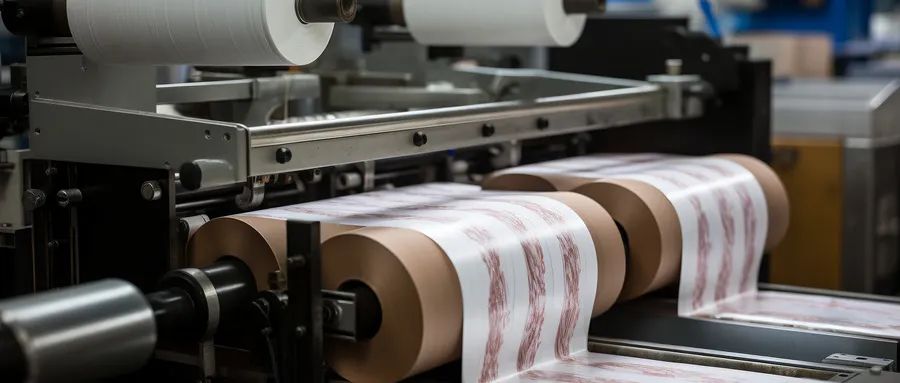
Clothing label printing companies, in response to the industry's trend of short orders and fast production, have introduced rotary pressing die-cutting equipment and upgraded it with smart technology. By adopting lean production principles to optimize processes, establishing a supply chain management system, and introducing an ERP system, they have achieved efficient production, won orders from many clothing brands, and maintained continuous business growth. Coated cutting tools, in the company's production process, reduce the frequency of tool changes thanks to their high wear resistance, improve production efficiency, and their low equipment damage ensures stable operation of automated equipment, guaranteeing on-time order delivery.
Trend Outlook
In the future, the die-cutting process for adhesive labels is expected to move towards intelligence, automation, and high precision. Smart tools will be able to monitor, diagnose, and adjust themselves, extending their lifespan; automated production flows will cover everything from raw material feeding to finished product packaging, improving efficiency; high-precision tools will use nano-processing technology and new superhard materials to meet the needs of high-end applications.
As an important direction in the tool field, coated tools are likely to deeply integrate with these trends in the future. With technological progress, the performance of coated tools will further improve, coating materials will become more diverse and high-performance, and coating processes will become more advanced and precise. This will provide better and more efficient solutions for the adhesive label printing industry, drive continuous industry development, and better meet the constantly changing market demands.