


With Fujifilm ramping up and Xerox launching new products, where's the next hot spot in the mid-range production toner printing market?
With innovations in inkjet, automation, and workflow intelligence, the development of toner technology has continued to grow rapidly. While the industry has been buzzing with praise for new inkjet technologies in recent years, toner processes have not declined under the impact of digitalization. On the contrary, through their own modern transformation, they have demonstrated remarkable vitality.
In the commercial printing field, manufacturers are constantly introducing improvements to enhance color accuracy, media compatibility, energy efficiency, and overall production efficiency. These advancements have broadened the applications of toner, while strengthening its role as a cornerstone in short-run printing, on-demand printing, and variable data printing environments.
With faster printing speeds and reduced maintenance needs, toner equipment is becoming increasingly competitive in areas once dominated by other technologies. At the same time, upgrades in post-press processing options and substrate compatibility are creating new opportunities for printing service providers seeking diversified output.
As a leading investor in toner technology, Fujifilm has been actively developing products in recent years. The entire industry is experiencing a shift from pure CMYK four-color printing to systems that offer wider color gamuts, higher color consistency, and greater creative potential. Improving core image quality plays an important role here, with new toner formulas and higher-resolution LED printheads delivering smoother, more precise print results.
But the real market shift lies in how these technologies are becoming accessible. Features that used to be exclusive to high-end printers-like expanded color channels, dedicated toners, and advanced color management-are now much more attainable. The market has opened up, giving more printing businesses a chance to offer higher-value applications without investing in top-tier equipment.
Fujifilm's mid-production printers, the Revoria Press EC2100/EC2100S and Revoria Press SC285/SC285S, exemplify this trend. Both machines are designed to deliver high-quality four-color and five-color printing with high detail, consistency, and efficiency. More importantly, they support field upgrades, allowing customers to move from CMYK four-color printing to five-color printing as their business needs evolve.
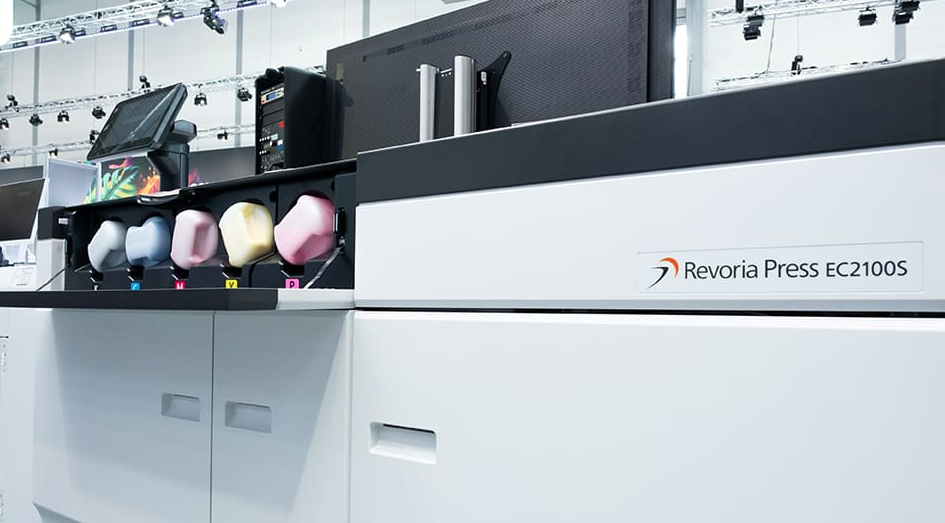
These 'S' series models support six special toners, including pink, clear, textured paper-specific toner, as well as gold, silver, and white toners. These printers make value-added printing easier than ever, opening up creative and business opportunities that used to be available only with high-end equipment.
Nowadays, printing companies should look for a solution that not only offers these special options but also provides consistently high-quality CMYK output as a standard. Standing out in the competition isn't just about meeting market demand; it's also a way for businesses to capture high-profit opportunities. At the same time, sustainability is becoming a key requirement across industries, and lower fusing temperatures, reduced energy consumption, and recyclable printing materials all contribute to a more efficient and eco-friendly production environment.
Meanwhile, Konica Minolta continues to innovate in toner printing, launching the new generation of AccurioPress systems aimed at enhancing speed, color performance, and automation in commercial settings. The all-new AccurioPress C10500 and C10500S production printers are designed for commercial printers, in-house corporate printrooms, and high-volume businesses, aiming to deliver high-quality output with minimal manual intervention.
These printers use Simit V toner, achieving a litho-like matte finish with lower fusing temperatures. Following industry trends, the S-series printers also include fifth-color capabilities, including white toner, reflecting the industry's growing demand for more color options.
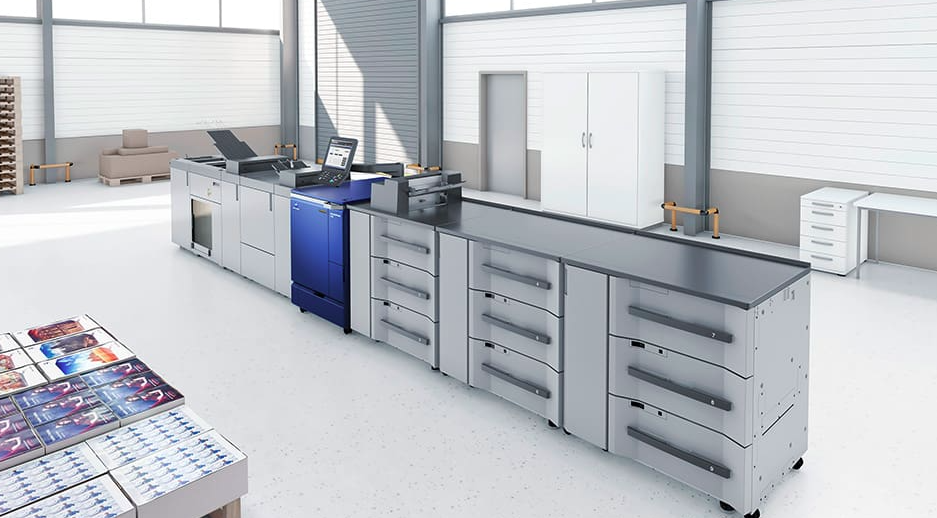
To free operators from tedious mechanical adjustments, both the AccurioPress C10500 and C10500S feature a range of technological enhancements designed to streamline workflows and reduce manual intervention. Using the intelligent optimizer unit, the device can automatically adjust and monitor color profiles; Smart media sensors can automatically identify paper types and weights, enabling unattended and uninterrupted printing.
This smarter way of working and higher level of automation make better use of operators' time without sacrificing quality and consistency. These two presses can reach speeds of up to 105 pages per minute and can handle a variety of substrates, including paper up to 450 grams thick and 1300 millimeters long, as well as embossed paper, envelopes, polyester film, and single-sheet labels, delivering vivid printing on color, transparent, or metallic materials.
Besides the high-end series, the mid-range market upgrades are also eye-catching. Konica Minolta's AccurioPress C7100 ENHANCED series offers a resolution of 3600 x 2400 dpi, offering higher automation and easier operation compared to previous models. To meet the market's demand for higher levels of automation, the enhanced press is equipped with a brand-new "intelligent color control" algorithm, capable of measuring up to 13 colors and making real-time adjustments during production.
At the same time, the optional intelligent quality control unit provides consistent color quality and forward and reverse registration, eliminating the need for recalibration or inspection during print production. Additionally, the online cutting unit offers various post-press options such as cutting, embossing, and punching, allowing direct production of fully bleed-cut book covers, imposition cards, business cards, and coupons on the assembly line.
It is worth mentioning that the AccurioPress C84hc has become the only internationally recognized high-chroma toner system on the market, having passed multiple rigorous tests, indicating that the brand's entire color printing system line has entered a mature stage of standardized, high-quality quality.
On the track of "surpassing CMYK," Xerox is also a trendsetter giant. Its emulsion concentrated toner is continuously improved, making the particles more uniform and smaller, resulting in clearer details and better color reproduction, while reducing toner usage and energy consumption. Xerox's newly launched Proficio production series, including the Xerox Proficio PX300 and Xerox Proficio PX500 presses, is designed to help print service providers remain competitive in the rapidly evolving medium-yield color printing market.
The current market environment and customer expectations have changed, making differentiation and efficiency more important than ever. These new devices are built on automation, color science, and leadership in the fields of "beyond CMYK," helping print service providers increase profits and stand out from the competition.
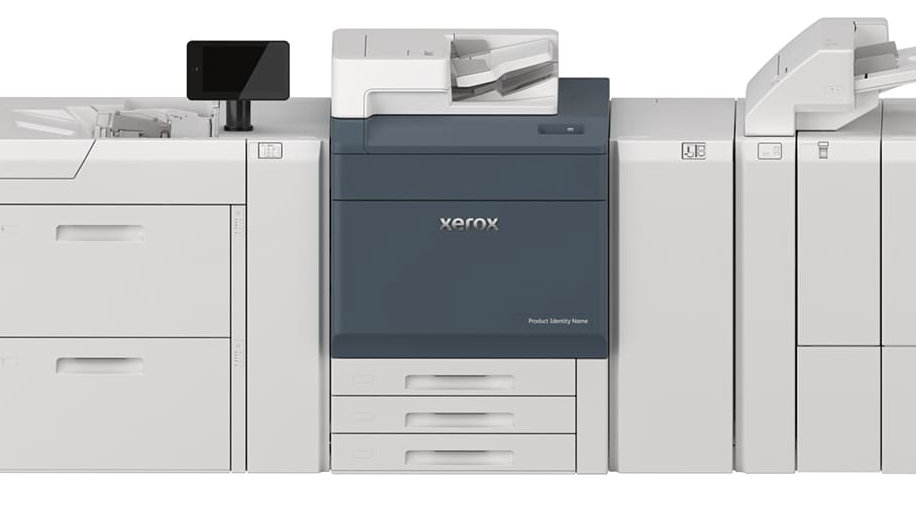
The all-new Proficio series is designed to replace the classic Xerox Versant 4100 and Versant 280 models, using low-melting-point dry toner and capable of producing ultra-high-definition images with 10-bit RIP rendering. This series also supports running additional colors in a single pass, like metallics, transparents, white, and fluorescents, which adds more value to printed materials. Its low-gloss clear toner allows users to print on textured paper without losing image clarity.
This opens up paths to new markets. For instance, white and clear toners can be used for small batch and personalized packaging, while eye-catching metallic toner is great for high-value products like cosmetics and jewelry.
However, toner itself is just one part of the overall value proposition. Buyers should look for evidence of synergy among automated workflows, digital front ends, efficient toner engines, as well as features like automatic calibration, precise color reproduction, and waste reduction-these work together to boost overall returns. This holistic approach is called a production ecosystem, where all parts of the process and value chain are interconnected and interactive.
Early digital toner presses might have been favored mainly for their efficiency in short-run printing and quick turnaround, but today's print service providers expect a more complex combination of productivity, quality, versatility, automation, and cost-effectiveness. Toner presses have evolved into powerful production engines.
With ongoing advances in chemistry, nanotechnology, and AI, new smart toner solutions for secure printing and even printed electronics are being developed. The toner process offers a mature path with low entry barriers, strong scalability, and minimal performance loss, and it will continue to shine brightly in the future printing ecosystem.