


What are the development trends behind the accelerated global expansion of sterile packaging giants and their overseas expansion?
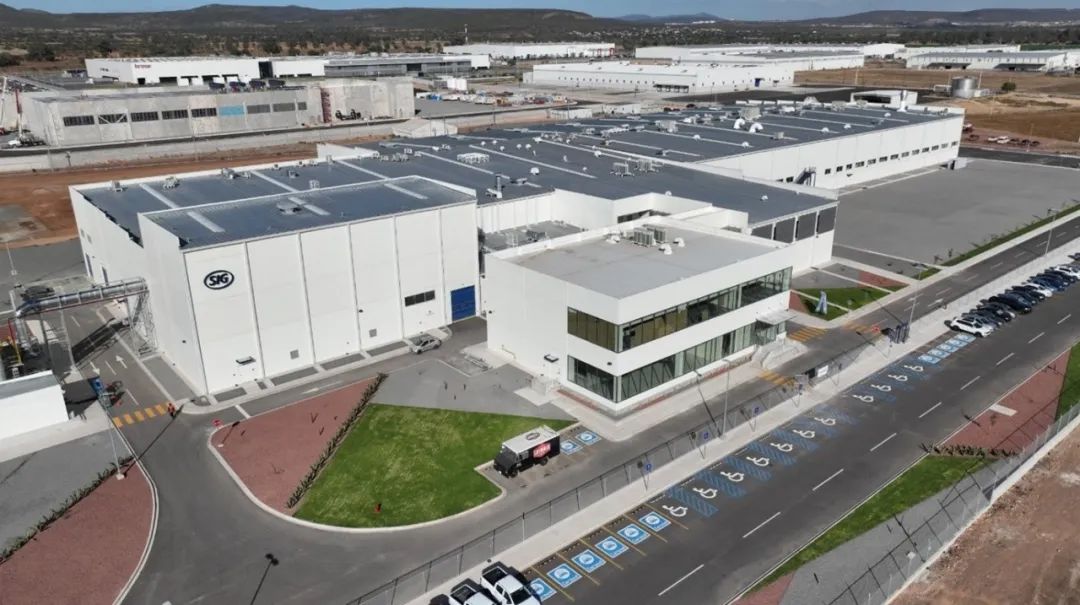
Recently, SIG Combibloc announced that its high-tech sterile paper box production plant in Queretaro, Mexico will undergo its first expansion, with plans to invest an additional $35 million. The expansion is expected to be completed and put into production in the second half of 2026, and the overall production capacity of Combibloc will increase by 50%.
At the same time, Tetra Pak, another global aseptic packaging giant, has officially launched its second aseptic paper box packaging material production line at its factory in Pingyang, Vietnam, with a total investment of 97 million euros. The new production line has more than doubled the factory's annual production capacity and added production capacity for 15 packaging specifications.
As the dual giants of global aseptic packaging, Kangmei Packaging and Tetra Pak are influencing the global aseptic packaging industry landscape through large-scale overseas expansion.
 Sorting out the overseas expansion paths of the two giants
The global layout of two sterile packaging giants has outlined different trajectories in similar waves of the times. There are certain differences between the two in terms of layout area, resource investment, and strategic rhythm. However, at the same time, there are similarities in the overseas actions of the two companies. From recent actions, both anchor the growth dividends of emerging markets. Embedding the key nodes of the global layout of two sterile packaging giants into the timeline of history can provide a clearer insight into the expansion logic behind them.
SIG combibloc
In 1998, Kangmei Bao's packaging material factory was officially put into operation in the eastern coastal industrial zone of Thailand (Rayong Province). This marks the comprehensive launch of Kangbai's localized production and business in Thailand and even throughout Southeast Asia.
In 2002, Kangmei Bao invested in building a factory in Suzhou Industrial Park, becoming a key foothold in the Asia Pacific market. The establishment of the Suzhou factory marks the beginning of Kangmei Bao's production and operation in China, and has become an important base for Kangmei Bao to radiate to the Asia Pacific region, serving numerous domestic dairy, beverage, and food enterprises.
In July 2011, Kangmei Packaging completed the first phase of its packaging factory in Paran á, Brazil, embarking on a journey to deeply cultivate the South American market.
In 2018, the Kangmei Bao Asia Pacific Technology Center was completed in Suzhou Industrial Park, which is the largest and most comprehensive technology center of Kangmei Bao outside of its global headquarters, and also the only technology center in the Asia Pacific region.
In 2023, Kangmei Bao's high-tech sterile paper box production factory in Queretaro, Mexico was successfully put into operation, which is an important step for its layout in the North American market.
In February 2025, Kangmei Packaging opened a sterile paper box packaging production factory in Ahmedabad, Gujarat, India, with an investment of 90 million euros and an additional investment of 40 million euros to expand capacity. In the same year, Kangmei Bao announced an additional investment of $35 million in its Mexico factory, with plans to complete the expansion in the second half of 2026.
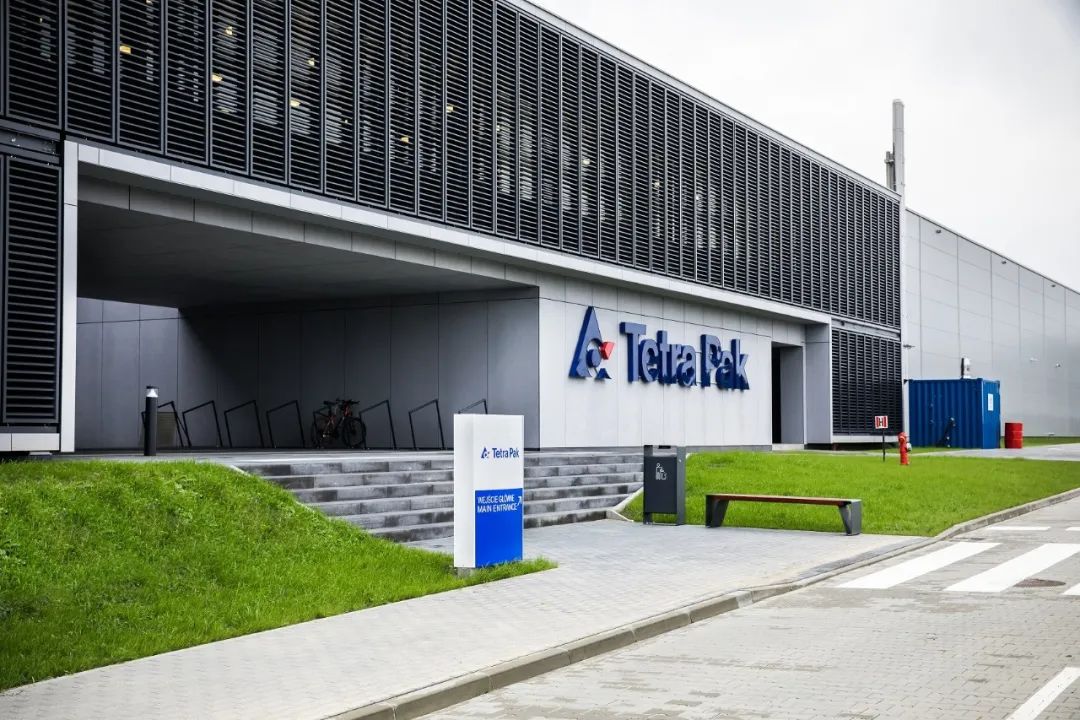 Appearance of Tetra Pak Company
In 1991, Tetra Pak rapidly expanded into the Asian region, setting up branches in countries such as India and Japan to provide localized services and adapt to different market demands.
In 1994, Tetra Pak Huaxin Packaging Co., Ltd., 75% owned by Tetra Pak Holdings, was established. Tetra Pak completed its first step in expanding its presence in China by setting up offices in nine key cities including Shanghai and Beijing; There are four joint venture factories in Beijing, Foshan, and Kunshan respectively, and a distribution network has been established throughout the country. Its China headquarters has also officially relocated from Hong Kong to Shanghai.
In 2003, Tetra Pak began to establish a company in Vietnam, embarking on a deep exploration of the Vietnamese market.
In 2007, Tetra Pak launched the construction of its Hohhot packaging factory, which was officially put into operation in 2009 and became an important global production base.
In July 2019, Tetra Pak established its first sterile paper packaging material factory in Pingyang, Vietnam. The factory cost 120 million euros and has a designed annual production capacity of 20 billion bags. It became one of the first factories in Vietnam to obtain LEED standard V4 gold certification.
In 2022, the integrated production service base of Tetra Pak Kunshan will be put into use, with functions of production, research and development, and training. It will also announce a capital increase of 63 million euros to expand production capacity, build an important strategic base in the Chinese market, and strengthen regional service and innovation capabilities.
On July 3, 2025, the completion ceremony of the second phase of the aseptic packaging factory project of Tetra Pak located in VSIP II-A Industrial Park, Yongxinfang, Ho Chi Minh City was held.

Viewing Overseas Layout Trends from the Path
Observing the overseas expansion actions of the two companies over a longer timeline, their overseas layout shows the following trends.
1. Expand emerging markets and seize high growth opportunities
Observing the overseas expansion paths of Kangmei Bao and Tetra Pak in recent years, their overseas layouts have shown a trend of seizing emerging markets in terms of market selection.
With the continuous release of consumption upgrading and demographic dividends in regions such as Asia Pacific, Latin America, and Africa, a large demand for packaging has emerged. Especially in Latin America and the Asia Pacific region, packaging demand has shifted from "basic functions" to "customized services". In response, Kangmei Bao and Tetra Pak have increased their investment in Latin America and the Asia Pacific region. Kangmei Bao invests in building a factory in India; Tetra Pak has added a production line to its Vietnam factory to meet the diverse needs of dairy products and beverages.
In fact, as early as around the beginning of the 21st century, Kangmei Bao and Tetra Pak began to enter the Asian market. Kangmei Bao established a packaging material factory in Thailand in 1998, fully expanding its localized production and business in Thailand. It landed in Suzhou in 2002. Tetra Pak established branch offices in India, Japan and other countries in 1991, and by the end of the 20th century, had established joint venture factories in Beijing, Foshan, Kunshan and other places. In recent years, while consolidating and stabilizing the market, Kangmei Bao and Tetra Pak have actively explored new business growth points and entered emerging markets.
It is worth noting that as one of the emerging markets, Kangmei Bao has significantly increased its investment in the Indian market in recent years. In February 2025, Kangmei Packaging invested 90 million euros to establish its first sterile paper box packaging production factory in India and added an additional 40 million euros for capacity expansion. This expansion move has taken an important step in the strategic layout of emerging markets.
2. Upgrade technology and services to empower market expansion
In the process of overseas development, printing and packaging enterprises need to quickly improve their technology and service levels to meet the needs of different markets due to differences in regulations, industry standards, consumer preferences, and other aspects in various countries. Kangmei Bao and Tetra Pak have invested heavily in research and development, continuously launching new technologies, products, and upgrading services to meet the diverse needs of global customers.
At the level of technological upgrading, focus on technology research and development and sustainable development. Kangmei Bao is deeply rooted in Suzhou Industrial Park, starting from a purely production-oriented enterprise and continuously transforming into a technology-based and intelligent enterprise. Kangmei Packaging's Queretaro factory in Mexico can provide a wider range of carton form combinations, including six main specifications, covering various capacities from 80 milliliters to 2 liters. Tetra Pak has strengthened its technology landing capabilities through an integrated base, and its Vietnam factory has added production capacity for up to 15 packaging specifications. In addition, adopting LEED green standards not only meets regional environmental requirements, but also enhances brand competitiveness through sustainability.
The upgrade of the service system focuses on full chain collaboration. For example, Kangmei Packaging has successively established a sterile paper box production plant, a filling machine assembly center, an Asia Pacific technology center, and three Asia Pacific factories in Suzhou, forming a full industry chain layout that now covers production, research and development, sales, and service. Lele Kunshan has launched an integrated production service base, which combines production, research and development, and training functions, strengthening regional service and innovation capabilities.
3. Regional deep cultivation to achieve supply chain upgrading
Under the global supply chain restructuring, "nearshore production" has become a consensus. Kangmei Bao's Mexico factory can quickly respond to the US market, while Tetra Pak's Vietnam factory radiates throughout ASEAN. This "regional center+flexible production capacity" model is conducive to improving the efficiency of product supply. For example, Tetra Pak has established a supply chain network in Vietnam consisting of the "Pingyang Factory Ho Chi Minh City Phase II Hub Regional Distribution Center", significantly improving order response speed.
In addition, Tetra Pak is building spare parts centers in the Asia Pacific market to optimize its supply chain. In February 2024, Tetra Pak opened its second spare parts center in Greater China in Beijing, making it the only region in the world with "dual centers" to ensure the safety and stability of the spare parts supply chain.
In the future, with the rise of emerging markets such as Africa and the Middle East, the expansion logic of Kangmei Packaging and Tetra Pak may continue: based on technology and regional demand, maintaining their own "individual rhythms" in the "common laws", and jointly promoting the evolution of sterile packaging from a "global product" to a "regional solution".
Currently, Chinese printing and packaging companies are facing challenges such as tariff barriers and trade frictions, increased entry barriers for environmental regulations, and rising logistics costs when going global. From the overseas expansion of Kangmei Packaging and Tetra Pak, it can be seen that in the wave of global competition, printing and packaging enterprises should increase investment in technological innovation, attach importance to sustainable development, and optimize supply chain management to forge core competitiveness.