


Weighing only 24 grams! A Zhejiang company has made a small lunch box that allows astronauts to slurp hot noodles in space
On the evening of May 29, the crew of Shenzhou-21 successfully returned to Earth. Nearly seven months of 'space business trip' set a new record for the longest single-crew stay in orbit by Chinese astronauts. What is little known is that during this journey, the astronauts' three daily meals-from steaming rice to noodles that can be 'slurped' in space-were all packed into a lightweight meal box weighing only 24 grams.
The provider of these meal boxes is neither a large state-owned enterprise nor a research institute, but a private company from Taizhou, Zhejiang: Zhejiang Xianglong Food Container Technology Co., Ltd.
Since 2021, Xianglong Technology has become the exclusive supplier of food containers for China's Shenzhou series spacecraft. But how could a meal box, no bigger than a cellphone, actually fly into space? The answer is far beyond just the term 'cutting-edge technology.'
Stepping into Xianglong Technology, the reporter saw not only the behind-the-scenes story of a space supply chain but also the breakthrough example of an ordinary small and medium-sized enterprise that, after a decade of relentless focus on a niche field, finally knocked on the door of a major national project. Behind this small meal box lies technology, standards, and, more importantly, the 'small but powerful' force within China's manufacturing ecosystem.
Unlocking the Space 'Slurp Noodles': A Space Challenge Behind a Water Inlet
Entering the Xianglong Technology exhibition hall, the reporter saw the space meal box displayed in a transparent glass case-it was not much larger than a cellphone and felt extremely lightweight in the hand.
"Guess how much it weighs?" Chairman Chen Huaqing teased, "Only 24 grams, about the weight of a small dumpling."
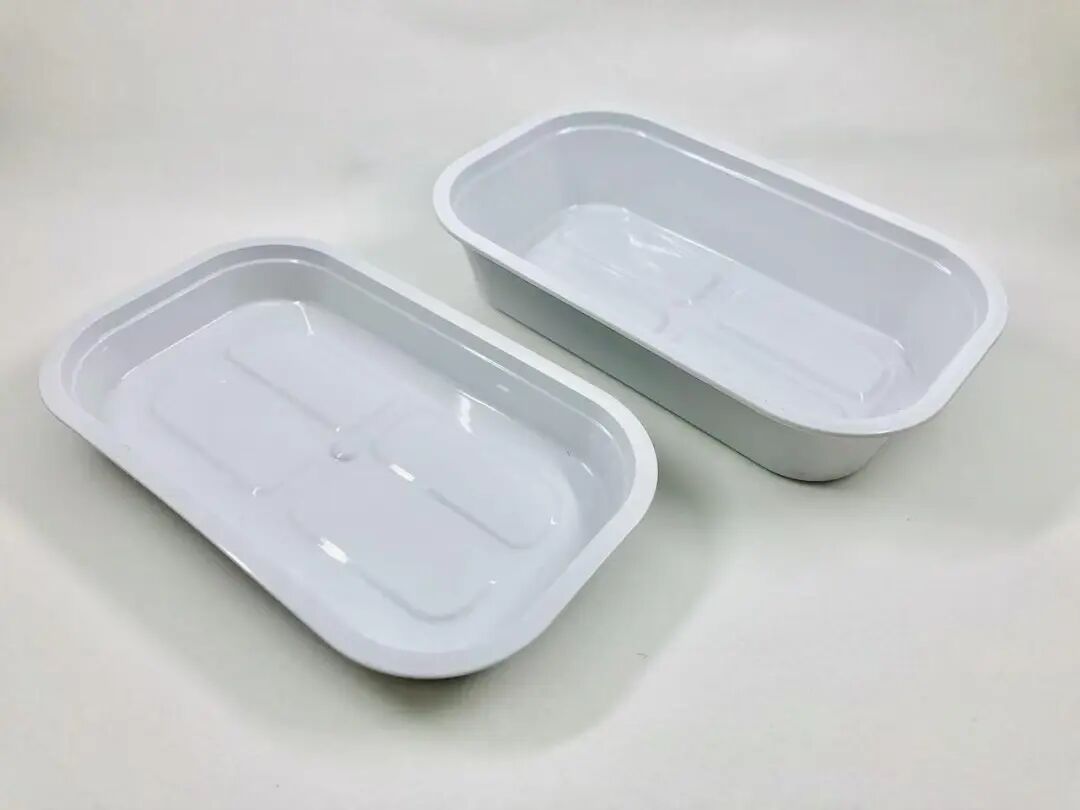
Lightness was precisely the first reason it was chosen.
Time went back to 2016, when Chen Huaqing received the development task from the aerospace department for the first time. He felt 'both proud and nervous.' At that time, China's space station was still in the planning stage, but the astronauts' meal boxes needed to be prepared in advance. Early aerospace food containers were iron cans, each weighing up to 60 grams. In the aerospace field, every gram of payload on a rocket corresponds to a huge 'shipping' cost. Weight reduction was an urgent need.
The specialty of Xianglong Technology just happened to come in handy.
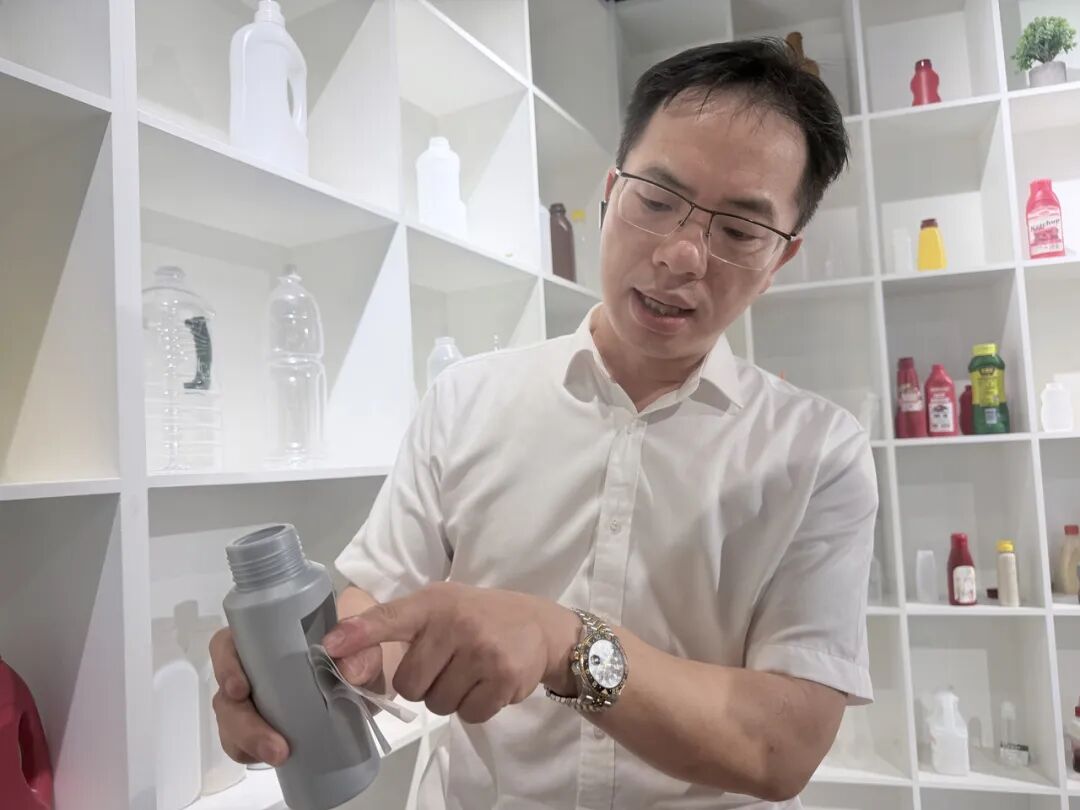
This company is the largest manufacturer of barrier food packaging containers in China. The so-called high-barrier materials preserve food through physical means. Chen Huaqing cut open a sample seasoning bottle to explain: on the thin bottle wall, there were actually five layers - the outermost layer resists impact and abrasion; the middle three layers block water vapor, ultraviolet light, and oxygen, respectively; and the innermost layer is made of high-purity, food-grade material. Using this material instead of iron cans not only ensures safety but also significantly reduces weight.
But bringing ground technology into space is far from simple.
Aerospace meal boxes must withstand extreme conditions such as overloading, strong vibrations, and drastic temperature changes. From 2016 to 2021, Xianglong Technology's R&D team spent a full five years repeatedly overcoming challenges in processes, materials, and design. Finally, the first batch of aerospace meal boxes successfully entered space aboard the Shenzhou-12 manned spacecraft.
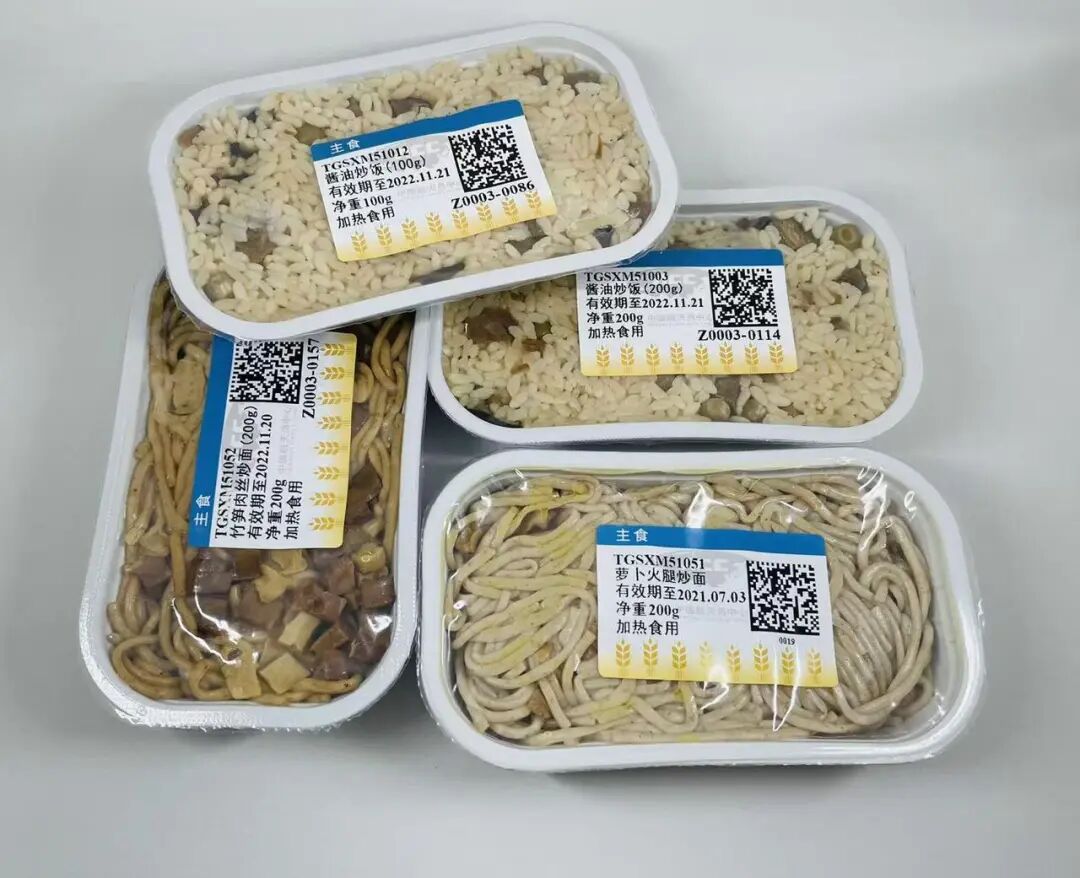
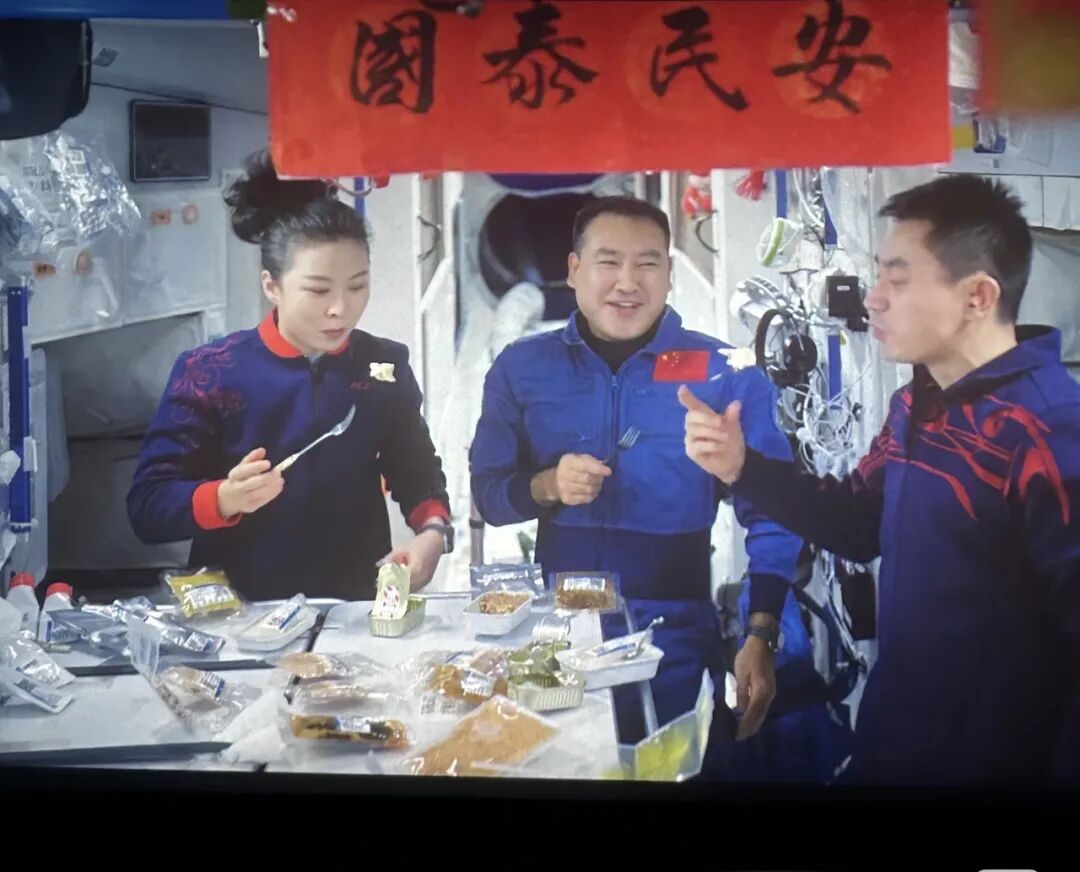
At this point, astronauts had a hot meal in space. But a new demand soon arose-could they "slurp" a bowl of noodles in space?
On Earth, instant noodles couldn't be simpler: just heat water. But in weightless environments, water turns into countless floating droplets that drift around. If hot water is poured directly into the container, the air inside cannot be automatically expelled, and if hot water spills, it could even endanger the precision instruments inside the cabin.
How to solve it? Xianglong Technology employed a clever structural design.
The reporter saw that this instant noodle lunch box is the same size as the rice lunch box, but the difference is that one corner of the lunch box has an extra water inlet leading directly to the bottom. "We added water intakes and exhaust ports. After water filling is complete, the water inlet will automatically seal; The exhaust vent is covered with a breathable membrane, allowing only air to escape without leaking. Chen Huaqing said. This way, the lunch box can be prepared in a fully enclosed space, and only opened after the food is ready-safe and convenient.
Today, Xianglong Technology produces aerospace meal boxes in two sizes, capable of holding more than 80 staple foods-rice, fried rice, noodles, vermicelli, and more. On average, more than 15,000 space-specific meal boxes are supplied annually. These foods can be stored at room temperature for up to three years and can be heated in various ways, allowing astronauts to enjoy warm, homemade flavors even in space.
From tin cans to lightweight 24-gram meal boxes, from only being able to eat re-cooked foods to being able to "slurp a bowl" of noodles anytime-this small meal box carries not only astronauts' daily meals but also a private enterprise's ability to respond to "national needs" through technology.
From Space to the Table: Why Aerospace-Grade Packaging Is Stuck at the "Last Mile"
The aerospace meal box has taken to space, but Xianglong Technology's ambitions go beyond this.
"Our original intention was to create domestically produced high-barrier food containers, so that more Chinese people can enjoy additive-free preserved foods." Chen Huaqing said. In his view, a major reason many foods need additives is the lack of high-quality food containers-if the packaging itself effectively blocks oxygen and moisture, food can naturally be "lightly added" or even "zero additives."
This logic sounds simple, but putting it into practice is not easy.
Entering the company showroom, a "bottle within a bottle" soy sauce bottle caught the reporter's attention. It has two layers: the inner soft bottle contains soy sauce, and the outer packaging bottle has an air inlet at the bottom. Every time you pour the soy sauce, the soft bottle shrinks a bit. "This design prevents air from contacting soy sauce. Even after repeated use, there's no worry about food losing its flavor. Chen Huaqing explained while demonstrating.
Xianglong Technology has launched over 100 similar innovations. Over nearly 20 years since its founding, its products have evolved multiple times from canned goods and seasonings to baby and pet food, and it has collaborated with many leading industry companies.
However, there is still a hurdle from "usability" to "large-scale use."
The cost of high-barrier materials is about 50% higher than that of ordinary food packaging. Downstream brands often hesitate when faced with cost pressures. Currently, this type of high-barrier food packaging accounts for only 0.3% of the domestic food packaging container market-the technology is mature, but the market has yet to explode.
Faced with this reality, Chen Huaqing did not rush to "lay out the spread." He chose a seemingly "clumsier" path: first, he reached the highest standards.
Since 2016, Xianglong Technology has fully implemented the internationally leading BRC food packaging quality system standards. This system imposed extremely strict requirements on production environment, quality management, and product traceability, and many people at the time felt it was "overinvested." But it was precisely this persistence of "strengthening ourselves first" that gave Xianglong Technology enough confidence and capability to face space missions later on.
Today, Xianglong Technology has grown into the largest barrier food packaging container enterprise in China, with a market share exceeding 70%.
"Our positioning is not as a plastic product manufacturer, but as a member of the foundation of the health industry." Chen Huaqing said. In his view, with China's rapid economic development, people's desire for health and environmental protection is growing stronger, and the era of "zero additive" preservation in food packaging will finally arrive.
By then, the journey from "going to space" to "landing" for space-grade meal boxes may no longer be so far.
Ten Years to Grind a Box: Why Does a Small Business Knock on the Door to Space?
How could an obscure small and medium-sized enterprise be able to open the door to China's space program? In Xianglong Technology's workshop, Chairman Chen Huaqing did not answer directly, but instead showed the reporter a "mold wall"-densely filled with scrapped test molds, the earliest date marked 2007.
"During those years, we couldn't even find a single reference blueprint." Chen Huaqing said. When the company was founded in 2007, the domestic high-barrier food container market was almost nonexistent, and multi-layer co-extrusion molds and hot runner forming technologies were monopolized abroad. No ready-made equipment, no mature processes-everything starts from scratch.
The most challenging challenge saw the team work continuously for over 70 hours, making more than 200 test molds, all of which were scrapped. "Looking at the pile of scrap molds piled into a small mountain, everyone felt uneasy, but not a single person said they would give up."
Besides the molds, the renovation of supporting equipment was equally difficult. Most of the existing production equipment only supported single-layer structures. To adapt to multi-layer processes, an entire control system had to be rebuilt - which was equivalent to starting from laying the foundation in an unfamiliar field. 'We had never been involved in control systems before. During that period, we spent every day poring over manuals, learning and modifying as we went,' they said.
In this way, from 2007 to 2014, over a full seven years and countless trials and errors, Xianglong Technology's multi-layer high-barrier packaging project finally completed pilot testing and entered industrial application. The overall thickness was less than 1 millimeter, breaking the monopoly of foreign technology. Precisely because of these seven years of solitary accumulation, when the aerospace department's research and development task approached them in 2016, Xianglong Technology became one of the few domestic companies capable of taking the order.
'Aerospace missions have extremely high requirements for safety, lightness, and reliability. Without those seven years of hard work, we wouldn't even have qualified to bid,' Chen Huaqing reflected. Only by pushing themselves to the highest standards could they survive future competition.
This idea of 'strengthening yourself first' ultimately led to their own opportunity. When the China Space Station was fully completed in 2023, Xianglong Technology, as a key collaborating unit, received a commemorative plaque from the China Astronaut Research and Training Center in appreciation, and was the only company in Zhejiang Province to receive this honor at that time.
In Zhejiang and even across the country, there are millions of small and medium-sized enterprises like Xianglong that start in niche sectors. They are often labeled as 'small, scattered, and weak,' and it is hard to imagine them having any connection with 'major national projects.' But the story of Xianglong Technology offers a different example: an ordinary private company that, over ten years, became the domestic market leader in a seemingly unremarkable packaging container, broke foreign technological monopolies, and ultimately entered the core supply chain of the nation's top scientific and technological projects.
Chen Huaqing revealed that today, Xianglong Technology is conducting preliminary research projects to help astronauts adapt to the ever-growing future space missions and new space environment challenges.
From a workshop in a small town in Taizhou to the dining tables on the Chinese space station-the journey of a small lunch box into space may be the very path that countless small and medium-sized enterprises can learn from in China's process of transforming manufacturing from large-scale to world-class.