


The pulp and paper industry is expected to benefit
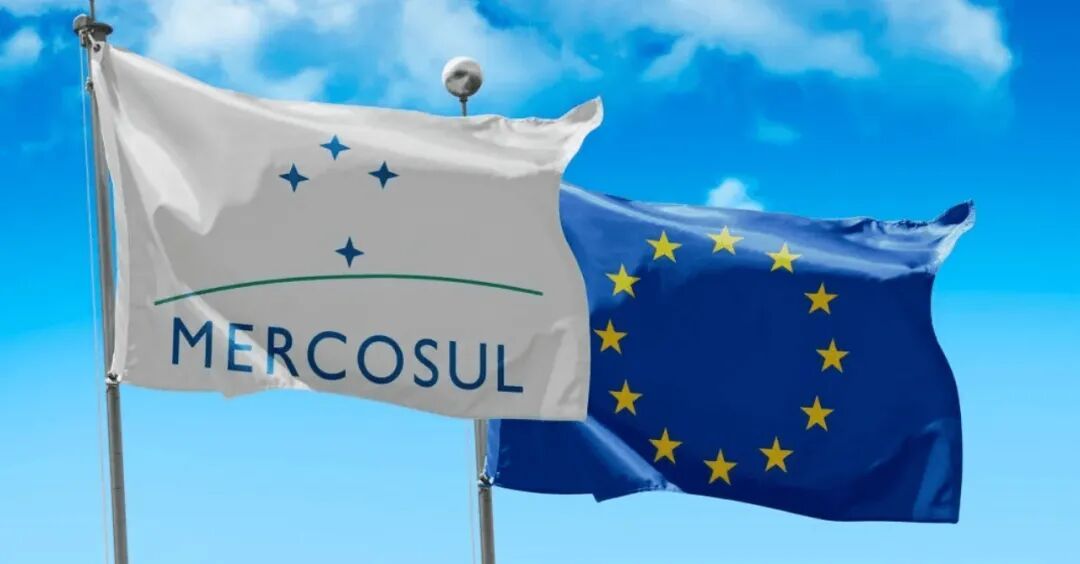
After more than 25 years of marathon negotiations, the Southern Common Market (MERCOSUR) and the European Union officially signed a free trade agreement on January 17 in Asunción, the capital of Paraguay. Against the backdrop of rising global geopolitical tensions and trade protectionism, this free trade agreement marks a key step for MERCOSUR and the EU towards creating one of the world's largest free trade zones, demonstrating both parties' commitment to openness, exchange, and cooperation.
However, after signing, this free trade agreement still needs approval from the parliaments of the respective countries before it can take effect. Analysts believe that, considering factors such as some EU member states holding a firm opposing stance, the approval process may encounter resistance in both the parliaments of the EU member countries and the European Parliament, and there remains uncertainty about its final implementation.
The Mercosur and the EU together represent a market of more than 700 million people, with a combined GDP accounting for about 25% of the global GDP.
In a joint statement issued by Mercosur member states following the signing of the free trade agreement, it was stated that the Mercosur-EU free trade agreement establishes a comprehensive and balanced framework to promote trade in goods and services, investment, and economic development. The statement said that the EU will gradually eliminate tariffs on 92% of Mercosur export products and will grant preferential treatment to an additional 7.5% of export products, including removing tariffs on 85% of pulp and 90% of EU paper and cardboard exports to Mercosur. "The channels for Mercosur goods to enter the European market will be significantly expanded, trade conditions will improve, and the competitiveness of businesses in the region will be enhanced," the statement said.
For the EU, Mercosur will eliminate tariffs on 91% of EU products over the next 15 years, allowing the EU to sell more cars, industrial machinery, electrical equipment, pharmaceuticals, and other products to Mercosur. Previously, these European products were significantly constrained in exporting to Mercosur member countries due to high tariffs.
The agreement opens up a new market for European paper producers. The Confederation of European Paper Industries (CEPI) stated that trade relations between European paper producers and South American counterparts have long been imbalanced.
"Since 2004, the EU has maintained zero import tariffs on pulp, paper, cardboard, and related products (including those from Mercosur countries). In contrast, Mercosur countries have imposed high tariffs on European exports, creating an unfair competitive environment," the industry association said.
"Given that the EU has already abolished tariffs for more than 20 years, this agreement should not lead to a significant surge in pulp and paper imports from Mercosur countries."
In the context of tense commercial relations between the EU and the US, the exchange of pulp and paper between the EU and Mercosur remains crucial.
CEPI pointed out: "Europe is a net exporter of high-quality paper and cardboard products globally, but at the same time, it is an important importer of market pulp from Mercosur, which is a key raw material for papermaking."
According to reports, the agreement includes a strengthened Trade and Sustainable Development chapter, accompanied by a legally binding annex. This annex contains commitments to halt deforestation and to enhance cooperation in sustainable supply chain development.
CEPI emphasizes that strict implementation of the Trade and Sustainable Development (TSD) chapter is crucial to ensure that environmental and labor standards are maintained. Both the European pulp and paper industry and Brazil's forestry sector have committed to preventing illegal logging and deforestation.