


Tetra Pak invests 500 million in Sweden to build a pilot plant, accelerating the 'aluminum-free' revolution in the packaging industry!
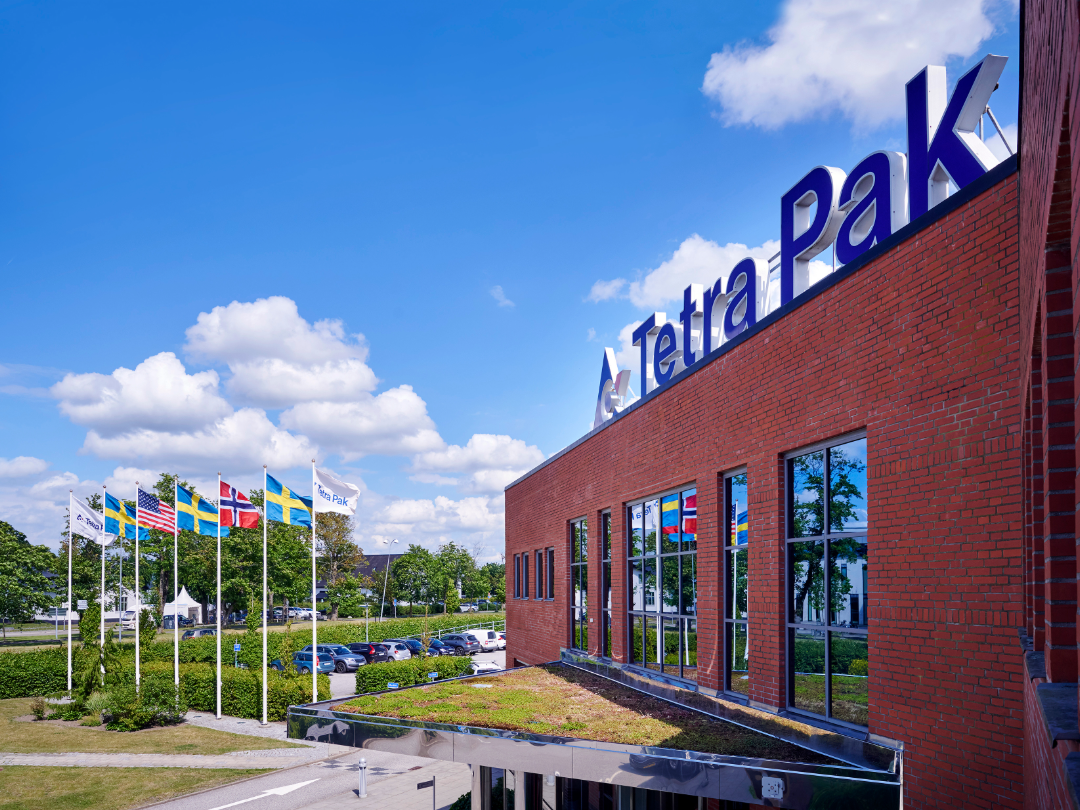
In the evolution of the global packaging industry, balancing 'fresh-keeping performance' with 'environmental friendliness' has always been an insurmountable gap. As a leading company in the global liquid food packaging sector, Tetra Pak's recent strategic move almost announced to the world the arrival of the 'all-paper-based' era in the packaging industry. Tetra Pak officially announced that it will invest 60 million euros (approximately 500 million yuan) to build a brand-new pilot plant at its headquarters in Lund, Sweden.
This is not just an expansion of production capacity, but a technological revolution targeting the underlying logic of aseptic carton materials. The core mission of this pilot plant is to accelerate the industrialization of paper-based barrier technology. For a long time, to ensure that perishable liquids such as milk and juice can have a shelf life of several months to even a year without refrigeration, aseptic cartons have had to rely on an ultra-thin layer of aluminum foil as a barrier to block oxygen and light.
However, the production process of aluminum foil is accompanied by high carbon emissions, and the recycling and separation process after disposal faces extremely high technical thresholds. Tetra Pak's investment aims to completely replace aluminum foil with more sustainable paper-based barrier materials, and to simplify packaging materials from "three-layer structure" to "double-layer structure".
Breakthrough of technical bottlenecks: make packaging more "green" and "stronger"
The decarbonization transformation of the packaging industry is no longer a multiple-choice question, but a compulsory question. For the majority of food and beverage producers, there is increasing pressure from retailers, regulators, and end consumers. Although traditional aluminum foil materials have excellent performance, they have gradually become a "pain point" in the industrial chain due to their high carbon emission intensity, sharp fluctuations in cost with international aluminum prices, and complex recycling processes.
Tetra Pak's new paper-based barrier material delivers a step-to-step leap in environmental performance while maintaining food safety and shelf life. According to a life cycle model validated by the Carbon Trust, this new paper-based alternative can significantly reduce the overall carbon footprint by 43% compared to traditional aseptic packaging containing aluminum foil.
More intuitive data lies in the change in the proportion of materials. By removing the aluminum foil, the paper content in the packaging is increased to about 80%. If plant-based polymers are further combined instead of traditional petroleum-based plastics, the share of traceable renewable materials in the entire package will climb to a staggering 92%. This means that the future beverage carton will be more like a "product of nature" than a stack of industrial synthesis.
From the laboratory to industrialization, the strategic layout of the Lund trial production plant
Tetra Pak knows that any breakthrough in the laboratory is just a castle in the air if it cannot achieve stable output on the industrial production line. Therefore, the construction of a pilot plant in Lund in southern Sweden had far-reaching strategic considerations. Lund is not only home to Tetra Pak's R&D team, but also close to Sweden's top Lund University.
Here, Tetra Pak can use world-class state-of-the-art testing facilities such as the MAX IV Synchrotron Radiation Laboratory to observe the performance of barrier materials at the molecular level. The new pilot plant will serve as a bridge between research and market, allowing customers to conduct full-link testing in a real production environment before committing to large-scale commercial applications. From the coating and molding of the barrier layer to the high-speed operation of the filling machine, every link will be tested in practice.
Joachim Tuvisson, Vice President of Materials & Packaging at Tetra Pak, makes it clear: "The significance of this plant is that it takes technology beyond theory. Customers can see firsthand how this new material performs on the actual filling line, building confidence for larger commercial changeovers. "
It is reported that the factory is expected to officially enter trial production in the first quarter of 2027, when it will receive the first batch of pioneer customers from around the world.
Footprints of the First Movers: Practical Verification of Juice Giants
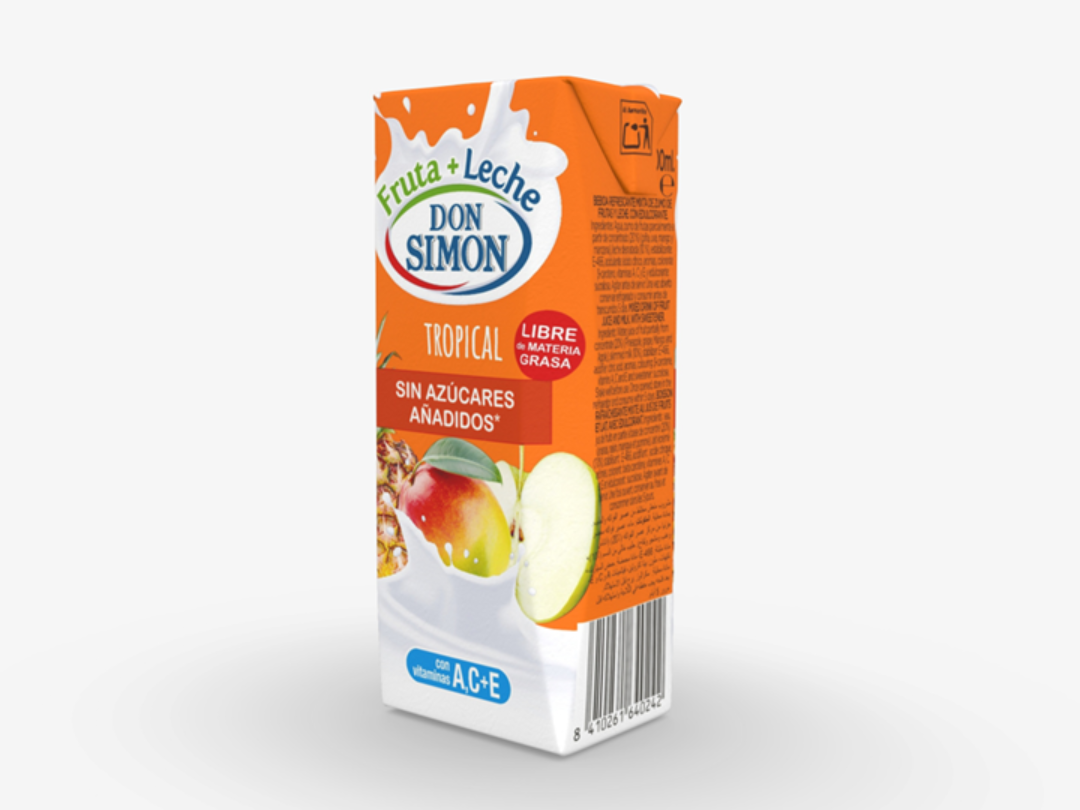
In fact, Tetra Pak's vision already has a successful precedent. In December last year, Tetra Pak partnered with García Carrión, a well-known Spanish beverage giant, to launch the world's first juice packaging with paper-based barrier technology. This innovative solution applied to a 200ml sterile slim leaf-shaped carton has been put into circulation in multiple markets and has aroused strong repercussions in the industry.
For García Carrión, this collaboration is a key part of its "360° sustainability strategy". The company's president, Don Jose García Carrión, said that as a brand with a history of 135 years, how to reduce dependence on fossil-based materials while ensuring the quality of juice is the core of the brand's evergreenness.
Measurements have proven that new paper-based packaging can effectively isolate oxygen, light and moisture, and its freshness preservation performance is comparable to that of traditional packaging, but in the minds of consumers, this product with higher "paper content" and easier to recycle is obviously more attractive.
Tatiana Lisetti, Executive Vice President of Packaging Solutions at Tetra Pak, is confident: "We are proving that sustainable innovation is not a laboratory furnishing. By working closely with leading companies, we are able to promote these new technologies across markets and categories, while ensuring that functionality and quality are not compromised. "
Recycling system change: simplification for better circularity
In addition to reducing the carbon footprint, another major contribution of Tetra Pak's new technology is its contribution to the recycling system. In traditional recycling processes, paper fibers, polymers, and aluminum foils in cartons require complex processes to be stripped. Tetra Pak has simplified the structure from three materials to two types of paper and polymer, greatly reducing the difficulty of recycling.
With the existing recycling infrastructure, this new design allows for higher paper fiber recycling rates while producing purer non-fiber components. This "design for recycling" approach accurately focuses on the world's increasingly stringent plastic packaging restrictions and resource circulation policies.
The investment in the Swedish pilot plant is just the tip of the iceberg of Tetra Pak's huge ambitions. Tetra Pak has set a clear plan to invest around EUR 100 million annually in the research and development of sustainable packaging by 2030. In the field of liquid food packaging, the dimension of competition is fundamentally shifting: future winners are no longer just cost controllers, but breakthroughs in materials science.
For dairy and beverage companies in the Chinese market, Tetra Pak's move sends a clear signal: the green transformation of the supply chain has entered deep waters. From "aluminum-based" to "aluminum-free", from "non-renewable" to "high-proportion, plant-based", packaging is no longer just a container, it is itself a core component of the company's carbon reduction goals.
Tetra Pak's 60 million euro gamble is a bet on a purer earth and a bet on the commanding heights of food packaging technology in the next decade. With the start of trial production in 2027, the packaging industry may usher in its own "fiber era".