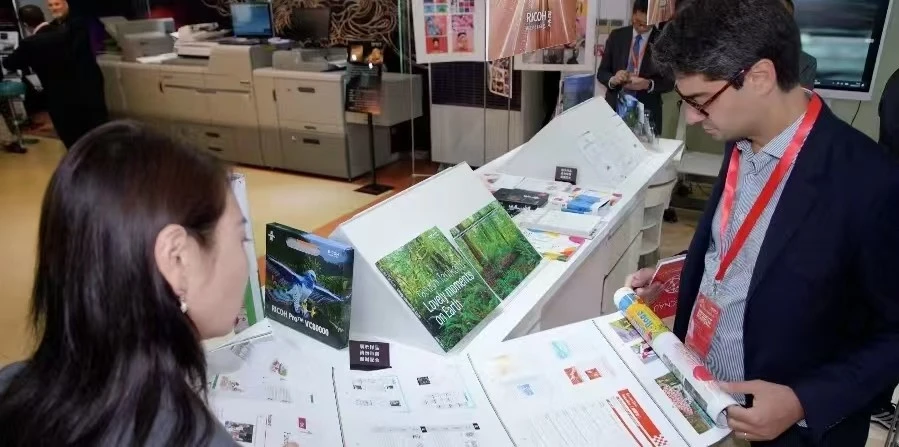
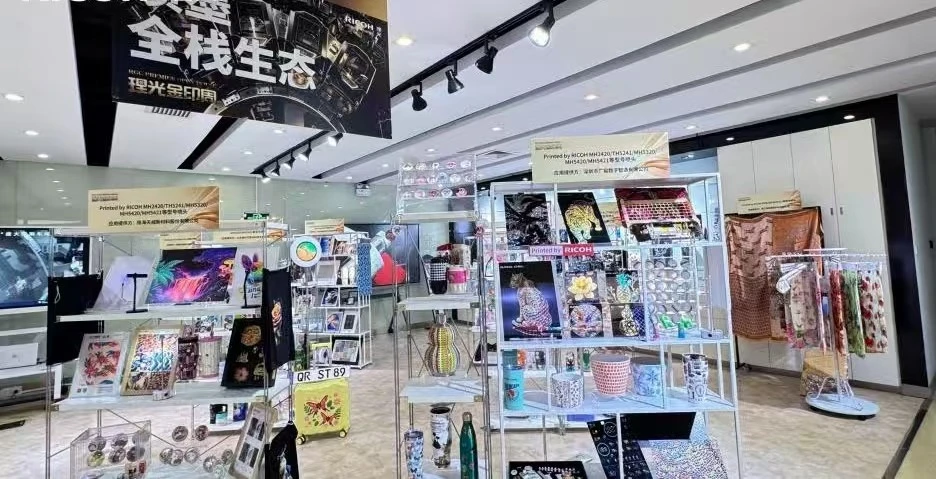
During the industry adjustment period, why is Ricoh going against the trend and doubling down? Ricoh executives explain their brand-new digital printing strategy!
From October 12 to 16, 2026, the first Ricoh 'Golden Print Week' took place at the Ricoh Innovation Experience Center in Shanghai, bringing the industry a feast of value that combines technical depth with industry insight. This 'Golden Print Week,' themed 'Printing & New Value,' showcased for the first time to the public a full-stack inkjet ecosystem that includes print head products, applications from ecosystem partners, and high-speed inkjet applications; production-oriented toner single-sheet devices and intelligent solutions; diverse customer applications; and tours of Ricoh's smart factory-covering four core areas and giving a panoramic view of one-stop, full-chain digital printing value-added solutions.
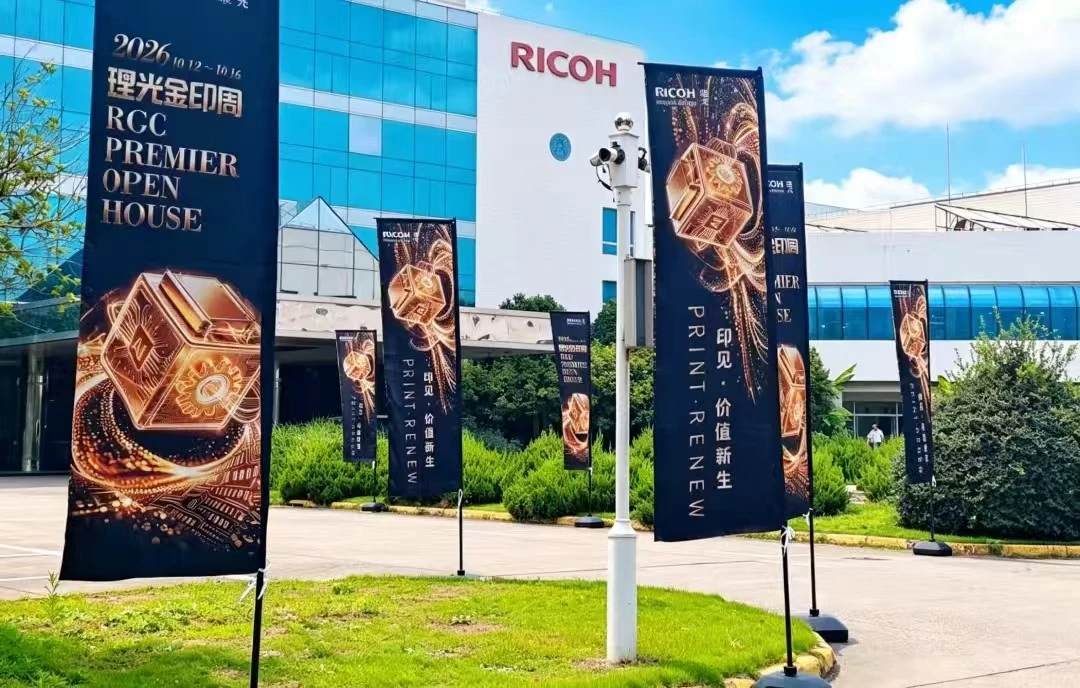
During the event, 《Printing Manager》 interviewed Mr. Atsuya Tateishi, General Manager of Ricoh Group's Commercial Printing Business Division, Mr. Daiichi Iwashita, General Manager of the Industrial Printing Business Division and Sales Planning Department, and Mr. Gao Fangzhi, Director of Ricoh China and General Manager of the Imaging Information Interaction Business Division, to explore how Ricoh drives value through technological innovation during industry adjustment cycles and works alongside Chinese printing companies to explore sustainable growth.
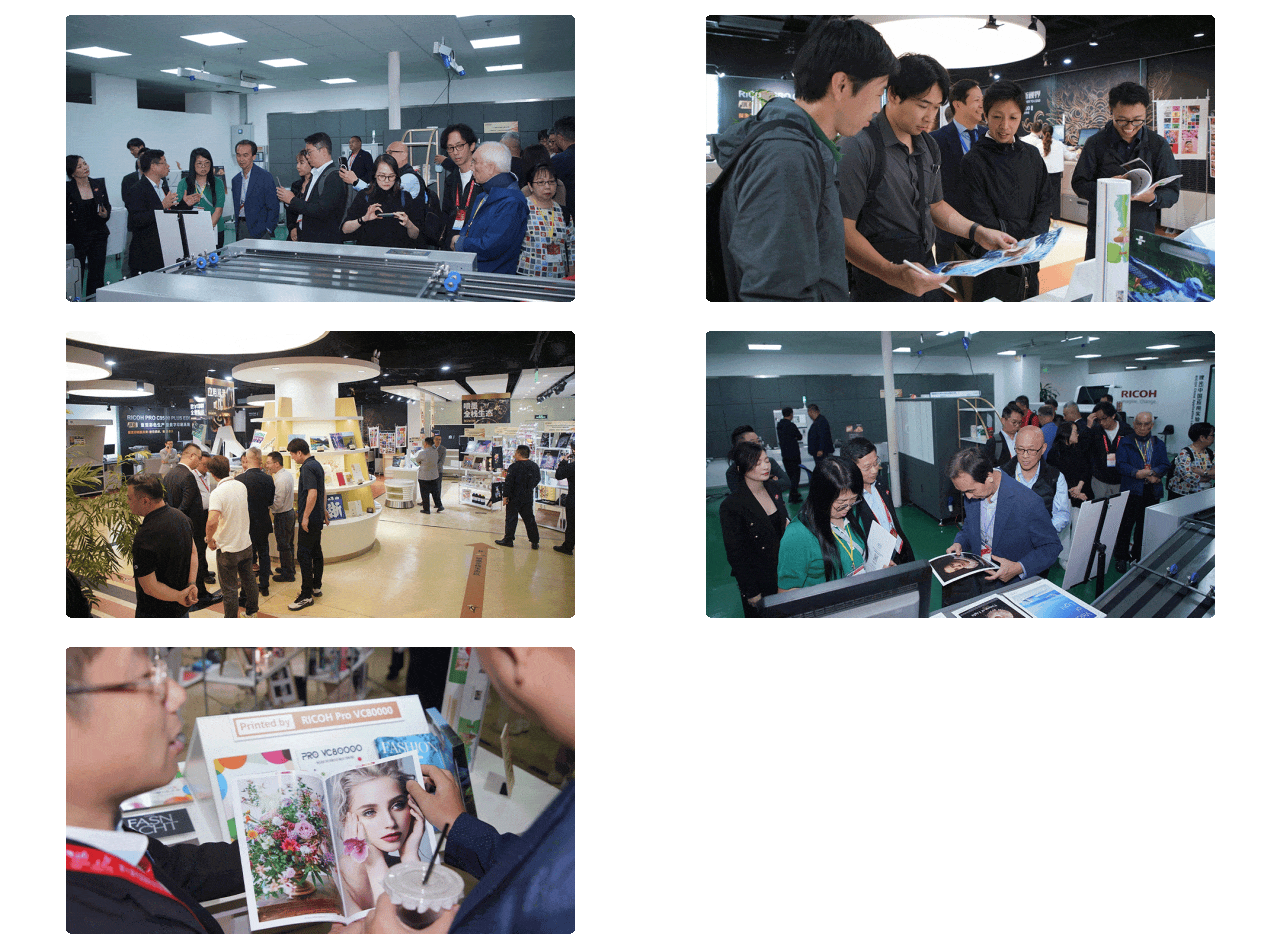
Live at the 'Golden Seal Zhou' event lounge
 Original Intention: From Equipment Supplier to Partner Alongside You
Currently, China's printing industry is in a phase of adjustment where supply exceeds demand. Rising costs, intensified competition, and shrinking profits have become common challenges. As the industry shifts from expanding scale to focusing on value, printing companies are often less concerned about 'whether to go digital' and more about whether each technological upgrade can translate into value, and whether every investment can bring sustainable profits and competitiveness.
 Ricoh China Director
General Manager of the Imaging Information and Interaction Business Division, Gao Fangzhi
This is exactly the core reason Ricoh is hosting this year's 'Golden Print Week' and opening up its smart factory for visits. 'We clearly sense the market's anxiety,' said Gao Fangzhi, Ricoh China Director and General Manager of the Imaging Information and Interaction Business Division. Ricoh hopes to deeply integrate technological innovation with customers' real business scenarios, so that technology can truly transform into business value.
Through this event, Ricoh wants to send a clear message to the Chinese printing market: at this critical stage of industry digital upgrading, Ricoh's role is more than just an equipment supplier - it's a strategic partner exploring alongside companies. 'We are willing to work with industry peers to jointly "see new value in printing" and build sustainable growth momentum,' said Gao Fangzhi.
 Breaking the Deadlock: Digital Upgrades Require Full-Process Reconstruction
Looking at the global printing market, the structure of market demand is undergoing profound changes. Traditional large-volume printing continues to shrink, while demand for small-volume, short-turnaround, and multi-variety business is growing rapidly. Digital print volumes are steadily increasing. At the same time, customers are putting more emphasis on personalized communication with printing. For example, demand for direct mail advertising and customized marketing materials based on user behavior data is rising quickly, and the need to produce diverse content in a short cycle is getting stronger.
In this industry shift, digital printing has long surpassed just being a technical process and has gradually become a key tool for addressing business challenges. On-demand production can reduce waste, efficiently handling small-batch orders can boost revenue, and automated and simplified operations help reduce reliance on senior technical staff while also lowering environmental impact and enabling green production. The value of digital printing is being continuously proven within the industry.
However, in reality, the results of digital upgrades in many companies have fallen short of expectations, and technology investments have not effectively translated into tangible business benefits.
Tatsuya Tateishi, General Manager of Ricoh Group's Commercial Printing Division
"Many traditional printing companies have misconceptions about digital upgrades, thinking that simply introducing equipment means they've upgraded." According to Tatsuya Tateishi, the real challenge of digital upgrades lies in connecting the entire business process-from order receipt, printing, post-press processing, to delivery-and building a comprehensive solution that can optimize the entire workflow.
To address this common pain point, Ricoh's approach is to 'think beyond equipment and focus on solutions.' Ricoh can provide a full set of solutions covering pre-press to post-press, achieving seamless integration between digital presses and the surrounding processes, enabling automation, reduced manpower, and improved production efficiency.
At the same time, Ricoh combines each customer's business processes and commercial model to tailor the optimal system architecture, helping clients enhance their capabilities in small-batch, short-turnaround, and personalized printing. "We are not just a printing equipment manufacturer but a partner that helps customers transform their business, providing comprehensive support to build a digital production environment for them."
 Deep Cultivation: Long-term Accumulation of Core Technology
Ricoh's confidence comes from decades of continuous technological accumulation. Leveraging a differentiated technology roadmap and covering diverse application scenarios, Ricoh has particularly maintained long-term leadership in high-speed inkjet and toner technologies, building a solid technical moat.
High-speed inkjet is Ricoh's core growth bet for the future. With the market continuously demanding shorter turnaround times, more variety, and personalization, the industry is shifting from mass production to on-demand printing at an accelerating pace. Douno Tatsushi also firmly believes: "High-speed inkjet is the key driver of this round of growth."
Behind this judgment is Ricoh's more than fifty years of technological accumulation. From printheads and inks to drying technology, Ricoh holds world-class core technologies. Starting with the launch of the RICOH Pro VC60000 in 2014, followed by the continuous paper high-speed inkjet printing system Pro VC80000, and then the world's first duplex aqueous B2 sheet-fed high-speed inkjet printing system Pro Z75, the product lineup has gradually improved, covering different capacity needs from small to large batches. At this year's "Golden Print Week," the stable performance of Ricoh's high-speed inkjet equipment allowed many visitors to directly experience its industrial-grade production capabilities.
On-site visit to Ricoh's smart factory during "Golden Print Week"
And the potential of high-speed inkjet goes far beyond printing itself. "By combining customer data with high-speed inkjet, personalized direct mail advertising and marketing communications can also be achieved."
On another level, toner digital printing is Ricoh's "foundation" in the mid-to-high-end market. Regarding the underlying R&D philosophy, Ricoh consistently adopts a pragmatic approach: "Commercial printing equipment, as the core production asset supporting customer business, derives its value mainly from actual operational performance in real production scenarios."
Hence, in refining products, Ricoh not only pursues high image quality and high productivity but also sets strict standards for equipment durability, stability, paper compatibility, ease of operation, and maintainability. Based on this concept, Ricoh continuously tackles practical production challenges such as static suppression, heavy media adaptation, and large-volume envelope printing, accumulating deep technical expertise and experience.
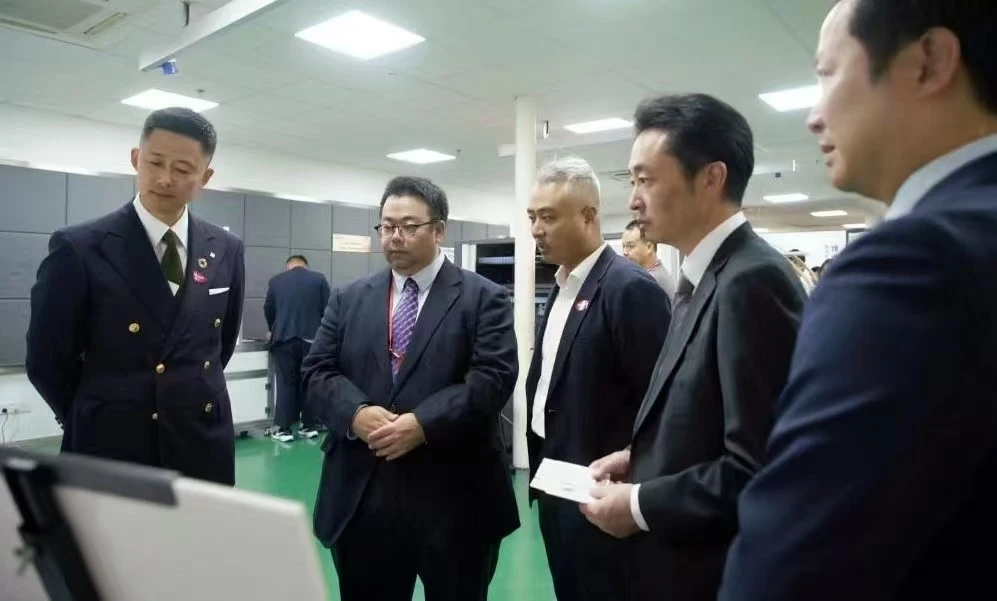

On-site visit to Ricoh's smart factory during the 'Golden Seal Week'
 Symbiosis: Deeply cultivating the Chinese market and expanding the boundaries of industrial printing
The commercial printing business showcases Ricoh's ability to integrate applications for end users, while the inkjet printhead business serves as the core foundation of Ricoh's technology ecosystem. At this year's 'Golden Print Week,' the highlights of the printhead ecosystem also reflect Ricoh's focus on source technology.
 General Manager of Ricoh Group Industrial Printing Business Division and Sales Planning Division
Daichi Iwashita
Daichi Iwashita, General Manager of Ricoh Group Industrial Printing Business Division and Sales Planning Division, introduced that starting from 2026, Ricoh China will officially take direct responsibility for the inkjet printhead business in the Chinese market. This is an important strategic adjustment for Ricoh in deepening its presence in China.
"China is a very important market for Ricoh's inkjet printhead business. This business adjustment allows us to get closer to our customers, understand their needs faster, and provide more timely and flexible support." He summed up Ricoh's core service philosophy in three keywords: Closer, Faster, Together.
"Our goal is not just to sell printheads but also to work with customers and partners to solve challenges and create new applications and business opportunities."
In recent years, China's inkjet market has been continuously vibrant. Previously, advertising printing was the main focus, but now new application scenarios such as textiles, labels and packaging, decoration, coding, and 3D printing are constantly emerging, and the technical capabilities of Chinese equipment manufacturers and system integrators are rapidly improving.
"Industrial inkjet is a field that requires the collaboration of multiple technologies. It needs the combined support of printheads, boards, inks, devices, software, and application technology. Ricoh alone cannot drive the development of the entire market."
Daichi Iwashita and Ricoh have a very open attitude toward the market: "Every company has different strengths, and through mutual cooperation, we can create new applications and new business opportunities together."
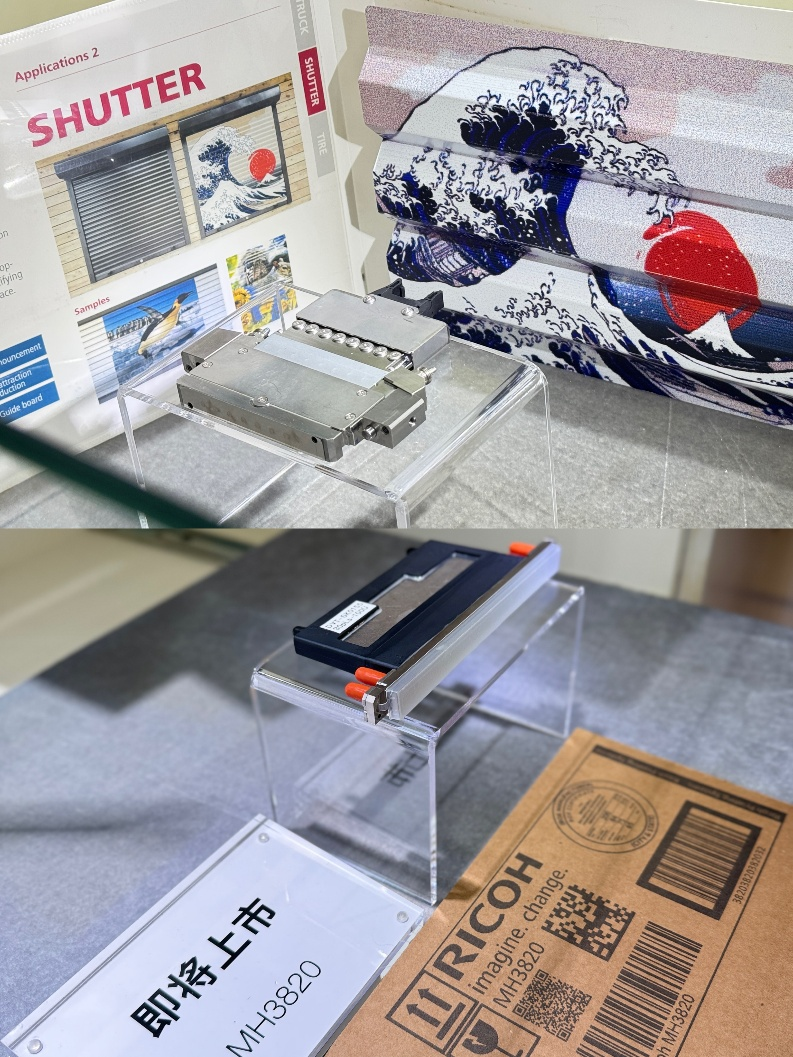
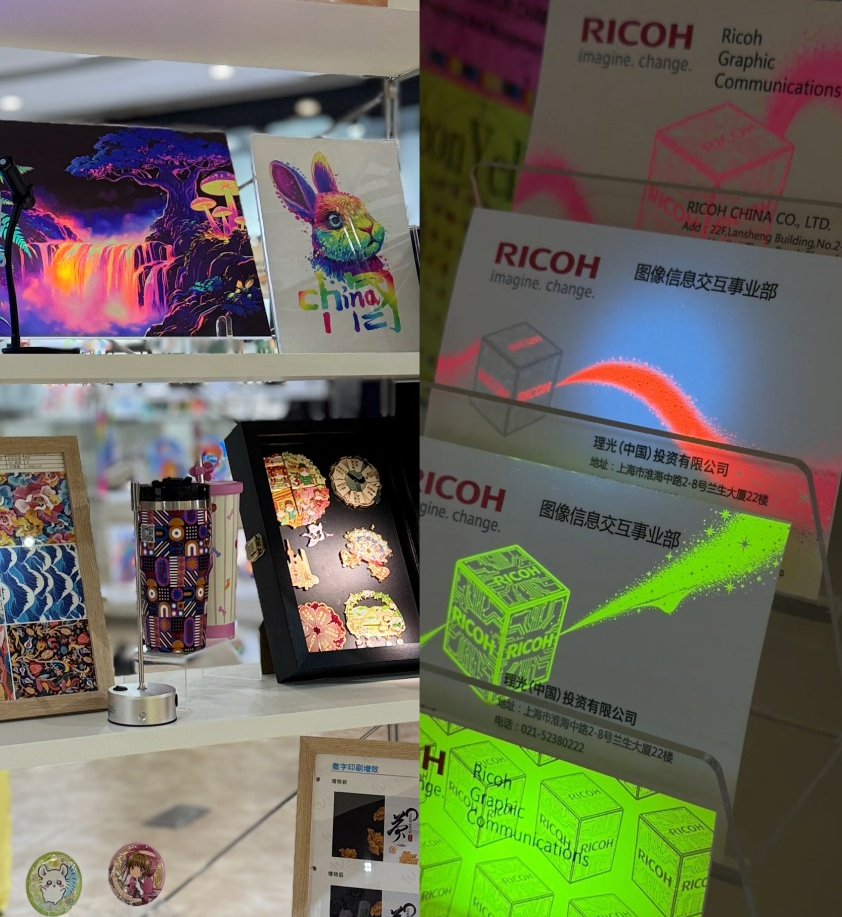
Ricoh Product Showcase during the 'Golden Seal Week'
Ricoh isn't just a simple parts supplier; we aim to be a business partner growing together with our clients. This is Ricoh's clear positioning in the China market. Looking ahead, Ricoh will continue leveraging its advantages in inkjet technology to explore more industrial printing applications, while deeply integrating printheads, inks, devices, software, and technical support to provide greater overall value to customers.
'For Ricoh, China isn't just a sales market. It has strong manufacturing capabilities, a rapidly developing market, and many innovative companies. We hope to create new value together with Chinese customers and partners, and take the successful experiences we develop in China to the global market.'
From live demonstrations of smart factories to deep deployment of core technologies, and to an open and win-win ecosystem approach, at this key point where the industry is shifting from scale expansion to quality improvement, Ricoh is committed to creating sustainable business value for its clients. Looking to the future, Ricoh will continue to focus on the China market, with technological innovation at the core and collaborative co-creation as the path, journeying alongside the Chinese printing industry to navigate cycles and witness new value emerge.