


Overseas Boom! Meiyingsen Holds Two Consecutive Research Meetings, Revealing the Lucrative Truth of Packaging Going Global
In 2026, with China's paper packaging industry facing pressure and fierce price competition, figuring out how to navigate the cycle and find a high-margin second growth curve has become the most pressing question for all packaging factories.
On July 13 and 14, Meiyingsen Group Co., Ltd., a leading domestic integrated packaging company, held two consecutive institutional research meetings, directly addressing the core concerns of both the capital market and industry peers. In this info-packed session, Meiyingsen not only revealed its domestic and overseas revenue cards but also openly admitted the high gross profit advantage of its overseas business.
While many peers are struggling due to heavy asset depreciation, Meiyingsen avoids this through a light-asset model of "renting factories and adjusting equipment," leveraging domestically trained talent and multi-region service capabilities to strategically capture high-value overseas markets. This operational approach-focusing on synergy rather than scale-offers a highly practical transformation model for Chinese paper and packaging companies that are currently uncertain about going global.
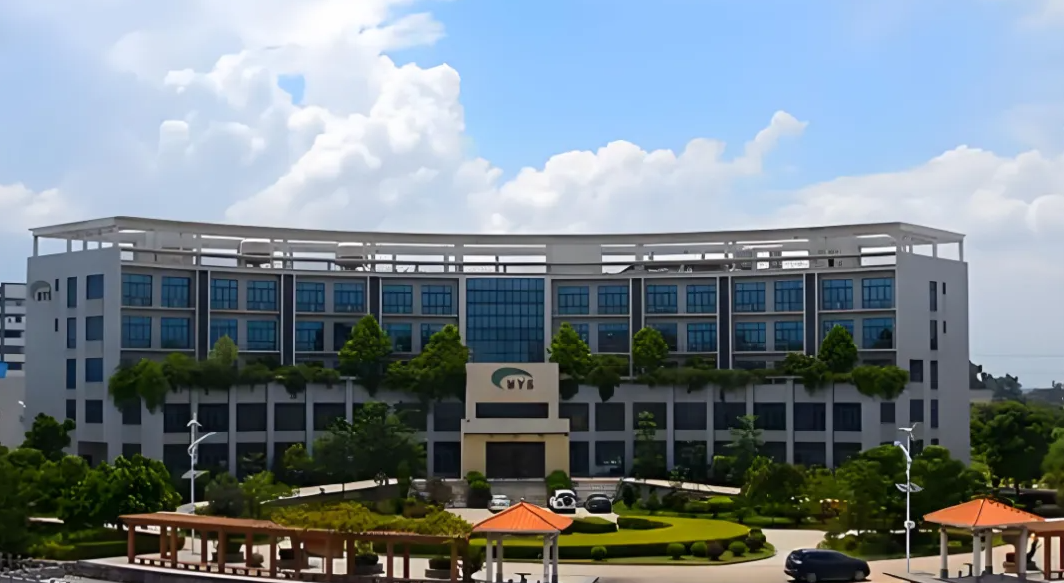
Overseas Revenue Contribution 40%: High Value-Added Positioning Secures Better Gross Margin Space
Amid the current global wave of industrial restructuring, forward-looking overseas capacity layouts are entering a period of tangible financial release. Meiyingsen clearly disclosed in its research that the proportion of domestic and overseas sales is currently evolving continuously, with domestic revenue accounting for about 60%, and overseas revenue steadily rising to about 40%. Compared to the shrinking profit margins caused by the domestic market's competitive red ocean expansion, Meiyingsen's overseas segment has demonstrated more attractive profit elasticity.
When discussing the gap in gross margins between domestic and overseas businesses, management admitted that the gross profit margins of overseas businesses are generally higher than those in China.
The underlying logic of this gap is mainly based on two aspects: on one hand, among the customers served by Meiyingsen's overseas factories, high value-added customers with extremely high packaging requirements are more concentrated; On the other hand, some foreign packaging markets have relatively mild market competition, with industry ecosystems clearly different from domestic ones, providing companies that go global ahead of the market with a stronger profit margin.
This dual-track positioning of "focusing on rapid growth overseas while stabilizing the domestic base" has become Meiyingsen's core trump card to resist the industry's downturn.
The company is not blindly expanding overseas but positions its domestic base as the "Whampoa Military Academy" for overseas expansion, continuously training and supplying professional technical and management talents to overseas factories, and relying on a highly collaborative domestic and international supply chain network to provide integrated cross-regional service support for international brand clients.
Electronic die-cutting products are gaining momentum: a diversified customer footprint centered on consumer electronics
As an integrated in-depth service provider offering packaging creativity, structural design, material distribution, and on-site support operations, Meiyingsen has demonstrated remarkable stability in restructuring customer structures.
Currently, among the company's domestic downstream customers, consumer electronics still make up the absolute majority, accounting for about 40%; Next is the furniture, home goods, and home appliances segment, accounting for about 25% of the total; In recent years, the booming automotive and new energy vehicle industry chains have also accounted for 15% of the market share.
The rest broadly covers multiple physical sectors such as baijiu, medical devices, food and beverages, health products, and express packaging. The customer base of its overseas factories is currently highly focused on industries such as consumer electronics, home appliances, and power tools, and has successfully developed new customers in certain niche fields.
Notably, beyond its core business, Meiyingsen is quietly cultivating its electronic functional materials die-cutting product business.
This segment mainly provides high-performance thermal conductive copper foil, cushioning pads, shock-absorbing foam, adhesive tapes, protective films, dustproof mesh fabrics, and conductive insulating films for high-quality customers in the electronics field, providing precision die-cut components such as high-performance copper foil, cushioning pads, shock-absorbing foam, adhesive tapes, protective films, dustproof mesh fabrics, and conductive insulating films.
Although these businesses currently account for a small proportion of the company's total revenue, their core service is mainly to top customers in consumer electronics and emerging industries.
Management expects that as new customer orders gradually come out, the proportion of die-cutting business and home appliance packaging will further increase, which will help the company build a higher marginal profit line with greater technical barriers beyond traditional corrugated packaging.
Renting factory buildings and reusing equipment: asset-light overseas expansion model successfully avoids heavy depreciation pressure
For packaging manufacturing companies operating heavily on assets, the large fixed asset depreciation caused by new factory construction often acts as an obvious killer that eats into initial profits. In response to analysts' concerns about whether overseas factory construction will lead to a significant increase in depreciation, Meiyingsen presented a financially smart "asset-light" hedging model.
First, the company's overseas expansion factories have basically adopted a flexible leasing approach, which avoids the long-term and large depreciation burdens caused by large-scale land and civil engineering purchases in the early stages.
Second, in terms of production equipment configuration, Meiyingsen prioritizes cross-regional coordination within the group, directly transferring idle capacity and mature equipment from domestic bases that are not yet fully utilized to overseas factories for operation.
This micro-operation of "renting factory space and adjusting equipment" minimizes the investment of new fixed assets for overseas expansion.
Book data shows that the company's depreciation and amortization remain at a very healthy and controllable level overall, with minimal disruption to cash flow.
In addition, regarding the major shareholder's previous financial debt lawsuits and other historical burdens, the company has provided clear reassurance: the dispute between the major shareholder and Zheshang Bank was settled as early as 2024, the settlement agreement is currently being executed normally, the previous payments have been made on time, and the remaining balance is small and expected to be repaid on time, ensuring absolute security for the listed company's equity structure and overall business portfolio.
Rejecting blind expansion: With sufficient funds, focus on securing the safety boundaries of core business
After experiencing a phase of pressure in the first quarter of 2026 caused by overall market volatility, Meiyingsen demonstrated the restraint and rigor characteristic of a long-established giant.
The first-quarter report shows the company achieved operating revenue of 907 million yuan, a slight year-on-year decrease of 6.6%. Net profit attributable to shareholders was 61.3634 million yuan, and the debt ratio was steadily controlled at an extremely low level of 36.18%.
Although the first quarter results were affected by the broader environment and some adjustments, the company's cash flow and own funds on its books remain very ample.
In response to market questions about whether it would consider cross-industry or blind external acquisitions due to its large cash holdings, management provided a very clear strategic definition: fully focusing on core business operations is Meiyingsen's core long-term strategy.
At this stage, the company will not blindly pursue cross-industry expansion just to chase hot topics; every investment and expenditure will be carefully aligned with the supporting needs of existing key clients and the alignment with related emerging industries.
Even amid the complex situation of frequent price fluctuations of raw materials such as base paper and fluctuations in the US dollar exchange rate, Meiyingsen can leverage its long-established stable loyalty with world-renowned brands and industry leaders, proactively negotiating with customers to adjust prices and absorbing cost fluctuations in new quotations, systematically spreading the price risks brought by raw materials.
A stable customer base credit also keeps the company's overall accounts receivable term stable, making bad debt defense extremely strong.
This systematic approach-strict control of capital expenditures in strategic planning, emphasis on stable dividends in financial management, and closely following high-quality clients going global-is precisely the deep secret behind Meiyingsen's ability to firmly grasp high gross margins and control home market dominance during the red ocean cycle.
Finally, here's a question for reference: in Meiyingsen's case, we saw that through a light-asset model of "overseas factory leasing and internal equipment allocation," they achieved up to 40% overseas income proportion. Do you think this "lightweight" overseas expansion model is replicable for medium-sized carton and packaging factories that have a large number of domestic but also face raw material and depreciation pressures? Do you face similar confusion in your actual business regarding asset depreciation or overseas decisions?