


The relationship between offset and digital printing is undergoing a qualitative change!
For a long time, offset and digital printing have always been seen as two extremes in the printing production world: offset is suited for large-volume, long-run jobs with stable color quality, while digital printing is known for its flexibility and efficiency in short-run production. However, with evolving market demands and rising customer expectations, the once-clear boundaries between these two techniques are increasingly blurred. Digital printing technology has advanced, achieving breakthroughs in print quality, substrate compatibility, and production capacity, now even handling jobs that used to be exclusive to offset printing. Meanwhile, offset printing remains the efficient, cost-effective choice for large, repetitive orders, and many printing companies still rely on offset equipment for high-volume, stable work.
Against this backdrop, many printing companies are adopting a hybrid production approach, running offset and digital printing side by side to maximize production efficiency and expand their service offerings. The challenge isn't choosing one over the other, but rather identifying the unique value lanes for each technique and combining them strategically to meet the diverse needs of the market.
Efficiency and flexible production
In traditional printing systems, roles are clearly divided. Offset printing, with its strong color consistency, low batch production cost, and high equipment stability, has long dominated the long-run market for brochures, packaging, and large-volume promotional materials, making it the backbone of large-scale printing production. Digital printing, on the other hand, relies on plate-free printing, quick setup, minimal prepress preparation, and support for variable data, making it ideal for short runs, rush jobs, and personalized customization. Moreover, on-demand printing helps brands reduce material inventory pressure and minimize resource waste, making it highly suitable for emerging niche markets like book printing, business documents, and online advertising materials. As a result, the volume of digital printing business has steadily increased worldwide.
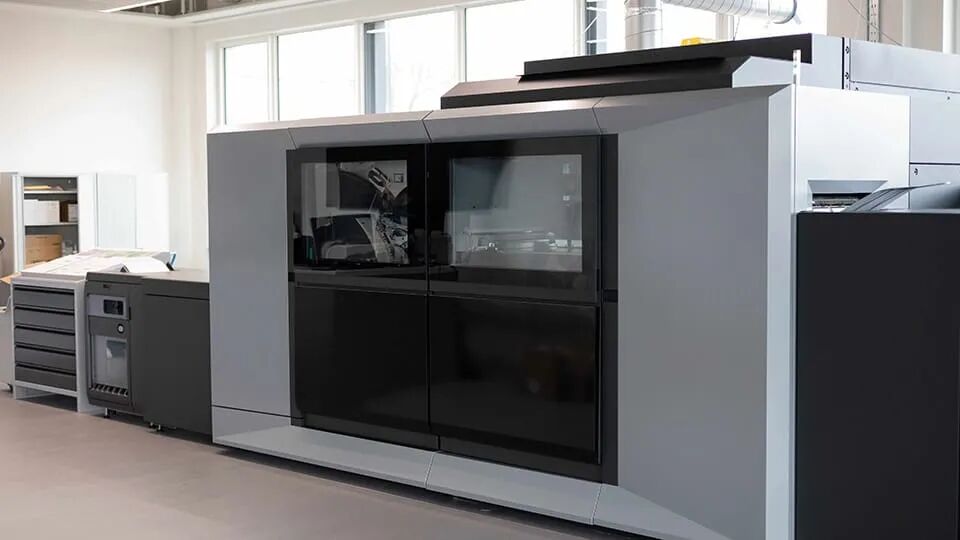
In recent years, however, drastic changes in the market environment have forced innovations in production processes. Global printing orders are showing a trend toward 'small batches, multiple runs, customization, and fast delivery.' The share of traditional long-run orders continues to shrink, and the drawbacks of single-process production models are becoming increasingly obvious. Companies that rely solely on offset printing struggle to handle fragmented short runs and customized orders due to a lack of production flexibility; while businesses focused on digital printing lack cost advantages for large-volume standardized orders, making scaled profitability weak.
At the same time, technological upgrades are continuously addressing the weaknesses of both processes. Digital printing has made significant leaps in color accuracy, substrate adaptability, and mass production stability, allowing it to take on high-quality printing jobs that previously could only be done with offset printing. Meanwhile, offset printing equipment continues to improve, significantly shortening machine setup times and reducing material waste during testing, making short-run offset printing both feasible and cost-effective. The once-clear boundary between the two processes is gradually blurring, laying the technological foundation for the widespread adoption of hybrid production models.
The relationship between offset and digital printing has reached a qualitative change.
Leading equipment manufacturers like Heidelberg and Barbarian have long made hybrid production systems a core focus of R&D. Through integrated equipment and intelligent workflow systems, they are promoting deep integration between offset and digital printing, bringing production and business value upgrades to printing companies.
Eirini Spanou, Heidelberg's B2B SaaS and AI strategy lead, notes that even though digital printing continues to grow rapidly, offset printing hasn't disappeared. On the contrary, the two are gradually being integrated into automated, workflow-driven hybrid production systems. "From Heidelberg's Speedmaster offset platform and Prinect automated production system to the complete digital ecosystem, every technological innovation revolves around one goal: to connect offset and digital printing and build a unified, coherent production workflow," Spanou adds. "The future of the printing industry isn't about choosing between offset and digital printing, but strategically integrating both to maximize quality, efficiency, and business returns."
Barbarian specializes in developing single-pass digital printing equipment, used in retail packaging, display boards, flooring, and metal substrates. Their VP, Chuck Slingerland, said that when discussing the combination of offset and digital printing on a single production line, the relationship between the two is fundamentally changing, entering a new stage of 'complementary coexistence.' Currently, the industry trend is toward unified integration of prepress, color management, substrates, and postpress processing, allowing offset and digital printing to seamlessly coexist in a single project. Printing buyers now focus more on finished product quality, delivery efficiency, and service stability, rather than sticking to a single printing process, further highlighting the commercial value of a dual-process approach.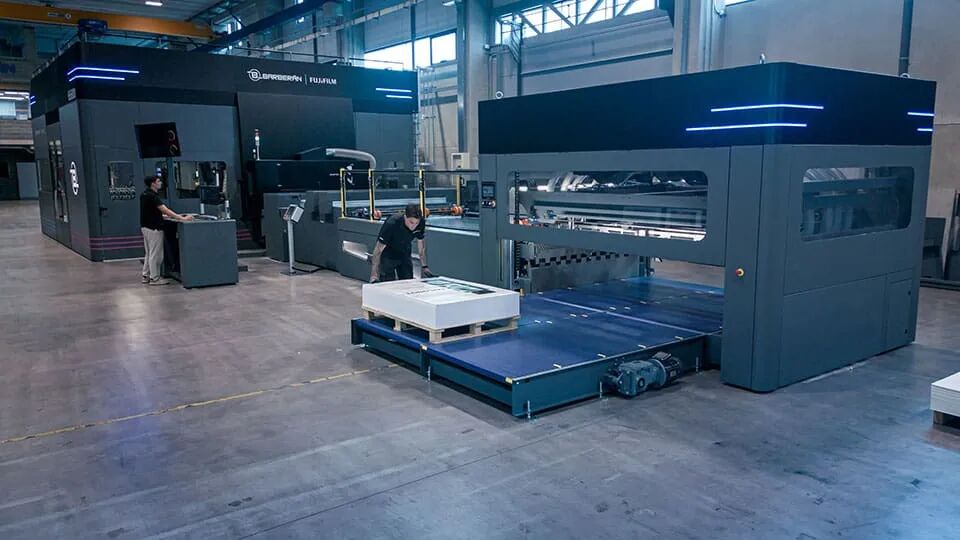
Regarding the current development status of small and medium-sized traditional printing companies, Slingerland frankly admitted that some small factories still use digital printing only as an auxiliary tool for proofs, short runs, or urgent orders. Due to insufficient automation, limited color control, and constraints from traditional production mindsets, the collaborative value of dual processes has not been fully realized. However, from a long-term industry perspective, hybrid production remains an irreversible trend. Integrated production lines can help companies smooth out capacity peaks, reduce operating costs, and expand service offerings, which is key to breaking through growth bottlenecks.
The optimal solution during the growth stage of hybrid production
Regarding industry development changes, Jean Lloyd, a special industry consulting expert for the global printing platform Print Island, provided a more mature and pragmatic assessment. She said that the early industry prediction that 'digital printing would replace offset printing' has long been disproven by the market. The two processes have never been in an absolute replacement relationship; they just have different application scenarios. Truly excellent printing companies no longer agonize over which process to choose but precisely grasp the boundaries of each process and leverage a hybrid model to tap into new opportunities.
Data from the British Printing Industries Federation (BPIF) confirms the industry's diversification trend. By 2025, the digital printing market in the UK will account for 37%, becoming an important growth driver, but it has not squeezed the core market share of traditional offset printing, resulting in a good symbiotic development pattern between the two.
In short, at the level of future industry development, there is a unified consensus across the whole industry: a hybrid model balancing traditional large-scale production and digital flexible production is the most stable and forward-looking production system. By using offset printing to handle large, standardized, cost-effective core orders and relying on digital printing for personalized, small-batch, and post-production customized tasks, companies can achieve optimal costs, minimal waste, and maximum efficiency. At the same time, they can unlock new business models like on-demand production and localized fulfillment, freeing themselves from the traditional industry pain point of excess inventory.