


One can be used to 3 production lines! The world's first Heidelberg Gallus Five hybrid printing machine was officially put into use
Recently, a major announcement came from Gallus Group, a subsidiary of Heidelberg and a global leader in label printing technology: the world's first high-performance hybrid press, Gallus Five, has officially been installed at Italian label manufacturing expert Artes Etichette. This equipment integrates 'flexographic printing, digital printing, and post-press' into one system, eliminating the need for multiple machines to operate together, and can help companies achieve a scalable transition from traditional printing to digital printing.
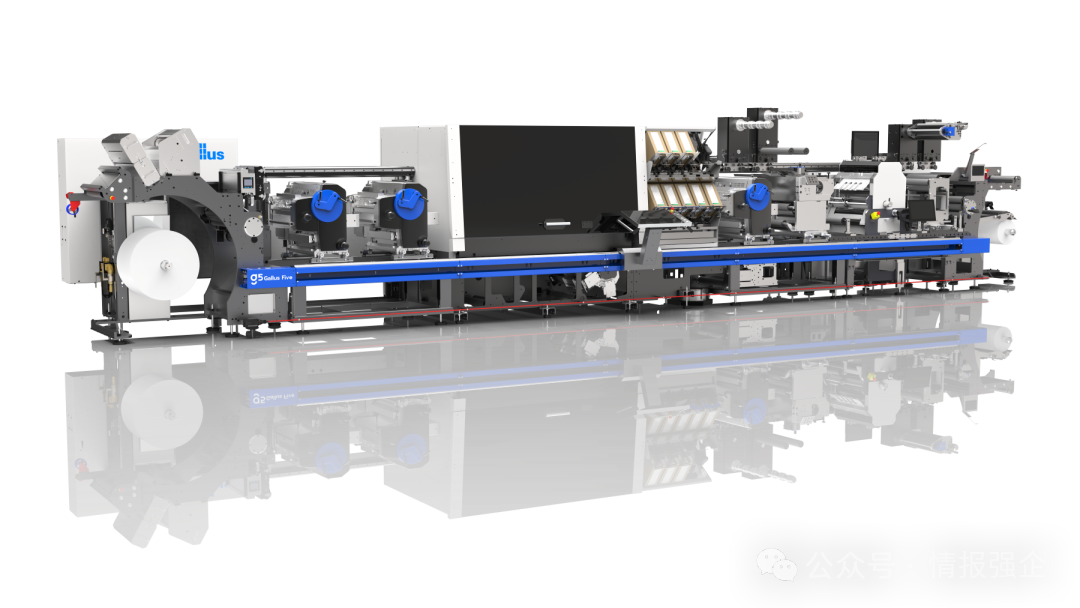
Benchmark Equipment Implementation
Balancing Quality, Efficiency, and Flexibility
The successful implementation of the world's first Gallus Five is not an accidental collaboration between the two parties, but is based on nearly fifty years of cooperative experience between Artes Etichette and the Gallus Group. The collaboration between the two can be traced back to the 1970s, starting from traditional flexographic and letterpress printing, and over the years they have maintained close cooperation.
Artes Etichette successively introduced two Gallus Labelfire printing machines in 2018 and 2022, and in 2024 deployed Europe's first Gallus One printing machine, accelerating the company's digital transformation. According to Artes Etichette, thanks to previous experience with Gallus digital printing technology, close cooperation with Gallus technical staff, and Heidelberg's extensive customer support network, the installation process was smooth and efficient. The new Gallus Five printing machine began operation within weeks after installation in December 2025 and entered full production in early 2026.
Only a few months after the installation of the Gallus Five hybrid printing machine, Artes Etichette began using its industrial capacity to handle its growing order volume. Leveraging this world-first equipment, Artes Etichette successfully transferred a large amount of traditional printing business to digital printing. This not only reduced material waste and plate change time but also simplified complex production processes, allowing the printing company to gain a competitive efficiency advantage in the market.
The industrial capacity performance of the Gallus Five is remarkable. The machine currently operates two shifts daily, totaling 15 hours, reaching full capacity. Its regular output is 10,000 meters, and it has successfully completed continuous printing runs of up to 60,000 meters multiple times, repeatedly proving the machine's capability to achieve industrial-level production efficiency. In terms of efficiency improvement, the Gallus Five operates at a speed of up to 100 meters per minute. Its color stability, predictable register accuracy, lower waste rate, and shorter preparation time significantly enhance production efficiency. Beyond its core application in food label printing, the machine widely serves multiple sectors including chemicals, detergents, cosmetics, pharmaceuticals, and durable goods, fully meeting the needs of various industry segments.
This hybrid printing machine, which combines flexibility with investment value, has been validated not only in overseas markets but also widely recognized by leading domestic printing enterprises. In early 2026, a leading domestic printing company, Shengda Printing, ordered ten Gallus One/Five hybrid digital inkjet printing machines. These machines will be deployed across multiple Shengda Printing production bases over the coming months, with the first two units officially arriving in June of this year.
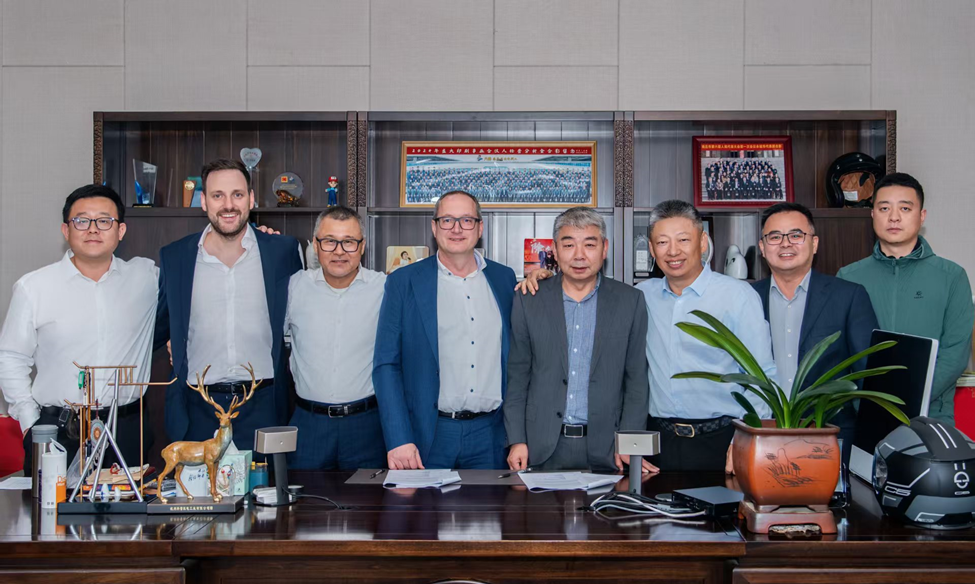
From the introduction of the world's first Gallus Five by Artes Etihette in Europe to the bulk purchase of the same series of equipment by Shanda Printing, the world's leading printing companies have reached a consensus with practical actions, and hybrid printing has completed the transformation from proof of concept to industrialization, which will no longer be a capacity supplement, but the core development direction of the main production line.
"Flexo + digital" hybrid printing technology
is reshaping the future of industrial printing
At present, the printing industry is facing a pattern of rapid short orders, rising personalized demand, and double test of efficiency and cost, and it is difficult to balance production capacity and flexibility with simple traditional printing or digital printing, and the "flexo + digital printing" hybrid printing technology opens up the "1+1> by integrating flexo printing units and digital engines 2" production mode.
This technology deeply integrates the high efficiency and high color saturation of flexo printing with the flexibility and variable data capabilities of digital printing, and makes up for the shortcomings of traditional processes through automated processes, widely adapting to multiple scenarios such as labels, flexible packaging, and personalized customization, further improving the comprehensive efficiency of hybrid equipment.
At drupa2024, the hybrid printing concept of "CI flexo + digital printing" was unveiled for the first time, and traditional CI flexo equipment manufacturers Uteco and W&H have launched CI flexo digital printing machines to better cope with short and medium-term orders in the market. Among them, the OnyxOMNIA launched by Uteco is the first flexo digital printing machine on the market, aimed at the flexible packaging market, with a flexo printing speed of up to 400m/min, a digital printing speed of up to 300m/min, and a maximum printing width of 1320mm. W&H has launched the "CI Flexo + Digital Printing" solution for the flexible packaging market, with a printing width of 1m and a maximum printing speed of 150m/min at a resolution of 1200dpi. Although the plan at that time was still in its infancy, it pointed out a new idea for integrated development for the industry.
Domestic equipment manufacturers have also followed the trend and developed a variety of hybrid printing equipment suitable for the local market. For example, Weigang Technology's first digital flexo printing machine in China ZJR S350 Pro series effectively integrates the high efficiency of flexo printing and the flexibility of digital printing through the "flexo + digital" combination printing solution, realizing process connection, reverse upward light, variable information printing and other functions, to meet the market's compound needs for short orders, long orders and multiple process combinations.
The 1200dpi digital flexible all-in-one machine Label Modular 330 HD jointly launched by Universal Printing and Spander relies on Universal's rich R&D experience in the field of digital inkjet printing and combines the technical precipitation of Spand's traditional flexo printing, and adopts a highly modular unit design, which can be flexibly configured and expanded according to the actual production needs of customers. Support any combination of flexo printing and digital printing process, truly realize the one-click efficient production of coating, printing, varnish and hot stamping.
The LabStar Hybrid series of digital and flexible combination production lines launched by Hongyuan Digital integrates the advantages of digital, flexographic, letterpress and other printing technologies, and can realize all categories of printing processes such as cold stamping, reverse process, special holographic graphic 3D transfer, lamination, and double-layer material compounding in one stop, meeting the needs of large-scale, high-quality, and multi-process composite labels, and covering the industrialized flexible mass production scenarios of large printing enterprises. The simultaneous efforts of domestic and foreign manufacturers have continuously improved the hybrid printing equipment matrix and promoted the industry to enter a new stage of integrated development.
The success of the world's first high-performance hybrid press, the Gallus Five, is a testament to the fact that hybrid printing technology has transcended potential applications and niche markets to become a true industrial production solution. In the future, with the continuous iteration of printing technology and the in-depth layout of domestic and foreign manufacturers, hybrid printing will further become the main production mode of the printing industry, promoting the whole industry to accelerate in the direction of intelligence, efficiency and scale.