


Kodak CTP plate making machine technology revealed: When printing factory owner's abacus collides with quantum physics
Today, instead of discussing basic operations such as "cost saving" and "efficiency improvement", let's focus on some hardcore ones.
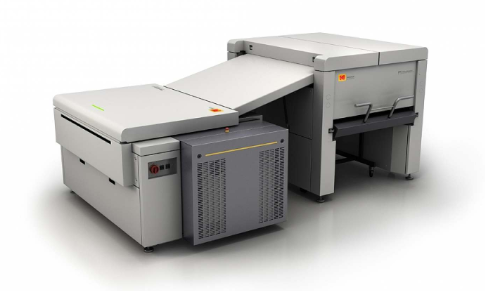
Using chip level realism to dissect how Kodak CTP turns traditional printing into a 'science fiction film'!

Chapter 1: Lightspeed Sculpture, Kodak's "Photon Bushido"
Traditional plate making vs Kodak CTP=Chopping meat with a kitchen knife vs Molecular cuisine
👉 SQUARESPOT laser array:
256 laser beams line up for attack, each beam of light is in the late stage of obsessive-compulsive disorder - never elliptical when hitting dots, never 4.9% when hitting 5% dots, with precision surpassing the limit of human hand tremors. (Don't ask, asking is quantum level control)

👉Thermal Metaphysics Scene:
Kodak engineers played with plate coating as a "temperature sensitive muscle" - the laser scanned the area, and the coating completed a "solid to gas" teleportation within 0.001 seconds, leaving clean dot edges comparable to AI image editing. (Developer solution? That's tears from the last century 💧)
Chapter 2: Algorithm Critical Strike! The 'strongest brain' in the printing industry
Do you think it's a machine? No, it's a printer that knows calculus
Network deformation compensation system:
Automatically calculate the stretching rate of the printing plate, environmental temperature and humidity, and machine vibration coefficient, and adjust the laser path in real time - even if the plate is secretly stretched lazily, the printed material will still be a straight steel man horizontally and vertically.
AI pre sampling black technology:
Feed the ICC color profile to Kodak CTP, which can simulate the actual printing effect with algorithms. The boss no longer needs to be a "human flesh testing machine" - the saved ink money is enough to buy the sales of the neighboring milk tea shop for three months.

Chapter 3: Environmental Protection Campaign! The physics teacher called himself an expert
No chemical development=turning the printing factory into a photosynthesis laboratory
♻️ The Victory of Energy Conservation:
Traditional plate making: chemical development → water washing → drying ≈ 1.5L of water and electricity consumption per plate
Kodak CTP: Pure physical imaging ≈ Energy only bounces wildly between laser and plate, power consumption is not as strong as workshop air conditioning presence
⚡ Scrap recycling Easter eggs:
Aluminum based plates, after being discarded, do not require special treatment and can be directly thrown into metal recycling, remelted, and then transformed back into smooth plates, realizing the magical plot of 'Rebirth of Me as a perpetual motion machine in a printing factory'.
💡 Philosophy of Kodak CTP
Using nanoscale precision to solve millimeter level errors
Make every photon a carrier of profit
--After all, in the printing industry, technology is the best currency capability 💰
