


Japanese capital has completely withdrawn! Sunshine Paper Industry monopolizes Shouguang Special Paper Factory
On June 16th, a landmark deal in China's paper industry was quietly settled - Sunshine Paper announced that its subsidiary Century Sunshine would acquire 40% equity of Sunshine Prince (Shouguang) Special Paper Co., Ltd. held by Aifute, a subsidiary of Japanese Prince Holdings, for 85 million yuan (including tax). Thus, this joint venture, which has been established for 13 years, has completely bid farewell to its Japanese background and become a wholly-owned subsidiary of Sunshine Paper Industry.
From Joint Venture to Sole Proprietorship: A Long Planned Declaration of Independence
Prior to this transaction, Sunshine Paper already held 60% equity in the Shouguang joint venture, but due to its joint venture nature, its financial data has always been independent of Sunshine Paper's financial statements. With the completion of the acquisition of the remaining 40% equity, this specialty paper manufacturer with an annual revenue of over 900 million yuan will be fully integrated into the Sunshine Paper system.
Behind the seemingly dry term of 'financial consolidation' is Sunshine Paper's comprehensive strengthening of its control over core assets. The announcement stated that wholly-owned holding will "ensure the group exercises absolute control over the management and financial income of the joint venture", and enhance operational efficiency and flexibility. In the high value-added track of specialty paper, technological autonomy and shortened decision-making chain mean stronger market adaptability.
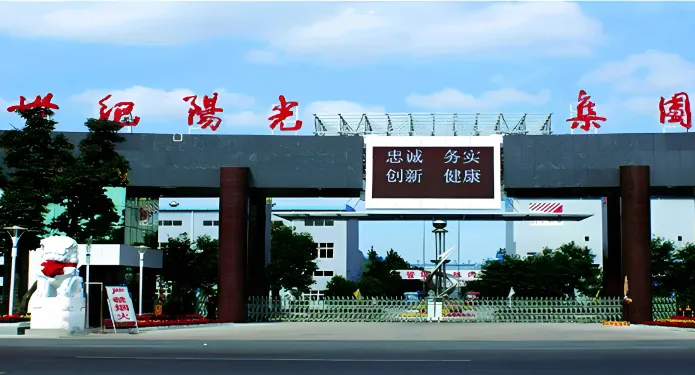
Prince turns around: a microcosm of the "Chinese retreat" of Japanese specialty paper
The complete withdrawal of Japanese Prince Holdings is not an isolated case. In recent years, giants such as Nippon Paper and Daimyo Paper have been reducing their production capacity of specialty paper in China, reflecting a dual dilemma: on the one hand, local Chinese enterprises are accelerating their technological research and development to catch up, and on the other hand, the slowdown in the growth of the high-end building materials market has weakened Japan's technological premium space.
Taking Shouguang Factory as an example, its flagship high-end decorative paper is directly applied to artificial board veneers and is a key material in the home building materials industry chain. In 2023, the factory's production capacity will exceed 120000 tons, with an annual revenue of 910 million yuan, and it has the scale and strength to compete with foreign investment in segmented fields. Prince Holdings' decision to cash out and exit at this time is more like a rational choice to shift its strategic focus.
Small Town Big Business: The Road to the "Invisible Champion" of Shouguang Factory
The rise of this factory, which covers only 255 acres, is a vivid footnote to industrial migration. At the end of 2011, with the strong support of the Shouguang Municipal Government, the original Arno Wittgenstein Chenming assets were acquired through a judicial auction for 203 million yuan, completing a rebirth. Nowadays, its quality management system and production equipment have taken a leading position in the industry, and its products cover high value-added categories such as high-end color paper and printing paper.
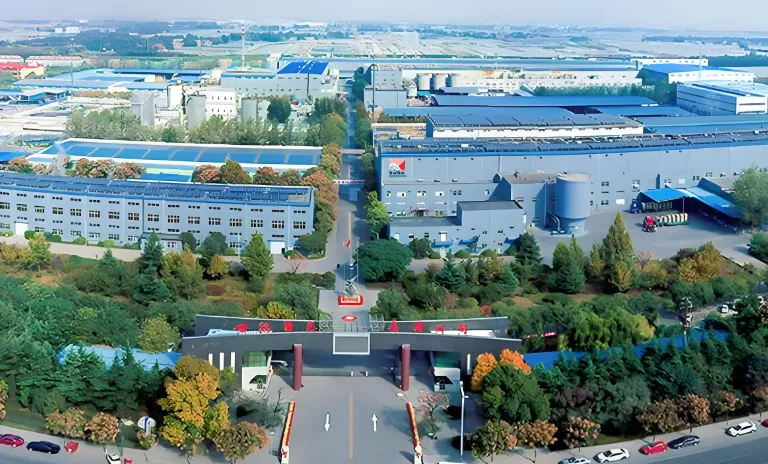
Sunshine Paper has made no secret of its expectations for this subsidiary in its announcement, stating that it has confidence in its long-term development prospects. After full ownership, the improvement of technological research and development autonomy and flexibility in capacity allocation may open up incremental space for decorative paper in emerging fields such as environmentally friendly building materials and customized home furnishings. When a county-level factory no longer needs the halo of foreign investment, it may indicate that Chinese manufacturing has truly broken through in the upstream of the industrial chain.
This acquisition reveals the upgrading trajectory of China's paper industry, from relying on foreign technology input to local enterprises achieving technological autonomy and market integration through capital operations. In the field of decorative paper, which was once dominated by foreign investment, Sunshine Paper Industry has completed a beautiful "Declaration of Independence". As more and more 'Shouguang factories' remove their joint venture labels, the hidden competitiveness of Chinese manufacturing in the upstream of the industrial chain truly emerges.