


It's Time to Replace Your CTP Equipment: 3 Reasons Why You Don't Know It
Upgrading computer-to-plate equipment is a huge investment. However, by upgrading your PC-to-plate equipment, you can take your business into a whole new world of opportunities. In a fast-moving industry like printing, replacing equipment is often the last resort. Computer-to-plate (CTP) devices are no exception. Margins in an industry are becoming increasingly thin, and everything from technology trends to business trends is changing rapidly. By proactively upgrading to the latest CTP models, you can stay ahead of technology iterations and seize new business opportunities. And, importantly, it saves you money.

There are 3 main reasons to replace your CTP device
1. Aging equipment
If you haven't upgraded your CTP equipment in the last 7 to 10 years, you're stretched thin in terms of capacity. While your current equipment may still be operating, as print speeds increase, the ability to produce plates often can't keep up with the demand for output prints.
The KODAK CTP is known for its quality, durability and reliability, but any CTP device is a complex system. Older equipment can become unreliable and problematic, and everything from the engine to the thermal imaging head, lasers, sensors, and automation controllers can be damaged after years of output. After 10 years of use of your platesetter, it will become increasingly difficult to source spare parts.
There are other risks associated with older machines. For businesses of all types and sizes, security issues cannot be ignored, and it is more important than ever to keep up with new operating systems and security patches. Outdated CTP devices can create vulnerabilities and pose a serious security threat, putting your customers' data, your reputation, and even your business at risk.
2. Your business is highly dependent on offset printing, and new equipment is the key to unlocking growth points
Offset printing is available in longer yields and is commendable in terms of quality and efficiency. However, the offset printing process also has high requirements for the printing plate. As an offset printer, you may be processing tens of thousands of plates each year – a huge demand for throughput that is difficult to keep up with old, manual CTP equipment.
Your existing CTP device may get the job done, but can it empower your business to thrive in a world of opportunities? With the latest CTP equipment, the platemaking process is fully automated, and the process is highly simplified, with little to no manual intervention for plate mounting, imaging, or sorting. You can get more plates out of your press shop, faster, and meet the volume and variety of plates required by your business output and quality goals. The new equipment reduces labor and energy costs, reduces waste generation, and enhances the cybersecurity of offset printing companies.
New equipment can also help you stay ahead of changing industry trends. For example, due to the rise of personalized printing, many print customers want a solution that supports frequent design changes. As this trend intensifies, it becomes even more important for offset printers to adopt advanced CTP solutions to improve work efficiency. Every offset printing company wants to continue to grow their business, and the new CTP equipment will help ensure that you can meet the ever-increasing requirements.
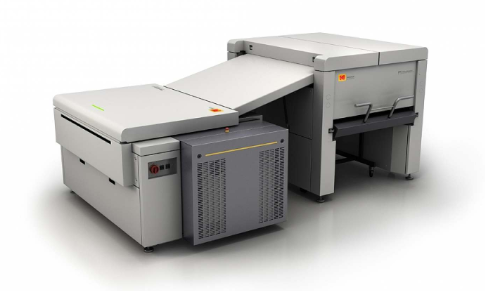
Your existing CTP device may get the job done, but is it keeping up with the needs of the market? Does it enable your business to thrive in a rapidly changing world? CTP technology has come a long way since you last purchased CTP equipment, and platemaking processes are becoming more complex and advanced.
New innovations enable users to achieve higher throughput with higher quality output and less space. Automation options, including remote monitoring capabilities, save time and labor. Combined with energy-saving features, simplified operation, and the ability to reduce errors and waste, automation can save you a lot of money. But that's not all. The more plates that can be automatically loaded, imaged, and unloaded, the more jobs you can handle each day, which will help strengthen your revenue potential.
The new CTP technology also has new imaging techniques. Even at faster speeds, you get nuanced output, perfect for artwork printing, microprinting, security printing, and raster printing. When you can easily achieve a wide range of demanding print results, you'll be able to stand out from the crowd and meet the full range of needs of a large customer base. The whole plate-making process is also more environmentally friendly. For example, the latest KODAK Quanwin platesetters and Platemakers use 3% less energy when imaging than our previous models, and 95% less than comparable direct platemakers on the market. KODAK Direct Platesetters are also the perfect companion to KODAK SONORA Process Free Plates, which can be used in combination to further reduce the environmental impact of plate making. Put simply, upgrading your equipment empowers you to meet the needs and expectations of your existing customers with ease, allowing you to discover new areas of growth. Ultimately, you'll get a decent return on your investment.
3. Your existing CTP equipment may be more costly
If the CTP operation is unexpectedly interrupted, the unpredictable cost can add up quickly. This includes obvious expenses such as repair and parts costs – as well as the cost of eventual replacement. For older devices, pricing for service contracts also increases, as older devices require more frequent screening and diagnosis. While Kodak provides excellent support services to its customers, the maintainability of equipment does become more challenging as machines age and technology becomes obsolete. If the older device platform is not compatible with the newer model, the parts may be more expensive.

In addition to this, you also need to take into account downtime, which can lead to lost revenue and increased costs. If a direct platemaker fails, the mainstay of printing loses its effectiveness. All of these factors add up to a potentially higher total cost than buying a new piece of equipment – and it's possible to pay in monthly installments at a lower cost.
Businesses face many unpredictable threats, uncertainties, and pressures, and there is no room for error. Investing in advanced platemaking technology to modernize your platemaking process can speed up processes, reduce business risk, and ultimately give you peace of mind.
The best solution is in the thick of nowhere
A good solution is not to knock on the user's existing configuration, but to make revolutionary improvements and upgrades. Kodak continues to lead the industry in change by investing in new CTP equipment, which now delivers plates to the printing department faster, and cuts labor costs and eliminates costly plate remakes. Kodak's award-winning technology is suitable for any small or large business, and the level of automation is fully customizable to your needs.
Kodak has a range of new or refurbished CTP equipment to help you achieve the level of plate making you never dreamed of-from the entry-level Kodak Max Manual CTP to the high-end, scalable Kodak Max Q800T Speed Plus model with multi-pallet plate loader. The new CTP solution can improve your existing workflow in a variety of ways, such as productivity, efficiency, growth, profitability, and more. Saying goodbye to old equipment may increase costs significantly from what you might expect, but it may cost you.