


From a certificate to an ability
Before formally embracing the C9 printing and packaging quality control and evaluation system, we already had a foundation in color management and were familiar with the industry's mainstream color management standards and testing methods, but we had never been able to 'go deep and thorough.' The crux of the problem was that in the past, we only controlled the color at a single moment, without managing the entire chain from file to finished product. Dot gain, neutral gray balance, temperature and humidity, operational gestures... every variable affects color consistency. We lacked a comprehensive measure that could evaluate all these variables at once. The systematic thinking of the C9 standard perfectly matches our aspirations for improvement.
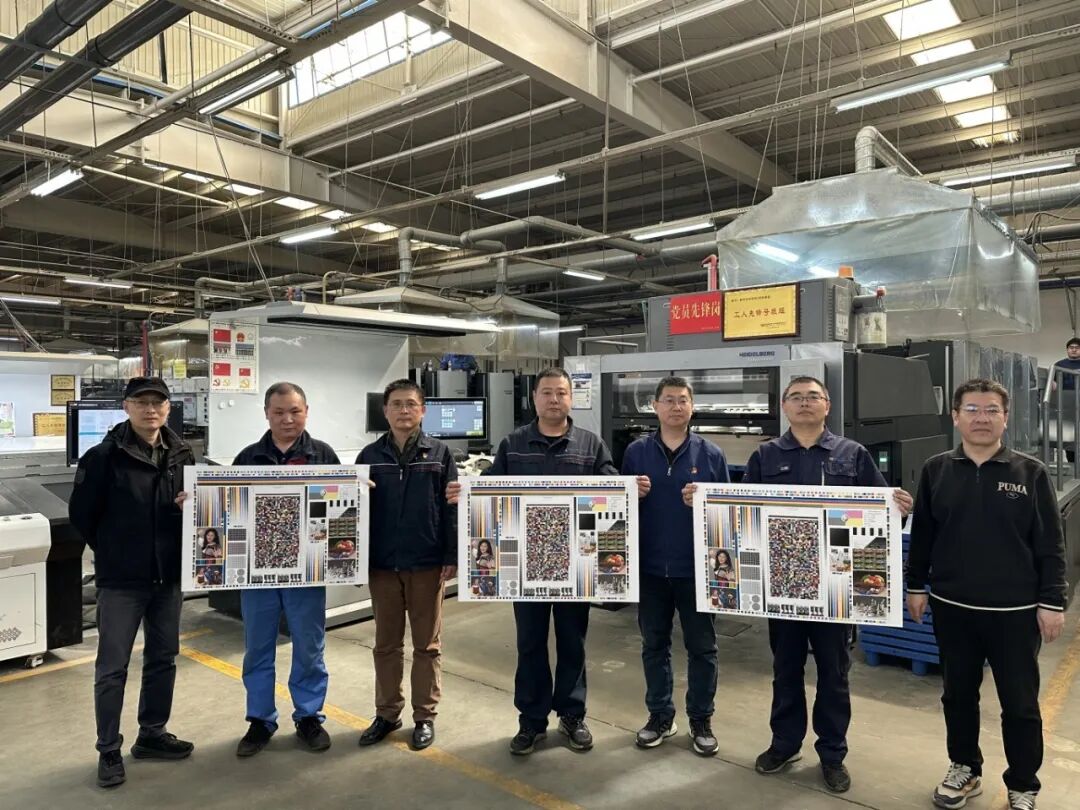
Figure 1 Hebei No. 2 Xinhua passed the C9 evaluation of multi-machine machines in March 2026
From evaluation to implementation: the internalization of the C9 standard
Easy to introduce, difficult to implement. The primary question facing the implementation of C9 is: who will lead it? If it only belongs to the technical department, it is easy to downgrade to equipment debugging; If it is only handed over to the production department, it may conflict with production capacity. We position it as the "number one project" and transform it into an operating specification that can be understood by all employees at the execution level. The company has transferred backbones from the pre-press and printing links, separated from conventional positions, and is full-time engaged in fine adjustment of color parameters. This arrangement conveys a clear will: quality improvement is the core project that needs to concentrate resources.
At the implementation level, we will "go from translation to transmission" of the C9 standard. The technical backbone translates terms such as "density value, tolerance range, and network expansion rate" into machine language. For example, "the expansion rate of outlets meets the standard" has become "pressure adjustment must be based on measurement data, not tactile experience". It is this layer-by-layer dismantling that enables enterprises to pass the evaluation entirely on their own strength. What is more meaningful than the certificate is the precipitated organizational ability - the skills and standardization awareness formed by employees in practice are the real core assets.
Achievement verification: from "perfect score textbook" to "color special team"
In the autumn of 2024, the People's Education Society will promote the C9 standard to the printing of textbooks for the first time, and we will participate in the pilot of Chinese textbooks. The printing of textbooks requires a high degree of color consistency across regions and batches, which is a difficult topic in quality control. As a pilot unit, technicians use a handheld density meter to measure the C9 measurement and control strip point by point, adjust and retest one by one, until all meet the standards. Without the assistance of scoring software, it completely relies on manual meticulousness and patience. In the end, we received the only perfect score in the country. This is not to prove that it is "the most beautiful", but to prove that it is "the most standard and stable" - this is the core value of C9: it gives enterprises not occasional stunning performance, but the ability to continuously and steadily output.
At the same time, we have gained a "color technology team that cannot be taken away". In the past, color management mainly relied on external engineers, and the tuning effect only lasted for about a month; When the environment changes, the colors deviate from the target. After the implementation of C9, through system training and internal C9 engineer training, color management has completed the transformation from relying on external experience to relying on internal processes. Standardized operating specifications replace individual judgment, and teamwork replaces single point of technology dependencies. At present, trained operators can independently complete color detection, calibration and stability control, and color management has been solidified as the core process asset of the enterprise.
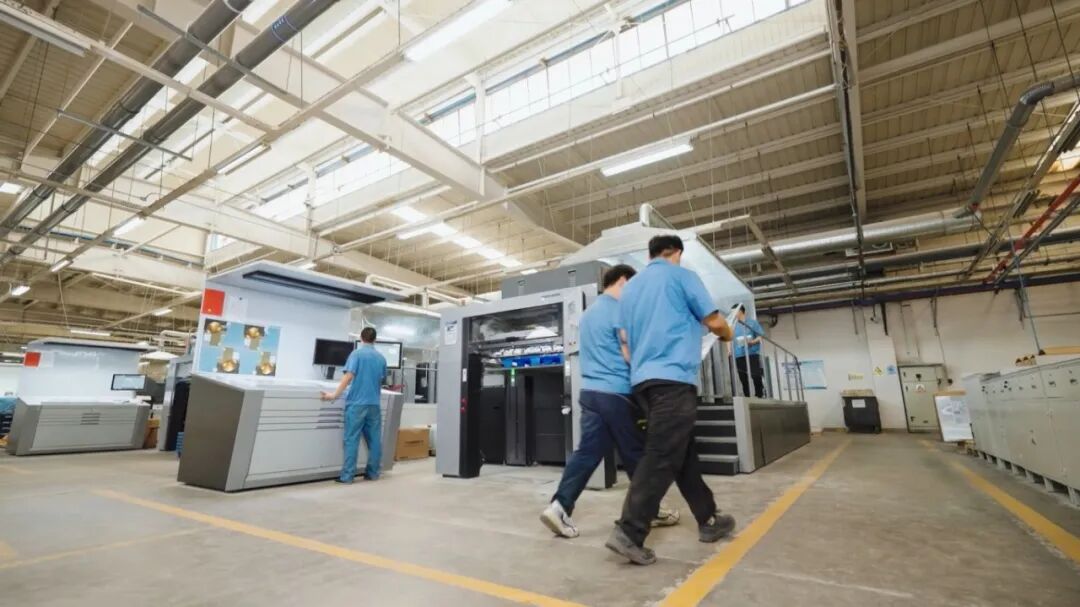
From Single Machine to Multiple Machines: Strategic Leap to Scaled Consistency
After evaluating a single machine and achieving a perfect score, we faced a new question: Should we be satisfied with just one "perfect machine"? Market orders are not assigned to a single printer. We decided to advance to multiple-machine C9 evaluation. Printers of different ages, conditions, and characteristics need to achieve output consistency under the same color standards. After nearly 20 days of intensive testing, the multi-machine evaluation was successfully passed. The engineering team we cultivated earlier carried out parameter calibration and process verification systematically. A single machine solves the "benchmark capability" problem, while multiple machines solve the "scale consistency" problem-this is a key step from "occasional excellence" to "systematic stability."
Beyond Evaluation: Continuously Creating Value with the C9 Standard
Obtaining C9 certification is a milestone, not an endpoint. The real value of C9 lies in integrating it into daily operations, shifting competitive advantage from "having a certificate" to "possessing the capability."
01/ Institutionalization: Integrate Standards into Daily Operations
Quality management manuals, job responsibilities, and operating procedures have all been upgraded to standardized operating procedures and linked to performance assessments. In-house C9 evaluation engineers are responsible for daily online inspections, sampling, and records, turning the high standards during the evaluation period into daily standardized practices. Currently, the C9 standard fully covers the daily printing of textbook covers.
02/ Quantifying Benefits: Presenting Value Through Data
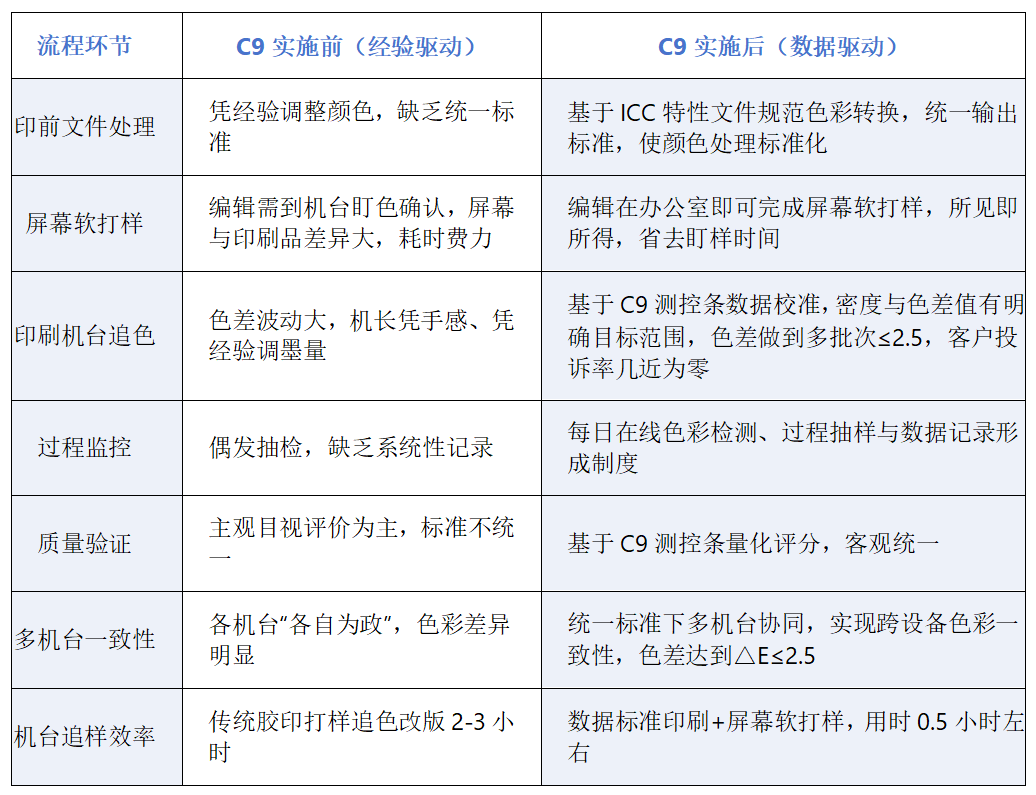
We track quantification from three dimensions: cost dimension (paper waste rate), efficiency dimension (sample checking time, proofing efficiency), and quality dimension (customer complaint rate). Internally, the data guides improvements; externally, it sends a signal that the company's color output capability is stable and reliable.
Table 1 Comparison Before and After C9 Implementation
03/ Full-Link Extension, Building a Standardized Ecosystem
Promote unified color standards in design and printing upstream to reduce deviations at the source; share C9 technical requirements downstream to enhance supply chain compatibility. Collaboration under the same color language between upstream and downstream can maximize overall efficiency and quality.
04/ Building a Digital and Intelligent Foundation, Embracing Intelligent Transformation
The color and quality data system established by C9 provides a reliable foundation for intelligent upgrades. We are advancing the interconnection between quality inspection equipment and C9 data to achieve automated quality assessments; associating production data in ERP with C9 quality data to explore coordinated optimization of scheduling, processes, and quality. Leveraging stable color output capabilities, the company is also able to handle on-demand short-run printing orders and incubate cultural and creative products, with process capabilities transitioning toward higher added value.

From Certification to Capability, from Single Points to Ecology
From Single Machines to Multiple Machines, from Coated Paper to Offset Paper, the C9 standard brings not only technological upgrades but also a shift in perspective: the significance of evaluation lies in internalizing capability; the value of standardization lies in driving the joint growth of the industry chain. Recently, the company took the lead in passing the C9 evaluation (offset paper), marking a further expansion of application scope and also serving as a comprehensive verification of the team's accumulated technical expertise.
We are fully aware that every evaluation is the starting point for the next journey. In the future, we will continue to promote the C9 standard throughout the entire process, using data to drive standardization, quantitative indicators to measure results, and full-chain collaboration to break down barriers. On this basis, we will steadily advance toward intelligent transformation. There are no shortcuts on this path; only through continuous investment and relentless refinement can the momentum of standardization be transformed into the strongest competitiveness, contributing to the high-quality development of the industry.